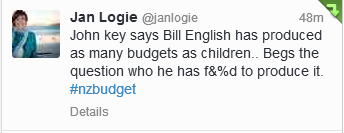
Barking from the closet.

If one thing has proven true over the years when it comes to religion and politics, it is that those who most ardently decry homosexuality as abnormal and represent themselves as paragons of “christian” family values often are themselves seriously repressed when it comes to their own sexual preferences. Be they Tories in the UK, Republicans in the US and preachers, priests, mullahs and rabbis the world over, these closet hypocrites go to great lengths to hide their “baser” urges, to include engaging in contact (!) sports and other “manly” activities like game hunting, entering into heterosexual marriages, having children, advocating for corporal punishment and loudly and obsessively condemning “deviant” sexual behavior and the gay community and feminists for a myriad of sins against the “natural” order of things.

Their self-loathing is such that some even practice how they walk and talk so as to appear more Roman than Greek (I am using the terms loosely here, as both Romans and Greeks accepted the “baser” urges as a part of life and are differentiated more by the class, gender and age element in them). Some go to great lengths to dress and act acceptably “mainstream” (according to how they perceive the mainstream). The more strident of the closet prudes threaten and bully those who question their public stance as well as their private desires.

Given its egalitarian and tolerant reputation, it would be a real shame if such people were a significant part of the New Zealand political, religious or social elite. Given demographic probability, chances are that there might be a few.

Which raises the question: does Colin Craig share that Larry Craig wide stance?

Monitoring Syrians and Supplicants.

The subject of spying is back in the news this week, but the coverage has been inadequate. Allow me to clarify some issues, first with regard to those who want to join the Syrian conflict and second with regard to politicians trying to ingratiate themselves with Kim Dotcom.

Contrary to the thrust of the coverage, not all those seeking to join the Syrian conflict are Syrian or descendants of Syrians. The Syrian War is a civil war between Shiia and Sunnis, where the minority Alawite-backed Assad regime is fighting to maintain its grip over a majority Sunni population (Alawites are a sub-sect of Shiia Islam). For a variety of affective and strategic reasons Iran (a very large Shiia dominant country) supports the Assad regime while Sunni-controlled Saudi Arabia and Gulf oligarchies back the armed opposition. This opposition is divided into what can be loosely called secular moderates (such as those grouped in the Free Syrian Army) and Islamicists (such as those in the al-Nusra Front and Al-Qaeda in Iraq and the Levant).

The latter have come to dominate the military side of the opposition due to their superior combat skills and determination. Their ranks include Sunni internationalists from all over the world (including New Zealand) who see joining the struggle as a religious imperative. Egyptians, Jordanians, Pakistanis, Britons, Australians and French nationals are among those fighting in Islamicist ranks. That has led to serious clashes with the moderate secularists (who do not have as many internationalists in their ranks, although there are some), to the point that the fighting between the armed opposition factions has allowed the Assad regime to re-gain the upper hand in the overall struggle after being near collapse just six months ago.

Where the armed opposition is winning, it is the Islamicists who are doing so.

In the last nine months the Prime Minister has made repeated reference to would-be New Zealand jihadis joining the fight in Syria. Some are already there and others have been barred from going. They may or may not be Syrian in origin, but his use of the “Syrian trump card” is a naked political ploy designed to use fear-mongering as a justification for extension of domestic espionage and, perhaps, as a way of pre-emptively steeling public opinion against the negative consequences of the inevitable revelations from Edward Snowden about New Zealand’s foreign espionage role within the Five Eyes/Echelon signals intelligence collection network. The trouble with the PM’s ploy is that the proclaimed threat does not match the facts.

According to the government ten New Zealand passports have been revoked since 2005 and a handful of Kiwis are in Syria fighting. The PM makes it sound as if all these have associations with extremist Islam. Perhaps they do, but the Syrian conflict only heated up as of early 2012, so the Syrian card does not explain why passports were cancelled prior to that. Moreover, the PM says that passports were cancelled in order to prevent “radicalized” Kiwis from returning and making trouble at home. That begs the question as to what the frustrated wanna-be jihadis are going to do now that their plans are thwarted and they are forced to remain in the country under heavy scrutiny.

A Syrian community spokesman has said that two brothers had their passports revoked after their parents informed authorities of their plans to travel back home to join the fight. He also accused the PM and his government of “racial discrimination.” The latter claim is ridiculous and shows a gross misunderstanding of how democratic governance works. John Key did not personally order the revocation of any passports nor does he have the power to rescind the cancellation order. New Zealand authorities did not cancel the brother’s passports because they were Syrian but because of their purported intentions. They did not target the entire Syrian community for who they are.

In fact, under current legislation the government is well within its rights to revoke passports on the grounds that the individuals involved intend to become or are part of a criminal enterprise, of which terrorism is one. Since the Islamicists fighting in Syria are considered terrorist organizations by the New Zealand government, any intent to join them could be construed as an attempt to engage in criminal activity. One might argue that the definition of terrorism is too broad (and I believe that it is), but as things stand the government’s concern about returning, combat experienced jihadis is a legitimate motive for canceling passports.

I shall leave aside the fact that the chances of survival of those joining the Syrian conflict is quite low* and they are being monitored in any event, so mitigating the potential threat posed by returning jihadis is not as formidable as Mr. Key implies. There are technical means of tracking the location of passports, and the individuals who are in Syria or want to go there have been identified already via domestic intelligence gathering. In fact, allowing suspects to travel while being secretly monitored is a standard intelligence collection method, so one can reasonably assume that the handful of Kiwi internationalists in Syria as well as their as of yet to travel brethren are the focus of both human and signals intelligence collection efforts by local espionage agencies in conjunction with foreign counterparts.

However, Mr. Key’s repeated public use of the Syrian card certainly has alerted any would-be extremists in the New Zealand Muslim community that they have been infiltrated by the Police and SIS and that there are informants in their midst. In fact, the New Zealand Muslim community is a bit of a sieve since 9/11 because personal, sectarian and financial vendettas as well as legitimate concerns about ideological extremism have seen the accusation of “terrorist” thrown around quite freely within it. This has been well known inside security circles (who have to separate bogus from legitimate accusations of terrorist sympathies), but the PM’s public disclosure has given potential jihadis a clear signal to exercise increased caution and diligence when planning future violence (should there be any).

The most important issue, however, is the selective application of the passport revocation authority. If would-be Islamic internationalists have not been convicted of crimes in New Zealand, and barring clear evidence that they intend to engage in crime abroad, then they should be allowed free passage to travel. If they engage in war crimes or crimes against humanity during a foreign conflict (be it in Syria or elsewhere), they can be charged upon their return, or even detained on the suspicion of complicity in said crimes. This is not a far-fetched speculation because both the Assad regime and its armed opposition have committed a raft of atrocities that fall under both definitions of illegal war-time behavior.

This applies equally to those who may choose to join non-Islamicist groups in other foreign conflicts (for example, by joining Christian militias in the Central African Republic), so specifically targeting those intending to go to Syria to fight is, in fact, selective if not discriminatory application of the relevant law. As far as following the Australian example and making it illegal to join a foreign conflict under penalty of imprisonment or revocation of citizenship, one can only hope not.

The simple fact is that would-be jihadis and other internationalists should be free to join any foreign conflict. They assume the risk of doing so and understand that they give up the diplomatic protections usually reserved for citizens traveling abroad. Should they be deemed a potential threat upon their return (in the event that they do), then it is the responsibility of local law enforcement and intelligence agencies to mitigate that threat within the rule of law. As I have alluded to above, that is not particularly hard to do in the New Zealand context.

As for politicians meeting with Dotcom, the issue is far more simple than sinister. Dotcom is a NZ permanent resident who is a fugitive from US justice still under extradition warrant (which is being argued in court). The authorities may well consider him a flight risk because he certainly has the means to do so. They may believe that he is continuing his criminal associations or practices while his court case is being heard (I shall refrain from making bad jokes about those who have flocked to his side during the GCSB Bill debates, or about the politicians who have knocked on his door). Given his penchant for partying and those he associates with when doing so, they may want to catch him in possession of illegal drugs.

Thus the Police would have legitimate reason to run ongoing surveillance operations on him, and can do so legally with or without the help of the SIS and now, thanks to the passage of the GCSB Bill, the GCSB. In doing so, they would monitor and record the comings and goings of visitors to his mansion, with that information passed up the chain of command.

That is why Mr Key’s version of how he came to know about Mr. Peters’ treks to the Coatesville property is odd. He claims that he got his information about Dotcom’s political visitors from Cameron Slater working with or independently from a Herald gossip columnist. That is troubling.

The Right Honorable John Key is the Minister of Intelligence and Security, so presumably he is aware of the status of security operations and the Dotcom case in particular given its history. But he claims that he received domestic espionage information about Dotcoms’s visitors from a right-wing, admittedly partisan “attack” blogger, rather than from the security agencies for which he is responsible and who have a legal right to monitor Mr. Dotcom. That is a sign of incompetence or willful ignorance on his part.

I have shares in a Bolivian gold mine I am willing to sell at a very affordable price to readers who believe a sociopath was the first source of the Dotcom visit data provided to the PM.  Perhaps I am wrong and it is simply too much for domestic law enforcement and intelligence agencies to pursue the monitoring of Dotcom for a supposed copyright infringement when so many Syrian-focused terrorists abound. But given the amount of resources expended and the reputational stakes involved, it would not be surprising and in fact legal for security agencies to do so.

I would suggest that if people like Winston Peters are concerned about being spied on when visiting Mr. Dotcom, then they should look at their own roles in allowing that to happen. Since 9/11 the legal powers and practical reach of the domestic espionage apparatus have been increased incrementally yet extensively under both Labour and National governments. Other than a relatively small number of Left activists and the Green Party (as well as ACT while Rodney Hide was still around to lead it), neither the majority public or the majority of political parties did anything to oppose this extension.

In fact, although Labour party figures and Winston Peters joined Kim Dotcom on the stage at various anti-GCSB Bill protests last year, and the bow-tied buffoon with a pompadour posing as a political party objected to having his personal communications accessed during the course of an investigation into leaks of confidential government information, Labour is responsible for the majority of the extensions and Dunne and Peters supported all of them. National has merely deepened the trend towards a surveillance society.

Hence, whatever Labour, NZ First or United Future may say now as a way of partisan point-scoring, they are full accomplices in the erosion of Kiwi privacy rights over the last decade. Any current whinging about violations of their personal and the larger collective privacy should be dismissed as cowardly rank hypocrisy.

In any event, when it comes to intrusions on basic freedoms of association, privacy and travel, not only Syrians living in New Zealand have reason to feel aggrieved.

* This is due to the immutable Buchanan rule of ground warfare: if you are firing your weapon over your head, or firing blindly around corners in the general direction of the enemy, you will not last long once s/he closes in. Should that rule be miraculously violated without consequence, the fifth Buchanan rule of asymmetrical warfare comes into effect: strapping explosives or amulets to your body in the hope of divine intervention is based on a false premise.

Why Does Class Matter? Contemplating Left praxis in a po-mo age.

My posts on the demise of the political Left in NZ have elicited a fair bit of debate, which is good. However, there are two main areas of misunderstanding in the debate that need to be corrected. The first is that that by repeating my oft-stated claim here and elsewhere that socio-economic class, and particularly the working classes, need to be the central focus of Left praxis, I am ignoring the productive and cultural changes of the post-industrial, post-modern era. The second is that I dismiss the entire Left as ineffectual losers.

Let me address the latter first. When I write about the “political” Left I am speaking strictly about those parts of the Left that directly involve themselves in politics, either institutionalized or not. In this category I do not include the cultural or activist Left that engage in direct action in non-political realms such as poverty alleviation, human rights protection, diversity promotion, etc. These type of Left indirectly address political questions and therefore have political import but are not immediately involved with or primarily focused on political matters (say, by acting as parties or running campaigns, among many other things). Some of their members may be, but the Left agencies involved are, first and foremost, non-political in nature.

In a way, these non-political Left entities act much like non-Left charities: they provide direct assistance to the disadvantaged or vulnerable, have clear political content in what they do, but are not political agencies per se.

Thus I recognize the good works of the non-political Left and even see them as providing potential foundation stones for effective Left political activism. But as things currently stand the interface between the non-political and political Left is largely skewed towards diluting the socialist content and neutering the working class orientation inherent in many forms of grassroots Left activism. And where the interface is direct (say, Socialist Aotearoa), the message is too vulgar and the agents too shrill to make their points effectively.

This may sound harsh but that is the reality. The larger point is that I am not dismissing the entire Left as “dead” or moribund. I am confining my diagnosis to the contemporary political Left, narrowly defined, and it is not defeatist to point out what I would have thought was glaringly obvious.

With regard to the second accusation, this has been the subject of much debate here at KP. Lew and Anita have both eloquently written on identity as a primary focus. I accept their arguments but also think that class matters when it comes to a Left praxis. To that end, let me reprise a statement I made in response to a comment made by reader Chris Waugh on the previous post.

Some people mistakenly believe that because I believe that a Left praxis has to be rooted in class consciousness I “dismiss” or neglect superstructural issues like gender, ethnic identity, environmental concerns and sexual preference.

I do not. However, I do not give these superstructural factors primacy in my thought because all of those forms of identification or orientation are non-universal, whereas insertion in a capitalist class system rooted in the exploitation of wage labor is a universal constant. Hence I see modern Left praxis as rooted in a working class consciousness, broadly defined to include all forms of non-managerial wage labor and all ethnicities, genders and preferences.

Put it this way: consider a situation where there is a female hourly worker and a female CEO of a major firm. What identification comes first when they meet each other in the social division of labor? Will identifying as female be so strong that it will bridge the class gap between them? Or will their class determine their relationship in the first instance?

Perhaps gender solidarity will prevail, as could be the case with being gay, Indian, bisexual etc. But I am simply unsure that these identifications universally supersede the class element and therefore should replace it as a focus of Left praxis.

So there you have it. Not all of the Left is ineffectual but the political Left certainly is. A working class orientation is necessary and central to any Left praxis but not sufficient to encompass the myriad of non-class progressive causes that make up the post-industrial Left. Resolving these issues and reconciling the dilemmas inherent in them are what must be done for the Left to regain a significant place in the NZ political arena.

Bowed but not Beaten: A Reply to Chris Trotter’s rejoinder to “Nothing Left.”

The post on the death of the NZ political Left has elicited a fair bit of commentary. That is good, because my purpose in writing it as a polemic was to foster debate about the internal weakness of the NZ Left and possible solutions to that problem. I did not discuss all of the negative externalities that work against a revival of the Left, but many others have, both in the comments on the original post as well as in the commentary in places like The Standard. In fact, some of the discussion in the thread on the original post as well as the Standard thread has been very good.

Needless to say, the right wing blogosphere loved the post. Kiwiblog, Keeping Stock and Whaleoil jumped at the opportunity to put the boot in. I commented on the Kiwiblog thread, where I was accused of defining what the “real” and “fake” Left were and of being one of those people who denigrate anything that does not fit their narrow definition of what being “Left” means. One nice person on the Standard derided me for being a “defeatist” and engaging in “self-flagellation.” This kind soul also harked to the idealism and determination of Nelson Mandela and Martin Luther King to show that we should not give up the fight, perhaps forgetting that Mandela renounced socialism once he became president (supposedly to protect democracy) and MLK –never a Leftist, he–got shot for his troubles long before racial equality was achieved in the US. Anyway, it was all quite entertaining.

Now Chris Trotter has entered the fray with this exposition: http://thedailyblog.co.nz/2014/01/23/theres-plenty-left-chris-trotter-responds-to-paul-buchanans-critique-of-the-new-zealand-left/

I wrote a response but it was not published by the Daily Blog administrator. Since my comment on Chris’s rejoinder was submitted more than 15 hours ago and 29 other comments have appeared, I assume that it will not be published, so I shall re-print it here:

“Fair rejoinder, but a bit off the mark.

The point of my polemic was to stir debate about the internal weaknesses of the NZ Left that have neutered it as a political alternative to the capitalist socio-political project. Besides the abandonment of a broad working class focus and socialist principles by the institutionalized Left (the party-union nexus) in favour of more narrow po-mo concerns and piecemeal challenges to the market-driven project, there is the factionalization, in-fighting, oligarchical leadership and general political insignificance of the activist Left. This opens the door to opportunists and charlatans to claim ideological leadership within the Left as a vehicle for self-interested advancement.

I see the cultural Left as having significance, but as a political force nether it or much of the informed Left commentariat have much political sway. And when some of that commentariat quietly seek remunerated ties to political actors who are the antithesis of everything socialism stands for, well, that is unfortunate.

So no, I do not share your optimism, but I am far from defeatist by directly addressing what I see as the elephants in the NZ Left room. Self-criticism and self-assessment are good things to do in good times and bad, and in my view the current moment is bad for the NZ Left.

Some of the commentary on the original post address ways to recapture the moment.

I do like your use of Gramsci though. Shallow as it may be in the context of this rejoinder, it points to the necessity of waging an effective counter-hegemonic war of position within the system, using what is given as instruments of usurpation of the ideological status quo.”

I should note that in his post Chris waxes positive about the Labour Party, the Greens, Mana and the CTU. In doing so he helps make my original case: none of these organizations are “Left” in the sense of being socialist or even primarily worker-focused, whatever they may have been at their inception. They may use socialist rhetoric and act “progressive” when compared to National and its allies, and they may be a better choice for Left-leaning people when it comes to electoral preferences and collective representation, but the hard fact is that play the game by the rules as given, do not challenge the system as given and, to be honest, just chip away around the superstructural margins of the edifice that is NZ capitalism.

Although I believe that the NZ political left is comatose if not dead, this does not mean that it cannot be revived or resurrected. As I said to a commentator on my original post, Keynesian economics in liberal democracies led to a 60 year period of class compromise that replaced the politics of class conflict extant prior to 1930. The so-called neo-liberal project in NZ was trialled under authoritarian conditions in places like Chile (yes Chris, I do remember Pinochet in part because his economic policies were emulated by Roger Douglas and company and marked the turn towards feral market-driven policy that persists in NZ today despite your protestations). It if founded on a direct return to the politics of class conflict, this time initiated by the upper bourgeoisie operating from an advantaged global position against the organized working classes via regressive labor legislation and the privatization of state provided welfare, health and education programs.

Many say the neoliberal elite are hegemonic when doing so. I disagree, in part because unlike Chris (who threw some Antonio Gramsci quotes into his rejoinder) I have spent a lot of time studying Gramsci’s concept of “egemonia,” (hegemony, or ideological leadership by consent) specifically its difference with the concept of “dominio” (domination, or rule by submission or acquiescence). Giovanni Tiso wrote a comment of Chris’s post that captures just a part of why Chris went a bit to far with his misuse of the words of the person who coined the non-Leninist interpretation of that special concept amongst the po-mo Left. I mention this because the entire thrust of Chris’s rejoinder read more like an instance of intellectual one-upmanship rather than a reasoned counter-argument.

The fact is that the current ideological dominance of the market-focused elite is only hegemonic in the measure that the political Left allows it to be. In NZ fair-minded people obey but do not consent to the system as given. In my view internal problems in the Left prevent it from presenting a viable counter-argument, much less counter-hegemonic alternative to the contemporary status quo.

It may not be armed conflict but the NZ market project, be it subtle, buffered or stark, is a war against the working classes, one that is based on the atomization of said classes via the destruction of class-based unions and ideological diversions that promote narrow sectoral representation based upon collective assumptions about the primacy of individual self-interest over solidarity, and which privileges greed over empathy.

In comments on the original post I offer some limited suggestions about a new Left praxis in NZ. I  am sure that there are many other avenues to explore along those lines. The market-driven project (which is no longer “neoliberal” in the original sense of the term), was an obvious and transparent return to the politics of class conflict, with preferential terms dictated by the financial elite.

No matter how dominant this ideology is at this moment, it opens a window of opportunity for the NZ Left, if it knows how to take the advantage. Rather than a monolithic compendium of all that is impossible to those born wrong, it renders bare the inegalitarian and exploitative foundations of the current socio-economic order as well as the abjectly quisling nature of the political elite that support it.

One final thought. I do not object to Leftists trying to earn a living, even if that means working in capitalist institutions on capitalist terms. I have to do so.

I do not even mind Leftists who live off of trust funds or marry well. In fact, I do not object to Leftists taking up paid work for non-Left parties as part of a tactical alliance against a common enemy or as a way of learning about the enemy from within.

I believe that those on the Left, much more so than those on the Right, need to be upfront about these apparent contradictions. They need to understand that touching power is not the same as confronting, much less wielding it. That is why I object to concealment of financial relationships between capitalist economic and political entities and those who publicly proclaim themselves to be Lions of the Left and champions of the dispossessed and voiceless.

My bottom line? We all have contradictions in our lives. For those on the Left the contradictions of living in a capitalist society can be overwhelming at times. It is how we resolve our ideological contradictions that separates the honest from the hypocritical.


Nothing Left

Judging from recent events, the New Zealand Left is spent as a political force.

Some Left media types jumped at the opportunity to work for Kim Dotcom’s Internet Party (which is clearly based on the Pirate Party model, originally from Sweden but now with an international dimension that is anything but working class based). Material and personal motivations rather than ideological affinity apparently pushed these people to violate rudimentary conflict of interest and ethical standards.

That is symptomatic of the fact that the political (as opposed to cultural) Left is well and truly dead in New Zealand. The association (supplication?) of these “progressives” with a cowboy capitalist who has zero Marxist inclinations is a travesty if not treason to any working class cause. In one case the class betrayal had a specific dollar amount and a proposed political candidacy attached to it.

That some on the Left would countenance Dotcom as a tactical ally (in that his party is supposed to siphon young urban professional votes away from National) demonstrates how bereft of ideas, agenda and praxis they have become.

But what about the rest? Surely the foibles of a few cannot condemn the many to political oblivion? With apologies for any offense caused, let us not mince words and cut to the chase.

There is no viable Left in NZ politics. The Labour Party gave up any pretense of being grounded in socialist principles decades ago when it embraced market-driven economics, and the CTU-led union movement are the embodiment of Robert Michel’s notion of the “iron law of oligarchy:” the purpose of the organization is to serve itself, and if that means playing the role of “responsible” corporate toadies, then so be it. The one true Left union, UNITE, has some decent socialists in it and working class interests at heart, but it is also  fronted by several unsavory characters with Trotskyite and Stalinist inclinations (among other unpleasant traits), so its appeal is limited.

The Greens have stripped out the Red in their watermelon ranks in order to become a Blue-Green alternative with a lunatic fringe that can work equally comfortably with the two big parties (by ignoring that fringe). The Maori Party is basically single issue in that it only focuses on things it perceives to matter to Maori and was never progressive or working class oriented in any event. Winston First is a personality cult wrapped in nationalist populist rhetoric and Mana is a personality cult posing as an indigenous socialist movement. The Alliance is dead. Social Credit is no more.

What passes for an armed Left is no more than a bunch of bumbling fantasists who make Kyle Chapman look like a strategic genius.

There are plenty of armchair leftists in academia and the commentariat (I shall include myself among them). Some of them are very good at offering trenchant critiques of the system as given, but they have no political consequence. Likewise for the scads of po-mo hipsters, dandies and PC twitterati who denounce oppression by clicking “Like” on Facebook pages but who have no sense of what is involved in the commodity chain that brings them their mochachino low fat skim milk lattes. There are plenty of bullhorn activists, some of them righteous and others not so much, who like to burn flags and march about denouncing the global zionist-imperialist conspiracy. But they have zero political weight and are more a nuisance than a threat to the status quo.

The most earnest and legitimate political Leftists are rank and file union and interest group activists, but their energy and commitment is all too often stymied and diluted by leaders more interested in themselves and their positions than the “cause.” Put differently, many of the Left political elite prefer to maintain their positions in the status quo rather than heed the demands of their grassroots to push for fundamental change. Their concerns are about the distribution of power and resources–their own and that of the organizations they front–within the system as given, not about changing the system.

The chattering Left is as divided as the political Left, in part because they overlap: feminists accuse others Leftists of being patriarchical, GLBT activists accuse other Leftists of being heterosexist, Anarchists see other Leftists as sell-outs or authoritarians (and all of these complainants have a point). In general the Left argues more amongst itself than it does with the Right. Not surprisingly, the political Left is fractured, with activists all too often splintered into narrowly focused groups that do not share either strategic or tactical concerns with other Left movements. Worse yet, much political Left rhetoric is simply devoid of grounding in reality, be it from 9/11 conspiracy types to those who think that the Rothchild Trilateralists control everything.

More fundamentally, although many on the Left can offer informed and uninformed critiques of capitalism and the current status quo in NZ, none have been able to provide a coherent, much less publicly supported agenda for change.  That is its fatal flaw: the political Left in NZ are seen more as naysayers and whingers than proactive and reasonable “doers.”

These are, of course, generalizations that are bound to twist the knickers of some of those just mentioned. I use them to make the point that the NZ political Left is increasingly the province of self-interested opportunists and vainglorious charlatans, some with sociopathic tendencies and others divorced from the practicalities involved in confronting a capitalist-dominated political system that has overwhelming popular support.

It would be useful then, for those of us who pontificate on such matters, to take stock of what it means to be a sincere and viable political Leftist in a country where the very mention of such a term elicits derision or disinterest on the part of the majority of those who should find socialism, or at least social democracy, to be the natural political choice.

For a start, it might be wise to put distance on the delusional sociopaths and self-interested opportunists and charlatans that give the political Left its bad name. Having done that, the legitimate Left can begin to craft an agenda for change that is more than just the piecemeal undoing of the market-oriented policies in place since 1985.

Ot it could simply admit defeat.

Media Link: Gettysburg Address and its contemporary relevance.

It is the 150th anniversary of the Gettysburg Address and Jim Mora at RNZ remembered it. He invited me on to the Panel segment to discuss its relevance today with a person who is well informed and one who is less so but strongly opinionated. The segment occupies the first 10 minutes or so of the audio feature and I come in at about the 4:20 mark.

http://www.radionz.co.nz/audio/player/2576894

Blog Link: The Transition Tango in Fiji.

Over at 36th Parallel Assessments I explore some of the dynamics that are and will be key factors in the political transition to free and open elections in Fiji scheduled for mid 2014. Unique circumstances in Fiji notwithstanding, the success of a transition from military-bureaucratic authoritarianism to freely elected government (if not democracy) hinges on some key factors, particularly the interplay between regime and opposition hard- and soft-liners. The essay explains how and why.

Whose Team New Zealand?

As much as anybody I enjoy sports and competition, so much so that I enjoy watching top level competition in sports that I am unfamiliar with. I have therefore enjoyed watching the America’s Cup racing, not so much because of the nationality of the teams but because of the boat design, speed, tactics and seamanship involved. In fact, I am poorly placed to get worked up on patriotic grounds because as readers of my earlier post on liminality may remember, I have allegiances to several countries and divided loyalties as a result. Moreover, I believe patriotism to be the last (and best) refuge of political scoundrels so I endeavour to resist its emotional pull wherever I happen to be living.

In this America’s Cup series I am cheering for Team New Zealand because I know that it means a lot to New Zealand and very little to the US. Other than rugby, Kiwis tend to adopt a “David versus Goliath” approach to international team sports. They are not alone in this small country syndrome, as I have pointed out previously with regard to Uruguay and team sports other than soccer. But in New Zealand that syndrome extends beyond sports, including into the international political and economic arenas.

With regard to the America’s Cup, here in NZ there is live blow by blow coverage of every meter of every race, whereas in the US it is not being covered live anywhere except on boutique cable boating channels. Here it is front page news in every newspaper and news broadcast. In the US it barely rates a header in the sports section of big city newspapers, including that of the race venue San Francisco. Heck, in Texas high school football (the helmeted version) gets more coverage on a weekend than the America’s Cup has had in a year!

In the US most people do not give a darn that Larry Ellison indulges a billionaire fancy with a crew that includes only one American. Here people want to name their first born sons after Dean Barker. They also want that turncoat, traitorous preferably ex-kiwi Russell Coutts strung from the lanyard because he dared to work for the competition. In other words, Kiwis are heavily invested in the outcome whereas in the US they are not.

Or are Kiwis that heavily invested? From what I gather from video coverage of people watching the race live on television on the Auckland waterfront, there is hardly a brown face in the mix. The same goes for those Kiwis who have traveled to the America’s Cup Village in San Francisco. Pure pakeha pulsation throughout.

So where are the non-Pakeha kiwis when it comes to this race? Are they just not into sailing? If so, why not? Why is something that is so heavily promoted by the media and advertisers as a nationalistic rallying point having so little impact on non-Pakeha communities?

I ask because the New Zealand taxpayers have put $38 million into Team Emirates for this race series (both Labour and National support the expenditure). So whether or not they are emotionally invested in the racing, Kiwis are financially invested in it. The public expenditure was justified on grounds that the economic benefits to NZ of a future Cup defense in the event of a win would justify the investment (since winners get to name the venue for the next race). The narrow investment now is said to bring greater and broader future returns.

Besides the fact that no public consultation preceded the allocation of taxpayer money to Team Emirates, the issue of benefits is thorny. Even if Auckland benefits from hosting a future defense of the Cup (and that would mostly go temporarily to hoteliers, restaurants, bars and other service sector providers), what about the rest of the country? Other than Auckland based niche industries like boat-building and sail-making and a few high-end tourist locations and ventures, is it true that the country as a whole will benefit from the tax revenues generated by increased economic activity in Auckland? Do we really expect to believe that places like Ruatoki and Twizel will see direct benefit from an America’s Cup defense in Auckland?

It should be noted that Team Oracle USA received no public funds for its Cup defense, and that the redevelopment of the Embarcadero in San Francisco was a majority private venture that has not yielded the economic dividends to the city that were originally tabled by way of justification for holding the race there. So the “future benefits” argument is contentious at best, especially if drawn over the long-term. Yet spending public money on the challenge is seen as in the long-term NZ national interest.

Put another way, why is it that NZ taxpayers coughed up money for a yacht race campaign that not all New Zealanders care about and which relatively few New Zealanders will benefit from in the form of future uncertain economic returns in the event of a successful challenge this year? Since hosting the Cup defense will undoubtably include allocations of more taxpayer dollars to infrastructure and venue development, is this an appropriate use of public money? Given that the food in schools program receives just $10 million a year, could it not be argued that government priorities are a bit out of whack when it comes to long-term investment in the nation’s future?

Leftist conspiracy types will claim that the government subsidy for a small appeal elitist sport is designed to benefit its rich and upper middle class business supporters, nothing more. I would hope not, but then again I come back to the question of who in New Zealand is truly supporting the Cup challenge. Is the America’s Cup for the few or for the many? In the US it is for the few by the few, but here in NZ the issue appears a bit more complicated.

Anyway, I could be entirely wrong in my read and certainly do not have a good handle on the extent of support for the America’s Cup outside of what I have seen and heard in the media. Readers are welcome to ponder and comment on the issue.

Better to do that than to get started on the subject of host venue race time limits being enforced in low wind conditions on a day when a overwhelming match-winning victory by the challengers was in sight!

Identity is politics

(Or: How the activist left learned to stop worrying and love identity politics.)

Here and elsewhere I spend much time railing against the notion that “identity” is somehow distinct from “politics”, or that “identity politics” is anathema to the idealised “real politics” of class and ideology. I don’t accept that those with politicised identities — in our context most often women, Māori and LGBTI people — ought to fall in behind the straight white able-bodied men of The Cause on the understanding that The Cause will lend its support to their subordinate issues when the time is right. Moreover, I don’t accept that a person’s politics can meaningfully be divorced from their identity. Identity is politics. I am far from alone in these views.

Recently it has come to my attention that many of those who claim to oppose “identity politics” are pretty happy with it too, given the right circumstances. The contest between Grant Robertson, Shane Jones and David Cunliffe provides a good example.

Right out of the gate the contest was framed in terms of identity — Grant Robertson’s sexual identity. “Is New Zealand Ready For A Gay Prime Minister?”, the headlines asked, proceeding then to draw dubious links between unscientific vox-pops and the reckons of sundry pundits, all of whom were terribly keen to assure us that they, personally, were ready, even if the country isn’t yet. But while Robertson’s identity is what it is, his campaign is not an identity politics campaign in any meaningful way. In this it differs sharply from the campaigns of the other two contenders.

Shane Jones
Shane Jones is expressly running an identity politics campaign: he’s Māori, and his goal to win all five seven of the Māori electorates for Labour is one of many explicit appeals to his Māoritanga, and well he might appeal: it is an attribute sorely lacking among our political leaders, and a particularly stark omission in Labour, with its long claim to being the, um, native party of Māori.

But Jones’ Māoritanga isn’t the only identity pitch: he has made overt masculinity a part of his brand. When he came clean about charging pornographic movies to Parliamentary Services, his explanation was “I’m a red-blooded male”. He recently doubled down on this in relation to Labour’s proposed gender-equality measures, saying New Zealanders didn’t want “geldings” running the country, and that “it was blue-collar, tradie, blokey voters we were missing”. His value proposition for the Labour leadership is that he can expand the party’s electoral base into the archetypally-masculine realm of the “smoko room” where such voters are said to dwell. It seems likely that this strategy will alienate a good number of female voters into the bargain.

David Cunliffe
David Cunliffe’s identity pitch is doesn’t look like an identity pitch, because we’re not used to seeing identity pitches from straight white men. But identity politics isn’t the sole domain of women and minorities — the US Republican Party has been running a long identity politics campaign for most of a decade against Barack Obama and Hillary Clinton.

Cunliffe’s claim is his identity as a guy who greets his supporters in a dozen different languages and whose announcement of a candidacy is greeted with a waiata, wearing a lei like it ain’t no thing. He is a mutual-second-best candidate for a bunch of different identity groupings — he’s male, but he has strong caucus support from Labour women, including his previous running-mate Nanaia Mahuta and marriage equality champion Louisa Wall. He’s straight, but he’s not homophobic or chauvinistic about it. He’s Pākehā, but his multicultural bona fides are clear, and he has strong support from Māori and Pasifika caucus members. He studied at Harvard, but he’s the working-class son of an Anglican minister. He’s comparatively young — Generation X — but not so young as to be seen as a whipper-snapper by the Baby Boomers. Homo Sapiens Aotearoan is David Cunliffe’s identity; a modern native of the biggest Pacific city in the world.

Grant Robertson
Grant Robertson’s campaign is quite unlike the others, which are pitched at the electorate, or parts of it. Robertson’s campaign is focused on unifying the Labour Party, on the basis that a unified party will be a more effective machine for building electoral support. His isn’t a pitch based around his individual brilliance or personal character, but his ability to organise, strategise, and forge an effective team out of his diverse and complicated group of colleagues. Robertson’s identity is a part of this — his advocacy and work in passing the marriage equality bill earlier in the year indicates where his politics lie, and make clear he’s no shirker — but this is by no means the focus.

And yet last night’s story by Brooke Sabin basically wrote Grant Robertson’s candidacy off on the basis of a series of ad-hoc buttonholes with workers at a union rally who apparently didn’t like that he was gay. Sabin reported that only two of the 40 people spoken to would support Robertson, and in the studio introduction to the piece anchor Hilary Barry inflated this to:

Labour leader hopeful Grant Robertson was dealt a blow today. Many in the religious and socially-conservative faction of the party, out in force at a rally this afternoon, don’t like that he’s gay, and won’t vote for him.

There are a swag of problems here: most obviously that repeatedly and urgently raising the issue (“not that there’s anything wrong with that”) sets the agenda. Further, the footage suggests that the only thing these vox pops were given to go on when assessing Grant Robertson’s fitness to be Prime Minister was that he was gay — so it was the only thing on the agenda. Worse yet; one respondent, when prompted to choose between Jones and Cunliffe, asked “Shane Jones … is he a gay too?” suggesting that not only was she not very well placed to make an informed assessment of the comparative merits of each candidate, but that asking her to do so anyway, taking her word as an indication of general union sentiment and then playing her naïve answer on national TV bordered on exploitation. (At least part of my assessment is shared by Neale Jones from the EPMU, who was there, and said on Twitter, “Sabin went around repeatedly badgering workers about whether they had a problem with Grant’s sexuality. Got story he wanted.”)

The Identity Agenda
Jones’ identity pitch is clear, and Cunliffe’s is less so, but not much less so. Robertson’s identity pitch is inferred from his sexuality and inflated. The only aspect of the archetypal “identity politics” candidate’s campaign which is focused on “identity politics” is the “ready for a gay PM” agenda, which is set by commentators and the media, outside Robertson’s control (but which he must tolerate, lest he be reframed as a “bitchy gay” rather than as the solidly masculine, rugby-playing sort we are possibly prepared to tolerate.)

So that’s ironic. But the deeper irony of this is that David Cunliffe is the darling of many of the people on the activist left who have railed most fiercely against “identity politics” all these years. (Check the list of endorsements here). There’s no policy to speak of in this contest — Cunliffe’s campaign is identity politics through and through, and yet the activist left loves him for it. I don’t think it’s unfair to observe that they love him, and they love it, because now it feels like their identity being prioritised in politics, as if it hasn’t ever been before. All that evil old “identity politics” they railed against before — the problem wasn’t that it was identity politics, but that it wasn’t their identity politics.

But I’m glad they love it. It works, after all. We have a strong sense of who David Cunliffe is, where he comes from and what motivates him, and that helps us understand, and more importantly to believe, his strategic vision and the policy platform he articulates. I think he genuinely does speak to a wider audience of potential Labour supporters than any recent leader, and that can only be a good thing for the party and the polity as a whole. If he wins, and I think he will, I hope it will go some distance to demonstrating that identity and ideology aren’t zero-sum; they’re complementary. Maybe once that realisation sinks in we’ll be really ready for a gay Prime Minister, or a Māori one.

Crossing: the flaw

This evening the GCSB Amendment Bill passed its third reading in Parliament, 61-59, despite a desperate last-minute campaign to persuade selected government MPs to cross the floor and vote against the bill.

I’m sure everyone involved would accept it was a long shot, a last-ditch effort after every other challenge had failed. But it shares some faults with the remainder of the campaign, and the left’s political strategy more generally, which has been marked by a lack of coherence and internal consistency, poor targeting, and seemingly more at shoring up support among activists than in extending that support.

Motivation

The merits of the GCSB issue were thoroughly thrashed out — the main problem is that it is an extremely complex topic about which few people have the expertise to make authoritative claims. Nevertheless, many of those people have made such statements, and the evidence is out there. This has been the strongest aspect of the “Stop the GCSB Bill” campaign more generally: its appeal to evidence.

But this was not a topic upon which government MPs were amenable to evidence. If they had been, they would surely have been swayed by testimony from the Law Society, the Human Rights Commission, and defence, security and IT experts including the former head of the GCSB itself. They were not moved by these appeals to evidence; not even slightly. They simply hold a different opinion on the merits of the GCSB Bill, one that happens to not be supported by the aforementioned experts (no doubt the PM provided another set of experts who gave them a counterview).

This is fundamentally because their motivation for passing the bill is ideological, not policy-oriented. National governments are strong on security. Whether they are or not, it’s part of their brand. They keep people safe, both at the day-to-day criminal level and at the level of transnational crime and terrorism. They are simply not willing to let some liberal bed-wetters prevent them from implementing a security system that better suits their petit-authoritarian worldview.

Hardening

Calls to cross the floor arose mainly from the left-liberal activist community. The biggest problem with calling on your ideological foes to cross the floor is that they’re your ideological foes. If they cared about what you thought, they wouldn’t be your foes, and they very likely would be amenable to changing their views based on the evidence, or at least to moderating them and cooperating.

But this is war. Not war on terrorism; war on the liberals, who are the real strategic threat to this government, and are ascendant in New Zealand’s left following the success of marriage equality, the continuing strength of the Greens, relative to Labour. In a war, when your enemies offer to parley, it is a sign of weakness, and nobody could mistake left-wing activists begging the Minister of Justice for a vote to sink a key plank of her government’s legislative agenda as anything other than a sign of desperation. In a war, when your enemies offer to parley, you only accept if you can’t crush them, see them driven before you, and hear the lamentation of their women. Hard ideological power is rarely vulnerable to moral suasion.

Trying to persuade individual MPs to betray their cause from a position of such ideological and strategic isolation was never likely to have any effect other than to harden their resolve, and to increase pressure on them from within their party to toe the line. In particular, given the vitriol to which certain MPs — notably Peter Dunne, hilariously regarded as being the most likely to switch — have been subjected in recent months, a sudden switch to flattery and appeals to better nature was simply incoherent and too jarring to be credible. Even a dog, if mistreated, will bite when petted. The fact that so much abuse continued even after the charm offensive began made it doubly ineffective.

In many ways this was a concentrated version of the overall strategy of moral and evidence-based persuasion: because support for the bill has been framed in a partisan way, there’s little point in convincing your own side. The task is to convince people who, for the most part, like John Key and trust his government that they are neither likeable nor trustworthy. It’s a hard thing to do — but doubly hard when your cause gets occupied by the Occupy movement, a point that Pablo made in one of his many excellent posts on this topic recently.

Target selection

Nine MPs were selected. Not to say that there were any actually good targets, but the selections misunderstand each MP’s place within the government machine.

The most obviously-idiotic target was Judith Collins, the Minister of Justice and probably the toughest authoritarian in government, including Key himself. Converting her was simply never a happening thing. National party newcomers Paul Foster-Bell and Claudette Hauiti were almost as laughable, given that their political careers exist only at the pleasure of the party.

Peter Dunne was probably the best target six months ago, except that he has since been subject to the greatest amount of vitriol over this issue. His relationship with the government has also been weakened recently, a bond he needed to renew, which he has.

John Banks, although personally of a nature similar to Collins, is vulnerable to his party machine which could possibly have been talked around — but the activist left thinks of him (and it) as being beyond liberal redemption, in spite of his voting in favour of marriage equality.

The others (Sam Lotu-Iiga, Melissa Lee, Jami-Lee Ross, and Nicky Wagner), were no worse than anyone else in the party.

Who do you love?

The only thing that gives a non-delusional Prime Minister in this data-driven age the sort of swagger John Key has is the knowledge that the polls are solid. There have been a few public polls: Research NZ; ONE News/Colmar Brunton; 3 News/Reid Research and most recently Fairfax/Ipsos.

Campbell Live’s unscientific, self-selecting plebiscite is barely worth a mention. So of these polls, only the last gives anything like a picture of an electorate that is closely engaged with this issue; it tells us three-quarters of New Zealanders do care about the GCSB Bill. But 75% on its own means nothing. Polls told us that 80% of the electorate opposed asset sales, and look how that worked out. This poll also tells us how much they care, and the answer is: only 30% are very concerned, and 25% aren’t concerned at all. More than half trust the government to “protect their right to privacy while maintaining national security”.

Key and his government will have much better polling than this, and broken down by party allegiance, too, and that’s important — Key would be perfectly happy to alienate 30%, or even 40% of the population as long as they’re all committed Labour and Green voters, and more than half overall still basically trust him. Key said people were more interested in snapper quotas than the GCSB bill, and he’s probably right — if you read that as “people who might actually vote for him.”

What was the performance in aid of?

The major effect of this campaign was to give the activist community something to believe in, a sense that they were Doing Something, rather than just sitting there while their freedoms got gutted. It was very much attuned towards focusing existing opposition, rather than towards expanding that opposition. (This was true to a lesser extent of the public meetings and mass rallies, which effectively church services, but these did also have an important role in disseminating evidence and bringing the discourse into the mass media).

The effect has been clear: there has been no effect. While opinion polling for the left has picked up in the last few days, it remains to be seen whether this will persist.

Although this one was poorly-executed I also don’t think a “cross the floor” campaign was necessarily a bad idea. Theatre matters. Morale matters. For all the criticism, there are many positives here. One is that people have gotten angry — even if it’s only a relatively small cadre of activists, that’s something we haven’t really seen much of recently. And there are some signs the discord may spread further (though not much further, as yet).

But while Do Something campaigns can be worthy in terms of making people feel better about losing, that is often all they are good for. They are often not very effective in terms of actually winning. This campaign worked well as a salve, but as far as effectiveness goes it was badly framed and focused on the wrong objective. It was both too partisan to draw in broad support from across the ideological spectrum, and then, later (once its ideological hostility was confirmed) began to treat the government as only a semi-hostile force that might be reasoned with. A less-ideological campaign to begin with, hardening into a more rigorous strategy as it became clear that the government would remain intransigent would likely have been more effective if it could have been stitched together (admittedly a big if).

Further, focusing on the bill’s passage was unrealistic. It was a fair enough interim goal, but more realistic is to focus on the repeal of the bill — now act — when Labour and the Greens are next in government, and to use it as a lever to assist them into government. Good progress has been made towards this as well, especially in securing what seems to be solid assurances of repeal from Labour, whose prior form on civil liberties has been very mixed.

What remains to be seen is if those involved can maintain momentum for another year. If they can, and this kicks off a 14-month campaign season, then it will have been a triumph, in spite of its tactical failure.

L