
Life circumstances have been such that I spend a lot of time alone at my home in the bush. That was major part of the reason that I moved to Auckland’s West Coast. The solitude was good for my academic reading and writing and the scenery was twenty shades of green beautiful even on misty rainy days. But in those days I had the ability to do sports and other physical activities like volunteer lifeguarding and first responding, things that kept me connected to the semi-rural community where I live.
Illness and injury have robbed me of the ability to engage in those things anymore, and my academic career involuntary ended some time ago. I did consulting and media talking head work for a while after that, but even though I had a face made for radio, that too eventually dried up. So I am left with blogging and the occasional podcast when the mood strikes. The mood strikes less often these days.
I have a family but they increasingly spend time away doing things that I cannot do because of my mobility issues. To be honest, I am a burden on them. When my presence became too much to deal with and the family dynamic turned sour given my unhappy behaviour stemming from pain and frustration, a decision was made to divide their time between here and a place in town. For them it has been a release, granting them more independence, freedom of action and choice. For me it has meant being confined to a very green prison. The mist seems to be closer these days.
Truth be told, this has been a loss for me. It is an odd type of loss. Not as bad as death or divorce but a void in my life nevertheless. It is open-ended as well, but the eventual resolution is not up to me.
Having spent a lot of time in the past with military types and endurance athletes as we all aged, I used to make the observation that while older single women tended to become cat ladies, older single men just got weird and degenerated into dark pursuits. Without the company of women, children and/or friends, I found that as they age men lose their sense of empathy and compassion. In particular, without the stabilising influences of women and kids, the turn to drink, drugs and even suicide becomes an almost inevitable path for (or perhaps mostly for) the most battle-hardened veteran or former athlete. For those whose bodies break along the way, the slide is quicker and the depths that are reached are deeper.
In that light, I think that I am getting weird.
Because I can no longer do sports and there is no point in putting the effort into academic research given my lack of access to academic libraries and field research funding (I have the first chapter of a long dormant book manuscript sitting on my office shelves dating to the time when my academic career ended), I do not have the outlets that made living in solitude quite comfortable back in the day. That is a problem that was somewhat manageable when other people were in the house, but once they left as part of the 2-house solution to their needs, I had nothing else to turn to except darkness. The slide into weirdness accelerated at that point.
In response, and in an effort to arrest the weirdness, I break my day into activity-defined segments. I spend around six hours a day reading, mostly on current events and foreign policy matters, but increasingly about music, other arts and cultural affairs, particularly in places where I lived (I like to read newspapers from cities in which I lived (or lived near to) like Singapore, Tucson, Buenos Aires, Rio de Janeiro, DC, Lisbon and Miami). I am lucky to have a few friends who share readings with me, mostly political and philosophical writings. Academic journals and books are now too expensive to buy, even on-line versions, and the screen is increasingly populated by click-bait, doom-scrolling garbage. I do not read on my cell phone beyond a wake-up glance at the news because to me that is a sign of pathological self-absorption. I prefer the comfort of a desk, chair and computer screen but I am increasingly now flipping through unwanted adverts and algorithm-driven stupidity.
I do listen to a fair bit of music while reading. I re-discovered the joy of the recorded sound during multiple hospitalisations over the past few years (mine, as well as that of my now fully recovered son), and with more time and less to do these days, the reading and listening habit has become a daily ritual.
I am fortunate to have a handful of correspondents who I communicate with fairly often. With a few exceptions, all of them are overseas and are part of my past lives. They are a helpful antidote to what I was warned about 30 years ago: a move to NZ was like turning my back on the “big” world where I had lived until then, be it in academia, government service, or just in the liminal familiarity of moving between places, languages and cultures in and between larger countries. Those warnings proved to be mostly correct, especially on the academic side of things, so having overseas interlocutors has been a lifeline of sorts..
Since I have limited mobility I no longer “get out much.” Hiking and tramping are out. Even walking the beach or cycling is no longer possible. So when not reading or watching other audio-visual entertainment, I try to break the day into smaller activity segments. Feed the bird. Plan meals. Clean the bench. Into that routine has recently entered a bright spot of relief. Every day at around the same time (since they are creatures of habit), a Rosella parakeet lands in my driveway across from my office window to eat seeds from the springtime grasses growing there. He used to startle and fly away when I first glanced over from my desk chair (they can spot human faces as a sign of danger and the distance between window and grass is just a couple of meters), but he has gradually gotten used to the human in the window and now struts and pecks away at the grass in a leisurely, almost cavalier fashion, as if he was the King of his own birdie domain/Garden of Eden.
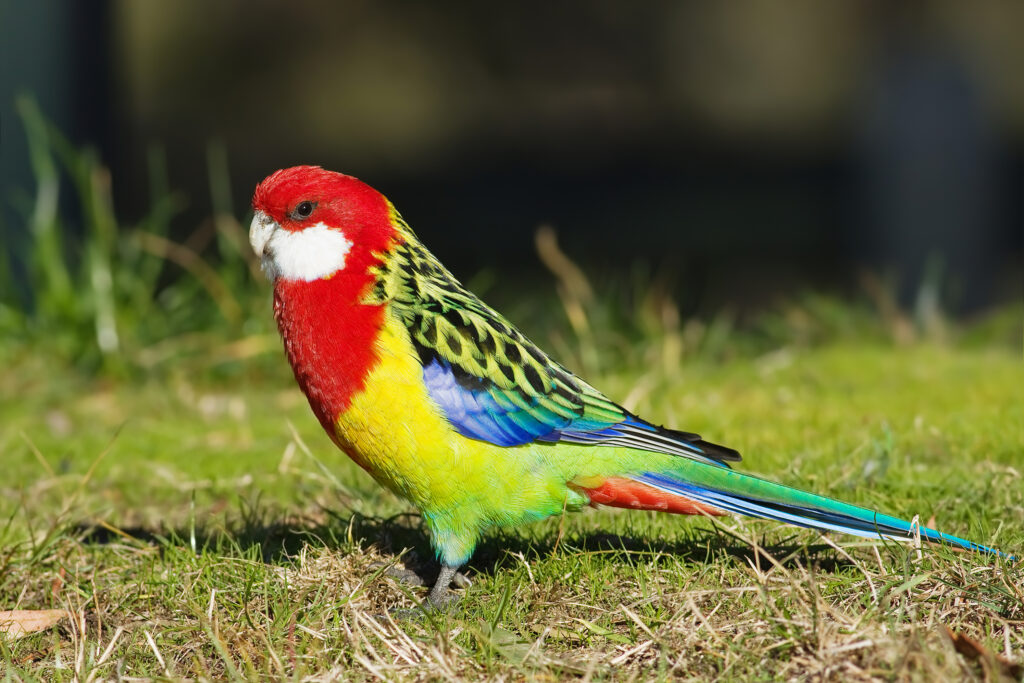
For my part, I now plan a small part of my day around his visits. I will not try to tame him with food offerings because this is the bush after all, and feeding wild birds is ultimately harmful to them by dulling their food gathering instincts. It is also a bourgeois activity–throwing spare nutrition at other sentient beings. How gauche! Be that as it may, I look forward to his visits and wonder why he is alone, since Rosellas are flock birds. Maybe he too was cast aside by his flock? Could it be that he just got too weird for them?
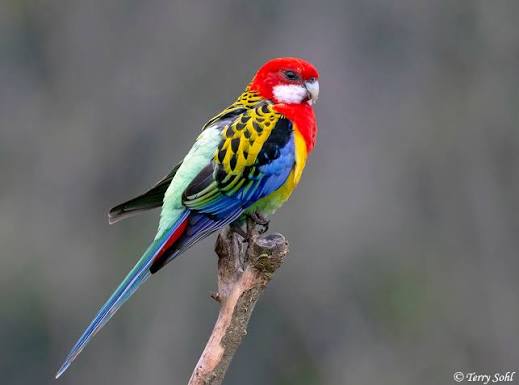
Or is that the weirdness in me projecting onto him? These are the type of things I never used to think about before, but now I do. On the upside, if this is the extent to which I am losing my grip, in comparative terms the slide is not too bad–yet.
In any event I write this in order to unsaddle myself from the loneliness void that I have been riding as of late. It will pass, as it always does when I see my NZ family again on their short visits to the old homestead. Better to let things out than to keep them bottled up, as they say.
‘Cause that is what really makes men get weird.