Sacred illusions

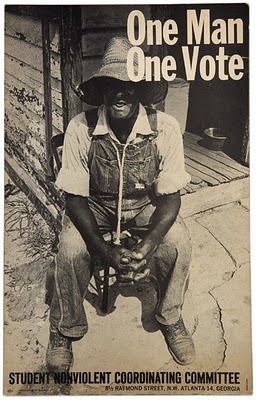
one man one votePita Sharples has severely undermined his own and his party’s credibility with his Race Relations Day speech criticising “one person, one vote”. As a minister in a democratic government, he has taken aim at one of democracy’s fundamental symbolic virtues, in such a way as to give the impression he (and his party) are anti-democracy. After years of fighting for the voices of mana whenua to be heard in democratic politics on strong principled grounds, Sharples seems now to have accepted the extreme right’s framing of that representation as antithetical to democracy.

Let’s just be clear: “one person, one vote” is no sort of actual democracy, it is an illusory ideal which persists only in hearts and minds, placed there by bold principles and the stirring oratories brought by democratic leaders of old looking to appeal to something bigger than they were. Even our present democracy, which is a very great deal closer to the ideal than the original American system, is pretty far from “one person, one vote” at a functional level. For a start, we have two votes. Even if you had one, what sort of vote would it be: first-past-the-post, where you’re at the mercy of geography; or single-transferable, where you’re not sure until after it’s all over who your vote actually got counted for; or what? For another thing, you can be a person and not have a vote — people under 18 don’t, prisoners convicted of serious offences don’t (and that could soon include all prisoners). There are more, but I won’t go on — the point is that “one person, one vote” is symbolic, not literal.

But neither are Sharples’ objections literal, they are symbolic. In the non-literal sense, what “one person, one vote” means is the opportunity for equality of input into the electoral process — whether that be by one or two votes, in a big electorate or a small one. What happens after that is democracy in action. In this regard, an electoral system which pays at least some regard to the principle of “one person, one vote” is a minimal bound for a modern democracy (though there are others also). Sharples’ criticism is that this isn’t enough — that democracy should be about equality of outcome rather than input. I agree — and I think very many other people do as well. Making democracy work takes much more than votes. But when it’s framed in the way he has framed it, this sort of discussion is political poison, because it attacks the heart of our political culture. This “race-based” framing of mana whenua political representation has been expressly developed in order to make those things seem indefensible in a liberal democratic context. Sharples has swallowed the hook, and instead of continuing to defend the Māori Seats and mana whenua representation on the existing and well-proven grounds (that it’s necessary for the establishment and maintenance of tino rangatiratanga, guaranteed by the Treaty) he has made a declaration which amounts to “yeah, they’re anti-democratic: so?” The most ridiculous aspect of it is that the existing mechanism which is so reviled complies with the principle of “one person, one vote”: electors on the Māori roll get get the same vote as anyone else, the only difference is in how they cast it. There is equality of input to the democratic process by Māori at the electoral level — it’s elsewhere in the process which is the problem.

I’ve argued before that the core symbolic and philosophical stuff of modern democracy is liberalism of one brand or another. No mainstream political concern can hope to win a democratic mandate without founding a lot of its agenda in liberalism. The symbolism of “one person, one vote” is crucial to this orthodoxy. Charles Elder and Roger Cobb, in The Political Uses of Symbols presented a typology of political symbols in the American context, organised into “political community” symbols which express political values at the highest level (“America”, “The Flag”, “The Constitution”); through “regime” symbols which express the political values of the current orthodoxy (in this case, American democracy, not a specific administration — the examples given are “The Presidency”, “Congress”, and “One Person, One Vote”); and three classes of “situational” symbols which express particular policy or administrational preferences of lesser affect (“The Reagan Administration; “gun control”, etc.) The higher up Elder and Cobb’s typology you go, the greater the degree of political consensus on the values imbued in a particular symbol. Nobody in American politics gets anywhere if they stand against “America”: the task of politics in that context is to convince people that what you stand for is “America”. “One person, one vote” is pretty high up that symbolic ladder. It is an illusion, but it’s a sacred illusion.

Every party in New Zealand’s parliament at present, except one, lays claim to this broad liberal tradition in one way or another. That one party which does not is the māori party. That is not to say that their agenda isn’t broadly liberal in function, but that it’s largely that way for non-Western-liberal philosophic reasons. This is the māori party’s great electoral purpose: to normalise an indigenous political-philosophical tradition. But they can’t do so this way, by attacking the liberal orthodoxy’s sacred illusions, the bedrock values held even by those who would never dream of calling themselves liberals. The māori party, more than any other, must recognise the value of “one person, one vote” as part of the history of democracy working for downtrodden minorities rather than against them, and adopt this as part of its own political basis.

As libertarians have discovered, if you don’t really believe in democracy it’s best not to bother with it — then you get to maintain whatever you claim as high moral ground and leave the actual business of governing to those who lack your unshakeable principles. But that’s not what the māori party is about. They do believe in democracy; they do recognise the importance of engagement and compromise and consensus, and they do plenty of work toward it, and a misguided outburst like this one puts it all in jeopardy. “Race-based” is National’s catch-cry from just a few short years ago, and they will take any encouragement given them to reach out to New Zealand’s conservatives, who are already distrustful of the māori party. It will force Labour further down the path of attacking the māori party to try to recapture the centre ground, rather than encouraging cooperation and the mending of fences. Most critically, it could create a backlash against the very mechanism Sharples seeks to save, generating opposition to the Māori seats his party needs for its survival, and which exist only by the pleasure of the Pākehā majority whose sacred illusions he has slighted.

While it should have been underway already, the māori party must now redouble its efforts to appeal to voters outside the Māori electorates, and prepare to live in a world without them.

L

Impunity, freedom and student body politics

fat_boy_slim_-_youve_come_aJust before the end of the university term last year, Peter McCaffrey and ACT On Campus gave the Victoria University of Wellington Student Association an object lesson in how democracy works. They successfully passed a resolution that VUWSA make a select committee submission in support of Roger Douglas’ Education (Freedom of Association) Amendment Bill (making student association voluntary) despite various machinations employed by the VUWSA members and officeholders there. These events were well documented in text by Jenna Raeburn and in video with a ridiculously triumphal soundtrack (irony noted by felix).

The fundamental problem of non-democratic (and poor-quality democratic) political systems is that they shelter those in power from the consequences of their actions. Authoritarianism (and authoritarian communism in particular) is deleterious not so much due to the economic failings of the system (such as the economic calculation problem) as due to the fact that in such systems there exists no mechanism to force, require or even encourage the leadership to act in its peoples’ interest. I’ve written a lot about the power transfer problem of orthodox Marxist pragma, and this is an aspect of it. When the leadership is invested with the monopoly power and authority to suppress a counter-revolution, how do you ever get them to relinquish it?

The effect of impunity is similarly evident in other fields; particularly in commerce, where the customary opposition of the terms “freedom” and “regulation” are little more than straw soldiers in a propaganda battle. Peter Drahos and John Braithwaite have written at length about the extent to which so-called free trade mechanisms such as TRIPS are instruments of international coercion more than they are of international trade, and how almost the entire intellectual property system of the modern world has been so thoroughly captured by existing rightsholders that it now functions as a form of privatised regulation by asserting near-impassable barriers to entry into the information marketplace. This suppresses competition, promotes the establishment and maintenance of cartels between existing participants, and all this breeds impunity, where participants have no (or few) reasons to develop their products and services to suit their users’ needs, and so they develop them to suit their own needs. The results are everywhere; for instance, in the fact that people are compelled to purchase Microsoft software with most new computers although they might hate and despise it, or simply not need it; or in the fact that those same users, having reluctantly purchased Windows since there are no easily-accessible alternatives (those having been shut out of the market years ago by patent thickets, bundling, cross-licensing, and so on) are then locked into using proprietary media formats, players, content distribution and communication systems with (in some cases well-known) surveillance functions and which are designed to restrict a users’ rights to their own hardware, content and communication, so that the system — and users’ participation in it — works in the provider’s interest, rather than the interests of its users.

That example is just one with which I’m familiar. Much more socially and economically important examples exist; particularly around medical development and crop research. But the point is that this whole system, billed as being about “freedom”, does not mean freedom for users so much as rightholders’ freedom from the need to cater to their users without fear of someone else eating their lunch.

Returning to student body politics. When a student union compels fees from its students, and when students who disagree with the union’s agenda are unable to withdraw their support, what incentive is there for the union to represent the interests of the student body? The political consequence of that system is a student body politic so complacent due to impunity in charge of millions of dollars a year in revenue that it literally cannot organise a SRC vote to save itself.

I am no great supporter of VSM; I view the threadbare rhetoric of “freedom” employed by Douglas, McCaffrey and so on with a jaundiced eye. I don’t believe people should simply be able to “opt out” of their society if they don’t like it, and I accept that the loss of revenue which will result from the (almost certain) passage of Douglas’ bill will place much of the genuinely good work student unions do in jeopardy. But the integrity of political systems is more important than discrete policy outcomes, and to be perfectly frank VUWSA, for its rank incompetence and duplicity in the face of legitimate challenge, deserves to be humiliated in this way.

I hope that the lesson about how democracy works will be well understood — that is: unless people make it work, it doesn’t. CSM as currently implemented promotes apathy and idiocy in student body politics, to a greater extent than it would exist in any case. That is bad for student body politics, and it’s bad for students. It depresses the quality of candidates and policy, and reduces the system to a comic farce which many students are justifiably ashamed of (if they care about it at all). Much better, for me, would be the the genuine politicisation of student politics, with groups organising and campaigning on their positions, winning a mandate and executing it, as in national and local body politics. If ACT on Campus want to campaign on “letting you keep more of your money”, let them do so, and good luck to them. (Of course, they have been, and it hasn’t been working out for them, so the parent party has resorted to regulation in the name of freedom. Plus ça change.)

So in my view the current threats to compulsory student unionism is largely the fault of the student unionists and their sense of entitlement to membership dues without the need to prove the value of their work to those who pay for it. The Douglas bill, while it will likely prove deleterious to the good work student unions do, may have a silver lining in that it will enforce greater discipline and competence upon student politicians, and require them to prove to their constituents that the work they do is actually valuable in order to win a mandate. If the work they do is genuinely valuable, as they say it is, such a mandate should be winnable. May they go forth and win it.

L

Postscript: Go and submit!
Select committee submissions on the bill close on 31 March 2010. Whatever your views, make them known. As I’ve said, I think it’s likely to pass (bloc support from ACT, National and UF), but that shouldn’t prevent you from making your views known. Incidentally, I approve of the relatively impartial editorial line taken by Salient, the VUWSA magazine. Especially given that this august [sic] organ depends on CSM for much of its funding, this is a bold and principled decision. Well done Sarah Robson.

The EAB becomes the NAB.

 It has recently been announced the the External Assessment Bureau (EAB) has become the National Assessment Bureau (NAB), combining external as well as internal intelligence assessments in the lead up to the 2011 Rugby World Cup (although I believe that the claim that the move was needed to better coordinate threat assessment for the World Cup is a bit specious, especially since the recommendation for an integration of internal and external intelligence assessment came from a report by former Foreign Affairs Secretary Simon Murdoch that was commissioned independently of the World Cup bid). There has long been dissatisfaction with the lack of coordination between New Zealand internal and external intelligence collection and analysis agencies (to say nothing of their professionalism and competence). Although there is a veritable alphabet soup of such agencies, there was until now no single unit that coordinated all of the intelligence flows into one coherent assessment brief for the PM. Some believe that this rendered the EAB ineffectual because it was a duplication of resources (since all of the operational agencies also have analytic branches that formulate their own assessments). Others simply claimed that it was a waste of space because PMs usually dealt directly with the operational agencies themselves (since the PM is also the Minister of Security and Intelligence). Thus the options were to disband the EAB or refocus it. The government has chosen the latter course.

The important thing to note is that the EAB/NAB is an analytic group located in the Prime Minister’s cabinet, and is responsible for providing intelligence assessments for the PM.  It is not an intelligence-gathering (spy) agency even though it handles classified material. Yet, news that it has now assumed an internal focus along with its ongoing external assessment duties has alarmed civil libertarians and elements on the Left. The Greens put out a press release expressing concern over the move, with Keith Locke offering the humorous observation that the only area of growth in the public service seems to be the spy agencies.

Well, not quite. Although I respect Keith Locke’s position, I disagree that giving the revamped NAB an internal focus is a bad thing or that this reform signifies a growth of the spy apparatus. The NAB budget and those of the operational agencies have remained relatively consistent the last five years (after major increases post 9/11), and the NAB is not targeted to increase the number of personnel working within it (which means more responsibilities for the same number of people assigned to it). Hence all that has been done is to give the intelligence assessment unit with the PMs office access to more rounded intelligence streams from both internal and external security agencies so as to be able to better prepare unitary and coherent net security assessments for the PM. Before, the EAB only looked at foreign issues as fed to it by MFAT, the SIS, the GCSB, Customs, Immigration and the NZDF intelligence units. Now it will get streams from the Police, CTAG (Counter Terrorism Assessment Group, which is an inter-agency unit that does both internal and external terrorist assessment) and from the SIS/GCSB and the other mentioned agencies on internal issues of concern. That way the NAB can provide a more comprehensive picture of any given security matter to the PM, since often times threats have what is known as a “glocal” character–a mixture of global and local characteristics. Think organised crime and its potential nexus with terrorism….the “glocal” or “intermestic” overlap is broad and variegated

In a way the change makes the NAB the NZ equivalent of the US National Security Council (NSC)–the primary assessment agency working for the President/PM. It is an assessment unit, not an intelligence collection (operational) unit. It is full of analysts, not spies. With a 3 million dollar budget covering 30 people, it does not have the capacity to do anything other than read and assess what the operational branches provide them. From my perspective, were I to be offered a government job, this would be the best place to be (knowledge being power, etc.).

This is not to say that the announcement is worry-free. The troubling parts are: 1) whether this means that both internal and external intelligence assessments will  now be politicised, much as the Zaoui and Urewera 18 cases were; and 2) no Parliamentary consultation or inputs were done in the build-up to the change. Although the Murdoch report is correct (there was a need to rationalise the flow of intelligence to the PMs office), it might have been more transparent and democratic to run the proposed reform past the country’s elected representatives rather than to just do it by executive fiat. There are also issues of accountability, since the NAB is not required to deliver specific reports to the the Intelligence and Security Committee (such as it is) or Parliament in general (although it does maintain a web site and issues and annual report on the generalities of its mission). The latter is not an insurmountable obstacle, however, because the PM can be made to account for the actions of his cabinet.

Thus, unlike many of my learned counterparts on the Left and in politics, I do not see the revamping of the EAB/NAB as an assault on civil liberties or an expansion of the security apparatus. Instead I see it as an effort to streamline and lend coherency to what the PM receives as informed advice on matters of security and intelligence. Time will tell if I am correct.

Political Idealism trumps the Law.

The “Waihopai 3” have been acquitted. Their act of civil disobedience, which resulted in damage to one of the domes covering eavesdropping equipment at the Echelon Signals Intelligence (SIGINT) gathering station near Blenheim, was deemed by a jury of their peers to be justified because of their sincerely held beliefs that the listening post contributed to human suffering on a world scale.

This is a remarkable verdict. The Plowshares group clearly trespassed and clearly did damage to the dome (they cut through both a perimeter fence and then the dome in order to access its interior). But their motives clearly outweighed, at least in the minds of the jury, the criminality of their actions (the charge of burglary against them was a grave mistake on the part of the Crown). The defendants pleaded not guilty to the charges of trespass, burglary and criminal damage and left the court as free men and as an inspiration to other direct action activists discontented with the status quo. One wonders if this  decision will establish not only a legal precedent but also encourage others to follow suit in pursuit of anti-status quo objectives.

I must confess to being at a loss for an explanation. As I wrote in “A Brief Comment on Spy Bases and Civil Disobedience” over at Scoop, (http://www.scoop.co.nz/stories/HL0805/S00039.htm), active acts of civil disobedience involving direct action (as opposed to the passive act school of civil disobedience exemplified by Ghandi and followed by his adherents after he was murdered) are most often premised on the perpetrators willingly understanding that their actions are in violation of conventional law, and that their actions will be punished accordingly. More often than not they plead guilty in order to make their political case at sentencing, something that spares the taxpayer the court costs of defending the charges while at the same time providing a courtroom soapbox for dissemination of their claims. Seriously committed activists often/sometimes (depending who is talking) never reach trial because they die trying. None of that occurred in this case.

I am sympathetic to the Plowshares cause although I seriously disagree with their view of the Echelon network. I applaud their willingness to stand up for their beliefs, and their use of unconventional, yet basically peaceful means to make their case. But for the life of me I cannot understand why they were acquitted, and I fear that the verdict has opened a Pandoras Box of unintended and perhaps dangerous consequences. But then again, we are talking about activities that occurred in New Zealand, although to be honest, if this action merited acquittal, what does that say about the case against the Urewera 18, who did not trespass, damage or burglarise anything?

Imagine what the outcome would have been had the Plowshares engaged their direct action in the US, UK or Australia. I reckon the verdict would have been different, and the sentences severe.

Outsourcing Counter-Espionage.

The SIS recently released its 2008-2009 annual report. I will be analyzing it in further detail in a future “Word from Afar” column over at Scoop. However, I thought I would provide readers with a glimpse of one aspect of its activities that called my attention.

On page 14 (out of 29) of the report, in the section titled “Intelligence and Advice to Government,” under the heading “Counter-Espionage,” the following quote summarizes the SIS approach towards countering foreign espionage activities in NZ: “The Counter-Espionage (CE) efforts identifies and frustrates acts of espionage against New Zealand or New Zealanders. We give advice to internal and external stakeholders and disrupt, where appropriate and usually via a third party, espionage activities prejudicial to New Zealand’s national security” (emphasis mine).

Beyond the fact that the SIS does not mention whether, in fact, any foreign espionage actually occurred during the time period in question (I would assume that it did), much less the precise nature of such activities, two points in that sentence are worth noting. First, the mention of external stakeholders. Who might they be? It is obvious who the internal stakeholders are-the government and other NZ agencies. But who, exactly, are the external stakeholders? Who would have a “stake-holding” interest in foreign espionage activities in or involving NZ: Australia? France? The US? UK? Private agents/ies?

That brings up the second and more interesting point. The SIS claims that it usually disrupts foreign espionage via “a third party.” Again, who is this party or parties? We can assume that the SIS uses the Police, the GCSB (for electronic and technical counter-measures), the NZDF and perhaps Customs and other government security agencies as part of this effort (since it would be alarming if it it used just one third party for all of its counter-espionage “disruption” tasks). But does the reference to third parties include foreign governments and/or private or non-governmental agencies such as private security firms? Given that private security agencies have recently spied on environmental activists on behalf of  public and private corporations in NZ, it is not a stretch to wonder if this type of out-sourcing is also used by the SIS. Such a privatization of intelligence operations opens a potential cans of worms with regards to civil rights and the blurring of the lines between proper governmental authority and profit-driven interest. If indeed private agencies are used for counter-intelligence operations, who are they? Does that include foreign firms as well as NZ privateers (such as Xe, the re-branded name for Blackwater, which has its own intelligence and counter-intelligence branches)? Hence, an explanation as to who are these third parties appears to be in order (not that I expect that we will receive one).

Moreover, could it be possible that the SIS also contracts to foreign governments counter-intelligence tasks on NZ soil or on behalf of NZ “interests?” Is that not a violation of sovereignty? Or is it simply expedient to do so given NZ’s lack of capabilities in this field?  Does the public have a right to know about such things? More specifically, does the parliamentary committee on intelligence and security (all 5 members) have knowledge of who these third parties are? If so, are they content with the arrangement, and on what specific grounds (such as oversight and accountability)? Again, the questions raised by this simple mention in the SIS report are both numerous and troubling.

I will leave for the larger essay the implication that the SIS does not have the capability to engage in counter-espionage operations on its own, particularly in its human component. That is worrisome in itself, but also is the reason for the third party outsourcing.

The full report is here: http://img.scoop.co.nz/media/pdfs/1002/nzsisar09.pdf

More narrativium

A fortnight ago I wrote a post about how the government’s conduct in office makes them vulnerable to accusations of cronyism and a tendency to be vague about the boundary between the political and the personal. In the past week, two more events have come to light which fit this narrative.

The lesser of the two is former National minister Roger McClay winding up in court for claiming mileage and expenses from his non-profit employer when they were paid for by the parliamentary service. It’s a long time since he was in parliament, but the episode speaks to the character of senior National party members.

More egregious is the decision to appoint former National Deputy Prime Minister Wyatt Creech to stitch up Environment Canterbury, which makes a great one-two punch with the news that they want to appoint former National Prime Minister Jenny Shipley as Commissioner. Thanks to I/S at No Right Turn for joining these dots.

Christchurch Central Labour MP Brendon Burns has made his views pretty plain, and as a consequence, the scrutiny may discourage the appointment. That’s the thing about keeping an eye on cronyism: it enables an opposition to punish a government brutally for both its past and its current misdeeds, and it brings a level of scrutiny from the media and other public agencies which has a chilling effect on further misdeeds. Even aside from the partisan advantages this brings, that’s good for democracy either way. Of course, in order to take full advantage of this narrative, Labour has to come out and actually denounce Taito Phillip Field’s own corruption during his time as a Labour minister. That’d be good for democracy, too.

L

The limitations of N.8 wire, and how the political/policy talent bench is so thin.

As some may remember, I have been in NZ on a mix of research and personal business (truth be told, I am in NZ accompanying my partner on her research leave. The title of this post is her idea, with a hat tip to Brian Easton). As part of my project on the security politics of peripheral democracies (which has NZ as a case study), I have been interviewing a cross-section of people involved in political life both in and outside the Wellington beltway: politicians, journalists, academicians, policy analysts, community and political activists, opinion-makers, bloggers (!) and a few very smart friends. Oh, and Lew (albeit informally, over a very enjoyable lunch). Some of those conversations were illuminating, some were lucid, some were disappointing and some, well, forgotten in the haze of a very good time.

Notwithstanding the fogginess of my recollection of a few of those conversations, one coherent theme has emerged. NZ’s so-called “number 8 wire attitude,” supposedly evidence of Kiwi pragmatism and resourcefulness, is actually the logical result of a chronic and perpetual lack of planning and an ex post, ad hoc approach to policy-making. One interlocutor phrased it as “policy by anecdote,” where politicians relate stories they have been told as proof that similar approaches elsewhere can work just fine in NZ (such as the repeated mention of Singapore as a developmental model for NZ because it is a small island economy, ignoring the obvious fact that it is authoritarian, stratified and in fact a state capitalist welfare state rather than a true market economy). Others simply noted a lack of vision, or a lack of reward for innovation. Some blamed the NZ character, others colonialism and imperialism, partisans blamed their opponents, analysts blamed the politicians, politicians blamed the analysts, journalists blamed the tabloidisation of news ….the range of explanations ran the gamut.

Be they on the political Left or Right, time and time again these keen observers of and participants in NZ politics and policy-making, some with storied histories of commentary and involvement in the debates of the last 25 years, noted that NZ political elites continually re-invent the wheel, adopt quick fix or knee-jerk responses and plaster solutions to concrete problems, and generally go with the cheapest option regardless of the complexities and repercussive consequences involved. There appears to be no full appreciation of the consequences of any given policy decision (including the shift to market economics and adoption of a nuclear-free status), and whatever sucess NZ has in the global arena is more a product of luck and chance (fortuna) rather than strategic planning and foresight (virtu). The current government is no exception and in fact is considered by this select crowd to be one of the shining examples of the syndrome.

In the view of these participant/observers, the situation is compounded by the lack of political and policy talent available. Beyond those who move overseas, the problem is generally seen as a product of the dunmbing down of political and historical knowledge in schools, media disinterest in anything other than scandal, risk-adverse cultures and abject mediocrity within the public bureaucracy, a gross lack of intellectual acuity and political nous on the parliamentary backbenches, and a general attitude of the part of both policy bureaucrats and politicians that “she’ll be right” regardless of what they do. That, and a loss of ethics, principle and integrity amongst the NZ elite in general.

I invite readers to ponder and comment on this. Given the range of people I have spoken to, this is not just the comments of a small group of disgruntled personalities. At another time I will reflect on what was specifically said about those people and agencies involved in security policy–that the MoD is less than useless, that the NZDF is a bastion of short-sightedness and political ignorance, that the NZSIS is a politicised, vengeful, incompetent cesspit, that the EAB is worthless and deservedly ignored, that the Police are as much a problem as they are a solution to domestic security issues, that the advice of all of these agencies and others are routinely ignored by the politicians in government at the moment–the list of grievances is long but the consensus amongst the consiglieri is strong: NZ needs a serious change in political and policy-making culture if it is going to really “punch above its weight” rather than simply muddle along–or be relegated to the lower tiers of democratic capitalist development within the next ten years.

Unmix these metaphors

ace_of_spades

In the last couple of weeks the government’s pistons have started pumping. After a year’s worth of blue-boiler-suited (non-unionised) engineers making sure the sleek machine is primed and fuelled and oiled and ready for action, the engine has roared into life and is beginning to blow out a cloud of smoke in preparation for a screaming burnout. As it proceeds, the party has dealt its Labour opposition a decent hand of cards; you could say they’ve built a house of them, which the mighty engine is in danger of knocking down. After campaigning on a platform of returning integrity and effectiveness to the Beehive, the public are beginning to get an inkling that the emperor may lack a couple of vital articles of clothing.

hughes12

Returning to cards: the strongest card is the decision to mine the conservation estate, announced last year. Classic crony capitalism is shaping up to be the trump suit. The other cards: Hide‘s junket timed to coincide with a wedding; Harawira‘s trivial but more spectacularly mismanaged junket; Key‘s and McCully‘s mining shares; revelations that Brownlee lied about being lobbied by mining interests which would stand to benefit from his actions as a minister; attacks against Radio NZ which benefit Joyce‘s former business partners; attacks against ACC which benefit the insurance industry to which the party has well-known ties; and ministers Heatley, Brownlee and Groser who were pinged pinching from the public purse for their own private pleasure.

corporate_crooks

Mining the conservation estate is the keystone of all this, the central peg on which the whole thing hangs — because the allegations cannot be denied outright, only explained. Particularly in the cases of Key and McCully’s shares, the value of the conflict of interest is irrelevant. It probably should be relevant, but it isn’t really: either there is a conflict of interest, or there isn’t. While there would be (much) more hay to be made from a large shareholding, that isn’t necessary to plant the seed of doubt in the rich loam of the electorate’s and the media establishment’s collective consciousness.

plant-a-tree

Likewise the other issues: trivial, but they ring true and all riff on the same themes. Hide’s transgression was much more significant in actual material terms than was Harawira’s, but Harawira was punished much more harshly because he failed to recognise the symbolic matter in play: both required abject, cringing apologies. Key’s “sloppy” uranium shares, which he was “too busy running the country” to recall owning is reminiscent of John McCain‘s failure to remember how many houses he owned, for which he was rightly crucified by a country staring down the barrel of an economic crisis which would cost many people their only home. The smiling visages of the three ministers on the front page of the Dominion Post: the Minister of Economic Development who can’t be trusted with a credit card; the Fisheries Minister who likes to splash out on feeds of kaimoana for his mates and party hangers-on; the Minister for Climate Change Negotiations wining and dining the former National minister who was an integral part of the Copenhagen negotiation, and now heads the environmental branch of the OECD apparatus. And so on. These are symbolic issues, not matters of real actual wrongdoing. But the government can’t just dismiss them outright, it needs to argue the merits, and by the time you have to argue the merits on this kind of thing, you’ve probably already lost the symbolic battle. This sort of behaviour passes the public’s sniff-test about how they think about the National Muldoon gave us. And it fits the narrative of the modern Key/Brash-era Nats as wheeler-dealers, well-heeled fat-cats with a finger in every pie, feathering the nest for their secretive plutocrat mates. It brings to mind an iceberg, with the tiny, trivial transgressions peeking above a glassy surface which hides the monstrous mass below.

iceberg

The job of the opposition is to tie all this into a coherent story which people can understand and feel in their guts: a myth that trips off the tongue at the pub or in the line at the football, in the front seat of a taxi, sitting on the bus, standing around the water-cooler or in the smoko room — in as many variations as there are poets of the NZ electorate.

This post cannot end without a mention of the good work the folks at The Standard — particularly Eddie — have done toward assembling the blocks for this narrative pyramid. I am often critical of them, and their tendency toward partisan hackery frustrates me, but they do a lot of good work, and it shouldn’t go unrecognised. They’ve covered all the main aspects listed here, but they can only go part of the way: now is for the opposition parties and their allies to lurch into action. All the cards have not yet been dealt; the ace of spades may yet be seen. Although the raw material is all there, it won’t be easy writing this story — just ask Lockwood Smith, who only by dogged repetition and worrying away at the Taito Phillip Field bone managed to raise the electorate and media’s awareness of that actual and manifest case of political corruption. But this is the opposition’s job, and if they can untangle the metaphors and lay them out for people in simple, appealing, resonant terms, they will gain some traction. Then perhaps, they too will begin to belch smoke and fire, and roar down the road to victory.

L

You are only as good as your opposition.

During the years that Labour was in government, I was appalled by the lack of serious discussion on security and defense issues (or any other issue, for that matter). Instead of asking hard questions of the government about defense policy, strategic focus, the military budget, reasons for the TSA,  Zaoui’s unfair inprisonement, the competency and purview of the NZSIS, oversight of police intelligence etc., National barked about petty scandals and personal pecadillos. Its strategy was to snipe from the sidelines, make no statements of policy or specific commitments to substantitive changes, and to wait until labour self-destructed and/or voters got tired of its incumbency and opted for change for changes sake. The strategy worked.

The irony is that now in opposition, Labour has not been successful at doing the same. That affords National the political space to continue to test the winds on issues like taxation, defense, educational standards, climate change and mining of national parks without firmly commiting to a course of action. It appears to be a strategy of policy by stealth osmosis: simply announce a proposal, let the pundits and informed public debate the merits, go with the flow and shift the specifics depending on how public opinion polling shows the response to be, or offer rhetorical placations while leaching through the opposition. In some cases (GST perhaps?) that may means abandoning the proposal entirely but in most cases it means saying one thing, speaking of compromise, but doing another without meaningful concession.

The irony is that by being so wishy-washy, National prevents Labour from making political capital out of its opposition. Although it seems to have tried to copy National’s playbook for the opposition–snipe, nag, whine but not commit to a policy or course of action that would directly confront National’s proposals in antithetical terms–which may be due to a belief that the first year in government belongs to the government, with the proper role of opposition being to offer no real alternatives until closer to election day, the strategy has failed Labour.

In an interview Selwyn Manning (of Scoop fame) noted that Key and his advisors could afford to do do policy reversals and utter vague, retractable promises because there was “no cabinet-in-waiting” on Labour’s side of the aisle. The insight is spot-on: with no quality opposition pressing hard, specific, technical questions in a number of policy areas on it, and with the  front and back-benches surrounding Phil Goff populated by lightweights or mealy-mouthed opportunists,  National has the luxury of being indolent. It is the default option, the easy way out, basking in the afterglow of the “anything but Clark” attitude of many in the electorate. Given the abysmal state of political reporting in general, and majority disinterest in, if not distaste for politics, this gives National a triple dose of insulation from sharp questions and better alternatives.

However, that may have begun to change. Evidence suggests that at least some voters who shifted their preferences to National out of a sense of fatigue with Labour, or who thought that National would be more moderate and pragmatic than dogmatic in its approach to policy-making, are beginning to reconsider their support for the Key government (including those who may still like Mr. Key personally).  That in turn offers an incentive to Labour to stop playing the attack poodle role in opposition and to develop some policy bite along with its bark. For that to happen, though, Labour needs a shake up in its ranks, not so much in its Leadership (after all, is there really an attractive alternative other than Mr. Goff?), but in the seats that have potential ministerial rank should they return to power. Best to do that sooner rather than closer to election time, in order to stake out an alternative policy platform that erodes National’s policy justifications while firming up the expertese and debating skills of the pretenders to cabinet jobs in a future Labour government.

NB: I write this after a week in NZ after a year-long absence. My thoughts are preliminary and driven by my alarm at the absence of serious policy discussions, or perhaps better said, the absence of coverage of policy discussions in the NZ media (the kerfuffle over Key’s stake in a uranium mining outfit being an example of political coverage that hammers the margins rather than the meat of its policy implications). That is either a sign of mass comfort or apathy (or both), none of which makes for an informed public and accountable government. After all, a government may only be as good as the quality of its opposition, but government and opposition are only as good as what the informed public demand. At this juncture, I see little public demand and limited quality depth in NZ political society.

False mean

idt20070815
I never get tired of this cartoon. It reminds me what being a Sensible Moderateâ„¢ is not at all about.

The latest proposal for the foreshore and seabed is PC gone mad — put it in the public domain, but not really the public domain per se, and everyone’s happy. Or not unhappy. Hopefully. And if they are, they’re just being unreasonable.

It’s blending half the kittens in order to avoid tackling the complex and painful political and historical problem which the issue represents. It’s the cop-out option which aims to offend nobody, but really only achieves that goal on the surface. It’s like a butchered mihi delivered by someone who’s not really well-meaning but wants to appear so, ignorant of the fact that wairua matters.

This has Peter Dunne’s fingerprints all over it, and he’s the one tying himself in verbal and conceptual knots: “no one owns it but we all own it and so therefore we all have an interest in it”. The unnamed sources are no better, arguing that since there are no rights, “everyone’s rights are protected.” You couldn’t make this up.

The trouble is that Māori — and the māori party in particular — don’t just want everyone to get along; they want their historical claims to the takutai moana tested and upheld, or negotiated to mutual satisfaction. This will necessarily include some positive determination as to the ownership status of those stretches of land and sea, from which will derive other rights — to development, to exercise kaitiakitanga, and so on — which can and should be negotiated on the merits of the original determination. This proposal commits a similar legal fallacy to the Foreshore and Seabed Act, in reversing the legal test as to customary title. Prior to the FSA all land was presumed to be in customary ownership unless alienation could be proven — the FSA reversed this, forcing claimants to prove that their rights to the foreshore and seabed had not been alienated. To be satisfactory to Māori, any resolution must address this change, and either provide recourse to that pre-existing legal framework, or a negotiated framework which satisfies all parties. Māori don’t want a Clayton’s solution in which they gain nothing except by losing slightly less than the Foreshore and Seabed Act took away, while things literally do not change for Pākehā.

Let me be clear, though: I don’t so much mind the function of the proposal as its justification. I prefer Hone Harawira’s proposal — full customary title, inalienable, with guaranteed access for all New Zealanders in perpetuity — but recognise that this is probably too ambitious in reality. A solution which mimics public domain in function while resolving the question of customary title could work. But this isn’t such a proposal. There is no short-cut, no easy way out of this. It’s time for both major parties to stop avoiding this fact, and face up to the responsibilities — and the opportunities — these historical times present.

Update: Yikes, even Marty G sort-of agrees with me!

L