Indigenous socialism with a Chilean face.

Happy New Year everyone.

I am, by personal and professional inclination, loathe to speculate on uncertain future events. On the other hand, I have an abiding interest in distant political processes even though I cannot claim particular analytic expertise when considering them. Thus, when watching the recent Chilean presidential election from afar, I found myself wanting to offer a view while being unable to realistically give a prediction or even outline what the future course of affairs will be beyond the inauguration of Chile’s new president in March. An exchange with a long term reader (Edward Main) during the holiday break led me to look closer into the matter. With that in mind, I hope that readers will take the following as an interested bystander’s observations rather than an expert reflection of the ongoing turn of events.

Five days before Christmas and 51 years after Salvador Allende was elected as the first socialist president in Chilean history, Gabriel Boric re-made history as the youngest candidate (35) to win that office. A former student activist and Congressman from Punta Arenas in Tierra del Fuego, he first rose to prominence during the 2011 student demonstrations against increases in tuition fees at the University of Chile, then again during the 2019 anti-austerity demonstrations precipitated by a 30 percent rise in public transportation prices in Santiago. In 2021 Boric rode a wave of votes (the most since mandatory voting laws were dropped in 2012) to win 56 percent of the national ballot (although less than 60 percent of eligible voters cast ballots, leaving a large pool of disaffected or apathetic voters in the political mix). He campaigned on an overtly socialist, specifically anti-neoliberal agenda, promising to tax the super rich, expand social services and environmental conservation programs, promote pension reform and universal health care and make the fight against income inequality his main priority in a country with the worst income gaps in South America.

Boric’s victory is remarkable given the tone of the campaign. His opponent, Jose Antonio Kast, embraced Trumpian-style rhetoric and openly said that he would be the “Bolsonaro of Chile” (Jair Bolsonaro is the national-populist president of Brazil who emulates Trump, now hospitalized because of complications from a knife attack in 2018). He railed against Boric as someone who would turn Chile into Cuba, Venezuela, Nicaragua, or even Peronist Argentina. Kast is the son of a card-carrying Nazi who fled to Chile after WW2 and built a sausage-making business that served as a launching pad for his children’s economic and political ambitions during the Pinochet dictatorship (the Kast family dynasty is prominent in Chilean rightwing circles). Jose Antonio Kast openly praised the strongman and his neoliberal economic policies during his presidential campaign while downplaying the thousands of murdered, tortured and exiled victims of Pinochet’s regime. He won a plurality of votes in the presidential primaries but lost decisively in the second round run-off between the two largest vote-getters.

Surprisingly given their vitriol during the campaign, both Kast and the outgoing president, rightwing Sebastian Pinera (son of a Pinochet Labour Minister who happened to be a friend of my father) extended their congratulations and offers of support to the newly elected Boric, who will be inaugurated in March. This makes the transition period especially important, as it may offer a window of opportunity for Boric to negotiate inter-partisan consensus on key policy issues.

Boric’s election follows that of several other Leftist presidential candidates in Latin America in the last two years, including those in Bolivia (a successor to the illegally ousted Evo Morales), Peru (an indigenous school teacher and teacher’s union leader) and Honduras (the wife of a former president ousted by a coup tacitly backed by the Obama administration). Centre-Left presidents govern in Belize, Costa Rica, Guyana, Mexico, Panama, and Suriname. A former leftwing mayor of Bogota is the front runner in this year’s Colombian presidential elections (now in Right-center hands) and former president Lula da Silva is leading the polls against Bolsonaro for the October canvass in Brazil. These freely elected Leftists are bookended on one end by authoritarian counterparts in Cuba, Nicaragua and Venezuela and on the other by right-leaning elected governments in Brazil, Ecuador, El Salvador, Guatemala Paraguay and Uruguay. Argentina, which has a Peronist government, straddles the divide between Left and Right owing to the odd (and very kleptocratic) populist coalition that makes up the governing Party. 

One might say that the region is relatively balanced ideologically speaking, but with an emerging tilt to the moderate Left as a result of the exposure by the pandemic of inherent flaws in the market driven economic model that dominated the region over the last thirty years. It remains to be seen if this political tilt will eventuate in the type of socio-economic reforms upon which the successful Leftists candidates campaigned on. What is pretty clear is that it will not be a repeat of the so-called “Pink Tide” that swept the likes of Hugo Chavez and Evo Morales into power in the early 2000s, both in terms of the extent of their policy ambitions and the style in which they rule. This most recent wave still retains many characteristics of the much lauded (by the Left) indigenous socialism of twenty years ago, but it is now tempered by the policy failures and electoral defeats that followed its heyday. It is indigenous not only because of its origins in populations that descended from pre-colonial civilizations (although there is still plenty of indigena in Latin American socialism), but because it originates in domestic and regional ideological thought and practice. Within this dual sense of the phrase, it is moderation and pragmatism that appears to differentiate the original 2000s versions from what is emerging today.

Western observers believe that the regional move Left may give China an opportunity to make strategic inroads in the hemisphere. That view betrays ignorance of the Latin American Left, which is not driven by any Communist orthodoxy or geopolitical alignment with China (or even blind hatred of the US), but instead is a very heterogenous mix of indigenous, environmental, trade union, student and social movement activism that among other things is progressive on gender and sexuality rights and climate change. This is not a Leninist/Maoist Left operating on vanguardist principles of “democratic centralism,” but instead a fluid amalgam of modern (industrial) and post-modern (post-industrial) causes. What that means is, since China is soon to overtake the US as the primary extractor of raw materials and primary goods from Latin America and has a checkered environmental record as part of its presence as well as a record of authoritarian management practices in Chinese controlled firms, it is by no means certain that it will be able to leverage emergent elected Latin American Left governments in its favor. 

In fact, given what has been seen in its relationship with the three authoritarian leftist states, many of the elected Leftist governments may prove reticent to deepen ties with the Asia giant precisely because of concerns about a loss of economic independence (fearing debt diplomacy, among other things). The Belt and Road initiative may seem an attractive proposition at first glance, but it can also serve to choke national sovereignty on the economic as well as diplomatic fronts. Boric and his supporters are very much aware of this given problems that have risen from Chinese investment in the Chilean mining and forestry sectors (such as disputes over water and indigenous land rights).

This is worth mention as a relevant aside. Chile’s economy remains primary good export oriented. The bulk of its GDP is derived from mining, forestry, fishing and agriculture, including value added products such as wine. Recently, lithium deposit exploitation has exploded across the so-called “lithium triangle” comprised of northwest Argentina, southwestern Bolivia and northeaster Chile, with Chinese investors jockeying for position with Western interests in the development of salt flat mining in which lithium is extracted for commercial purposes in an increasingly e-based global economy. Such mining is environmentally damaging and machine intensive, so the benefits accrued go to those who can afford to invest in it rather than to workers associated with it. Chinese firms compete on the bottom line, not on social responsibility.

The political economic consequences of this dependence on primary good exports fuelled by foreign investment follows a larger pattern whereby Chilean economic elites resist public investment in anything other than service industries connected to primary good supply chains and ancillary businesses (input and output logistics, highways, port infrastructure and the legal and commercial apparatuses attendant to them). This has made for a significant urban-rural divide when it comes to economic opportunity, something that is not alleviated by the proliferation of universities and private education institutions during the last 30 years. In fact, the Chilean economic model discourages investment in value-added technological innovation that would undermine the primacy of the primary good export sector as the dominant economic, social and political constellation. Instead, Right governments have used low export tax policy as a means of promoting “trickle down” opportunity to those inserted into the main productive sectors while Left leaning governments have used tax revenues on exports as a means of alleviating social inequalities and dysfunction while expanding the service sector middle class. As the 2019 demonstrations made clear, neither has worked. Boric’s presidency has that as its fundamental conundrum.

That brings up the internal political dynamics at play in Chile. For Boric to succeed he will have to deliver on very high public expectations. For that to happen he needs to navigate a three-cornered political obstacle course.

In one corner is his own political support base, which is comprised of numerous factions with different priorities, albeit all on the “Left” side of the policy agenda. This include members of the Constitutional Convention charged with drawing up a replacement for the Pinochet-era constitution still in force (something that was agreed to by the outgoing government in the wake of the 2019 protests). The Convention must design a new constitution with procedural as well as substantive features. That is, it must demarcate governance processes as well as grant enshrined rights. The balance between the two is tricky, because a minimalist approach that focuses on processes and procedures (such as elections, office terms and separation of powers) does not address what constitutes a “right” in a democracy and who should have rights bestowed upon them, whereas an encompassing approach that attempts to cover the universe of social endeavour risks granting so many rights to so many people and agencies that it overwhelms regulatory processes and becomes meaningless is real terms (the latter happened with the 1988 Brazilian constitutional reform, which covers a plethora of topics that have been cumbersome to enforce or implement in practice).

Not all of the delegates share the gradualist, incremental, moderately pragmatic approach to policy agenda-setting that Boric espouses, and because they are independently elected, it signals that the future of Chile resides in a very much redesigned approach to governance. It is even possible that delegates consider moving from a presidential to a parliamentary democracy given that Chile already has a very splintered party system that requires the building multiparty coalitions to form majorities in any event. Whatever is put on the table, Boric will have to urge delegates to exercise caution when it comes to sensitive issues like taxation, military funding and autonomy, land reform (including indigenous land rights, which have been the source of violent clashes in recent years) etc., less it provoke a destabilizing backlash from conservative sectors. In light of that and the strength of his election victory, it will be interesting to see how Boric approaches the Constitutional Convention, how his Cabinet shapes up in terms of personnel and policy orientation, and how his support bloc in Congress responds to his early initiatives.

The latter matters because Boric inherits a deeply fragmented Congress that has a slim Opposition majority but which in fact has seen all centrist parties lose ground to more extreme parties on both the Right and Left. Even so and depending on the issue, cross-cutting alliances within Congress currently transcend the usual Left-Right divide, so it is possible that he will be able to use his incrementalist moderate approach to advance a Left-nationalist project that keeps most parties aligned or at least does not step on too many Party toes. On the other hand, the fact Boric won 56 percent of a vote in which only 56 percent of eligible voters went to the polls means that his policy proposals could easily be rejected on partisan grounds given the lack of unified majorities on either side of the ideological divide.

In another corner are the political Opposition, dominated by Pinochetista legacies but increasingly interspersed with neo-MAGA and alt-Right perspectives (what I shall call Chilean nationalist conservatism). The Right has a significant presence in the Constitutional Convention so may be able to act as a brake on radical reforms and in doing so create space for Boric and his supporters in the convention to push more moderate alterations to the magna carta (each constitutional change requires a 2/3 vote in order to pass. This will force compromise and moderation by the drafters if anything is to be achieved).

The fact that Pinera and Kast, scions of the Pinochetista wing (they do not like that name and disavow ties to the dictatorship other than support for its “Chicago School” economic policies), readily conceded and offered support to Boric may indicate that the neoliberal wing of Chilean conservatism understands that many rightwing voters may have abstained from voting or voted for Boric on economic nationalist grounds as a result of Pinera’s adherence to market-oriented policies that clearly were not alleviating poverty or providing effective pandemic relief even as the upper ten percent of society continued to capture an increasing percentage of national wealth. This could mean that the Chilean Right is less disloyal to the democratic process as it was in the run up to Allende’s election and therefore more committed—or at least some of it is—to trying to reach compromises with Boric on pressing policy issues. In that sense their presence in the Constitutional Convention may prove to be a moderating influence. 

Conversely, in the wake of the defeat the Chilean Right might fragment between Pinochetista and newer factions, which will mean that conciliation with government initiatives will be difficult until the internal power struggle within the Right is resolved, and then only if it is resolved in a way that marginalizes Trump and Bolsonaro-inspired extremists within conservative ranks. After all, what sells in the US or Brazil does not necessarily sell in Chile. The most important arena in which this internal dispute will have to be resolved is Congress, where extreme Right parties have taken seats from traditional conservative vehicles. On the face of it that spells trouble for Boric, but the narrow Right majority in Congress and Pinochetista disdain for their extreme counterparts may grant him some room for manoeuvre.

In a very real sense, Boric’s political fate will be determined in the first instance by the coalition politics within his own support base as well as within the Right Opposition.

The final obstacle is getting the Chilean military on-board with the new government’s project. Of the three factors in this political triumvirate, the armed forces are both a constant and a wild card. They are a constant in that their deeply conservative disposition and institutional legacies are unshakable and guaranteed. This means that Boric’s government must tread delicately when it comes to civil-military affairs, both in terms of national security policy-making but also with regard to the prerogatives awarded the armed forces under the Pinochet constitution. Along with the Catholic Church and landed agricultural interests, the Chilean armed forces are one of the three pillars of traditional Chilean conservatism. This ideological outlook extends to the national paramilitary police, the Carabineros, who are charged with domestic security and repression (the two overlap but are not the same).

Democratic reforms (such as allowing female combat pilots) have been introduced into the military, especially during the tenure of former president Michelle Bachelet as Defense Minister, but the overall tone of civil-military relations over the years since democracy was restored (1990) has been aloof, when not tense. Revelations that Pinochet and other senior offices had received kickbacks from weapons dealers produced a paratrooper mutiny in 1993, and when Pinochet returned from voluntary exile in the UK in 2000 he was greeted with full military honors in a nationally televised airport ceremony. This rekindled old animosities between Right and Left that saw the military high command issue veiled warnings about leaving sleeping dogs lie. Until now, that warning has been heeded.

The role of the military as political guarantor and veto agent is enshrined in the Pinochet constitution. So is its receipt of a percentage of pre-tax copper exports. These powers and privileges have been pared down but not eliminated entirely over the years and will be a major focus of attention of the Constitutional Convention. With 7,800 kilometers of land bordering on three states that it has had wars with and 6,435 kilometers of ocean frontage extending out to Easter Island (and all the waters within that strategic triangle), the Chilean military is Army-dominant even if the other two service branches are robust given GDP and population size (in fact, the Chilean military is one of the most modernized in Latin America thanks to its direct access to copper revenues). What this means is that the Chilean armed forces exhibit a state of readiness and geopolitical mindset that is distinct from that of most of its neighbors and which gives it unusual domestic political influence.

The Chilean armed forces High Command continues to operate according to Prussian-style organizational principles that, if instilling professionalism and discipline within the ranks, also leads to highly concentrated and centralized decision-making authority in the services Flag-rank leadership. Moreover, although the Prussian legacy has diluted in recent years (with the Army retaining significant Prussian vestiges, to include parade march goose-stepping, while the Air Force and Navy have adored UK and US organizational models), the Chilean Navy is widely seen as a bastion for the most conservative elements in uniform, with the Air Force encompassing the more “liberal” wing of the officer corps and the Army and Carabineros leaning towards the Navy’s ideological position. The effect is to make democratic civil-military relations largely hinge on the geopolitical perspectives and attitudes of service branch leaders towards the elected government of the day.

Successfully navigating these three obstacle points will be the key to Boric’s success. The groundwork for that is being laid now, in the period between his election and inauguration. Should he be able to reach agreement with supporters and opposition on matters like the scope of constitutional reform and short-term versus medium-term fiscal and other policy priorities in the midst of a public health crisis, then his chances of leaving a legacy of positive change are high. Should he not be able to do so, then his attempt to impart a dose of pragmatism and moderation on Chilean indigenous socialism could well end in disarray.

We can only hope that for Boric and for Chile, the country advances por la razon y no por la fuerza.

The incremental shift.

In the build up to the Xmas holidays I was interviewed by two mainstream media outlets about the recently released (December 2021) Defence Assessment Report and last week’s 5 Eyes Communique that included New Zealand as a signatory. The common theme in the two documents was the threat, at least as seen through the eyes of NZ’s security community, that the PRC increasingly poses to international and regional peace and stability. But as always happens, what I tried to explain in hour-long conversations with reporters and producers inevitably was whittled down into truncated pronouncements that skirted over some nuances in my thought about the subject. In the interest of clarification, here is a fuller account of what is now being described as a “shift” in NZ’s stance on the PRC.

Indeed, there has been a shift in NZ diplomatic and security approaches when it comes to the PRC, at least when compared to that which operated when he Labour-led coalition took office in 2017. But rather than sudden, the shift has been signalled incrementally, only hardening (if that is the right term) in the last eighteen months. In July 2020, the the wake of the ill-fated Hong Kong uprising, NZ suspended its extradition treaty with Hong Kong, citing the PRC passage of the Security Law for Hong Kong and its negative impact on judicial independence and the “one country, two systems” principle agreed to in the 1997 Joint UK-PRC Declaration on returning Hong Kong to Chinese control. At the same time NZ changed its sensitive export control regime so that military and “dual use” exports to HK are now treated the same as if they were destined for the mainland. 

In November 2020 NZ co-signed a declaration with its 5 Eyes partners condemning further limits on political voice and rights in HK with the postponment of Legislative elections, arrests of opposition leaders and further extension of provisions of the mainland Security Law to HK. The partners also joined in condemnation of the treatment of Uyghurs in Yinjiang province. In April 2021 Foreign Minister Nanaia Mahuta gave her “Dragon and Taniwha” speech where she tried to use Maori allegories to describe the bilateral relationship and called for NZ to diversify its trade away from overly concentrated partnerships, using the pandemic supply chain problems as an illustration as to why.

She also said that NZ was uncomfortable with using the 5 Eyes intelligence partnership as a public diplomacy tool. I agree completely with that view, as there are plenty of other diplomatic forums and channels through which to express displeasure or criticism. The speech did not go over well in part because NZ business elites reacted viscerally to a large tattooed Maori woman spinning indigenous yarns to a mainly Chinese and Chinese-friendly audience (and other foreign interlocutors further afield). From a “traditional” (meaning: white male colonial) perspective the speech was a bit odd because it was long on fable and imagery and short on “hard” facts, but if one dug deeper there were plenty of realpolitik nuggets within the fairy dust, with the proper context to the speech being that that Labour has an agenda to introduce Maori governance principles, custom and culture into non-traditional policy areas such as foreign policy. So for me it was the balancing act bookended by the trade diversification and 5 Eyes lines that stood out in that korero.

Less than a month later Prime Minister Ardern spoke to a meeting of the China Business Summit in Auckland and noted that “It will not have escaped the attention of anyone here that as China’s role in the world grows and changes, the differences between our systems – and the interests and values that shape those systems – are becoming harder to reconcile.” That hardly sounds like appeasement or submission to the PRC’s will. Even so, Mahuta and Ardern were loudly condemned by rightwingers in NZ, Australia, the UK and US, with some going so far as to say that New Zealand had become “New Xiland” and that it would be kicked out the 5 Eyes for being soft on the Chinese. As I said at the time, there was more than a whiff of misogyny in those critiques.

In May 2021 the Labour-led government joined opposition parties in unanimously condemning the PRC for its abuse of Uyghur human rights. The motion can be found here.

In July 2021 NZ Minister of Intelligence and Security Andrew Little publicly blamed China-based, state-backed cyber-aggressors for a large scale hacking attack on Microsoft software vulnerabilities in NZ targets. He pointed to intolerable behaviour of such actors and the fact that their operations were confirmed by multiple Western intelligence agencies. He returned to the theme in a November 2021 speech given at Victoria University, where he reiterated his concerns about foreign interference and hacking activities without mentioning the PRC by name as part of a broad review of his remit. Rhetorical diplomatic niceties aside, it was quite clear who he was referring to when he spoke of state-backed cyber criminals (Russia is the other main culprit, but certainly not the only one). You can find the speech here

In early December 2021 the Ministry of Defense released its Defense Assessment Report for the first time in six years. In it China is repeatedly mentioned as the major threat to regional and global stability (along with climate change). Again, the issue of incompatible values was noted as part of a surprisingly blunt characterisation of NZ’s threat environment. I should point out that security officials are usually more hawkish than their diplomatic counterparts, and it was the Secretary of Defense, not the Minister who made the strongest statements about China (the Secretary is the senior civil servant in the MoD; the Minister, Peeni Henare, spoke of promoting Maori governance principles based on consensus and respect into the NZDF (“people, infrastructure, Pacifika”), something that may be harder to do than say because of the strictly hierarchical nature of military organisation. At the presser where the Secretary and Minister spoke about the Report, the uniformed brass spoke of “capability building” based on a wish list in the Report. Let’s just say that the wish list is focused on platforms that counter external, mostly maritime, physical threats coming from extra regional actors and factors rather than on matters of internal governance.

Then came the joint 5 Eyes statement last week, once again reaffirming opposition to the erosion of Hong Kong’s autonomy and its gradual absorption into the Chinese State. Throughout this period NZ has raised the issue of the Uyghurs with the PRC in bilateral and multilateral forums, albeit in a quietly diplomatic way.

I am not sure what exactly led to NZ’s shift on the PRC but, rather than a sudden move, there has been a cooling, if not hardening trend during the last eighteen months when it comes to the bilateral relationship. The decision to move away from the PRC’s “embrace” is clear, but I have a feeling that something unpleasant may have occurred in the relationship (spying? influence operations? diplomatic or personal blackmail?) that forced NZ to tighten its ties to Western trade and security networks. The recently announced UK-NZ bilateral FTA is one step in that direction. AUKUS is another (because if its spill-over effect on NZ defense strategy and operations).

What that all means is that the PRC will likely retaliate sometime soon and NZ will have to buckle up for some material hardship during the transition to a more balanced and diversified trade portfolio. In other words, it seems likely that the PRC will respond by shifting its approach and engage diplomatic and economic sanctions of varying degrees of severity on NZ, if nothing else to demonstrate the costs of defying it and as a warning to those similarly inclined. That may not be overly burdensome on the diplomatic and security fronts given NZ’s partnerships in those fields, but for NZ actors deeply vested/invested in China (and that means those involved in producing about 30 percent of NZ’s GDP), there is a phrase that best describes their positions: “at risk.” They should plan accordingly.

Along with the New Year, there is the real possibility that, whether it arrives incrementally or suddenly, foreign policy darkness lies on the horizon.

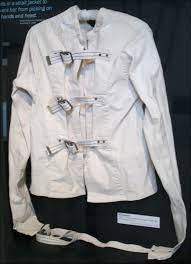
The unshackled straitjacket.

In the 1980s the political scientist Jon Elster wrote a book titled Ulysses and the Sirens where he uses the Homeric epic The Odyssey to illustrate the essence of democracy. In book 12 of The Odyssey, the enchantress Circe warns Ulysses of the dangers posed by the mythical Sirens, purportedly half women and half bird but in reality monsters, whose songs were irresistible to men and who endeavored to lure wayfarers to their deaths on the rocky cliff faces of the Siren’s island. Circe advised that only Ulysses should listen to their “honeyed song,” and that his men should plug their ears with beeswax while he be lashed to the mast of his ship after his men plugged their ears, and that even though he cried and begged them to untie him once he came to hear the Siren’s alluring tones, that he only be freed once his ship was far our of reach of the Siren’s voices. So it was, as Ulysses heeded her advice, made safe passage in spite of the temptress’s calls, and he and his crew proceeded on their decade-long voyage home from the Trojan Wars to Ithaca. As it turns out, it did not end well for all, which is a story for another day. (Thanks to Larry Rocke for correcting my initial mistaken read about their fate).

Elster’s use of the story is designed to highlight three related things. First (the minor point, about the false promise of ethereal options), that, as with the Sirens, while there may be many seemingly attractive alternatives to the inefficiencies of democratic governance, the perils imbedded in purported alternatives outweigh the (mythical) rewards that they claim to confer. Second, that a good leader prizes wise counsel and heeds their advice. Third (the major point), that democracy at its essence is a self-limiting (self-binding) form of governance in which incumbents of political decision-making positions deliberately refrain from making full or untrammeled use of the powers vested in them by virtue of the popular vote. The underpinning belief is that political decision-makers will adhere in principle to self-limitation because they understand and share Elster’s view of democratic governance: it is not just about the means of power acquisition and subsequent use once it public office; it is about (self) restraint in the exercise of power in pursuit of the common good. Power is exercised not for personal or partisan again. It is exercised for the benefit of all. And for that to happen, self-restraint is necessary.

Unfortunately, humans are not those most righteous of creatures so in recognition of human fallibility in practice limits are placed on public authority not by voluntary adherence to principle but by institutional mores, norms, laws and conventions. Constitutions are the highest expression of that enforced restraint in the exercise of power, and systems of checks and balances between different branches of government are the means by which self-restraint is imposed and enforced. The key to adherence is that all actors accept the importance of self-limitation in the first place and understand that the constitutional/institutional rules are designed to encourage collective compliance in the face of temptations to pursue individual or partisan agendas and policies inimical to the common good.

I call this the “straitjacket” theory of democratic politics. Politicians voluntarily accept the limitations on their powers imposed by systems of checks and balances when assuming public office. The understand why self-restraint is the essence of democracy, along with consent and compromise in the pursuit of second-best solutions that, if not satisfying everyone all of the time, satisfy enough people most pf the time so that the political system because self-reproducing (and re-generating!) on its own terms. There is a material as well as social-cultural component to this grand contingent compromise (i.e. expectations have to be met in order for collective consent to continue to be given), but the combination of universal laws and institutional norms and mores promote a type of political socialization in which self-restraint is seen and promoted as a civic virtue, not a weakness, because it promotes exactly that type of compromise when it comes to policy outcomes.

The rule of self-restraint applies to all political actors in a democracy, local and national, in government or in Opposition. The temporal boundaries of electoral cycles means that all actors get to compete again at some pre-determined and relatively short-term date. That means that losers today can become winners in the near future, and that current winners need to deliver on their promises if they are to win again. The implicit bargain is clear: governments do not press full advantage even if widely popular and Oppositions do not go full contrarian on every government initiative. That encourages moderation in debate and policy outcomes because adopting extreme, polarized positions violates the law of self-restraint and in so doing inhibits compromise on collective outcomes. If sides go for broke today when it comes to policy, they may find themselves on the receiving end of equally extreme counter-measures down the road, with the vicious cycle continuing from there. Recognition of this fact–that today’s political behavior casts a shadow on the future for better or worse–is another contributor to the adoption of self-limiting strategies by political actors. This is not just a matter of principle. It is a matter of pragmatism for those committed to operating under democratic governance paradigms.

From a cynically Marxist perspective, the need for political self-restraint in pursuit of contingent compromises rests on the fact that otherwise the rapacious and undemocratic nature of capitalism would be exposed by the zero-sum politics of its political puppets. Over the long term that augers poorly for capitalist political control and the social and institutional advantages that go along with it, so moderation and self-restraint under democratic institutions are, as Lenin noted, the best “political shell” for capitalism. The idea is to not get too greedy or partisan when it comes to profit-taking and political competition and to macro-manage the economy consensually so that profit-driven or partisan avarice is constrained. That way capitalist hegemony can be disguised and maintained rather than exposed and challenged. Someone who appreciated this fact in a non-Marxist way was John Maynard Keynes, and the phrase “Keynesian compromise” is often used describe his approach to political economy.

Whatever the interpretation, for today’s liberal democracies and a few of the newer experiments in that political form, this has been the unwritten political understanding that overlaps the social compact between governed and governors. There are always exception to the rule and moments in which principle falls hard on the sword of hypocrisy, opportunism and privilege, but in the main the enduring feature of democracy has been that those in positions of power do not take full advantage of the authority vested in them. In may not always be a matter of voluntary choice for them, but they understand why the straitjacket must be worn.

Those days are over. In the US but also in other parts of the world where US-style politics has leached like a cancer onto local democratic politics (think Brazil, but even places like Chile, the UK or Italy), politicians not only do not adhere to self-binding strategies but no longer accept the straitjacket premise. Whether a matter of principle or pragmatism, the shadow of the democratic future holds no sway over them and so self-restraint or limitation in the use of their authority is no longer considered a virtue. Instead, they work hard to use procedural, institutional and legal maneuver, aided and abetted by external forces such as direct pressure and gaslighting campaigns channeled via lobbyists, partisan and social media, to undermine and subvert the system from within—in other words, to unshackle the straitjacket, political Houdini-style in order to impose their partisan and personal preferences on society.

Hence the rise of a phenomenon known as the “constitutional coup” whereby disloyal Oppositions attempt to impeach government incumbents on false or flimsy grounds (again, Brazil is a sad example). Now there has appeared something known as the “procedural coup” where one (or two) branches of government attempt to usurp and override the decisions of another, effectively voiding the balance-of-power premise inherent in constitutional systems such as the US. And it was exactly that goal that motivated Trump and his supporters on January 6—to usurp the power of Congress to declare a winner in last year’s presidential race.

That has been laid out in gory detail by the investigations into the January 6 insurrection-turned-coup attempt in the US, where it has been revealed that there were orchestrated links between the White House, Republicans in Congress and insurrectionists to violently impede the certification of the Biden presidential victory. It is seen in Republican attempts to stack state election offices with partisans and to gerrymander and engage in voter suppression programs that skew elections in their favor. It is seen in GOP and rightwing activist groups coercively attempting to gain control of local government offices and school boards via impeachment and recall campaigns waged against serving incumbents. It is seen in the insanity of GOP House members spouting Qanon and other MAGA extremist beliefs in and outside the debating chamber, including threats of physical harm to Democrat colleagues. None of this is an exercise in self-restraint and clearly is an attempt to loosen the fetters of institutional noms and practices.

The US is the exemplar of democratic corrosion but it is not alone. Already the same type of tactics—cries of election fraud before elections are held in places like Brazil and Chile; instigation of civil, including militia resistance to duly constituted government mandates such as in Australia; attempts to delegitimize government with calls to arrest, try, imprison or execute public officials because of their use of public health orders to impose pandemic control measures, all with a wink and nod from opposition politicians, such as in Aotearoa–the very edifice of global democratic governance is being shaken from without and within.

It is the latter threat that is the concern here because a stable democracy is impervious to seditious conspiracies. In contrast, unstable or fragile democracies whose political leadership is ridden with ideological extremists, charlatans, grifters, profiteers and other unscrupulous self-interested maximizers of egotistic opportunities, in which the fundamental law of self-restraint no longer applies, is fertile ground for authoritarian usurpation from within or without.

It is quite possible that the US is too far gone down this path to avoid a civil war. But if democracy is going to be saved there as well as elsewhere, then we must return to the foundational principles upon which that political edifice rests: that those in public office practice self-restraint in the use of their authority and abide by the the imposed limits placed upon that authority by the system of checks and balances inherent in the tripartite division of government powers. Only then can we return to the type of horizontal as well as vertical accountability that a political system built on self- or imposed restraint can uniquely offer the society that it governs.

Chinese influence and American hate diffusion.

Over the last decade concerns have been raised about Chinese “influence operations” in NZ and elsewhere. Run by CCP-controlled “United Front” organisations, influence operations are designed to promote PRC interests and pro-PRC views within the economic and political elites of the targeted country as well as Chinese diaspora communities. The means of doing so is transactional and convertible by cash. United Front organisations put money and operatives into the local political system exploiting loopholes or laxities in political finance laws and candidate selection processes, and buy majority ownership of or board membership in strategically placed local firms. This greases the skids for more “Chinese-friendly” perspectives in economic and political decision-making circles.

In parallel, local Chinese language media (both Mandarin and Cantonese) are purchased and their editorial orientation turned towards the CCP party line. This ensures that dissenting opinions are eliminated from outlets that cater to newer Chinese language immigrants, something that, for example, is evident in the coverage of Hong Kong over the last few years. Along with outright intimidation campaigns directed at critics, dissidents and so-called malcontents, this ensures that what is presented to local native and expat populations about China is what the CCP wants it to be. With large scale (now temporarily suspended due to Covid restrictions) immigration of CCP-approved or affiliated mainlanders on student and business visas and the emergence of ethnic Chinese lobbying groups, this ensures that pro-PRC narratives come to dominate how it is spoken about in targeted countries.

The practical goal is to present homogenous and uniform pro-CCP views among expat communities and to re-orient local elite perspectives and material interests towards a more China-friendly position, both in terms of international affairs as well as Chinese domestic politics. The broader strategy is to use the “Achilles Heel” of liberal democracy–freedoms of expression, association and movement–to subvert democratic societies from within. The approach is top-down and largely elite-focused, but has trickle down effects throughout the targeted society. Most importantly, it works. One only has to look at the wedding of NZ political and economic elite interests to those of Chinese agents and entities to understand why. Think Don Brash, John Key and Jenny Shipley as poster children for that type of unholy union, but Labour has, shall we say, some baggage of its own in this regard.

However, there is another malign foreign influence operating in NZ as well as places like Brazil and Italy. It arrives as a type of cultural or ideological diffusion and it is propagated by US-based non-state political actors like Steve Bannon and his Counterspin media channel as well as the Qanon conspiracy network, Alex Jones and Infowars plus assorted other alt-Right and neo-fascist outlets channeling anti-government and anti- “Deep State” views of the likes of the Proud Boys, Oathkeepers and Three Percenters. Rather than the top-down and elite-centric approach adopted by Chinese influence operators, US cultural-ideological diffusers use “alternative media,” direct marketing (such as by distributing leaflets and cold calling with false information) and social media (including using political blogs, fake websites, plus trolls and bots on large platforms) to exploit pre-existing social fault lines and amplify newer divisions in a targeted society. In doing so they copy and adapt Russian (and now Chinese) psychological operations models of disinformation, misinformation and false-flagging. They prey on gullibility, ignorance and/or hate and their currency is rage: rage born of frustration with life opportunities or personal grievance; rage against institutions and processes (i.e. the “system”), rage against past injustices and/or modern offences or slights; rage against assorted ‘others” challenging status and privilege; outrage at offences big and small–the sources of rage are both individual and collective and with enough coaching and channeling can be marshalled into a powerful force for good or evil. Cultural-Ideological diffusers such as Bannon travel on the dark side.

The approach is bottom-up and grassroots in orientation, and works along what Gramsci called the trenches of civil society to push a counter-hegemonic notion of “good sense” against the hegemonic conception of “common sense” purveyed by the mainstream (elite-controlled) media. These trenches include social movements as well as social institutions in which historical and contemporary grievances can be combined into a civil resistance front.

In the contemporary NZ context, that means uniting anti-vaccination/mask/lockdown sentiment with anti-tax, anti-environmental, anti-1080, Christian conservative, libertarian, gun-rights and assorted other rightwing views as well as outliers like Maori sovereignty proponents. To cultivate grassroots resistance it uses local activists as well as “Astroturf” entities such as the purportedly farmer-led group known as the “Groundswell Movement,” which in fact is a creation of the urban rightwing (and National Party-aligned) Taxpayers Union. The rhetoric of cultural-ideological diffusion protests is imported to a large extent and at times seemingly at odds with local issues: witness the proliferation of Trump and MAGA-supportive references amongst current anti-government demonstrators. More worryingly, unlike most of the NZ protest movements of the past, the rhetoric and actions of local protestors influenced by cultural-ideological US agitators is tinged with overt hints of violent punishment, retribution and revenge against the government, “liberals,” and even the mainstream media (which if anything has shown itself to be largely uncritical and mild Fourth Estate that is mainly interested in generating clicks or viewership based on controversies-of-the-day and scandal). References to NZ authorities as Nazis deserving of Nuremburg-style trials lend an ominous tone to the recent exercises in civil rights, to which can be added the open displays of racist, misogynist and neo-fascist sentiment among those involved. That may be a more “natural” form of discourse for a deeply polarised country like the US with a long record of political violence, but it has no organic roots in NZ’s otherwise vigorous culture of civil disobedience and public protest.

Less the smorgasbord approach to forming anti-government movements seem hopeless as a political strategy or praxis (and hence dismissible), the key to its success is to use cultural-ideological diffusion tactics to create a temporary coalition of convenience, not a long-term alliance. It’s immediate purpose is to sabotage the government from without, not undermine it from within. It uses contemporary political conflicts such as the debate about pandemic mitigation to sow social and political division while exploring the same Achilles Heel as do the Chinese influence operators (the freedoms of speech and protest in particular). Ultimately, its long-term end is similar: to undermine public faith in the liberal democratic system as given in order to impose a more authoritarian order of some sort. But for the time being, the focus is on the short-term: sow unrest, promote sedition and usurp authority using social media to import US-sourced cultural-ideological framing of “wedge” issues in order to do so.

Gramsci of course wrote thinking about Left political praxis in Mussolini’s Italy, so there is a certain irony in the adoption of his thought by the likes of Steve Bannon. But that is part of why Bannon is an evil genius: he knows what works and does not care from where good strategic ideas come from.

Not surprisingly local security “experts” have jumped up to state the obvious that things might get violent if the anti-government rhetoric continues to escalate along the lines mentioned above. Raising public consciousness of this possibility is a good thing. More helpfully, the NZ intelligence community has warned that a terrorist attack is possible within a year or so and that it will likely come in the form of a “lone wolf” emerging out of the anti-vaxx/mask/lockdown movement (although the process of radicalisation and likely profile of such an individual has not been specified). The media is covering itself as a target of extremists because some of its members have been threatened by anti-government bullies, and politicians, with good reason, are increasingly concerned about their security given the vitriol directed at (some of) them. While it is laudable to focus attention on the security threat angle implicit in recent protests, a deeper understanding of the methodology and mechanics of cross-border non-State cultural-ideological diffusion is in order, especially when it is subversive in intent. Unless one understands what the likes of Bannon want to do when directing their malevolent gaze on Aotearoa and who are the most susceptible to the entreaties of their perverse siren song, then all that can be done is to react to rather than pre-empt whatever harm is headed our way.

Our security authorities need to be cognisant of this fact, but as a stable and largely peaceful society, so do we.

Random Retweets: Pandemic mitigation.

Introduction.

I have recently seen a trend whereby people turn their twitter ruminations into op eds and even semi-scholarly essays such as those featured on Spinoff, Patreon or The Conversation. It makes sense to develop ideas from threads and maximise publication opportunities in the process, especially for academics operating in a clickbait environment that has now crept into scholarly journals. I am not immune from the thread-to-essay temptation, although I have tended to do that on my work page and stick to subjects more pertinent to my work because the twitter account I use is a business rather than personal one.

With that in mind and because I have not posted here for a while, I thought it opportune to edit and repurpose some twitter thoughts that I have shared on the subject of what might be called the security politics of Covid mitigation in New Zealand. Below I have selected, cut and pasted some salient edited tweets along that analytic line.

Security aspects of pandemic politics.

There are traditional national security threats like armed physical attack by external/internal enemies. There are non-traditional national security threats like rising sea levels and disasters. Anti-vaxxers are a non-traditional national security threat that must be confronted.

Social media is where state and non-state actors (criminal organisations, extremist groups) link with local agitators in order to combine resources for common purpose. Viral dis-/misinformation and influence campaigns designed to socially destabilise and politically undermine public faith in and support for liberal democracies like NZ are an example of such hand-in-glove collaboration. If left unchecked it can lead to mass public disorder even when seemingly disorganised (e.g. by using “leaderless resistance” tactics). This growing “intermestic” or “glocal” threat needs to be prioritised by the NZ intel community because otherwise social cohesion is at risk. On-line seditious saboteurs must be identified, uncovered and confronted ASAP. That includes “outing” the foreign-local nexus, to include state and non-state actor connections.

If people are going to complain about Chinese influence operations in NZ, then they would do good to complain about US alt-Right/QAnon influence operations in NZ as well. Especially when the latter is manifested in the streets as anti-vac/anti-mask protests. The difference between them? PRC influence operations attempt to alter the NZ political system from within. US alt-Right/QAnon influence operations seek to subvert it from without. Both are authoritarian threats to NZ’s liberal democracy.

In the war against a mutating virus initially of foreign origin NZ has a 5th column: anti-vax/maskers, religious charlatans, Deep State and other conspiracy theorists, economic maximisers, venal/opportunistic politicians, disinformation peddlers and various selfish/stupid jerks. Their subversion of a remarkably effective pandemic mitigation effort should be repudiated and sanctioned as strongly as the law permits. Zero tolerance of what are basically traitors to the community is now a practical necessity (along with a 90% vaccination rate). Plus, as a US-NZ dual citizen who had his NZ citizenship application opposed by some hater, I would like to know who let in the rightwing Yank nutters now fomenting unrest over masks/vaxes/lockdowns/mandates etc. They clearly do not meet the good character test.

A counter-terrorism axiom is that the more remote the chances of achieving an ideological goal, the more heinous will be the terrorist act. Anti-vax and conspiracy theorists using Nazi/holocaust analogies to subvert democratic pandemic mitigation strategies are akin to that.

Long-term community well-being requires commitment to collective responsibility and acceptance of individual inconvenience in the face of a serious public health threat. It is part of the democratic social contract and should not be usurped for partisan or personal gain. Elephant in the room: when cultural mores contradict and undermine public health scientific advice but for political reasons cannot be identified as such. If true, partisan-focused approaches to Covid is not just an Opposition sin. The virus does not see culture or tradition. Anti-vax/mask views are no excuse to violate public health orders. Likewise economic interest, leisure pursuits, religious or secular beliefs no matter how deeply held. Ergo, cultural practice cannot override the public good. Collective responsibility is a democratic obligation.

Those that set the terms of debate tend to win the debate. In politics, those that frame the narrative on a subject, tend to win the debates about it. By announcing a “Freedom Day” the govt has conceded the debate about pandemic mitigation. The issue is not about human freedom. It is about managing public health risk in pursuit of the common good. Using “freedom” rhetoric injects ideology into what should be an objective debate about prudent lockdown levels given uneven vaccination rates, compliance concerns, mental health and economic issues. Bad move.

9/11, forever wars and the end of liberal internationalism.

In the years that followed the post 9/11 US invasions of Afghanistan and Iraq, I wrote several essays about how, wittingly or wittingly, Osama bin Laden had successfully employed the well-known guerrilla tactic known as the “sucker ploy” on a grand scale. The sucker ploy is a tactic by which guerrillas commit an outrage or stage a provocation of some sort that draws a disproportionate response from the military that they are fighting, thereby shifting popular support from the latter to the former. A classic example is for guerrillas to shoot at passing military vehicles or aircraft with small arms fire from a village, then retreat into the surrounding countryside while the military responds by annihilating the village and its occupants. 

When the US stayed in Afghanistan after the Taliban were ousted from government and al-Qaeda was eliminated from its territory (end of 2002), and then invaded and occupied Iraq under the false pretense that Saddam Hussein was an ally of al-Qaeda and was going to use weapons of mass destruction on the West or allow al-Qaeda to do so, it took the sucker’s bait. It embarked on a global “war on terrorism” that saw the US and others expend much blood and treasure in places like the Sahel and Sub-Saharan Africa, Syria and Libya, Mesopotamia down to Mali, Kenya and many more places in between and beyond, stretching to Europe and Australasia. The US expended trillions of dollars and thousands of lives on these “forever” or “endless” wars, feeding a relentless military-industrial complex while spinning off the militarisation of US policing and some sectors of civil society that is creating the conditions for civil war, hints of which have already been seen over the last couple of years.

Whatever goodwill existed towards the US in the immediate wake of 9/11, it gradually dissipated as a result of US foreign policy recklessness and arrogance over the next twenty years. Yet partisan logics of saving face by “staying the course” or, if that is not enough, patriotically respecting the sunk costs invested rather than simply “cutting and running” locked the US into continuing the folly of pursuing forever wars in far-off places with little strategic value or which posed no existential risk to the country. Those wars have not resulted in any significant change favorable to the geopolitical position of US but have contributed to the polarisation of its internal politics.

Meanwhile US adversaries like the PRC and Russia built and rebuilt their military forces into peer competitors of the US and expanded their spheres of influence. Mostly as a result of US bungling, Russia is now the most important extra-regional power in the Levant and North Africa and is poised, however ironically, to become a major interlocutor between the Taliban and the global community. Chinese economic and diplomatic influence is world-wide in scope and its aggressive military presence is now a constant in East and Southeast Asia as well as along its land borders. Other actors such as North Korea, Iran and Turkey have been emboldened by perceived US weakness while traditional US allies fret about the stability of the international order without its central presence as a stabilizing force.

The Great Satan has seemingly turned into a Paper Tiger.

It gets worse. Across the world authoritarianism has replaced democracy as the dominant political form. Rather than embrace democracy as an antidote to the hatreds that produced 9/11, autocrats of all types have taken advantage of the post 9/11 moment to impose their rule. In another irony, this includes the US, which nurtured the conditions that led to the election of a bigoted sociopathic narcissist to the presidency and the unleashing of long pent-up hatreds within the body politic. “America First” in reality means “America in Retreat” into neo-isolationism and xenophobic defenses of borders, Anglo-Saxon Christians within those borders, economic nationalism and, when it comes to foreign relations, coddling of foreign dictators who shared the former president’s biases and/or his transactional view of how politics should be conducted. The Obama interregnum notwithstanding (and even he seriously compromised on the original idealism of his foreign policy perspective, which won him a Nobel Prize), the US continued to cast a blind eye on the misdeeds of “friendly” dictatorships like the Egyptians, Jordanians, Saudis or Emiratis while barking about those in Iran, Cuba, Syria and Venezuela (and even there, with relatively little bite).

US political/diplomatic leadership is on the wane at home and abroad. The truth is inescapable: since 9/11 the US has been in decline, for the most part due to its own ignorance and excesses.

Needless to say, there were other intervening factors and variables that contributed to the slow-moving, partial success of bin-Laden’s strategy. Sure, he was not around to see it come to fruition. Sure, there has not been a global awakening of Islamicism that threatens the socio-economic and political parameters of most established nation-states. Wahhabism and Salafism are not the dominant sects in the Muslim world. So bin-Laden’s strategy failed in that it did not produce the specific results that he desired. But 9/11 did set into action a chain of events that has left the international community very different that what was before, with the US diminished and divided and no longer the undisputed global “hegemon.” That must be acknowledged.

A key result of this decline is the collapse of the concept of liberal internationalism as a guiding foreign policy principle in the US. This principle, which long enjoyed bipartisan support in US foreign policy circles and which is premised on the notion that the combination of market economies and democratic governance is the best political-economic form (regime), was thought to be imposable by external actors—meaning the US and its democratic capitalist allies—on unstable or failed underdeveloped states where extremism was believed to breed and prosper. From that belief came the pursuit of nation-building and regime change as foreign policy objectives, even if the targets of such ambition had no history with democracy, maintained pre-modern economic, cultural and social structures in which notions of consent and compromise (two hallmarks of all democratic social interaction) were absent, and were ill-disposed to have an occupying force impose anything on them other than temporary physical security and material aid.

The futility of military and civilian “capacity-building” in such contexts is summed up by an essay written by a former US Army Green Beret about his time in Afghanistan titled “Throwing Rocks at a Fire.” The essay recounts the story of a fire in an Afghan commando barracks at an outpost outside the capital. The fire was started by a gas burner used to make morning tea, which was set on the floor of the barracks and surrounded by blankets pulled from beds for the commandos to sit on (the preferred to have their tea on the floor rather than on tables when inside due to the cold weather, much as they did in their home villages). One of them inadvertently knocked the gas burner over, which set fire to a blanket. Rather than smother the fire with dirt or water or toss the burner out a window or door, the commandos–the best of the best Afghan soldiers–threw more loose blankets on the fire, which then rapidly spread to the barracks beds and wooden floor and walls (which unlike village huts, were not made from earthen and clay materials). They then ran out of the building. When the SF trooper arrived, he found the commandos throwing rocks at the fire through the front door of the now fully engaged building. It burnt to the ground.

Rather than chalk it up to the actions of ignorant primitives, my reading is that for the Green Beret the moral of the story was the futility of attempting to impose modernity, to include modern concepts of rationality and logic, on deeply rooted pre-modern cultures and societies that were uninterested in the social aspects of so-called modern democratic living. Learning to fight better with modern weapons was one thing, but re-learning basic forms of social engagement was quite another. Their traditions worked fine for them and imposition of other forms of social organization only complicated things and turned out bad in the end. In hindsight, the Green Beret came to understand their view, but by then he was physically, psychologically, occupationally and temporally far away from that outpost.

As it turns out, for all the lip service paid to promoting democracy, the world is now governed by more authoritarians that democrats, and many of the places in which authoritarianism has flourished are those in which the US intervened the most heavily. As for the promotion of market economics, the major consequence has been greater global income inequality within a context of increased concentration of commodity production, demand and exchange. Contrary to what its adherents and proponents claim, market capitalism does not lead to a “rising tide raising all boats” phenomenon and trickle down (supply side) economics does not lead to a watering of the seeds of a budding middle class emerging out of poverty world-wide. Instead, it has baked in a socio-economic landscape of structural disparity and deprivation juxtaposed against and subordinate to a parallel world of opulence and waste.

In sum, there is very little that is politically or economically “liberal” about the world today.

More can be added to this litany of unhappiness but for the moment the point is this: the era of liberal internationalism has come to an end as both a practical objective and a foreign policy theory. It remains to be seen what will emerge in its stead once the repercussions of the pandemic and US decline fully filter throughout the global community. But therein lies a basis for hope, because in a multipolar world in which no one actor can impose its vision of the “proper” order of things and yet the need for international cooperation is more apparent than ever, perhaps the makings of more equitable and balanced global society can be made organically rather than by imposition even in the face of cultural and social difference.

The price of neo-imperialist hubris.

One adage of warfare is that when a clearly weaker actor fights a clearly stronger actor to a standstill, then the weaker actor has won the contest. This is particularly so for asymmetric, irregular warfare where one side has the advantage of disproportionate force but the other side has time and willpower in its favour. So long as the weaker actor can remain steadfast over time when resisting the superior force, then not only will stalemate be achieved but eventual victory for the weaker actor is more likely. Where the weaker actor is fighting on home territory against a foreign force, the probability of its eventually prevailing are significantly improved. For the stronger actor fighting on foreign soil, the longer the conflict is drawn out, the more likely that it will be defeated, especially if domestic support at home (political and social) for the fight wanes over time. If the foreign power is simultaneously fighting another major land war (or wars), then its chances of victory in any of them are significantly reduced. Instead, such “forever wars” become deaths by a thousand cuts for the militarily stronger foreign power.

The Vietminh/Vietcong provide a good example of this. They resisted colonial and post-colonial French and US-led Western forces for more than two decades and eventually achieved independence, then fought off Chinese aggression to consolidate their hold over what is now the Republic of Vietnam. Like the VC, the Taliban have no Air Force, have no Navy, and what sophisticated ground warfare equipment they employ (which is not much), they captured from foreign forces or were clandestinely supplied by anti-Western states such as China and Russia. They used cross-border allies to good effect in getting supplies through (Iran and Pakistan in particular but not exclusively), and used guerrilla, hit and run tactics to extend the occupiers territorially until individual units or outposts could be surrounded and overrun by highly mobile and locally massed Taliban forces using surprise and local knowledge to their advantage.

The Taliban are, in a nutshell, a resilient, extremely determined, ruthless, cunning and resourceful adversary who fights on its home turf against foreigners and foreign-backed locals who (in the case of the former) do not understand them and who (in both cases) do not have the will to continue fight without an end in sight. For the Taliban it is Allah’s will that they fight and die for him, so there is no time horizon on or particular end point to their struggle against infidels. In effect, we may not like their medieval ideology, but we must recognise their will to impose it at all costs.

That brings up another maxim of warfare: The actor who prevails is the one that is willing to suffer the most losses and continue fighting. The Taliban have shown their mettle in this regard. To that we can add the historical observation that unlike secular (say, Maoist or Marxist-Leninist) guerrilla groups, religiously-inspired irregular warfare actors are seldom fully defeated, but instead ebb and flow like the tide depending on the political and social conditions of the day and the strength of countervailing forces.

That is because of the nature of their respective ideologies. Religion is a pervasive, deeply imbued primordial cultural organizing principle that, if driven underground, continues to reaffirm commonly shared traditional social values even in modern secular societies. In contrast, secularist ideologies, particularly anti-capitalist ideologies, start as minority belief systems that run contrary and seek to undermine the traditional or “proper” way of things. That makes it more difficult for them to clandestinely sustain themselves. Religious irregular warfare actors seek to reaffirm what traditionally is and has been; secular irregular warfare actors seek to overthrow and replace what is and was. Depending on the relative depth of religious belief in a given society, the former has a much better prospect of long-term success than the latter when it comes to asymmetric conflict.

Because of their lack of ideological support in most societies, secular irregular warfare actors either win or lose, the first via protracted irregular conflict culminated by conventional military victory and the latter via short intensive kinetic campaigns waged by overwhelmingly superior military actors. Faced with unfavourable warfare conditions, religious irregular warfare actors use society’s ideological depth as a subterranean means to avoid definitive kinetic and political outcomes and instead sink into the fabric of society and pursue guerrilla warfare as a form of counter-hegemonic struggle (often using terrorist tactics). Secular irregular warfare actors also attempt to do this, but their lack of ideological depth in society exposes them to relatively quick detection and elimination. Conversely, the deeper the religious culture into which religious irregular warfare actors can dive, the more likely that they will resurface as an intact fighting force once the stronger opponent has left the battlefield. That has now happened in Afghanistan.

The price paid by the Taliban during this conflict has been enormous. They have been killed in astronomical numbers by land, air and sea. A generation and more of their leadership cadres have been decimated. They lost control of cities and then rural areas, in some cases fleeing across borders in order to avoid complete annihilation. And yet, after two decades on non-stop warfare and the inter-generational destruction of scores of fighting cadres, they have regained control of Afghanistan now that the US and its ISAF partners have left the country.

In contrast, after twenty years of foreign-led military and civilian capacity building and billions of dollars spent on infrastructure in pursuit of national unification, the ISAF/UN-backed Afghan central government’s control throughout the country collapsed with astonishing speed. In the space of two months once the foreign forces withdrawal was announced, the Taliban gained control over the majority of Afghan territory. Kabul has fallen and the foreign-backed president Ghani has fled (along with millions in cash), leaving his subordinates and foreign patron remnants to fend for themselves. Taliban patrol the capital’s streets and assassins lurk in and around the Kabul “Green Zone” where foreigners and local elites lived and worked, selectively murdering journalists, pilots, teachers and other skilled labourers seen as associated with the occupiers or opposed to Taliban rule. The spectre of a genocidal, gendered bloodbath is a real possibility and there is a mass refugee migration underway from Afghanistan into neighbouring countries, especially from non-Pashtun, non-Sunni regions. Over a quarter million people have fled their homelands in the last two months alone, and the international airport in Kabul is a scene of chaos as thousands seek airlift rescue. It is not a stretch to draw parallels with the fall of Saigon, especially after seeing scenes of Chinook helicopters evacuating people from the rooftop of the US embassy.

Even more so than the failed experiment in post-Saddam Iraq, the US-led push to democratise and secularise Afghan politics and society has fallen hard on the double swords of corruption and traditional culture. The Western-backed governments that have held power once the Taliban were overthrown in 2002 have been little more than kleptocratic distribution wheels for the favoured and connected. Modernization in the form of aid programs to foment the likes of female education, road building, health and sanitation facilities, reticulated sewage systems, electrical power grids etc. have not only been a source of corruption but have been accepted without producing the cultural shifts that were assumed by Western patrons to be the logical and inevitable end result of such efforts. As a former US military officer noted with reference to the locals, “they will smile and gladly accept our help during the day, and then they will sneak back and kill us at night.”

In other words, the physical infrastructure of the country may have been modernised, but by and large the societal value structure was not.

The hard fact is that the seeds of the latest Western defeat in Afghanistan were sown the moment the nation-building project in that country began. Had the US and its allies defeated the Taliban and then left Afghanistan to sort itself out along traditional ethno-religious and tribal lines (say, by allowing warlords and tribal militias to contest local authority with central government advocates), the process of national reunification or reorganisation would have been violent but in all likelihood shorter and more durable when it came to the distribution of and balance of power between local and central authorities. As a Pentagon colleague of mine said when surveying the wreckages of US military intervention there and in Iraq, “we should have declared victory and gone home after the bad guys were defeated, then left (them) to it.”

Instead, the US-led ISAF coalition attempted to impose “democracy” on a country with extremely limited historical or practical experience with that concept. The project was therefore bound to be a failure in form (procedure) and substance (outcomes), both of which were manipulated to serve the ends of local elites. To put it in more general terms: attempting to impose modern and post-modern Western-style political forms, social norms and cultural mores on populations dominated by pre-modern (authoritarian) social hierarchies was akin to trying to get a fish to ride the proverbial bicycle.

The irony is that the notion of “nation-building” was a bastardisation of the counterinsurgency (COIN) axiom about psychological operations, where the point is to win the “hearts and minds” of a disputed population via provision of security, health care and other amenities of civilisation in order to gain their acceptance and trust while diminishing that given to the insurgent enemy. The original COIN focus was on very localised populations for relatively short periods of time, not entire countries for long periods of time, and involved using local grievances against domestic insurgents in order to gain information that allowed for their detection and elimination as part of what came to be known as the “inkblot” strategy of incremental taking and holding of enemy social space. In other words, it was one aspect of an irregular warfare strategy used against insurgents and was not an end of itself.

This was all known before the nation-building exercise began, not only by counter-insurgency specialists in military communities, but by anthropologists and sociologists who study places like Iraq and Afghanistan and their respective sub-cultures. It was/is also known by political scientists (aka “transitologists”) who study regime change from authoritarianism to democracy and vice versa–in short, it is hard to impose from the outside unfamiliar and often unwelcome types of governance on tradition-bound and/or pre-modern societies even if improvements to material standards of living are part of the package. The reasons are many but the conclusion is clear: external imposition of foreign social norms and political structures, no matter how well-wrapped in developmental assistance, is most likely to fail.

All of this accumulated wisdom was ignored in Western capitals (including Wellington) when the macro-level dimensions of the ISAF mission were operationalised. Instead, intelligence and military organisations attempted to use social scientists to develop micro-level conceptual maps of the “human terrain” on which the military and civilian capacity-building campaigns were undertaken. Although they enjoyed some tactical success, at a strategic level these efforts ultimately failed and proved to be a harbinger of things to come.

Never has that phrase “graveyard of Empires” been spelled out in so much lost blood and treasure. But beyond the waste of Western efforts to construct a unified country in territory that is home to more than one nation, or the brutal toll taken on innocent Afghan civilians looking to live in whatever peace might come to them, what exactly has been lost? Is the impending calamity of a Taliban takeover as described by Western media and politicians really likely to come true?

As it turns out, after I started writing this post I got a call from my friend Jon Stephenson, the war correspondent and investigative reporter. Jon probably knows as much as anybody in NZ about that country, and it was fortuitous that he got in touch while I was thinking about what is written above. What follows is my distillation of some pertinent parts of our conversation.

The Taliban are not monolithic. They have moderate and militant factions and political and military wings. They exert more control and influence in the rural, less modernised countryside than they do in cities, especially the capital Kabul. The political leadership in Doha is more moderate than the military leadership on the ground in Afghanistan, and its degree of control over military commanders is comparatively looser than, say, that of the political leaders of Hezbollah or Hamas. The Taliban have been relatively well-received in Pashtun/Sunni dominant regions such as their birthplace, Kandahar Province, but have encountered local resistance in non-Pashtun/Shiia regions such as Bamiyan Province. In other words, their degree of support and control in areas outside of Kabul is uneven and at times contested by local warlords and militias. As for Kabul, the issue is pretty stark. The Taliban can infiltrate, surround, isolate and attempt to choke the capital into complete surrender in the face of significant armed resistance from foreign military forces and what is left of Afghan security units linked to them, or the capital can keep supply lifelines going by air and (perhaps, but unlikely) secure land corridors until a negotiated settlement is reached. Western military help will be needed to stave off or forestall a Taliban takeover of Kabul but if that is forthcoming (and it appears to be) a peaceful handover of power or power-sharing compromise may be possible.

In any event issues of national governance may prove problematic for the Taliban. After all, what they will have to do even if complete military victory is achieved is to build a State out of the ruins of the current one. They will need to provide public goods and services, organise a (Sharia) legal system, re-create a public bureaucracy that includes everything from health and education administration to border (immigration and customs) controls and transportation regulations, civil aviation rules, document issuance and certification, etc. For that they will need bureaucrats and other skilled labor, many of whom are fleeing the country as I write. They will need an institutional edifice–actually buildings with people and communications apparatuses in them– in order to discharge their nation-wide public service functions beyond those involved in local repression. Hence, although they may be adept at fighting and some may be willing to return to the Medieval Era when it comes to organising Afghan society, it is more likely that the Taliban will have to compromise on the extent to which Afghanistan will return to the Dark Ages and what aspects of modernity it can live with. The question is therefore how much will the Taliban be willing and able to compromise, and on what subjects and policy areas?

This is all the more true because other foreign actors, the PRC, Russia, India and Iran in particular, have their sights on mineral-rich Afghanistan as a geopolitical buffer and/or investment opportunity. Pakistan, as always, will be a major player in Afghanistan’s future because it would prefer to see Afghanistan weak and internally divided rather than unified and strong (if for no other reason than the latter encouraging cross-border irredentist sentiment in Pakistan). Islamicist groups in bordering countries and further afield may be emboldened by the Taliban’s success and seek to emulate them while looking for their support. That is bound to be of concern to the leaders of the above-mentioned countries as well as the other geographically contiguous “‘Stans,” all of which have indigenous Islamicist groups to contend with.

Getting these foreign interlocutors to invest diplomatically and economically means that the Taliban must offer self-binding assurances and guarantees and assume contractual obligations of various sorts, negotiated by people competent enough to engage with sophisticated foreign counterparts and legitimately representative enough to ensure that any deals they make or promises made are binding. That is by no means assured at this point because if one thing is certain is that Afghans are generally disposed to look at any foreign presence with suspicion and distrust. That includes non-Western foreigners as well as those from the West, who in any event will have to confront the compounded obstacles posed by corruption and traditional values.

At a minimum, besides the need to operate domestically-focused public bureaucracies, the Taliban will need a diplomatic corps capable of dealing with foreign entities. Those must include people competent to engage with aid agencies given the inevitable requests for reconstruction assistance as well as those responsible for interacting with various potential military and diplomatic partners. That requires significant levels of education and experience, which given the brain drain now underway in Afghanistan means that the Taliban cannot afford to go full Pol Pot on the country and kill all infidel locals off and in fact will likely have to employ foreign nationals in any event in order to operate their public sector, to say nothing of staffing the private interests that may establish a presence in the country.

This is not entirely unusual–Singapore would collapse in less than a week if “ang mohs” (Europeans) were withdrawn from upper and middle management ranks in all bureaucratic sectors of the Little Red Dot–but the retrograde cultural dispositions of at least some of the Taliban leadership may make that difficult to achieve and will require internecine settlements between moderate and militant Taliban factions in what may well turn out to be the “old fashioned” Afghan way of resolving conflicts. The larger point is that the world does not end with a Taliban takeover, they cannot survive as a regime governing a nation-state if they kill and repress everyone who is not an adherent of their ideology, they therefore need to know how to play nicely with a range of interlocutors, foreign and domestic, all of which means they need to get their house in order before they present a cohesive if not inclusive face to Afghan society as well as the global community.

Twenty years of foreign occupation has changed Afghan society, at least in the urban and suburban areas where Western influence and development projects were the most heavily felt. Just as the degree of religious density in a society facilitates the subterranean presence of religious irregular warfare actors, the degree to which that social fabric is imbued by new conceptions of the proper cultural order makes more difficult a return to the original Taliban past, especially when the return involves material and social deprivation for all or some of society’s component parts–say, for example, women, who are now an integral and vital part of Afghan public services.

In parallel, the Taliban of today are not exact replicas of their fathers. The intergenerational passage mentioned earlier with regard to warfare extends to how the contemporary Taliban differ in their view of how to rule post-occupation Afghanistan. As Jon Stephenson mentioned with regards to the situation in general, it is hard to predict what will happen but things have certainly changed for the Taliban when it comes to governing in coalition or alone. The society that they will now inherit is not the society that they left behind when the foreigners arrived to remove them.

In a signal of its defeat, the US has asked the Taliban not to attack its embassy in Kabul and warns that it will use aid assistance as leverage against future Taliban provocations or transgressions once it office. Both scenarios may come to pass but the truth is that the the Taliban will be looking for new international partners rather than redraw contracts with those who backed the deposed regime. For those Afghans who placed their bets on supporting the US and ISAF and worked with and for them, the moment is indeed uncertain and tragic. Like the Kurds, Iraqis and Vietnamese before them, many of those who sided with the US will lose their lives and livelihoods in the months to come. Others may find refuge in ISAF coalition member countries, including New Zealand. But the hard reality is that siding with a foreign occupier was always a fraught proposition based on significant inter-temporal (current and future) risk, and for many that dark future has arrived. What is puzzling is that even in the face of such foreboding prospects, many non-Taliban Afghans have chosen to surrender (in the case of security forces) or flee (in the case of civilians) rather than fight.

What this means is that indeed, there is a tragedy at play in the return of the Taliban. But it may not be the calamity that many in the West think that it will be because the circumstances surrounding the return mitigates against rather than in favour of wanton destruction and mass blood-letting. The Taliban need to demonstrate that they can rule over a society that is in significant ways different than the one they governed two decades ago, and they need to engage with an international community that also is different than the one that blamed them for harbouring al-Qaeda. The Taliban themselves are different in many ways, as are the foreign interests willing to engage with them on economic and diplomatic matters. Their domestic threat environment now includes co-religionists in the form of al-Qaeda and Daesh, to which can be added splinter groups from adjoining countries and local warlords and militias with foreign ties. It will not be easy for them to re-impose the status quo ante 2002 even if that is their unified desire (which it does not appear to be judging from the political leadership’s statements).

This is the basis for a glimmer of hope in the Afghanistan regime transition now underway. If not born of compromise, Taliban rule will likely be different out of necessity. It is important that the international community do all that is possible to ensure that the political necessity of the moment becomes long-term governance fact not only for the good of the Afghan people but in order to pay the fair price of making amends for what ultimately is the result of Western neo-imperialist hubris.

Postscript: What was heard from above. https://www.theatlantic.com/ideas/archive/2021/08/what-i-learned-while-eavesdropping-on-the-taliban/619807/

A note on the “jihadi bride.”

I ruffled a few feathers by referring to Gerry Brownlee as a “buffoon” during a radio interview this week. The subject in question was the involuntary repatriation of Suharya Aden and her children to NZ after Australia cancelled her citizenship. Brownlee was blathering about her being a terrorist security threat, how she jumped the que ahead of deserving Kiwis in the MIQ line and how the government needed to be more transparent about the process under which Ms. Aden was to be returned and administered. He said that NZ should adopt citizenship-stripping laws like those in Australia so as to prevent the likes of MS. Aden returning voluntarily or otherwise.

Truth be told, what I really wanted to say but could not because of time constraints was that Mr. Brownlee was/is a “racist dog-whistling, grasping-at-straws-on-the-security-angle tool.” I say so because Brownlee is the guy who ran the Christchurch earthquake “relief” efforts and sent private investigators to spy on insurance claimants and residents asking for help; who said that there were no white supremacists in Christchurch after the March 15 attacks; who hinted at dark conspiracy theories about Covid during the 2020 election; who railed about refugees during debate about the Control Order Bill last year when the Bill was strictly about returning Kiwis suspected to be involved in foreign conflicts. He was part of a government that regularly hid, misled or deliberately lied to the public on a number of issues, including those involving national security. He was an atrocious Defence Minister, more interested in junkets than full metal jackets, and a piss-poor Foreign Minister (among other failures) who was every diplomatic reception’s worst nightmare. He is long past his expiry date as a politician, so being a public buffoon is a step up. If you wish you can call him a tool, but either way, Pablo don’t suffer the fool.

As part of the debate on the Control Orders Bill (now Act) Brownlee knows that Control Orders come into effect once a person is on NZ soil and that invocation of the Act automatically triggers suppression orders on the name and case details of the person(s) targeted by the Act. His claims for more “transparency” about Ms. Aden’s case in progress are therefore disingenuous at best. Also, as a former Defence Minister, he should know something about operational and information security, so demanding to know how/when she is being returned is also a cynical ploy.

In any event enough about him. For the sake of clarity, let me outline some facts about Ms. Aden’s case, but without breeching any secrecy protocols.

Suhayra Aden was born in Mt. Roskill in 1995 of Somali refugee parents. At age six her family moved to Australia, settling in Melbourne, and took Australian citizenship. Her family is still there. in 2014, at age 19, she travelled to Turkey and from there was smuggled into Syria in order to become a so-called “jihadi bride.” How and why she became radicalised in Australia is not publicly known but likely to be known to Australian authorities. She may have been radicalised on-line. She may have been subjected to family or peer pressure. She may just wanted to see the world or get a taste for adventure. She was young, gullible, perhaps manipulable and clearly made some bad decisions. And yet she is still quite young at 26.

Two aspects of the Turkey/Syrian phase of her life are worth noting: First, according to Australian journalists who interviewed her in 2019, that she had second thoughts about the venture once she got to Turkey and tried to call her mother to seek help in escaping. She was unsuccessful and was taken by her minders/smugglers into Syria instead. This raises the possibility that everything that happened to her afterwards was done under duress, without her informed consent. Second, she was not “married” in the traditional Western sense of the word. In the medieval world view of ISIS, women are domestic servants, sex toys and breeders, that is, reproductive vessels of future fighters. They are assigned “husbands” and required to submit to them in every way. They are therefore not so much “wives” as they are domestic servants, sex slaves or, in historical terms, concubines. Concubines have interpersonal and sexual relationships with (often polygamous) men but do not hold the status of “full” wives whether or not there is a “full” wife in the picture. I have been told that my characterisation of Ms. Aden as a concubine or camp follower has been labeled as sexist by some NZ fourth wave feminists, but I suggest that they read a dictionary and get back to me on that one. Remember–it is ISIS that is medieval when it comes to gender roles, not me.

In Ms. Aden’s case, she had two “husbands,” one or both of them apparently Swedish (I have read conflicting reports on this). Both were killed in Syria, presumably fighting Western or Assad’s forces. She had three children with these men, one of whom died at an infant or toddler age of pneumonia. In 2019 she fled to the Al-Hawl refugee camp in northwestern Syria. That means that during the four years (2015-2019) she was actually in Syria, she was pregnant for 27 months of that time (2 years and 3 months). She presumably nursed her infants concurrently with and after those pregnancies. Along with the gender role assignation described above, that strongly suggests that she was not an ISIS fighter and therefore is unlikely to have been involved in committing atrocities even if her husbands were. And even if she was or knew about such things, the fact that she was likely acting against her will from the onset mitigates against accusations that she was actively engaged in terrorism. Evidence to the contrary, labelling her as a “terrorist” therefore seems to me to be smear of the most vile sort, something that many corporate and social media outlets, Gerry Brownlee and Judith Collins have all done.

In February 2021 Ms. Aden and her surviving children were caught by Turkish border authorities while attempting to cross into that country from Syria. At the time Turkish officials called her a “terrorist” but after questioning about evidence to that effect they dropped the claims. Instead, the narrative changed to her fleeing Al-Hawl in order to escape ISIS. Unlike the Kiwi “bumbling jihadist” Mark Taylor, who is in Kurdish custody, the Turkish authorities are keen to have Ms. Aden and her children deported. Lucky for her and unlucky for him, NZ feels obliged to help with that process. But how did NZ come to be involved?

In the 2019 interview with Australian journalists conducted at Al-Hawl, Ms. Aden expressed a desire to return to Australia. After the interview was made public, in early 2020 the Morrison government stripped her of her Australian citizenship under section 35 or the 2007 Australian Citizenship Act, amended in 2015 (after she had left Australia). The 2015 amendment to the 2007 Act stated that citizenship could be revoked because of “conduct inconsistent with allegiance to Australia,” although what constituted “inconsistent conduct” is not specified. What this means is that when Ms. Aden left for the fighting fields of Syria in 2014 she was doing nothing illegal, and that both the 2015 amendment to the ACT and the 2020 revocation of her citizenship were applied retroactively without due legal process or recourse.

In fact, sometime during the interim between her departure from Australia and arrest in Turkey, Australia requested that INTERPOL, the international police consortium, issue a “Blue Notice” on Ms. Aden. Unlike “Red Notices,” which are arrest warrants based on criminal charges, “Blue Notices ” are requests for information about persons of interest to the requesting party, such as missing persons. Louisa Akavi, the Kiwi nurse kidnapped and held hostage by ISIS, is also the subject of an INTERPOL Blue Notice. She is not only welcome home–she is wanted home by her whanau. Ms. Aden may also have family support in Melbourne but her country of choice has turned its back on her and her children. In NZ she has no such support and yet, as a citizen, her right of return is the same as Ms. Akavi. Therein lies the dilemma.

The Australians not only issued Ms. Aden’s non-criminal request for information to INTERPOL (how could they issue a criminal warrant since she had not committed any crime before and when she left Australia?), but they nevertheless went ahead and stripped her of her adopted citizenship after the fact based on assumptions about her agency and volition when it came to personal associations, travel and residence. Unlike the “bumbling jihadi,” she is not seen on tape calling for jihad and denouncing her home (Crusader) country. But they have called her a terrorist nonetheless.

That left NZ no other option but to return her and her children back to NZ, following international law and practice (which states that citizenship cannot be stripped from natural-born subjects and that States must recognise and assume responsibility for their subjects when asked to do so by foreign powers). Ms. Aden is a native born Kiwi and her children assumed citizenship by birthright. They have no other place to go now that Australia has rejected them. Should NZ adopt an Australian approach, as Brownlee and Collins suggest, then they would be left stateless and bereft. I would argue that whatever the sins of the mother, vesting them upon the children is a grotesquely callous act unbefitting a liberal democracy. As an international good actor and as a civilised society NZ has to make the best of a bad thing by offering them repatriation. Thankfully that is about to happen.

When Ms. Aden and her kids arrive in NZ it is likely that she will be the first person subjected to the Control Orders Act. As mentioned, that involves suppression of her name and details of her case. What is known is that the Act prescribes restrictions on her freedom of movement, communication and association. She will be monitored by security agencies and supervised by social welfare agencies, including psychological counselling services. This management program may even involve electronic bracelet usage (again, details of what is involved will likely be subject to suppression orders). She may be granted permission to engage with local civil society organisations specialised in the treatment of refugees from conflict zones and/or post-traumatic stress disorder. She and the children may receive new identities so that they can better lead “normal” and productive lives.

The need for those sort of extreme privacy measures is due to the dual nature of the security concerns involved. On the one hand, NZ security authorities must be vigilant that she pose no risk to NZ society. Were she in any way to encourage extremism in any forum or venue, she would likely be charged and prosecuted accordingly (perhaps even under proposed hate speech legislation, if not the Terrorism Suppression Act). The good news is that data from Europe suggests that returning “jihadi brides” statistically have a near-zero chance of continuing their support for Islamic extremism. Perhaps it is the traumas that they suffered, the trials that they endured, the tribulations that they encountered or the travails of their existence in war zones, but the likelihood of their returning to jihadism is very remote at best.

On the other hand, Ms. Aden and her family need to be protected from harm themselves. There are many Islamophobes in NZ who wish her (and her children) ill or worse. Some have vented in social media abut their desire to do her harm, so the threats must be taken seriously. That poses problems for the Police if her address, name or locations of schools, mosques and social service organisations that she frequents are made public. Given that there are innocent children involved, the authorities must be proactive on their behalf.

In the end, the NZ government has to make the most of a difficult situation and appears to be doing so, barking from the Opposition notwithstanding. It will be for Ms. Aden to make the most of her second (or third) chance in life, if not for herself then for the future of her children. The Opposition would be wise to cease and desist trying to score political points on the matter, less they find themselves confronted by a similar dilemma in the future when in government.

Most of all, it is time for the buffoonery to stop.