Media Link: AVFA on the Open Source Intelligence War.

I have been busy with other projects so have not been posting as much as I would like. Hence the turn to linking to episodes from this season ‘s “A View from Afar” podcast with Selwyn Manning (this is season 3, episode 8). In the month since the Russians invaded Ukraine we have dedicated our shows to various aspects of the war. We continue that theme this week by using as a “hook” the news that New Zealand is sending 7 signals intelligence specialists to London and Brussels to assist NATO with its efforts to supply Ukraine with actionable real time signals and technical intelligence in its fight against the invaders. We take that a step further by discussing the advent of open source intelligence collection and analysis as not only the work of private commercial ventures and interested individuals and scholars, but as a crowd sourcing effort that is in tis case being encouraged and channeled by the Ukrainian government and military to help tip the conflict scales in its favour.

We also discuss the geopolitical reasons why NZ decided to make the move when it arguably has no dog directly involved in the fight. It turns out that it does.

Media link: the Russia-Ukraine crisis unfolds, redux.

In this week’s “A View from Afar” podcast Selwyn Manning and I continue our discussion about the Russian-Ukraine crisis even as Russian troops began their invasion into the latter country. Of necessity it had to be speculative about events on the ground, but it also widens out the the discussion to consider the short-term implications of the conflict. You can find the podcast here.

Media Link: “A View from Afar” podcast season 3, episode 3 on the geopolitics of the Ukrainian crisis.

In this podcast Selwyn Manning and I look into the tensions surrounding the threatened Russian invasion of the Ukraine and the geopolitical backdrop, diplomatic standoff and practicalities involved should an invasion occur. In summary, Russia wants to “Findlandize” more than the just the Ukraine and, if it cannot do so by threatening war, then it can certainly do so by waging a limited war of territorial conquest in parts of the country where ethnic Russians dominate the local demographic (the Donbass region, especially around Donetsk and Luhansk). It does not have to try and seize, hold, then occupy the entire country in order to get its point across to NATO about geopolitical buffer zones on its Western borders. In fact, to do so would be counter-productive and costly for the Kremlin even if no military power overtly intervenes on Ukraine’s behalf.

You can find the podcast here.

Redrawing the lines.

Early this year I was asked by a media outlet to appear and offer predictions on what will happen in world affairs in 2022. That was a nice gesture but I wound up not doing the show. However, as readers may remember from previous commentary about the time and effort put into (most often unpaid) media preparation, I engaged in some focused reading on international relations and comparative foreign policy before I decided to pull the plug on the interview. Rather than let that research go to waste I figured that I would briefly outline my thoughts about that may happen this year. They are not so much predictions as they are informal futures forecasting over the near term horizon.

The year is going to see an intensification of the competition over the nature of the framework governing International relations. If not dead, the liberal institutional order that dominated global affairs for the better part of the post-Cold War period is under severe stress. New and resurgent great powers like the PRC and Russia are asserting their anti-liberal preferences and authoritarian middle powers such as Turkey, North Korea, Saudi Arabia and Iran are defying long-held conventions and norms in order to assert their interests on the regional and world stages. The liberal democratic world, in whose image the liberal international order was ostensibly made, is in decline and disarray. In this the US leads by example, polarized and fractured at home and a weakened, retreating, shrinking presence on the world stage. It is not alone, as European democracies all have versions of this malaise, but it is a shining example of what happens when a superpower over-extends itself abroad while treating domestic politics as a centrifugal zero sum game.

While democracies have weakened from within, modern authoritarians have adapted to the advanced telecommunications and social media age and modified their style of rule (such as holding legitimating elections that are neither fair or free and re-writing constitutions that perpetuate their political control) while keeping the repressive essence of it. They challenge or manipulate the rule of law and muscle their way into consolidating power and influence at home and abroad. In a number of countries democratically elected leaders have turned increasingly authoritarian. Viktor Orban In Hungary, Recep Erdogan in Turkey, Rodrigo Duterte in the Philippines, and Narendra Modi in India (whose Hindutva vision of India as an ethno-State poses serious risks for ethnic and religious minorities), all evidence the pathology of authoritarianism “from within.”

Abroad, authoritarians are on the move. China continues its aggressive maritime expansion in the East and South China Seas and into the Pacific while pushing its land borders outwards, including annexing territory in the Kingdom of Bhutan and clashing with Indian troops for territorial control on the Indian side of their Himalayan border. Along with military interventions in Syria, Libya and recently Kazakstan, Russia has annexed parts of Georgia and the Donbas region in eastern Ukraine, taken control of Crimea, and is now massing troops on the Ukrainian border while it demands concessions from NATO with regard to what the Russians consider to be unacceptable military activity in the post-Soviet buffer zone on its Western flank. The short term objective of the latest move is to promote fractures within NATO over its collective response, including the separation of US security interests from those of its continental partners. The long term intention is to “Findlandize” countries like Ukraine, Estonia, Latvia and Lithuania so that they remain neutral, or at least neutralized, in the event of major conflict between Russia and Western Europe. As Churchill is quoted as saying, but now applied to Vladimir Putin, “he may not want war. He just wants the fruits of war.”

>>Aside about Russia’s threat to the Ukraine: The Russians are now in full threat mode but not in immediate invasion mode. To do that they need to position water and fuel tankers up front among the armoured columns that will be needed to overcome Ukrainian defences, and the 150,000 Russian troops massed on the eastern Ukrainian border are not sufficient to occupy the entire country for any length of time given Ukrainian resistance capabilities, including fighting a protracted guerrilla war on home soil (at least outside Russian ethnic dominant areas in eastern Ukraine). The Russians know that they are being watched, and satellite imagery shows no forward positioning of the logistical assets needs to seize and hold Ukrainian territory for any length of time. Paratroops and light infantry cannot do that, and while the Russians can rapidly deploy support for the heavier forces that can seize and hold hostile territory, this Russian threat appears to be directed, at best, at a limited incursion into Russian-friendly (read ethnic) parts of eastern Ukraine. That gives the Ukrainians and their international supporters room for negotiation and military response, both of which may be essential to deter Russian ambitions vis a vis the fundamental structure and logic of European security.<<

Rather than detail all the ways in which authoritarians are ascendent and democrats descendent in world affairs, let us look at the systemic dynamics at play. What is occurring is a shift in the global balance of power. That balance is more than the rise and decline of great powers and the constellations aggregated around them. It is more than about uni-, bi-, and multipolarity. It refers to the institutional frameworks, norms, practices and laws that govern the contest of States and other international actors. That arrangement—the liberal international order–is what is now under siege. The redrawing of lines now underway is not one of maps but of mores.

The liberal international order was essentially a post-colonial creation made by and for Western imperialist states after the war- and Depression-marked interregnum of the early 20th century. It did not take full hold until the collapse of the Soviet Union, as Cold War logics led to a tight bipolar international system in which the supposed advantages of free trade and liberal democracy were subordinated to the military deterrence imperatives of the times. This led to misadventures and aberrations like the domino theory and support for rightwing dictators on the part of Western Powers and the crushing of domestic political uprisings by the Soviets in Eastern Europe, none of which were remotely “liberal” in origin or intent.

After the Cold War liberal internationalists rose to positions of prominence in many national capitals and international organizations. Bound together by elite schooling and shared perspectives gained thereof, these foreign policy-makers saw in the combination of democracy and markets the best possible political-economic combine. They consequently framed much of their decision-making around promoting the twin pillars of liberal internationalism in the form of political democratization at the national level and trade opening on a global scale via the erection of a latticework of bi- and multilateral “free” trade agreements (complete with reductions in tariffs and taxes on goods and services but mostly focused on investor guarantee clauses) around the world.

The belief in liberal internationalism was such that it was widely assumed that inviting the PRC, Russia and other authoritarian regimes into the community of nations via trade linkages would lead to their eventual democratization once domestic polities began to experience the material advantages of free market capitalism on their soil. This was the same erroneous assumption made by Western modernization theorists in the 1950s, who saw the rising middle classes as “carriers” of democratic values even in countries with no historical or cultural experience with that political regime type or the egalitarian principles underbidding it. Apparently unwilling to read the literature on why modernization theory did not work in practice, in the 1990s neo-modernization theorists re-invented the wheel under the guise of the Washington Consensus and other such pro-market institutional arrangements regulating international commerce.

Like the military-bureaucratic authoritarians of the 1960s and 1970s who embraced and benefited from the application of modernization theory to their local circumstances (including sub-sets such as the Chicago School of macroeconomics that posited that finance capital should be the leader of national investment decisions in an economic environment being restructured via the privatization of public assets), in the 1990s the PRC and Russia welcomed Western investment and expansion of trade without engaging in the parallel path of liberalizing, then democratizing their internal politics. In fact, the opposite has occurred: as both countries became more capitalistic they became increasingly authoritarian even if they differ in their specifics (Russia is a oligopolistic kleptocracy whereas the PRC is a one party authoritarian, state capitalist system). Similarly, Turkey has enjoyed the fruits of capitalism while dismantling the post-Kemalist legacy of democratic secularism, and the Sunni Arab petroleum oligarchies have modernized out of pre-capitalist fossil fuel extraction enclaves into diversified service hubs without significantly liberalizing their forms of rule. A number of countries such as Brazil, South Africa and the Philippines have backslid at a political level when compared to the 1990s while deepening their ties to international capital. Likewise, after a period of optimism bracketed by events like the the move to majority rule in South Africa and the “Arab Spring,” both Saharan and Sub-Saharan Africa have in large measure reverted to the rule of strongmen and despots.

As it turns out, as the critics of modernisation theory noted long ago, capitalism has no elective affinity for democracy as a political form (based on historical experience one might argue to the contrary) and democracy is no guarantee that capitalism will moderate its profit orientation in the interest of the common good.

Countries like the PRC, Russia, Turkey and the Arab oligarchies engage in the suppression and even murder of dissidents at home and abroad, flouting international conventions when doing so. But that is a consequence, not a cause of the erosion of the liberal international order. The problem lies in that whatever the lip service paid to it, from a post-colonial perspective liberal internationalism was an elite concept with little trickle down practical effect. With global income inequalities increasing within and between States and the many flaws of the contemporary international trade regime exposed by the structural dislocations caused by Covid, the (neo-)Ricardian notions of comparative and competitive advantage have declined in popularity, replaced by more protectionist or self-sufficient economic doctrines.

Couple this with disenchantment with democracy as an equitable deliverer of social opportunity, justice and freedom in both advanced and newer democratic states, and what has emerged throughout the liberal democratic world is variants of national-populism that stress economic nationalism, ethnocentric homogeneity and traditional cultural values as the main organizing principles of society. The Trumpian slogan “America First” encapsulates the perspective well, but support for Brexit in the UK and the rising popularity of rightwing nationalist parties throughout Europe, some parts of Latin America and even Japan and South Korea indicates that all is not well in the liberal world (Australia and New Zealand remain as exceptions to the general rule).

That is where the redrawing comes in. Led by Russia and the PRC, an authoritarian coalition is slowly coalescing around the belief that the liberal international order is a post-colonial relic that was never intended to benefit the developing world but instead to lock in place an international institutional edifice that benefitted the former colonial/imperialist powers at the expense of the people that they directly subjugated up until 30-40 years ago. What the PRC and Russia propose is a redrawing of the framework in which international relations and foreign affairs is conducted, leading to one that is more bound by realist principles rooted in power and interest rather than hypocritically idealist notions about the perfectibility of humankind. It is the raw understanding of the anarchic nature of the international system that gives the alternative perspective credence in the eyes of the global South.

Phrased differently, there is truth to the claims that the liberal international order was a post-colonial invention that disproportionally benefitted Western powers. Because the PRC and USSR were major supporters of national liberation and revolutionary movements throughout the so-called “Third World” ranging from the Middle East, Sub-Saharan Africa, Central and SE Asia to Central and South America, they have the anti-Western credentials to promote a plausible alternative cloaked not in the mantle of purported multilateral ideals but grounded in self-interested transactions mediated by power relationships. China’s Belt and Road initiative is one example in the economic sphere, and Russian military support for authoritarians in Syria, Iran, Cuba and Venezuela shows that even in times of change it remains steadfast in its pragmatic commitment to its international partners.

With this in mind I believe that 2022 will be a year where the transition from the liberal international order to something else will begin to pick up speed and as a result lead to various types of conflict between the old and new guards. What with hybrid or grey area conflict, disinformation campaigns, electoral meddling and cyberwarfare all now part of the psychological operations mix along with conventional air, land, sea and space-based kinetic military operations involving multi-domain command, control, communications, computing, intelligence, surveillance, reconnaissance and robotics (C4ISR2) systems, the ways in which conflict can be engaged covertly or overtly have multiplied. That technological fact means that it is easier for international actors, or at least some of them, to act as disruptors of the global status quo by using conflict as a systemic re-alignment vehicle.

Absent a hegemonic power or Leviathan, a power vacuum has opened in which the world is open to the machinations of (dare I say it?) “charismatic men of destiny.” Putin, Xi Jingpin and other authoritarians see themselves as such men. Conflict will be the tool with which they attempt to impose their will on international society.

For them, the time is now. With the US divided, weakened and isolated after the Trump presidency and unable to recover quickly because of Covid, supply chain blockages, partisan gridlock and military exhaustion, with Europe also rendered by unprecedented divisions and most of the rest of the world adopting“wait and see” or hedging strategies, the strategic moment is opportune for Russia, China and lesser authoritarian powers to make decisive moves to alter the international status quo and present the liberal democratic world with a fait accompli that is more amenable to their geopolitical interests.

If what I propose is correct, the emerging world system dominated by authoritarian States led by the PRC and Russia will be less regulated (in the sense that power politics will replace norms, rules and laws as the basic framework governing inter-state relations), more fragmented (in that the thrust of foreign policies will be come more bilateral or unilateral rather than multilateral in nature), more coercive and dissuasive in its diplomatic exchanges and increasingly driven by basic calculations about power asymmetries (think “might makes right” and “possession is two thirds of the law”). International organisations and multilateral institutions will continue to exist as covers for State collusion on specific issues or as lip service purveyors of diplomatic platitudes, but in practice will be increasingly neutralised as deliberative, arbitrating-mediating and/or conflict-resolution bodies. Even if not a full descent into international anarchy, there will be a return to a Hobbesian state of nature.

2022 could well be the year that this begins to happen.

Update: For an audio short take on what 20022 may bring, please feel free to listen to the first episode of season three of “A View from Afar,” a podcast that offers a South Pacific perspective on geopolitical and strategic affairs co-hosted by Selwyn Manning and me.

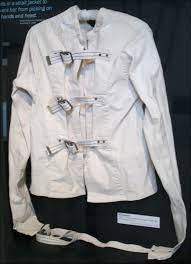
The unshackled straitjacket.

In the 1980s the political scientist Jon Elster wrote a book titled Ulysses and the Sirens where he uses the Homeric epic The Odyssey to illustrate the essence of democracy. In book 12 of The Odyssey, the enchantress Circe warns Ulysses of the dangers posed by the mythical Sirens, purportedly half women and half bird but in reality monsters, whose songs were irresistible to men and who endeavored to lure wayfarers to their deaths on the rocky cliff faces of the Siren’s island. Circe advised that only Ulysses should listen to their “honeyed song,” and that his men should plug their ears with beeswax while he be lashed to the mast of his ship after his men plugged their ears, and that even though he cried and begged them to untie him once he came to hear the Siren’s alluring tones, that he only be freed once his ship was far our of reach of the Siren’s voices. So it was, as Ulysses heeded her advice, made safe passage in spite of the temptress’s calls, and he and his crew proceeded on their decade-long voyage home from the Trojan Wars to Ithaca. As it turns out, it did not end well for all, which is a story for another day. (Thanks to Larry Rocke for correcting my initial mistaken read about their fate).

Elster’s use of the story is designed to highlight three related things. First (the minor point, about the false promise of ethereal options), that, as with the Sirens, while there may be many seemingly attractive alternatives to the inefficiencies of democratic governance, the perils imbedded in purported alternatives outweigh the (mythical) rewards that they claim to confer. Second, that a good leader prizes wise counsel and heeds their advice. Third (the major point), that democracy at its essence is a self-limiting (self-binding) form of governance in which incumbents of political decision-making positions deliberately refrain from making full or untrammeled use of the powers vested in them by virtue of the popular vote. The underpinning belief is that political decision-makers will adhere in principle to self-limitation because they understand and share Elster’s view of democratic governance: it is not just about the means of power acquisition and subsequent use once it public office; it is about (self) restraint in the exercise of power in pursuit of the common good. Power is exercised not for personal or partisan again. It is exercised for the benefit of all. And for that to happen, self-restraint is necessary.

Unfortunately, humans are not those most righteous of creatures so in recognition of human fallibility in practice limits are placed on public authority not by voluntary adherence to principle but by institutional mores, norms, laws and conventions. Constitutions are the highest expression of that enforced restraint in the exercise of power, and systems of checks and balances between different branches of government are the means by which self-restraint is imposed and enforced. The key to adherence is that all actors accept the importance of self-limitation in the first place and understand that the constitutional/institutional rules are designed to encourage collective compliance in the face of temptations to pursue individual or partisan agendas and policies inimical to the common good.

I call this the “straitjacket” theory of democratic politics. Politicians voluntarily accept the limitations on their powers imposed by systems of checks and balances when assuming public office. The understand why self-restraint is the essence of democracy, along with consent and compromise in the pursuit of second-best solutions that, if not satisfying everyone all of the time, satisfy enough people most pf the time so that the political system because self-reproducing (and re-generating!) on its own terms. There is a material as well as social-cultural component to this grand contingent compromise (i.e. expectations have to be met in order for collective consent to continue to be given), but the combination of universal laws and institutional norms and mores promote a type of political socialization in which self-restraint is seen and promoted as a civic virtue, not a weakness, because it promotes exactly that type of compromise when it comes to policy outcomes.

The rule of self-restraint applies to all political actors in a democracy, local and national, in government or in Opposition. The temporal boundaries of electoral cycles means that all actors get to compete again at some pre-determined and relatively short-term date. That means that losers today can become winners in the near future, and that current winners need to deliver on their promises if they are to win again. The implicit bargain is clear: governments do not press full advantage even if widely popular and Oppositions do not go full contrarian on every government initiative. That encourages moderation in debate and policy outcomes because adopting extreme, polarized positions violates the law of self-restraint and in so doing inhibits compromise on collective outcomes. If sides go for broke today when it comes to policy, they may find themselves on the receiving end of equally extreme counter-measures down the road, with the vicious cycle continuing from there. Recognition of this fact–that today’s political behavior casts a shadow on the future for better or worse–is another contributor to the adoption of self-limiting strategies by political actors. This is not just a matter of principle. It is a matter of pragmatism for those committed to operating under democratic governance paradigms.

From a cynically Marxist perspective, the need for political self-restraint in pursuit of contingent compromises rests on the fact that otherwise the rapacious and undemocratic nature of capitalism would be exposed by the zero-sum politics of its political puppets. Over the long term that augers poorly for capitalist political control and the social and institutional advantages that go along with it, so moderation and self-restraint under democratic institutions are, as Lenin noted, the best “political shell” for capitalism. The idea is to not get too greedy or partisan when it comes to profit-taking and political competition and to macro-manage the economy consensually so that profit-driven or partisan avarice is constrained. That way capitalist hegemony can be disguised and maintained rather than exposed and challenged. Someone who appreciated this fact in a non-Marxist way was John Maynard Keynes, and the phrase “Keynesian compromise” is often used describe his approach to political economy.

Whatever the interpretation, for today’s liberal democracies and a few of the newer experiments in that political form, this has been the unwritten political understanding that overlaps the social compact between governed and governors. There are always exception to the rule and moments in which principle falls hard on the sword of hypocrisy, opportunism and privilege, but in the main the enduring feature of democracy has been that those in positions of power do not take full advantage of the authority vested in them. In may not always be a matter of voluntary choice for them, but they understand why the straitjacket must be worn.

Those days are over. In the US but also in other parts of the world where US-style politics has leached like a cancer onto local democratic politics (think Brazil, but even places like Chile, the UK or Italy), politicians not only do not adhere to self-binding strategies but no longer accept the straitjacket premise. Whether a matter of principle or pragmatism, the shadow of the democratic future holds no sway over them and so self-restraint or limitation in the use of their authority is no longer considered a virtue. Instead, they work hard to use procedural, institutional and legal maneuver, aided and abetted by external forces such as direct pressure and gaslighting campaigns channeled via lobbyists, partisan and social media, to undermine and subvert the system from within—in other words, to unshackle the straitjacket, political Houdini-style in order to impose their partisan and personal preferences on society.

Hence the rise of a phenomenon known as the “constitutional coup” whereby disloyal Oppositions attempt to impeach government incumbents on false or flimsy grounds (again, Brazil is a sad example). Now there has appeared something known as the “procedural coup” where one (or two) branches of government attempt to usurp and override the decisions of another, effectively voiding the balance-of-power premise inherent in constitutional systems such as the US. And it was exactly that goal that motivated Trump and his supporters on January 6—to usurp the power of Congress to declare a winner in last year’s presidential race.

That has been laid out in gory detail by the investigations into the January 6 insurrection-turned-coup attempt in the US, where it has been revealed that there were orchestrated links between the White House, Republicans in Congress and insurrectionists to violently impede the certification of the Biden presidential victory. It is seen in Republican attempts to stack state election offices with partisans and to gerrymander and engage in voter suppression programs that skew elections in their favor. It is seen in GOP and rightwing activist groups coercively attempting to gain control of local government offices and school boards via impeachment and recall campaigns waged against serving incumbents. It is seen in the insanity of GOP House members spouting Qanon and other MAGA extremist beliefs in and outside the debating chamber, including threats of physical harm to Democrat colleagues. None of this is an exercise in self-restraint and clearly is an attempt to loosen the fetters of institutional noms and practices.

The US is the exemplar of democratic corrosion but it is not alone. Already the same type of tactics—cries of election fraud before elections are held in places like Brazil and Chile; instigation of civil, including militia resistance to duly constituted government mandates such as in Australia; attempts to delegitimize government with calls to arrest, try, imprison or execute public officials because of their use of public health orders to impose pandemic control measures, all with a wink and nod from opposition politicians, such as in Aotearoa–the very edifice of global democratic governance is being shaken from without and within.

It is the latter threat that is the concern here because a stable democracy is impervious to seditious conspiracies. In contrast, unstable or fragile democracies whose political leadership is ridden with ideological extremists, charlatans, grifters, profiteers and other unscrupulous self-interested maximizers of egotistic opportunities, in which the fundamental law of self-restraint no longer applies, is fertile ground for authoritarian usurpation from within or without.

It is quite possible that the US is too far gone down this path to avoid a civil war. But if democracy is going to be saved there as well as elsewhere, then we must return to the foundational principles upon which that political edifice rests: that those in public office practice self-restraint in the use of their authority and abide by the the imposed limits placed upon that authority by the system of checks and balances inherent in the tripartite division of government powers. Only then can we return to the type of horizontal as well as vertical accountability that a political system built on self- or imposed restraint can uniquely offer the society that it governs.

Random Retweets: Pandemic mitigation.

Introduction.

I have recently seen a trend whereby people turn their twitter ruminations into op eds and even semi-scholarly essays such as those featured on Spinoff, Patreon or The Conversation. It makes sense to develop ideas from threads and maximise publication opportunities in the process, especially for academics operating in a clickbait environment that has now crept into scholarly journals. I am not immune from the thread-to-essay temptation, although I have tended to do that on my work page and stick to subjects more pertinent to my work because the twitter account I use is a business rather than personal one.

With that in mind and because I have not posted here for a while, I thought it opportune to edit and repurpose some twitter thoughts that I have shared on the subject of what might be called the security politics of Covid mitigation in New Zealand. Below I have selected, cut and pasted some salient edited tweets along that analytic line.

Security aspects of pandemic politics.

There are traditional national security threats like armed physical attack by external/internal enemies. There are non-traditional national security threats like rising sea levels and disasters. Anti-vaxxers are a non-traditional national security threat that must be confronted.

Social media is where state and non-state actors (criminal organisations, extremist groups) link with local agitators in order to combine resources for common purpose. Viral dis-/misinformation and influence campaigns designed to socially destabilise and politically undermine public faith in and support for liberal democracies like NZ are an example of such hand-in-glove collaboration. If left unchecked it can lead to mass public disorder even when seemingly disorganised (e.g. by using “leaderless resistance” tactics). This growing “intermestic” or “glocal” threat needs to be prioritised by the NZ intel community because otherwise social cohesion is at risk. On-line seditious saboteurs must be identified, uncovered and confronted ASAP. That includes “outing” the foreign-local nexus, to include state and non-state actor connections.

If people are going to complain about Chinese influence operations in NZ, then they would do good to complain about US alt-Right/QAnon influence operations in NZ as well. Especially when the latter is manifested in the streets as anti-vac/anti-mask protests. The difference between them? PRC influence operations attempt to alter the NZ political system from within. US alt-Right/QAnon influence operations seek to subvert it from without. Both are authoritarian threats to NZ’s liberal democracy.

In the war against a mutating virus initially of foreign origin NZ has a 5th column: anti-vax/maskers, religious charlatans, Deep State and other conspiracy theorists, economic maximisers, venal/opportunistic politicians, disinformation peddlers and various selfish/stupid jerks. Their subversion of a remarkably effective pandemic mitigation effort should be repudiated and sanctioned as strongly as the law permits. Zero tolerance of what are basically traitors to the community is now a practical necessity (along with a 90% vaccination rate). Plus, as a US-NZ dual citizen who had his NZ citizenship application opposed by some hater, I would like to know who let in the rightwing Yank nutters now fomenting unrest over masks/vaxes/lockdowns/mandates etc. They clearly do not meet the good character test.

A counter-terrorism axiom is that the more remote the chances of achieving an ideological goal, the more heinous will be the terrorist act. Anti-vax and conspiracy theorists using Nazi/holocaust analogies to subvert democratic pandemic mitigation strategies are akin to that.

Long-term community well-being requires commitment to collective responsibility and acceptance of individual inconvenience in the face of a serious public health threat. It is part of the democratic social contract and should not be usurped for partisan or personal gain. Elephant in the room: when cultural mores contradict and undermine public health scientific advice but for political reasons cannot be identified as such. If true, partisan-focused approaches to Covid is not just an Opposition sin. The virus does not see culture or tradition. Anti-vax/mask views are no excuse to violate public health orders. Likewise economic interest, leisure pursuits, religious or secular beliefs no matter how deeply held. Ergo, cultural practice cannot override the public good. Collective responsibility is a democratic obligation.

Those that set the terms of debate tend to win the debate. In politics, those that frame the narrative on a subject, tend to win the debates about it. By announcing a “Freedom Day” the govt has conceded the debate about pandemic mitigation. The issue is not about human freedom. It is about managing public health risk in pursuit of the common good. Using “freedom” rhetoric injects ideology into what should be an objective debate about prudent lockdown levels given uneven vaccination rates, compliance concerns, mental health and economic issues. Bad move.