Sacred illusions

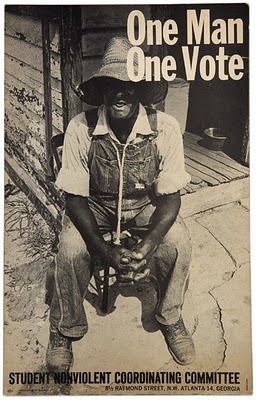
one man one votePita Sharples has severely undermined his own and his party’s credibility with his Race Relations Day speech criticising “one person, one vote”. As a minister in a democratic government, he has taken aim at one of democracy’s fundamental symbolic virtues, in such a way as to give the impression he (and his party) are anti-democracy. After years of fighting for the voices of mana whenua to be heard in democratic politics on strong principled grounds, Sharples seems now to have accepted the extreme right’s framing of that representation as antithetical to democracy.

Let’s just be clear: “one person, one vote” is no sort of actual democracy, it is an illusory ideal which persists only in hearts and minds, placed there by bold principles and the stirring oratories brought by democratic leaders of old looking to appeal to something bigger than they were. Even our present democracy, which is a very great deal closer to the ideal than the original American system, is pretty far from “one person, one vote” at a functional level. For a start, we have two votes. Even if you had one, what sort of vote would it be: first-past-the-post, where you’re at the mercy of geography; or single-transferable, where you’re not sure until after it’s all over who your vote actually got counted for; or what? For another thing, you can be a person and not have a vote — people under 18 don’t, prisoners convicted of serious offences don’t (and that could soon include all prisoners). There are more, but I won’t go on — the point is that “one person, one vote” is symbolic, not literal.

But neither are Sharples’ objections literal, they are symbolic. In the non-literal sense, what “one person, one vote” means is the opportunity for equality of input into the electoral process — whether that be by one or two votes, in a big electorate or a small one. What happens after that is democracy in action. In this regard, an electoral system which pays at least some regard to the principle of “one person, one vote” is a minimal bound for a modern democracy (though there are others also). Sharples’ criticism is that this isn’t enough — that democracy should be about equality of outcome rather than input. I agree — and I think very many other people do as well. Making democracy work takes much more than votes. But when it’s framed in the way he has framed it, this sort of discussion is political poison, because it attacks the heart of our political culture. This “race-based” framing of mana whenua political representation has been expressly developed in order to make those things seem indefensible in a liberal democratic context. Sharples has swallowed the hook, and instead of continuing to defend the Māori Seats and mana whenua representation on the existing and well-proven grounds (that it’s necessary for the establishment and maintenance of tino rangatiratanga, guaranteed by the Treaty) he has made a declaration which amounts to “yeah, they’re anti-democratic: so?” The most ridiculous aspect of it is that the existing mechanism which is so reviled complies with the principle of “one person, one vote”: electors on the Māori roll get get the same vote as anyone else, the only difference is in how they cast it. There is equality of input to the democratic process by Māori at the electoral level — it’s elsewhere in the process which is the problem.

I’ve argued before that the core symbolic and philosophical stuff of modern democracy is liberalism of one brand or another. No mainstream political concern can hope to win a democratic mandate without founding a lot of its agenda in liberalism. The symbolism of “one person, one vote” is crucial to this orthodoxy. Charles Elder and Roger Cobb, in The Political Uses of Symbols presented a typology of political symbols in the American context, organised into “political community” symbols which express political values at the highest level (“America”, “The Flag”, “The Constitution”); through “regime” symbols which express the political values of the current orthodoxy (in this case, American democracy, not a specific administration — the examples given are “The Presidency”, “Congress”, and “One Person, One Vote”); and three classes of “situational” symbols which express particular policy or administrational preferences of lesser affect (“The Reagan Administration; “gun control”, etc.) The higher up Elder and Cobb’s typology you go, the greater the degree of political consensus on the values imbued in a particular symbol. Nobody in American politics gets anywhere if they stand against “America”: the task of politics in that context is to convince people that what you stand for is “America”. “One person, one vote” is pretty high up that symbolic ladder. It is an illusion, but it’s a sacred illusion.

Every party in New Zealand’s parliament at present, except one, lays claim to this broad liberal tradition in one way or another. That one party which does not is the māori party. That is not to say that their agenda isn’t broadly liberal in function, but that it’s largely that way for non-Western-liberal philosophic reasons. This is the māori party’s great electoral purpose: to normalise an indigenous political-philosophical tradition. But they can’t do so this way, by attacking the liberal orthodoxy’s sacred illusions, the bedrock values held even by those who would never dream of calling themselves liberals. The māori party, more than any other, must recognise the value of “one person, one vote” as part of the history of democracy working for downtrodden minorities rather than against them, and adopt this as part of its own political basis.

As libertarians have discovered, if you don’t really believe in democracy it’s best not to bother with it — then you get to maintain whatever you claim as high moral ground and leave the actual business of governing to those who lack your unshakeable principles. But that’s not what the māori party is about. They do believe in democracy; they do recognise the importance of engagement and compromise and consensus, and they do plenty of work toward it, and a misguided outburst like this one puts it all in jeopardy. “Race-based” is National’s catch-cry from just a few short years ago, and they will take any encouragement given them to reach out to New Zealand’s conservatives, who are already distrustful of the māori party. It will force Labour further down the path of attacking the māori party to try to recapture the centre ground, rather than encouraging cooperation and the mending of fences. Most critically, it could create a backlash against the very mechanism Sharples seeks to save, generating opposition to the Māori seats his party needs for its survival, and which exist only by the pleasure of the Pākehā majority whose sacred illusions he has slighted.

While it should have been underway already, the māori party must now redouble its efforts to appeal to voters outside the Māori electorates, and prepare to live in a world without them.

L
More narrativium

A fortnight ago I wrote a post about how the government’s conduct in office makes them vulnerable to accusations of cronyism and a tendency to be vague about the boundary between the political and the personal. In the past week, two more events have come to light which fit this narrative.

The lesser of the two is former National minister Roger McClay winding up in court for claiming mileage and expenses from his non-profit employer when they were paid for by the parliamentary service. It’s a long time since he was in parliament, but the episode speaks to the character of senior National party members.

More egregious is the decision to appoint former National Deputy Prime Minister Wyatt Creech to stitch up Environment Canterbury, which makes a great one-two punch with the news that they want to appoint former National Prime Minister Jenny Shipley as Commissioner. Thanks to I/S at No Right Turn for joining these dots.

Christchurch Central Labour MP Brendon Burns has made his views pretty plain, and as a consequence, the scrutiny may discourage the appointment. That’s the thing about keeping an eye on cronyism: it enables an opposition to punish a government brutally for both its past and its current misdeeds, and it brings a level of scrutiny from the media and other public agencies which has a chilling effect on further misdeeds. Even aside from the partisan advantages this brings, that’s good for democracy either way. Of course, in order to take full advantage of this narrative, Labour has to come out and actually denounce Taito Phillip Field’s own corruption during his time as a Labour minister. That’d be good for democracy, too.

L

Let it burn

At the head of a large army [Po-ts’ai] was besieging Ch’ang-she, which was held by Huang-fu Sung. The garrison was very small, and a general feeling of nervousness pervaded the ranks; so Huang-fu Sung called his officers together and said: “In war, there are various indirect methods of attack, and numbers do not count for everything. Now the rebels have pitched their camp in the midst of thick grass which will easily burn when the wind blows. If we set fire to it at night, they will be thrown into panic, and we can make a sortie and attack them on all sides at once, thus emulating the achievement of T’ien Tan.” That same evening, a strong breeze sprang up; so Huang-fu Sung instructed his soldiers to bind reeds together into torches and mount guard on the city walls, after which he sent out a band of daring men, who stealthily made their way through the lines and started the fire with loud shouts and yells. Simultaneously, a glare of light shot up from the city walls, and Huang-fu Sung, sounding his drums, led a rapid charge, which threw the rebels into confusion and put them to headlong flight.
— Sun Tzu, The Art of War, XII.9(4)

I can’t agree less with Grant Robertson’s, response to David Garrett’s latest bit of madness. He says he “doesn’t want to give further oxygen” to Garrett’s “extreme and appalling” views, but that’s exactly what they need: oxygen. At present both Rodney Hide and John Key probably want to forget the fact that Garrett is the ACT party’s Law and Order spokesperson, and that consequently there are no such things as his “personal views” on these topics which are separable from those of the party — he is the ACT party’s mouthpiece on such matters, and the government’s ally. We, the people who elected him and permitted Hide to assign him that role, are entitled to take these views seriously, examine them in the context of other things he has said and done, and the opposition’s job is to prevent anyone from forgetting what this man stands for, and how far his definition of “reasonable” is from that of the wider public. From now until he’s ejected from parliament, Garrett should not be able to show his face to the public without a graphic reminder of the fact that he think homosexuality is morally equivalent to paedophilia; that he favours policy (now implemented) which means more prisoners will suffer rape as a consequence of their punishment; and that he thinks poor brown parents should be sterilised. He must be required to either defend his views robustly, or forced to issue yet another humiliating public apology; and both ACT and the government must be required to defend their association with him, or forced to dissociate, demote or publicly censure him.

The instinct for the opposition to deny a topic like this the spotlight only makes political sense when the opposition is vulnerable on the issue; when they fear it could result in a populist backlash against them. Even then, the principles at stake mean a very strong backlash would be required to justify restraint on simple pragmatic grounds. There is no prospect of such a backlash in this case: as Grant says, the statement is “extreme and appalling”. Does Grant think his own sense of what is extreme and appalling differs so much from that of the electorate that they will not agree with him? The worst possible course of action for ACT and the government is to allow this topic to remain at the top of the political agenda for as long as possible. Failing to even try to keep it there shows a lack of political nerve on the part of the opposition; a continuation of the failed strategy employed prior to the election, which Key won in no small part because the very people who should be fighting against him bolstered his public image as a mild, simple, non-threatening chap. Genuine threats must be neither mocked or minimised; the “extreme and appalling” should not be laughed off or left unchallenged. This is the sort of weak-kneed liberal wimpishness and lack of rectitude which leads many voters to mistrust parties on the left, and cleave to parties and leaders whose convictions are firm and forthrightly held. The good and the just does not speak for itself, much as we might wish it would. It requires champions to stand for it, and evil truimphs when those champions fail to stand and fight.

To do so is not the “dirty” personalisation of politics: the character and views of a man who sits on the Law and Order select committee, and in the future could conceivably hold a warrant for Justice, Corrections or Police are perfectly legitimate matters for political debate, which speak both to his ability to represent the interests of New Zealanders and to the quality of the processes and people which allowed him to attain such a position.

The Garrett Solution, as I’ve argued elsewhere, contradicts almost everything the small-government right claims to stand for. After a decade of howling about “Nanny State in the bedroom” and “social engineering” we now see that their erstwhile objections to both these things were not principled, as they claimed, but were in fact just objections on the merits. Social engineering is wrong, they say, unless it’s at the genetic level. It’s also not new: this sort of thing was enthusiastically embraced during the last government by the more unhinged members of the extreme right, and now it has gone mainstream.

The topic of eugenics is the strongest symbolic matter introduced to the political sphere by any participant this term; it is a topic on which the right can only lose, and introduced by someone who is already vulnerable. The grass is high around the government’s camp, the fire is set by one of their own: now, if they are to gain an advantage, the opposition must fan the flames and beat the drums.

L

Unmix these metaphors

ace_of_spades

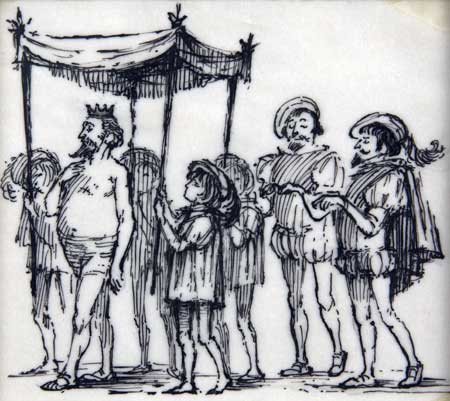
In the last couple of weeks the government’s pistons have started pumping. After a year’s worth of blue-boiler-suited (non-unionised) engineers making sure the sleek machine is primed and fuelled and oiled and ready for action, the engine has roared into life and is beginning to blow out a cloud of smoke in preparation for a screaming burnout. As it proceeds, the party has dealt its Labour opposition a decent hand of cards; you could say they’ve built a house of them, which the mighty engine is in danger of knocking down. After campaigning on a platform of returning integrity and effectiveness to the Beehive, the public are beginning to get an inkling that the emperor may lack a couple of vital articles of clothing.

hughes12

Returning to cards: the strongest card is the decision to mine the conservation estate, announced last year. Classic crony capitalism is shaping up to be the trump suit. The other cards: Hide‘s junket timed to coincide with a wedding; Harawira‘s trivial but more spectacularly mismanaged junket; Key‘s and McCully‘s mining shares; revelations that Brownlee lied about being lobbied by mining interests which would stand to benefit from his actions as a minister; attacks against Radio NZ which benefit Joyce‘s former business partners; attacks against ACC which benefit the insurance industry to which the party has well-known ties; and ministers Heatley, Brownlee and Groser who were pinged pinching from the public purse for their own private pleasure.

corporate_crooks

Mining the conservation estate is the keystone of all this, the central peg on which the whole thing hangs — because the allegations cannot be denied outright, only explained. Particularly in the cases of Key and McCully’s shares, the value of the conflict of interest is irrelevant. It probably should be relevant, but it isn’t really: either there is a conflict of interest, or there isn’t. While there would be (much) more hay to be made from a large shareholding, that isn’t necessary to plant the seed of doubt in the rich loam of the electorate’s and the media establishment’s collective consciousness.

plant-a-tree

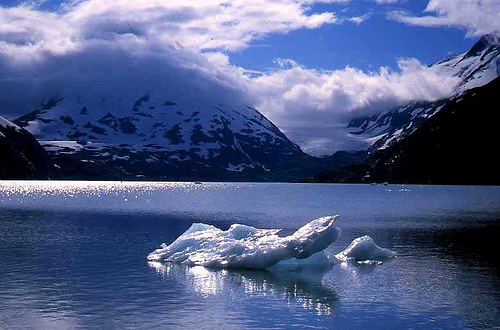
Likewise the other issues: trivial, but they ring true and all riff on the same themes. Hide’s transgression was much more significant in actual material terms than was Harawira’s, but Harawira was punished much more harshly because he failed to recognise the symbolic matter in play: both required abject, cringing apologies. Key’s “sloppy” uranium shares, which he was “too busy running the country” to recall owning is reminiscent of John McCain‘s failure to remember how many houses he owned, for which he was rightly crucified by a country staring down the barrel of an economic crisis which would cost many people their only home. The smiling visages of the three ministers on the front page of the Dominion Post: the Minister of Economic Development who can’t be trusted with a credit card; the Fisheries Minister who likes to splash out on feeds of kaimoana for his mates and party hangers-on; the Minister for Climate Change Negotiations wining and dining the former National minister who was an integral part of the Copenhagen negotiation, and now heads the environmental branch of the OECD apparatus. And so on. These are symbolic issues, not matters of real actual wrongdoing. But the government can’t just dismiss them outright, it needs to argue the merits, and by the time you have to argue the merits on this kind of thing, you’ve probably already lost the symbolic battle. This sort of behaviour passes the public’s sniff-test about how they think about the National Muldoon gave us. And it fits the narrative of the modern Key/Brash-era Nats as wheeler-dealers, well-heeled fat-cats with a finger in every pie, feathering the nest for their secretive plutocrat mates. It brings to mind an iceberg, with the tiny, trivial transgressions peeking above a glassy surface which hides the monstrous mass below.

iceberg

The job of the opposition is to tie all this into a coherent story which people can understand and feel in their guts: a myth that trips off the tongue at the pub or in the line at the football, in the front seat of a taxi, sitting on the bus, standing around the water-cooler or in the smoko room — in as many variations as there are poets of the NZ electorate.

This post cannot end without a mention of the good work the folks at The Standard — particularly Eddie — have done toward assembling the blocks for this narrative pyramid. I am often critical of them, and their tendency toward partisan hackery frustrates me, but they do a lot of good work, and it shouldn’t go unrecognised. They’ve covered all the main aspects listed here, but they can only go part of the way: now is for the opposition parties and their allies to lurch into action. All the cards have not yet been dealt; the ace of spades may yet be seen. Although the raw material is all there, it won’t be easy writing this story — just ask Lockwood Smith, who only by dogged repetition and worrying away at the Taito Phillip Field bone managed to raise the electorate and media’s awareness of that actual and manifest case of political corruption. But this is the opposition’s job, and if they can untangle the metaphors and lay them out for people in simple, appealing, resonant terms, they will gain some traction. Then perhaps, they too will begin to belch smoke and fire, and roar down the road to victory.

L

Incoherence about national education standards

There’s incoherence in the government’s rollout of the new national educational standards regime which goes beyond the unreasonable use of statistics I noted yesterday, and it’s illustrated most crisply in the differing approaches taken to mainstream schools and kura kaupapa Māori. Simply put, standards are being implemented on a trial basis (audio link) in KKM, and without a trial process in mainstream schools. The problem is not about a lack of background: Anne Tolley made this clear last year in response to a Parliamentary question from Te Ururoa Flavell, saying that there existed “a significantly robust research basis from which to develop national standards in kura kaupapa Māori.”

The mainstream education sector — without whose buy-in any such implementation will certainly fail — are understandably furious since their main problem with national standards has not been one of principle so much as a lack of confidence in the details of any regime’s implementation and an understandable desire to have input into a system which will fundamentally change the nature of their work. A substantial part of the reason they are suspicious is because National spent its nine (long) years in opposition taking every possible opportunity to deride the education sector as Labour toadies and teachers as walk-sock-and-cardigan-wearing fat-bottomed do-nothings, and as NZ Principal’s Federation president Ernie Buutveld says in the interview above, the sector’s suspicions have been confirmed: national standards is less about measuring students and more about measuring teachers, with a punitive view to demonising them in the eyes of parents. This is the political motive: driving parents to vote for National rather than for Labour. I suppose the reasoning goes something like, if teachers are well-respected and regarded and generally vote Labour, Labour will be similarly well-respected and regarded amongst parents. Or something like that.

The problem with measuring teachers on the performance of their students, however, (and I speak as a former teacher), is the same as the problem of judging a football team by its fans. A team doesn’t choose its fans, and schools or teachers don’t choose their students. There is only a certain extent to which a given teacher, however inspired or well-meaning, can influence the social, cultural, economic, health and other factors which feed into educational success; even more so when there exists a strictly results-focused teaching culture, rather than an improvement and engagement-focused culture, as there certainly will once standards are bedded in.

This is not to say that KKM should be denied their national standards trial process. But that is what National should be saying, in order to be consistent. Because the stated reason a similar trial has been repeatedly denied the mainstream education sector is urgency — the sense that we must move swiftly and make the changes so that not one more child will be left behind. This sort of incoherence in policy and rhetoric (or, as it is in this case, between policy and rhetoric) always yields flaws which can and should be exploited, and here’s the flaw in this. One of the two following statements is necessarily true:

  • The Government’s justification for rolling out national standards in mainstream schools without a trial period (urgency) is false and misleading, and accordingly the government’s motives in rolling out the trial period are different to their stated motives; or
  • The Government doesn’t care about kura kaupapa Māori students or schools, and doesn’t consider their educational standards a matter of urgency or substantial importance.

So, Anne Tolley and John Key, which is it?

L

Update: Sage wisdom on this topic from Gordon Campbell.

It’s official*

* (As official as a 1,000-person phone poll can be, anyhow.)

Māori support for Phil Goff after “blue collars, red necks” is very low — 18% among all respondents, and 36% among Labour voters. That’s dire. (Full Digipoll results here.)

So, if these numbers are to be believed, (also with the proviso that this rot probably began before the Nationhood speech) the first part of my critique is borne out: Labour under Phil Goff will struggle for support among Māori, without serious and long-term remedial work. The two other points of my critique remain open: that it is philosophically unjustifiable for a progressive left party to betray a loyal support base and its quest for tino rangatiratanga in this manner; and that the corresponding long-term increase in support among the “social conservatives” in the working class, who were the targets of the strategy, will probably not make up for this loss (and the negative-sum effects of depressing Māori turnout). I’ll watch with interest.

What’s interesting is that Goff’s rhetoric has moderated substantially since December. Goff and Pagani seem to have lost their nerve. This is potentially the worst of all possible worlds for Labour’s electoral fortunes: they have rightly been tarred with the redneck brush, probably alienating Māori and social liberals in important numbers, but not sustained their narrative for long enough to turn the targets of their appeal away from National. Double loss in electoral terms; but I think something of a gain in strategic terms for the party.

Long may their nerve to continue this ugly business remain weak.

L

The riddle of Key’s incredible popularity

ONE of the year’s intriguing mysteries remains the source of Prime Minister John Key’s popularity when there is no evidentiary reason for the continuing level of public support he enjoys.
In the US, the American public, both Republicans and Democrats, have long realised that President Barack Obama’s “yes, we can” is more accurately defined as “no, we can’t”, despite the passage of his health-care bill on Christmas Eve.
In this, he has achieved rare bipartisanship. Both major parties accept that the bill, in its current form, is a real stinker.
So much for compromising with the states and with every Congressman and Senator to get it passed.
Given Key has achieved nothing of similar magnitude […] he has finished his first year in office with a duck on the political scoreboard.
[…]
The mystery of Key’s incredible popularity may well lie in the sneaky admiration New Zealanders have for those who get away with extraordinary scams.
Remember how the Great Train Robber Ronnie Biggs found a haven (for a while) with his family in Melbourne while on the lam from British authorities and how he managed to stay ahead of the law while making good his escape to Brazil?
Biggs was no Ned Kelly, nor a Robin Hood, but managed to gather a surprising mass of public sympathy despite dudding his wife and children and was in all reality no more than a petty criminal addicted to good-looking women and a lazy lifestyle.
New Zealanders appreciate clever rip-offs and may not yet have cottoned on to the personal cost that they will have to bear from Key’s profligacy with their cash.

If I could spy on you, dear readers, I suspect I would see a few heads nodding in approval.

As the second-to-last paragraph hints, the above wasn’t written about John Key — it was written by conservative columnist Piers Akerman in Sydney’s Sunday Telegraph the week before last. I’ve replaced ‘Kevin Rudd’ with ‘John Key’ and ‘Australian’ with ‘New Zealander’ (and cut it, obviously).

But dedicated partisans on both sides are frequently similar in their thinking, and I’ve read pretty much this sort of argument again and again from Key’s enemies — people whom I hope are embarrased that they deal in the same sloppy generalities and bitter grumblings as Piers Akerman — over the past year. It misses the point, which is that he’s still popular. By definition, he’s doing well. And yet there is no ‘evidentiary reason’ for it to be so.

This provides a clue as to Akerman’s puzzlement, and that exhibited on this side of the Tasman with regard to Key’s ongoing favour: you’re looking at the wrong factors. The main factor omitted by Akerman and others of his sort is that he (Rudd or Key, take your pick) is emotionally resonant with the electorate. This matters; in some cases, it’s enough on its own. He (either of them) won a campaign based on next to no policy at all, leading the incumbent oppositions of the day to ridicule him, ignoring what was right under their noses: that policy wasn’t necessary.

The modern left’s obsession with facts and figures, expected utility and measurable outcomes should, in a rational world, grant them a strong advantage in any political contest. Indeed, the classical analysis is that democratic political systems which apportion votes by population rather than by wealth are inherently biased toward the working classes who are more numerous by definition. Given the assumption that Labour’s policies objectively provide greater material advantage to a larger number of electors than National’s policies, they should win that horserace every time. But they don’t, because politics is not rational. Concrete policy achievements are not the key to political success; their impact is largely limited to how they make the electorate feel about the party and candidates, not how they impact on the electorate in observable, material terms (although, depending on the policy, this can have considerable impact). The link is not direct and linear: there’s a crucial and very complex layer of abstraction which most politicians on the left simply don’t see.

Drew Westen (about whom I’ve been raving to anyone who’ll listen for the past year or so) goes into much more detail about this, and his book The Political Brain should be required reading to anyone who wants to know how people actually think about politics — when they think at all, which isn’t very much or very hard.* He calls this focus on reason ‘trickle-up politics’; as valid, he says, as trickle-down economics. This strategy concentrates its firepower on the dispassionate brain, the least-important part when it comes to making important judgements, and disdains that which lurks beneath — the part which can call upon deep-seated experience and instinct to order the supposedly rational brain to do what feels right, utility calculations be damned.

Generally speaking, the right understands this better, and they tend to lead from the gut. This provides the left with what they think is an opening to debate the matter on facts, not realising that facts aren’t very important in political decision-making. Westen and other researchers have found in a wide range of experimental situations that they can predict with greater than 80% accuracy a person’s position on a given political issue of the day, knowing only how the person feels about the issue. Adding facts back into the equation only improves predictions by a few per cent. They literally don’t matter without the emotional resonance. This is true for everyone from randoms on the street to justices of the Supreme Court. It’s just how people are.

So, my one wish for the NZ left for 2010 is this: stop thinking of political popularity as the result of naked appeals to the material self-interest of utility accountants; stop hectoring those who remain unconvinced and ask why they are unconvinced, without resorting to the lazy option of complaining that they are fools or stricken by false consciousness or that they just like a good scam when they see one. Start thinking of politics as a system for engagement and trust-building, by which to build a mandate to make a better country. National aren’t that strong; it’s just that they’re against opposition who turn up to the battle for hearts and minds armed with a spoon.

L

*Westen’s research is American and focuses solely on the two-horse Republican v Democrat battle, so it isn’t directly analogous to NZ or Australian politics. Nevertheless, most of the traits he observes hold true to a fairly large extent.

‘Blue collars, red necks’: triply flawed

To those who stick up for their identity, socialism sticks up two fingers!

In the coming years, core tenets of socialist and indigenist faith will be tested. Labour, with its recently-adopted ‘blue collars, red necks’ strategy, has struck out along a path which requires a large slice of its core constituency — Māori — to search their political souls and choose between the renewed Marxist orthodoxy which privileges class above all else; and the progressive social movements developed over the past three or four decades which have produced a society tolerant enough to permit their unprecedented cultural renaissance.

The strategy indicated by Phil Goff’s speech appears to be substantially based on the simple calculus, most forthrightly argued by Chris Trotter, that ‘social liberals’ are fewer in number than ‘social conservatives’ among the proletariat, and therefore an appeal to ‘social conservatism’ will deliver more votes than the equivalent appeal to ‘social liberalism’. This is couched as a return to the old values of the democratic socialist movement — class struggle, and anything else is a distraction. But because the new political strategy is founded upon an attack on Māori, it requires that working class solidarity wins out over indigenous solidarity and the desire for tino rangatiratanga in a head-to-head battle. Māori must choose to identify as proletarians first and tangata whenua second. Similarly, the māori party’s alignment with National and subsequent intransigence on issues such as the Emissions Trading Scheme asks Māori to privilege their indigeneity over material concerns.

An article of faith of both socialist and indigenist movements is that their referent of political identity trumps others: that all proletarians are proletarians first, and that all indigenous people are indigenous people above all else. In the coming years, unless Labour loses its bottle and recants, we will see a rare comparison as to which is genuinely the stronger. Much of the debate which has raged over this issue, and I concede some of my own contributions in this, has been people stating what they hope will occur as if it surely will. For this reason the test itself is a valuable thing, because it provides an actual observable data point upon which the argument can turn.

A spontaneous interlude: I write this on the train into Wellington, in a carriage full of squirming, shouting, eight and nine year-olds on a school trip to the city. In a (rare) moment of relative calm, a few bars of song carried from the next carriage, and the tune was taken up enthusiastically by the — mostly Pākehā — kids in my carriage.

Tūtira mai ngā iwi (aue!)
Tātou, tātou e.
(In English:
Line up together, people
All of us, all of us.)

Read into this what you wish; one of life’s little rorschach tests.**

Clearly, I don’t believe Māori will abandon the hard-won fruits of their renaissance for a socialist pragma which lumps them and their needs in with everyone else of a certain social class, which in the long term would erase the distinction between tangata whenua and tangata Tiriti. This distinction will fade with time, but that time is not yet come. For this reason I believe the strategy is folly at a practical level. Add to which, the appeal to more conservative social values was always going to be strong among Māori and Pasifika voters, so the left and right hands (as it were) of the socialist conservative resurgence seem unaware of what the other is doing: with the left hand, it beckons them closer, and with the right it pushes them away.

My main objection to the ‘blue collars, red necks’ strategy is not practical — although that would be a sufficient cause for opposing it. The main reason is because of principle, and this question turns on an assessment of the left in politics. Trotter and other old-school socialists (and presumably Pagani and Goff and the current leadership of the Labour party) believe that the left has been hijacked over the past generation by non-materialist concerns and has lost its way as a consequence. I believe that the wider social concern with non-material matters has saved socialism from its own dogma.

Largely discredited as an economic system and its legacy irretrievably tarnished by the catastrophic failure of practically every implementation, socialist-aligned parties on the left have been forced to diversify from a strict focus on what’s in the pockets of the proletariat to what’s in their heads — what they care about and who they are, their identity beyond being ‘the proletariat’. In doing so these movements have embraced liberalism, social equality movements, and environmentalism, and the resulting blend, termed ‘progressivism’ has become part of the political orthodoxy, such that the political right must now pay at least some mind to these considerations if it is to remain viable. This broadening, and the progressive movement’s redefinition of what is right by its general and gradual rejection of racism, sexism, sexual and religious discrimination, among others, has been hugely beneficial to society. For reasons of principle, it should not be discarded out of cynical political expedience.

Furthermore, maintenance of the social liberal programme has strategic, pragmatic value. It has enabled left political movements to broaden their support base and engage with groups often marginalised from politics, breaking the previously zero-sum rules. The modern Labour party has built its political church upon this rock of progressive inclusion, broadening its support base by forming strategic alliances with Rātana from the time of the First Labour Government and less formally with the KÄ«ngitanga and other Māori groups, to which the party owes a great deal of its political success. The progressive programme has broadened to include other groups historically marginalised by the conservative establishment. For Labour to shun its progressive history and return to some idealised socialist pragma of old by burning a century of goodwill in order to make cheap electoral gains by emulating their political opponents is the same transgression many on the economic left have repeatedly levelled against the māori party, and with some justification: selling out one’s principles for the sake of political expedience is a betrayal, and betrayals do not go unpunished. In this case, the betrayal is against the young, who will rapidly overtake the old socialist guard as the party’s future; and Māori, who will rapidly overtake the old Pākehā majority in this country’s future. The socialists might applaud, but Labour represents more than just the socialists, and it must continue to do so if it is to remain relevant.

So, for my analysis, the ‘blue collars, red necks’ strategy fails at the tactical level, because it asks Māori to choose their economic identity over their cultural identity; it fails at the level of principle, because it represents a resort to regressive politics, a movement away from what is ‘right’ to what is expedient; and it fails at the level of strategy, because by turning its back on progressivism the party publicly abandons its constituents, and particularly those who represent the future of NZ’s politics, who have grown up with the Labour party as a progressive movement. It is triply flawed, and the only silver lining from the whole sorry affair is that (again, if Goff and Pagani hold their nerve) we will see the dogmatic adherence to class tested and, hopefully once and for all, bested.

L

* Of course, Goff claims it is no such thing. But Trotter sees that it is and is thrilled, and John Pagani’s endorsement of Trotter’s analysis reveals rather more about the strategic direction than a politician’s public assurance.

** I see this as an expression of how normalised Māori-ness is among young people, and as much as can be said from the actions of nine-year-olds, an indicator of NZ’s political future.

Scrambling for morsels.

I do not mean to be unkind, but does it not seem like John Key is gallivanting around the world looking to stuff his nose into major leader’s derrieres without substantive returns for his efforts? He claims to be exercising “leadership” and showing the flag at various and sundry conferences (recently APEC, now Copenhagen), but in reality he is an incidental player looking for a photo op. At the APEC meeting he did not have a single bilateral meeting with anyone of import–his breakfast handshake with Obama does not count. Heck, even other small players did not give him the time of day, and that much vaunted agreement to continue discussions about enlarging the Transpacific Partnership (TPP) was no more than a US delaying move while it sorts out trade issues with bigger regional players such as Malaysia and Indonesia (even if the P4 agreement involving Chile, NZ, Brunei and Singapore is used a possible model for the larger deal). In reality, NZ got nothing from the APEC meetings (the bilateral trade deals announced during the time of the meetings had already been finalised and the occasion was merely used to reveal that fact), and the way advanced economies are feeling the heat (no pun intended) over extending climate change controls in the midst of a global recession as of yet in course, the Copenhagen conference  looks to produce a lot of hot air and little concrete action.

Meanwhile political tensions in NZ are picking up, and in fact are the tip of a growing iceberg of social unrest that has seen recent divisions over race, corruption, social policy and cultural mores all hit the media front pages. Meanwhile Mr. Key burns a few carbon credits and gets his passport stamped every two weeks on his way to “summits” in which he has no real say, while Bill English actually runs government policy direction. As an example, think of the Don Brash’s 2025 recommendations–it was English, not Key who dismissed them as unreasonable, and Key has not voiced an opinion to the contrary (perhaps Mr. Key choose to be charitable to the guy he rolled). In fact, Mr. Key presents himself as Mr. Milquetoast–nary a hard word can be heard emanating from him regardless of the skullduggery happening beneath/over/behind him.

That makes  me wonder whether what we are seeing is a National version of the French system, where there is a figurehead president who does diplomatic work but has no real policy making power, and a PM who does the real business of governing. From the looks of things Mr. Key is National’s president, but it is Mr. English who pulls the strings of his globe-trotting puppet. This may be an unkind thing to say, but the more important question is whether it is untrue.