Hang ’em high

Labour Supercity candidate Daljit Singh, standing for election to the Otara-Papatoetoe Local Board, has been revealed as one of those charged with voting fraud-related offences. As Idiot/Savant says, it’s awful that this information didn’t come out earlier so that he could be punished electorally as well as judicially, but this is part of the price we pay for a robust justice system.

However, the fact that Singh has avoided his due scrutiny thus far (and, farcically, may yet be duly elected to the board) makes strict attention to his case all the more important, and places a heavier burden on those who are associated with him –and in particular on the Labour party whom he represents — to respond swiftly and decisively to divorce themselves from Singh and his alleged misdeeds. This must take cognisance of the fact that he has not yet been convicted of anything and it may be conditional and hypothetical, but if Labour have learned anything at all from the Taito Phillip Field scandal, it’s that a lesser test than ‘convicted in a criminal court’ must apply with regard to such matters.

In the interim Singh’s erstwhile allies must assess the evidence and base their response on judgements as to its veracity, but the moment his guilt is admitted or proven, they must be the first to call for his (figurative) hanging; because they stood to benefit from his fraud, they must condemn it all the more loudly. Singh and Labour’s enemies can be relied upon to do so; his allies must also. Andrew Little has initially done so, and this is heartening. IrishBill at The Standard, as an allied third party, has done likewise.

It is also perfectly legitimate to draw links between Singh and others’ alleged wrongdoing and Labour’s own fundamental standards and character, since candidates by definition represent the party. While one rotten apple does not (as many will certainly argue) imply a party of inveterate crooks, this latest incident on top of the Field affair, Labour’s steadfast support for Winston Peters through the Owen Glenn donation scandal, and continuing perverse behaviour by Chris Carter (I could list more examples) do certainly speak to crucial failures of judgement when it comes to the party’s selection and endorsement of both candidates and allies. If the rumoured pecadilloes of Richard Worth, the overt bigotry and criminal background of David Garrett, and the blundering damfoolishness of Melissa Lee (there are more examples here also) can be said to illustrate the character of the ACT and National parties (and I believe they can) then the same must surely hold true for Labour. Whatever speaks to character speaks to the heart and soul of a political movement, and by this standard Singh’s implication in voter fraud, if proven, will be a lifelong stain on the party which admitted and endorsed him.

And if anyone so much as breathes words like courageous corruption in apologia for Singh and whoever else, hoist them by the same rope. Democracy’s ends are only as good as the weakest part of its means.

L

Frogs, toadies and tadpoles


There’s been a long and turgid discussion about the Greens’ support for the Canterbury Earthquake Response & Recovery Act (CERRA) on Frogblog, with commenters including many of the usuals from around the blogosphere, Russel Norman and Kevin Hague, and someone called BJ Chip (who I assume is a comms flack) running defence for the Green party. (I can’t figure out how to link to individual comments, sorry). Another commenter, Geoff Fischer, makes a persuasive case against the Greens’ newfound pragmatism, both on the Frogblog thread and on his own site. Whilst I don’t entirely agree with Geoff (I’m a pragmatist at heart) I think his critique is a good one, particularly for the Greens (who aren’t). But there are also strong pragmatic grounds to attack the Greens’ decision to support the CERRA; grounds which, if the Greens are serious about their new realpolitik posture, they’d do well to consider.

I’m often disappointed by the Greens’ persistent — even pigheaded — reliance on the ‘principled stand’ in politics. While valuable among a suite of tactics, it’s overused as a one-size-fits-all response which pigeonholes them as idealistic zealots who don’t compromise and can’t be worked with. But although I think its consistent use is a poor strategy in the general case, it gives the Greens a valuable trump card: the ability to say “these are our principles; if you don’t like them, go ahead on your own”. While it all too often results in other parties abandoning the Greens as irrelevant and going ahead on their own, it does build a powerful narrative about the Greens which speaks to characer and reliability and permanence. Principled politics, as Geoff says in other words, has an objectivity about it which is often lost in modern pragmatic discourse where what often passes for ‘true’ is whatever you can argue. When all the other parties in parliament — even the other parties who (however unjustly) appeal to the ‘principled’ brand, such as ACT — are falling over themselves to betray their principles, it’s all the more important that you stick to your own. Put another way: when your political strategy is to be principled, refusing to act on principle is not a pragmatic decision.

Most obviously, taking a uniquely principled stance at the time when the pressure is greatest to cave in hugely strengthens that narrative mentioned above, ensuring the long-term strength of the brand. It’s easy to be principled when nothing is on the line — the measure of a party’s commitment to principle is how it performs when the stakes are highest. That measure has now been taken.

Secondly, principled politics is what the Greens know. It’s their realm of competence. An idealistic stance would have given them the ability to critique whatever misdeeds the government undertakes in the name of this act with a clear and objectively indisputable line (“we voted against it”), whilst the best they can muster at present is the equivocal, inconsistent line which Norman is running in the Frogblog thread (“we objected to it and we don’t like it but we voted for it anyway because we thought it was the right thing to do”). BJChip demonstrates a fundamental lack of understanding how public-sphere political communication works with (her or his, I’m not sure) defence: “if they give us such idiotic cr@p [as “you voted for it”] we can give it back chapter and verse”. I replied with the following:

And not a word after “but you voted for it” will be worth a damn out there in the cold, pragmatic world of realpolitik which the Greens have now decided to enter. In that world “but you voted for it, so STFU” is the super-hero version of the “Nine Long Years” gambit which paralysed the Nats from 1999-2004 and has paralysed Labour for the term so far. You can’t beat it; in the battle of the soundbite, it’s political kryptonite because when they say it, they’re right. You voted for it: it’s your law, you swing by the same rope as the rest if and when it all comes apart. And so you should.

As much as they might believe themselves to be big-game players, the Greens have never even made a serious attempt to master the complexities of pragmatic politics, preferring to leave the cut-and-thrust to others. In the realm they have now entered they aren’t so much frogs as tadpoles. Judging by Norman and Hague’s statements and the spirited defence of BJChip (and others who use the pronoun “we” on behalf of the party), it seems they will attempt to defend the decision to support CERRA as they would any principled stance, with a clear restatement of the whys and wherefores behind the decision, omitting any discussion of the political consequences. This is impossible, because it is clear to even the most casual observer that the decision was a pragmatic one based on the politics.

Third and most importantly, at the electoral sharp end a uniquely principled stand positions the party as a ‘safe harbour’ for voters from other parties who are disillusioned by those parties’ too-enthusiastic embrace of pragmatism. This is where I think the Greens got their political calculus most badly wrong. The Greens’ own membership and support base was not going to be unduly turned off by the fact the party refused to support a bill granting dictatorial powers to Gerry “sexy coal” Brownlee; they may have taken some sort of hit, but the risk was not as dire as it is being spun. But a principled stance against this manifest assault on the constitutional framework of the country would have permitted the Greens to position themselves as the last line of defence against Shock Doctrine authoritarianism; a rallying point for liberal values. “Even if you disagree with our policy orientation,” they might say, “at least you know where we stand, and can rely on us to stand against the worst excesses of government impunity.” Coupled with the ideological moderation signalled by the departure of Sue Bradford and Jeanette Fitzsimons, I believe the Greens stood to gain considerable support from disappointed Labour voters, particularly those who wanted the party to act as a functional opposition to the government — and they might have even picked up a little bit from the other parties, as well.

So the decision manifestly fails on grounds of principle, and because the Greens are a self-declared party of principle with neither a strong history nor any particular skills in the exercise of realpolitik, it is doomed to be a failure in practice as well. One silver lining, though: since the Greens stand to gain nothing from it, their support for CERRA doesn’t really indicate that they’ve sold their principles out for power as “Tory toadies”; more that they simply lost their nerve. This stands in contrast to Labour, whose support for the act was obviously based on pragmatic grounds of political calculus, and principles of good governance be damned. This is especially the case for Christchurch-based MPs like Brendon Burns, who is leading the red team’s defence in a particularly distasteful fashion. They are complicit in the power grab. The Greens and their principles are just casualties of it.

L

Blue smoke

In my previous post on the Canterbury Earthquake Response & Recovery Act (CERRA) I lamented the conspicuous absence of outrage in response to the bill’s provisions from partisans on the right. I have since been heartened by the responses from some of the more principled commentators on the right; well done them.

But there is one most conspicuous exception. I have on many occasions in the past defended Kiwiblog’s David Farrar from allegations that he’s a bog-standard Tory authoritarian. Yes, he’s a loyal partisan; yes, he does have his authoritarian tendencies, but his typical policy alignment is clearly classical-liberal. He is is consistently more liberal than almost all of his fellow-travellers and has regularly exhibited a forthright commitment to democratic principles of the rule of law, of good constitutional practice and the importance of checks and balances. Even yesterday’s response conveyed lukewarm concern about the scope and extent of the act. But I take back all that defence of David’s character; and so, apparently, does David take back his commitment to those liberal principles.

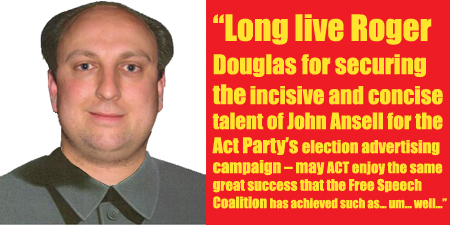
Because this morning’s post on the CERRA is nothing short of cringing, snivelling partisan apologia for dictatorship dressed up as a simplistic classical history lesson. Dictatorship, it appears, is a-ok with David just as long as the dictator wears the right coloured tie. Where now are the lofty appeals to the principles of good governance, the shrieking about attacks on the nation’s constitutional integrity, the billboards bearing the endorsements of dictators? There are plenty around, including a very explicit homage to the Free Speech Coalition campaign which David fronted, but nothing from this erstwhile and self-proclaimed champion of democracy himself.

The fact that DPF is being schooled on both the principled and pragmatic problems with this bill by some of the more wide-eyed and reactionary members of his commentariat suggests that he has taken leave of his political instincts as well as his principles; for instance, the notorious ‘burt’, who urges him to consider what might happen if (due to the collapse of ACT) National fails to win the 2011 election and a Labour minister takes over from Brownlee; a possibility he and the government had either not anticipated or don’t believe was worth considering. Nothing would be sweeter irony, but either way: David’s credibilty on these matters is up in a cloud of Tory-blue smoke; a legacy destroyed by unprincipled partisan loyalty. Such is the price of political dependence.

Update: Similar sentiments from Peter Cresswell, Danyl Mclauchlan and The Standard, from whom I purloined the image.)

Another update: More angels required to dance on DPF’s pinhead.

L

No democracy on the honour system

This morning I posited a conspiracy theory that the government would use the temporary deregulation measures undertaken in response to the Canterbury earthquake to progress another tranche of wide-ranging reforms to the resource management regime and building and construction industries after the 2011 election.

Absurdly, if the Canterbury Earthquake Response and Recovery Bill is passed without very extensive amendments of the sort proposed by the Greens and voted down by both major parties (it’s going through all three stages right now), then all that and much, much more could happen this week, no election required, and without any review by the courts. The executive powers granted to the relevant Minister (that’s Gerry Brownlee) in this bill are so sweeping as to permit him to do almost literally anything as long as it has something to do with quake recovery — amend or suspend almost any piece of legislation, overturn any electoral decision — really, Dean Knight, Graeme Edgeler and Andrew Geddis (themselves no wide-eyed conspiracy nuts) are just three of the constitutional law experts who are boggling at the possibilities; Idiot/Savant is also much more than usually incandescent, and Gordon Campbell pulls few punches, either. Geddis says the law gives him “a case of the screaming collywobbles”. How’s that for a technical term. Their argument — contra government speakers such as Nick Smith — is that, because there is no real oversight to test whether actions taken are “reasonably necessary or expedient for the purpose of the Act”, the bill’s scope is not strictly limited in black-letter law to those matters, nor indeed to the region impacted by the quake, and the minister and his commission basically enjoy immunity. These are sweeping powers such as those which might be accorded an executive head of state in a command-government situation such as a major war.

Not would happen, mind. I don’t think anyone genuinely thinks Gerry Brownlee will decriminalise murder, approve mining across all schedule 4 land, enact wartime conscription or overrule the results of the forthcoming Supercity election. I don’t. But the point is (assuming Dean Knight knows what he’s talking about) that Brownlee can. Or will be able to tomorrow, until April 2012, which astute readers will note is a good half-year after the next general election must be held. There are no real checks or balances, much of the actions taken under this legislation are able to be taken in secret, and actions taken will not — at least on paper — be subject to judicial review. This means that we are relying on Gerry Brownlee to not be evil. But democracy doesn’t work on the honour system. It can’t. It doesn’t work on the basis that you give a government power in the hope that they use it legitimately; you give it power on the basis that you have the authority and ability to wrest it back from them if they misuse it, and on the assumption they will misuse it. The honour system is fine for bouquets being sold at the cemetery gates. It’s no basis upon which to run a country.

As I’ve often argued here and elsewhere, what sets liberal democracy, with all its failings, apart from authoritarian systems is the ability for the electorate to transfer power by the exercise of these sorts of checks and balances. Under orthodox authoritarian socialism for examplem — more or less the only form of socialism ever fully implemented on a nationwide scale, in the USSR and China, for instance — the transitional dictatorship is empowered with the sole authority and means to put down any such counter-revolution as might endanger the transition to genuine communism; and because of this, the dictatorship enjoys impunity. It has no reason to work in the interests of the people it purports to serve, inevitably becoming inefficient, corrupt and brutal. (Thus, the problem with socialism is authoritariansm which accompanies it, not so much the economic aspects, but that isn’t my point here).

The Canterbury Earthquake Response and Recovery Bill, of all the ridiculous things, brings into being the potential for just such a regime in New Zealand, and we can only hope it is not used to that effect. It is a colossal, hypervigilant overreach. And if any ill comes from this, Labour — and even the Greens and the māori party — will bear as much responsibility as National; they are all supporting it out of “unity”.

Where now are those who railed against the Electoral Finance Act, who speculated darkly that Helen Clark might not relinquish power after the election, or might suspend the operation of the free press; who shrieked about the Section 59 repeal; against ‘Nanny State’ and the illusory Stalinism of lightbulbs and shower heads, drink-drive limits and alcohol purchase ages and compulsory student union membership? Here the papers are being signed to dismantle robust constitutional democracy right under our very noses, and there’s barely a whimper.

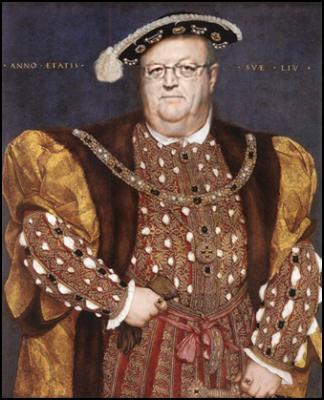
(Updated to add Lyndon Hood’s fantastic image of Brownlee VIII, link to Campbell’s article, and tidy the post up a bit.)

L

The measure of military commitment is taken in blood.

The death of Lt. Timothy O’Donnell in an ambush while on patrol in Bayiman province is a tragic but inevitable consequence of the NZDF participation in the ISAF mission in Afghanistan. His death, the first in ten years since the killing of Private Leonard Manning in an ambush by Indonesian militias in East Timor, is a sad reminder of the bottom line when soldiers are sent into conflict zones. But that is a cost worth paying when the soldiers are volunteers, understand their orders and the risks involved, deploy willingly and enjoy the support of politicians and public back home. The latter depends on how the public perceives the conflict in question, which usually reduces to perceptions of immediate or proximate threat weighed against the costs and benefits presumably involved.

The costs of the NZDF deployment to Afghanistan are now clear and are likely to mount in the months ahead as Taliban sharpen their attacks in the build-up to ISAF withdrawal as of July 2011. The question for NZ is now not so much military as it is diplomatic and political: will the NZ public continue to support the deployment if casualties continue to mount, and will the National government have the political will to continue in the fight in the event of growing public opposition and the intangible diplomatic benefits to be accrued from ongoing participation?

Although it is a bit dated, I have explained why I believe the mission is worth continuing here. I have also explained why I believe that the ISAF mission is bound to change once the July 2011 withdrawal commencement date begins. As a follow up, I have written a short piece that will appear in a mainstream media outlet tomorrow on Lt. O’Donnell’s death in the context of a Taliban resurgence and switch to a “balloon” guerrilla strategy in which the Taliban retreats from large kinetic confrontations in Halmand and Kandahar provinces and regroups in areas such as Bayiman where the ISAF presence on the ground is thinner (i.e. when they get squeezed they pop up elsewhere rather than fight a superior force at the point of massed contact).

All indications are that the security situation in Afghanistan will get worse rather than better, if it ever does. ISAF commander General David Petraeus and US Joint Chief of Staff Chairman Admiral Mike Millan have said as much. John Key has committed the NZDF to the Bayiman PRT until September 2011 and is considering extending the NZSAS deployment past its schedule end date of March 2011. But now that the costs of the mission are etched in blood, does he have the nerve, resolve and most importantly public support to keep that promise should things get worse in the months to come? Given that 2011 is an election year, will polls rather than principle drive his decision? One thing I believe will be certain. More Kiwi blood will flow in that forsaken land.

Blog Link: National Cuts and Runs.

Recent events strongly suggest that in spite of its supportive rhetoric, National is planning to withdraw the NZDF commitment to the International Security Assistance Force (ISAF) in Afghanistan as early as next year. Rather than just state why it has decided that the fight is no longer worth fighting, National is attempting to mask the decision by saying that it would “consider” continue the NZSAS deployment past March 2011 and that it might slow the NZDF withdrawal from the Bamiyan Provincial Reconstruction Team as part of the larger timetable for ISAF troop drawdowns that extends to 2014. But actions speak louder than words and National’s decision to not honour Australia’s request for 50 NZDF personnel to serve as police trainers in Oruzgan Province as replacements for departing Dutch troops is a clear indication that it believes the mission is a failure. So the writing is on the wall.

Whatever the merits of the Western involvement in Afghanistan, this decision sends some interesting signals to allies and disinterested parties alike. I explain my view of the subject in the July 24, 2010 issue of The Listener.

Sleeping dogs

Tim Watkin usually writes good sense, but with the latest post on gun control it’s clear he just doesn’t know his subject. Toughening gun control in NZ is basically a hiding to nothing, both in policy and in symbolic terms. It’s pointless for three main reasons:

  1. We already have pretty sane firearm laws and gun culture which regulate legitimate gun owners, and constrain the sorts of weapons most useful to criminals;
  2. As a country, we own a lot of guns, and they’re important to our way of life and identity, and this importance is the subject of bipartisan political consensus;
  3. We have very low rates of gun-related crime already, and any regulation which would be effective would be very costly, both in financial and political terms.

Just to preface this: I own a hunting rifle, and as a bit of a propaganda geek I’ve paid close attention to gun control as a matter of symbolic politics (alongside abortion, it’s a leading “touchstone” rhetorical issue in US domestic politics). I’ve been watching the way NZ is beginning to develop a (rather amateurish, but effective enough to not be laughable) US-modeled gun-ownership lobby with interest as well. But I’m not one of those “don’t tread on me” gun nuts who thinks bringing a loaded assault rifle to a town hall meeting is a core part of the democratic process. Owning a firearm is useful, but it’s not an absolute right — rather one which must be weighed against other consequences, including those which stem from arming communities. But I object to knee-jerk policy proposals which misoverestimate the problem, won’t solve it in any case, and will come at considerable cost.

What problem?
The most significant objection I have to Tim’s analysis is that he assumes gun crime is a serious enough problem to warrant harsh regulatory consideration; and seems to think that tackling it like the government has “tackled” knife crime is a sensible approach. I reckon both are suspect assumptions.

According to a UN survey from 2000 (the most recent I can easily access), 13% of our homicides (including attempts) were committed with a firearm, at an annual rate of 0.18 per hundred thousand population. That is a rate slightly higher than the UK (0.12 per hundred thousand, with much more strict firearm laws); just over half the rate of Australia (0.31, also with much more strict firearm laws, including a hugely expensive buyback programme undertaken in 1996 with the intention of solving the problem). I don’t think things have changed all that much; in 2009, the year of Jan Molenaar, the figure was 15% of our recorded murders (incl. attempts). You can use the Statistics NZ tools to get data here. You can also compare a bunch of countries’ rates here, but be sure to read the disclaimer. The bottom line is that we have extremely low gun crime rates by world standards, especially given that we have very high gun ownership rates. By far the highest proportion of gun-related deaths in NZ are suicides — I don’t have the numbers to hand but I recall it being above 70%. That’s a consideration, since suicides are usually committed with weapons of opportunity, and a firearm is particularly effective. But this is not the argument being made.

Knives are a much more serious problem, accounting for about twice as many homicides in NZ, and “other weapons” and “manual” which I assume includes unarmed homicides are also generally more common than firearm murders. The government has seen fit to “crack down” on knife crime by trying to prevent youths’ access to knives at the retail level using a voluntary code of practice. This is pure security theatre. Everyone credible knows it won’t make a blind bit of difference because kids don’t go and buy a knife from a shop, they just take one from the kitchen drawer or the toolbox in the garage. Firearms are already much more heavily regulated than this, and as a consequence people wanting one but who lack a license don’t roll into Hunting & Fishing and buy one — they get them illegally because we have no idea how many there are or who owns them (more on this later). So the comparison between guns and knives, while tempting, is bogus. Knife crime is much more serious than firearm crime, much less-heavily regulated, and the trivial additional regulation proposed won’t change anything — but it also won’t cost anything.

What guns?
Part of the reason gun crime is such a minor problem in NZ is due to our history and culture with guns, and in particular the fact that “personal defence” has never been a justification for firearm ownership. Tim also gets this wrong: citing “personal defence” as a reason for needing a firearms license will mean you get denied one, especially if you’re trying to apply for a restricted weapons license (which is the example he uses).

Excluding the post-settlement period, firearms in NZ have generally been conceptualised in law and culture as tools rather than weapons — for hunting, sport shooting, or the defence of the realm. Most in existence today are .22 calibre rabbit guns, or bolt-action ex-infantry rifles from the first and second world wars, passed down from father to son, or modern firearms based on near-identical designs, or shotguns designed for gamebird hunting. Partly due to length, partly due to action design and calibre, these are pretty useless for self-defence except for the appearance of threat and as clubs. By the same token, they are far from ideal for offensive use. Part of the reason criminals are rarely armed with firearms is because they are nearly impossible to conceal (which makes carrying or using them a riskier proposition than, say, a knife), and if sawn off below the regulation length of 30 inches, they are still not very convenient, and give police instant cause for book-throwing if discovered.

There are relatively few pistols or assault rifles in NZ, and those which are owned are very tightly controlled, with extremely high standards required of the owners. The NZ Police apparently operate a “sinking lid” policy on restricted weapons: to gain permission to import or produce one, you need to destroy another. This has driven the market price of such weapons through the roof, putting them out of the reach even of many legitimate collectors; although it must be said that the distinction between a “military-style” semi-auto and any other semi-auto is largely (not entirely) cosmetic, and one is no less deadly than the other. As the rather grim saying goes, the seven-round magazine restriction on an ordinary semi-auto centrefire rifle just means that if you want to kill more than eight people, you’ll need to reload.

Firearm licenses, especially those for restricted weapons like military-style semi-automatics and pistols, are issued at the discretion of an Arms Officer on the basis of the applicant being of “fit and proper” character. The threat of losing the license acts as a firm constraint on legitimate gun owners’ behaviour, with most hunters, collectors, etc. living in fear of having their license revoked. This constraint comes into force, for example, when deciding whether to keep a firearm for self-defence purposes in a country where most potential assailants, burglars, etc. are not themselves armed: if you happen to use it as such, you must then explain to your arms officer how come you had it handy, rather than locked up in its safe, with the bolt and ammunition separated. Most people comply to avoid this inconvenience, and because they know that the chances of a family member actually meeting a life-or-death situation are much higher with a loaded firearm lying around than otherwise.

In general (and again, I don’t have the figures to hand) the vast majority of gun crime in NZ is committed by people without a legal right to own or use a firearm in the first place (being not “fit and proper”). Jan Molenaar was just such a person, so using him as an exemplar of all that is wrong with the system is a bit misleading. It’s certainly an indictment on police procedure following the last shake-up of gun laws. Probably the biggest failure in our gun licensing regime is the lack of a registration system for specific firearms. It’s expensive, time-consuming and bureaucratic but would have been of some use had it been implemented when suggested by the Thorp report, even if just to draw a clear demarcation line between compliant and non-compliant owners. I think that horse has bolted now.

As for the matter of private internet sales of arms and ammunition — Tim clearly hasn’t used Trade Me for this purpose. It’s considerably more robust than any comparable method other than a brick-and-mortar shop (and many B&M shops use the same methods to sell nationwide). Anyone can view restricted auctions, but to bid or ask a question you need to enter your firearm license number. Repeated failure to do so (or entering made-up numbers) gets you blacklisted. If buying otherwise than by a face-to-face meeting, you are required to complete a form designated by the Police for this very purpose, and have it counter-signed by your local Arms Officer, who sights your license. The first step (needing to enter your number) prevents anyone without access to a license even bidding or making contact with a seller. This is probably the most effective safety mechanism in the system.

Sleeping Dogs
These are policy and cultural reasons which explain why trying to crack down on gun ownership in NZ is likely to be pointless. But Tim’s post was largely about the political aspects of the issue: the tension between the imperative to be Tough On Crime and the danger of getting tarred with the Nanny State brush. In symbolic terms, I reckon gun control is a loser for both of the major parties because, unlike the knife measure which is empty theatre, any meaningful changes to the gun ownership regime will come at a considerable costs. One important consideration with this is that in NZ (and Australia), unlike in the USA, gun control is seen as a matter of bipartisan consensus, with both National and Labour generally occupying the middle ground (and ACT and the Greens taking up the flanks). This means there’s little or no partisan advantage to be gained by either side.

The first of these costs is purely financial. A registration, licensing audit, inspection-reclassification or buyback scheme to remove firearms (or certain firearms) from circulation (or from the hands of those not “fit and proper”) is hugely expensive. The Australian Federal Government raised a special tax for the purpose and spent hundreds of millions of dollars on its buyback scheme, and even given the dramatic reduction in gun crime rates which resulted, it was generally seen to be wide-open for rorting. In New Zealand, with a much lower baseline level of gun crime, much less money and much more pressing law and order policy issues, this simply wouldn’t fly. Quite apart from the money, the drain on already-stretched police time would make a mockery of the government’s pledge to deliver resources to the front lines and away from the “bureaucrats”. And for all of that, it would still predominantly capture guns possessed by licensed owners: the “good guys” who, of all people, should retain their gun-owning privileges.

The second, and probably weightier cost is about the NZ identity. As I’ve argued before, wild places matter to us in identity terms. While most New Zealanders don’t own firearms, and never will, many more than the 250,000 who do like to think of themselves as potential outdoorsfolk who might go and shoot a possum and do their bit to save the rata. I don’t want to overstate this, though. Gun owners and hunters are viewed with considerable ambivalence by the general public, and with some cause. The gun lobby doesn’t do itself or the more reasonable branches of the sporting community any favours, and to a large extent they’re thought of in similar terms to Jan Molenaar and the various flavours of SHTF nutters.

But Nanny State also comes into this. Tim suggests that Labour couldn’t afford to do this for fear of strengthening the narrative established by the last term of the Clark government (I agree), but that National might just be able to get away with it. I disagree. Half of National’s support base are farmers or rural/semi-rural men of above-average income who are generally law-abiding and consider themselves responsible citizens in partnership with the authorities — of the view that the government “works for us”, rather than the view that the government is an agent of their oppression. (There are exceptions to this last, but mostly they vote for ACT and are thus irrelevant to this calculus.) This is almost exactly the same demographic which wants to be able to take care of his own rabbit problem and hunkers down in a cold maimai before dawn on the first weekend of winter for a laugh, and they greatly value the illusion that doing so is an inalienable right akin to that laid down by the Second Amendment. They tolerate (often with considerable reluctance) the existing licensing regime partly as a pragmatic solution to the social problem of crime, and partly because it accords them the status of being officially deemed “fit and proper”. But they will not tolerate further incursions on these privileges, and it is this demographic whom the gun lobby, with its US-imported “armed society is a polite society” rhetoric, is targeting using the present hysteria about violent crime as a springboard. These are the guys who already feel under threat from policies like the ETS, which prevents them from buying the V8, forcing them to settle for the V6.

This demographic might be the sort of people who could be persuaded to support tighter restrictions if there were a strong crime-reduction case to be made for it. But since there’s so little to gain, and since the existing regime is already at the margins of what is acceptable, National rouses these sleeping dogs and permits their radicalisation at its peril.

L

You can’t mess with the messers

[Note: Idiot/Savant stole my initial title for this post — word for word! — forcing me to get more creative. The definitive version is here. Not sure about the video, though.]

Education minister Anne Tolley has tacitly threatened to go nuclear on primary principals who refuse to comply with National Standards directives, or who speak out against them. In a speech to the Principals’ Federation conference in Queenstown today, she said:

It’s much quicker [contacting me with concerns] and you will get results, rather than going to the media and making threats, which is just politicking, and achieves little.
And while we’re on that subject, you are pretty unique among public servants who can speak freely in the media. May I remind you that I made representations to make sure that continues.
However – no public servants have ever been granted the privilege of picking and choosing which Government laws they choose to administer. Lawyers, accountants and all the other professionals working in Ministries can offer opinions. But it’s the Government that makes policy decisions.

Now, there’s an implication here that the minister might retract her “representations” to make sure that the rights of teachers to speak freely are preserved, but there’s nothing to this. Any move to constrain teachers’ views or their expression would immediately draw furious and justified denunciations of the government for politicising and propagandising the education system, such as no liberal political movement could withstand.

In the final analysis she’s 100% correct about the government setting policy and the sector implementing it. By way of remedy, the ministry can take over the running of a school which fails to implement education policies adequately, and Trevor Mallard suggests the ERO has already started heavying truculent schools to set an example to others.

But it is an empty threat. For one thing, you can’t play the bossy schoolmarm with schoolteachers and principals — they wrote the book on it, and know all the tricks of the game, having put up with them from students for their entire professional lives. Not to mention that, as career educators they have far more invested in the quality of their education system than a minister who’s only been in the job two years and could be gone in the next cabinet reshuffle.

More crucially, though, the minister is up against old-fashioned collective action: a heavily unionised workforce which knows it is indispensable and irreplaceable. So what happens if it’s not just one school? What happens if it’s a dozen, or a hundred, or almost all the primary schools in the greater Auckland area, or the schools of two National heartland electorate regions at either end of the country, or as much as 94% of the sector overall?

Later in the speech, Tolley said:

I’ll say it again – we are going to get this right, for the students, and for their parents.

But when push comes to shove, National Standards simply cannot be implemented by fiat. Teachers, directed by principals, are those who must undertake the implementation of the policy. While I cite them reluctantly because I don’t entirely agree, it’s somewhat like what the Randians are saying about Obama’s response to the BP oil spill: no amount of threat or bluster can provide any additional incentive to progress a cleanup whose failure or undue delay will spell a certain end to the company. No matter how you slice it, there are not enough Ministry of Education staff members, non-unionised part-time relievers or teachers who are happy with National Standards as proposed to do the complex and important work of assessing all the students who need to be assessed; cataloguing, moderating and communicating those assessments to parents and the ministry in a coherent manner. This is ignoring the fact that you can’t simply parachute a compliant teacher or apparatchik into an unfamiliar classroom and have them do it with any legitimacy. The teachers who stand up in front of that class of kids day-in and day-out are the only ones who can properly assess them, and they know it.

The sector also knows it’s in the right. Educators’ opposition to National Standards is neither ideological nor capricious, and they have have consistently levelled principled and pragmatic arguments against only the proposed implementation of the policy, backed by the best local and international experts in the field. They support assessment standards in principle, and have repeatedly suggested reasonable alternatives to the proposed implementation. The problem isn’t with their willingness to work with the minister; it’s that the minister isn’t interested in working with the sector.

So ultimately one of two things will happen: one side or the other will compromise sufficiently for the issue to progress, or the minister will be faced either with backing down in abject failure or sacking a significant proportion of the education workforce, with the consequent failure of the policy by default, not to mention a massive outcry from parents who’re forced to take time off work because their kids can’t go to school (and from their bosses, and bank managers, and almost everyone else). There’s no better way to bring the country to its knees.

Tangentially, this situation illustrates a branding risk I’ve been meaning to post on for a while: if you name a policy initiative after your party or some other core bit of your identity, you had better be damned sure you can get it through to full implementation without a hitch, lest its failure tarnish your good brand. Quite apart from any concerns with the policy, his National government has failed to do so with its National Standards. Not only is the policy programme and its attempted implementation against the wishes of the only people who can implement it a catastrophic mistake, but its naming looks like a spectacular failure as well. If it’s not pulled out of the fire soon, in future, all National’s political enemies will have to do to score a point is recount some of the more embarrassing events of this episode and say “these are National’s Standards”. It’s already happening — I’ve seen that very sentence used at Red Alert, for instance, regarding something unrelated to education reform. Instant conversion of a wonkish policy criticism to a gut-level identity observation which will resonate with the folk who just wanted their kids to go to school, those who wanted nothing more than to teach them as best they could, and ultimately the kids themselves. For this reason, my instinct is that the long-term damage to National’s brand and electability on this matter will become too high a price to pay for the perceived win over the sector, and those with a more strategic view of National’s situation will require that the wound be cauterised. Although it’s a backdown, over the long term this will be good for the party. More importantly, it will be good for the country.

L

Between the Devil and the deep blue sea


(Image, “Road to Hell”, stolen from Alexander West.)

And I did not mean to shout, just drive
Just get us out, dead or alive
The road’s too long to mention, Lord, it’s something to see
Laid down by the Good Intentions Paving Company
(Joanna Newsom)

John Key’s government is starting to play for keeps after a year and a bit warming up. There have been a few clear examples of this, including the aggressive tax and service cuts in Budget 2010, and signs pointing to privatisation in the not-too-distant future. Less orthodox is the recent hardening of the government’s position on take Māori.

Key was not punished for his calculated snub of TÅ«hoe, and it seems the success has emboldened him to flip the bird to an even larger Māori audience, saying two things: that Māori can take or leave the government’s public domain proposal for the Foreshore and Seabed; and that by “Māori” he means “the māori party”. It’s these things I want to discuss, and they need a bit of unpacking.

Pragmatism and principle
Conventional wisdom on the Left is that Key’s blowing off Māori is (either) paying the red-neck piper, or a genuine manifestation of his (and the government’s) own racism. I think it’s neither and a bit of both. On the second bit, I accept that the National party’s history on Māori issues is broadly racist inasmuch as it hangs on a “one law for all” rhetorical hook whilst systematically opposing measures which safeguard the equal application of those laws to Māori, but I think this is down to the casual racism of privileged ignorance rather than the malicious anti-Māori sentiments of Orewa. Key’s politics, I am convinced, consist of a thick layer of pragmatism on a thin frame constructed of a few very strong principles. The principles are not the bulk of his politics, but they strictly delineate the extremes of what he will and won’t accept. Fundamentally on cultural issues he’s a pragmatist, and doesn’t much care either way as long as he’s getting his. But there is a solid core there which is only so flexible, and changing the ownership status of huge tracts of land (whether by Treaty settlement in the case of Te Urewera or by nationalisation in the case of the Iwi Leadership Group’s suggestion regarding privately-owned sections of the Foreshore and Seabed) is too much of a flex. There are good principled reasons for National to oppose such a scheme, and for this reason I don’t think he’s pandering to the redneck base so much as preserving what he perceives to be the National Party’s immortal soul: cultural conservatism and the maintenance of material property rights. Although I broadly disagree with the reasons, and the decisions, I wish that Labour had done as much to preserve its own immortal soul in 2004 and 2005.

“One law for all”
While I’m on record opposing a “public domain” resolution of the Foreshore and Seabed because it’s a solution of convenience rather than one born of any deep consideration of the issues in play, I have a little more time for Mark Solomon’s suggestion that if Māori are to give up nascent property rights to the takutai moana, those already holding such property rights ought to be obliged to do the same. I’m not convinced by arguments from PC and DPF to the contrary. PC’s argument, that iwi and hapÅ« ought to have full common-law recourse to test their claims as permitted by the Court of Appeal ruling in favour of Ngāti Apa has more merit than DPF’s, but I still consider it a poor option since there is a high likelihood of a culturally and politically repugnant outcome which would lack durability and further inflame racial hatred. Contrary to DPF’s claim that Solomon’s position is unprincipled, Tim Watkin argues that it’s actually a pretty good representation of “one law for all”. It would ensure that existing landowners — most of whom happen to be Pākehā — are not grandfathered into a new scheme simply by virtue of having bought land which may or may not have been legitimately acquired from whomever it was bought, while iwi and hapÅ« — who happen to be exclusively Māori — are forced to give up their rights. I argued much the same thing a few days ago, and I’m pleased to see someone else thinking along the same lines. While the whole Foreshore and Seabed going into public domain is worse than Hone Harawira’s proposal that the land be vested in customary title with ironclad caveats because it strips away rights rather than granting them, it does have the advantage of stripping those rights equally, rather than on the basis of largely racial discrimination.

There is another, economic, point in play: if land not presently in private ownership is placed in the public domain and declared inalienable, the increased value of those few freehold, fee-simple property rights which do exist at present will have a phenomenal distortive effect on the property market and on New Zealand’s social structure, with the inevitable result that almost every scrap of it will end up in foreign ownership. We will then have the perverse and incoherent result that most of the beaches will be owned in common — but those which aren’t will be the exclusive domains of ultra-wealthy foreigners. Whether this is a good or a bad thing is a fair point for debate, but I think this fact will grant Solomon’s proposal considerable appeal to the broader New Zealand public, especially among those who do not — and even at present prices, could never — own waterfront property.

Just who are these “Māori”, anyway?
As I noted above, Key has been clear that he cares not a whit for the Iwi Leadership Group’s views on the matter: he considers that the māori party has a mandate to negotiate for all Māori and the decision is theirs. This is strictly almost correct: they do have a such a mandate, and whatever they decide will be broadly regarded as legitimately representing “Māori”, to the extent that the decision accords broadly with the views of Māori as expressed by their various civil society agencies. This proviso, missing from Key’s glib assessment of the political situation, is crucial. By omitting it, Key aims to drive a wedge between the party and those civil society agencies — chief among them the Iwi Leadership Group convened for this very purpose — from whom they ultimately derive their electoral mana. The māori party, frequent howls of “sellout!” from the Marxist left notwithstanding, do regularly test their policy positions against these stakeholder groups, at hui, and in their electorates. This makes them particularly secure in terms of their support, as long as they act in accordance with their supporters’ wishes. I have long criticised the howlers for misunderstanding just what it is that the māori party stands for, and their mischaracterisation of the party — plump buttocks in the plush leather seats of ministerial limousines, representing “big brown business” — is similarly a wedge, of a slightly different hue. But this issue is the test. Without the support of the Iwi Leadership Group, it’s hard to see how the māori party could maintain its claim to a mandate.

Crossroads
Which brings me to the verse at the top of this post. This issue has deteriorated to the point that the National government — like the Labour government before it — issuing public ultimatums to Māori and prejudging the case by claiming to speak for the māori party’s position. That is not mana-enhancing for a coalition partner which has showed enormous patience and swallowed almost innumerable dead rats in exchange for largely symbolic concessions. This breakdown of diplomacy on its own is not sufficient to call time on the coalition relationship — that comes down to the merits of the choices available, and the proposal simply isn’t enough. I have long defended this approach on the basis that the big issues were still to play out — but the loyalty and commitment shown by the māori party, in the teeth of furious criticism from enemies and allies alike, must be rewarded. A Whanau Ora pilot programme simply isn’t enough. This road was paved with good intentions, and there was a chance it would lead elsewhere than where it did — a chance which had to be taken but which, barring a swift change in the government’s position, seems to have proven unfounded.

If the government holds to its ultimatum, the māori party must turn around and walk back into the light. On this I agree with Rawiri Taonui (audio). The party will lose much more by abandoning its people and agreeing to a Faustian bargain than by simply failing to negotiate the repeal of the Foreshore and Seabed Act, which realistically was a nearly impossible task in any case. And even if the party did support the bill, it would not mean the end of the struggle. As Taonui says, although they might have the numbers to pass the legislation, the government’s solution will have no legitimacy or durability in practice without the support of the ILG and those it represents. Where there is injustice, resistance will seep out around the edges. If the issue of the takutai moana remains live, the party can continue to advocate for a just and enduring solution, and the ILG’s proposed solution opens a potential route for re-engagement with the Labour party. All is not lost.

The big question — as I asked in r0b’s excellent thread the other day is: what will Labour do?

They can sit back and say “I told you so” to the māori party, hoping they will fold, or they can make a better offer and hope the māori party will become more inclined to work with them. I can see how either would be a reasonable tactical position in terms of electoral numbers, even though the former course of action would continue the erosion of Labour’s historically liberal and Māori support. But there’s also a real danger the party will do neither, or will attempt to do both and fail at doing either, such as by arguing that the FSA was actually not that bad after all. That would be a tragedy.

The whole world’s watching. I have to say Shane Jones, who the party desperately needs if it is to have credibility on this issue, hasn’t helped dispel the predominant impression of Māori politicians held by the New Zealand public.

L

Cannibalising society for the money proxy

This talk of not being jealous about tax cuts, and the unstated supposition that the rich are just better reminded me about a couple of posts I wrote a year or so ago about the “money proxy”: the idea of wealth as an easy quantifier for a person’s value. I’ve rehashed the argument here because I think it’s particularly apposite given the forthcoming budget. Paraphrasing myself:

Money is both the means by which we judge a person’s worth (in the human sense) and the resource needed to enjoy the comfort and dignity to which human beings are entitled by simple virtue of their being human beings. Because the same thing is used as both a means and an end, there is inevitable conflict: by denying people access to sufficient food, healthcare, accomodation, etc. on the grounds that they cannot afford to buy it for themselves, a society tacitly says: you are not worth it because you do not have enough money.

Previously, I had argued that while there’s considerable shared ground between National and Labour (both want economic growth, believe in the state’s role in providing some public services, etc.) the predominant difference between the two in economic terms is in the reflexive positions to which they repair when hard choices need to be made. National believes in supporting ambition, Labour in mitigating harm:

The former sees achievement as the highest goal, and failure as a necessary collateral effect of attempted achievement. They grade a society by its upper bound, by how much success its leading members achieve. In this regard, the ideology emphasises ambition, celebrating that qualities as the most beneficial to society while disregarding the worst consequences of its failure – destitution, disease, starvation, etc. The caricature of an ambitionist, if I may coin the term, sees the world as humanity’s oyster, and humanity in positive terms – as potentially successful and satisfied and healthy and secure, and considers that anyone who does not achieve these things has simply not tried hard enough, or for long enough, or lacks the innate characteristics needed to achieve those things and is therefore not entitled to them. Entitlement accrues to a person on the grounds of their success. In symbolic terms, the way to appeal to these people is in terms of opportunity, advantage, individuality, and the idea of just desserts for effort rendered.
On the other hand, the caricatured mitigationist (to coin the opposite term) grades society on its lower bound, by the extent to which the least successful members of the society are allowed to suffer by the more successful. They see the world as a dangerous, inhospitable place in which the default state is abject meanness, and humanity in negative terms of limiting those inhospitable forces, keeping out the cold and the hunger and the disease, while anything else is a bonus. Entitlement accrues to a person on the grounds of their humanity alone. The way to appeal to these people symbolically is in terms of compassion, brotherhood, sacrifice, cooperative achievement and that principle that none should suffer needlessly.

Emphasis added to identify the key symbolic points of the rhetoric around this budget, and highlight the fact that things are playing out exactly as you would expect. These battle lines were drawn long ago, and for all National’s “compassionate conservative” rebranding, there’s really nothing new in their focus here. They faced a clear choice between ambition and harm-mitigation, and chose according to their political identity. They simply don’t have a problem with the money proxy: it’s a measure as good as any other, and a nice clean “objective” one, because it’s determined by a market.

But I do. Following the first excerpt, I wrote:

This, to me, is not acceptable. If we cannot divorce the value of a person’s dignity, comfort and wellbeing from the monetary cost of sustaining it, what’s the purpose of society?

It’s bad in principle that people are treated (to a greater or lesser extent) as non-people by virtue of their material circumstances. And furthermore, I think it’s a bad decision in plain pragmatic utilitarian terms to attempt to swim against the economic tide and support ambition at the cost of significant harm:

Push comes to shove at times like this, when things are tight. When many people are deprived them, the human necessities of health, comfort and dignity can more readily be achieved by an idea of the common good than by the burning desire of ambition. […] In good times it’s easy to emphasise the greater good because a reasonable minimum standard can be expected to exist or be trivially provided for the few who need it. None need suffer except by a relative standard. In hard times, however, when raw success is less achievable, mitigating harm at the temporary expense of ambition becomes more valuable by its easy achievement.

So what we have with the budget, judging by the pre-release hype, is simply a return to form for the National party, and it should be countered by a return to form by the Labour party as well. National are retreating from the middle ground which won them the election and repairing to their reflexive, reptilian-brain adherence to the money proxy as an iron law of society. Labour must reclaim this ground; not that it ever really ceded it, rather permitting an occupation which is now beginning to withdraw.

The underlying calculation is a tradeoff of societal harm against economic growth. Another way of putting it, in more resonant terms, is: how much of society are we prepared to cannibalise, and for what gains, accruing to whom? This is the question around which Labour should orient its response. The words “many” and “few” will fit neatly into it.

L