Resisting the decline

This is art, can you believe it?After some reflection and consideration of the pretty well-made arguments against my last post on Sensing Murder, I now have a bit more understanding of and sympathy for the position of those who are so infuriated and offended (thanks, Tony, Keir, Andrew and others). While I still think the difference between psychics and other sorts of entertainers is one of degree rather than kind, I accept that it’s a pretty big difference of degree, and that matters.

I wonder if there’s a correlation between those who object most strenuously to shows like Sensing Murder and those who generally bemoan the falling standards of entertainment and current affairs, and particularly the rise and proliferation of reality TV formats, and the consequent “realitisation”, if I may coin the term, of other genres. I’m thinking, here, of shows like Lost, which started out basically as a fictional version of Survivor; and 24, which is basically a video game in serialised form; the talking-head rent-a-quote instant-experts which predominate in news and current affairs programming; and the reality-esque coverage of media heroes and antiheroes like Clayton Weatherston and David Bain.

I reckon there would be, and I reckon that no small portion of the reason people hate on Sensing Murder so much is because it represents the most egregious example of this trend toward manufactured verité — in entertainment, in real life, and in how real life is presented to us. In this, it’s just another example of “resisting the decline” of society, which happens to an extent every generation.

I should hasten to add that I think it’s important that the decline be resisted — but by the same token I think it’s important that the reasons for resisting it be clearly stated and understood. But here’s another thing: while there is undeniably a great deal of dreck in the reality TV ouvre, and a significant amount of bland mediocrity, has the move genuinely brought nothing of value? The most venerated examples of the reality genre — Survivor for one; Idol and so on for another — have given zillions of people a great deal of pleasure, and now form a pretty central part of our* culture. I have a particularly soft spot for Survivor since it’s essentially just a big ball o’ political, social and psychological theory implemented in a handy ritualised narrative form.

In case you think I’m a trendy hipster libertine, I do personally disdain a huge amount of pop-culture — but not to the extent that I wish its absence on others who are into that sort of thing. That’s where I draw the line with Sensing Murder: let those who have been duped of money or faith complain to the small claims tribunal, or Fair Go, or the Advertising Standards Board, or the Commerce Commission. Let those who dislike the programme turn it off, and voice their disapproval to TVNZ and the show’s producers. Let those who object to public money being spent on it, and to the Police becoming involved in it make their objections known strongly, but let it all be done in the knowledge that some folk want it anyway and are willing to pay for it, even if it is all faked (and, deep down, they know it).

Last generation’s trash is this generation’s treasure; and vice versa. So it has ever been. This is part of what it is to live in a liberal society. Is it not?

L

* Permit me this generalisation, since I don’t want to write, nor (I am sure) do you want to read, yet another awkward definition of the “self” in this context.

Unfettered free trade is like having unprotected sex with strangers.

Like a sexual addict, New Zealand has a dark obsession with free trade. The obsession may speak to a larger issue rather than the value of trade per se. That issue may be the pathology of NZ political-economic elites fantasising about trade benefits rather than the real benefits to their constituents.

 Whatever the case, the number of free trade agreements (FTAs) NZ has negotiated is high for a small democracy (9–bilaterals with the PRC, Australia,  Malaysia, Thailand,  Singapore and South Korea, multilaterals with the Transpacific Partnership (P4) with Brunei, Chile and Singapore, and with ASEAN/Australia, as well as a regional agreement with the Gulf Cooperation Council (GCC) grouping several Arabian peninsular states). It has negotiations underway with India and Hong Kong  (bilaterally), on the Anti-Counterfeiting Trade Agreement (ACTA),  and with Australia, the US, Vietnam and Peru on joining the P4 in an expanded TPP. Further FTA negotiations with ASEAN and other partners are ongoing. NZ is an ardent champion of the virtues of free (unprotected) trade and open commercial borders in international fora such as the WTO.  In other words, if this were a sex survey, New Zealand is  promiscuous in its  approach to free trade.

To further the analogy, the pursuit of free trade under the National government is the macroeconomic equivalent of cruising for sex. It focuses on the immediate satisfaction of new market penetration and commodity exchange rather than on the potentially negative consequences of the liaison. Phrased politely as foreign market opening and reciprocal investment, the thrust of NZ’s FTAs gives much less regard to the “after-entry” (or “morning after”) consequences of sequentially engaging multiple partners with different strategic objectives born of varying cultural backgrounds, governance, resource bases and historical legacies. There is, in a word, a lack of prophylaxis when it comes to NZ’s approach to free trade.

FTAs are essentially tariff reduction, currency, investment and border control agreements. They are commonly referred to as “market opening” pacts. The focus is on the conditions and terms of entry. Although consensual, oftentimes these are largely determined by the interests of larger, dominant partners, particularly in bilateral agreements. But multilateral FTAs are like group sex–there is more room for individual manuever within the general rules of engagement, but the group dynamic may force the weaker partners to submit to advances that they may normally prefer to avoid (to bring things back to the subject, such as on issues like unorganised child or wimin’s labour, or open pit mining in conservation zones).

In either event, less concern  is placed in the rush to secure new FTAs on the environmental, labor market, gender, immigration, indigenous and security implications of trade opening. These are considered to be secondary consequences that are best dealt with based upon local market conditions.  It is the terms of the initial engagement that matters, not the morning-after effects.

This is what makes the indiscriminate New Zealand approach to free trade all the more alarming. Of  its new partners, many are authoritarian and most are bigger in size, with larger and more variegated economies of scale. The terms of NZ’s engagement with such partners, while legally equal, often leave it in a subordinate position where it is forced to accept practices that are unacceptable or contrary to community standards at home. In fact, if the analogy holds, then many of the NZ’s trade partners should have name suppression, if only becauseof their authoritarianism and systematic abuse of human rights at home.

Nor is NZs penetration of foreign markets pain-free. As Fonterra has learned, after-entry issues in foreign markets such as product quality control are not inconsequential. In fact, as far as the brand is concerned, the after-entry consequences of rapid market opening can often be devastating.

It is not just the brand that can be damaged by the rush to market opening.  Scholars have already begun to point to the negative consequences for the environment, indigenious groups, and labour rights when FTAs are negotiated without regard to after-entry consequences. I am currently working on a book chapter that highlights the security implications of the above-mentioned expanded TPP, to include its criminal and military-strategic and intelligence flow-on effects. 

For NZ, the longer term situation is not good. For example, even though NZ has opened its borders to increased aviation and martime-borne tourism, it has not increased the number of MAF or Customs dog-handlers to handle the increased volumes of tourist traffic in places such as Rotorua, Tauranga and Opua (all of the environmental security and drugs searchers have to be driven from Auckland) even though the volume of imported commercial goods has increased exponentiallyas well. This leaves gaping holes in bio-security as well as in narcotics interdiction in commercial ports of entry (think of an increase of thousands of containers worth of commercial goods entering NZ per year without the ability to scrutinise even a quarter of them). Nor have Police, Immigration or Customs resources been increased with an eye towards countering organized crime using newly opened trade borders as conduits for a bit of market penetration of their own (note recent reports of Chinese students serving as drug couriers–the PRC is the main source of the precursor chemicals for the manufacture of P). In addition, lax financial regulations and corporate registration laws contribute to making NZ an increasingly attractive destination  for money laundering ventures and business fronts originating in Asia. Again, no thought has apprently been given to these types of issues when FTAs are negotiated. 

In spite of the clear dangers of unprotected free trade, here defined as FTAs without negotiated after-entry provisos, the National government, Labour, and most minor parties believe in the mantra that the rising tide of free trade raises all economic boats. But, to continue the physical analogy, such an unprotected surge of free trade also brings with it potentially unhealthy (some might say deviant)  after-entry consequences when it comes to the socio-economic fabric of NZ society. That is why prophylaxis is necessary at the point of negotiations, not later.

John Key and Tim Groser may think of themselves as “players” on the world trading scene,  but they may be cruising for commercial love in all the wrong places, at least in terms of their choice of partners and neglect of morning- after effects.  Ill-conceived and lacking in consideration of longer-term impact beyond short-term aggregate growth, such an approach downplays overall societal welfare in favour of commerical and political elite satisfaction.  That may be exciting for the latter, but like victims of a night on the town gone wrong, it has the potential to leave the NZ political economy battered, brusied, postrate, supine and hopeless in the face of the manipulations of trade partners who seemed nice at first and promised many things, but whose subsequent behaviour proved less noble.

PS: remember, this post is about the potential negative effects of free trade. I realise that the cruising/unprotected sex analogy is a bit over the top, but I could not resist given how postively orgasmic the Key government waxes about free trade (sorry!).

PPS: In Wellington now. Went from 26 degrees and 99% humidity in AK to horizontal drizzle and wind at 15 degrees. Not quite dressed for it coming from my SE Asian redoubt. Looking forward to meeting Lew and (hopefully) seeing Anita again.

A walking, talking, living advertisement

… for why civilised societies which hope to remain civilised don’t lock violent children up with hardened criminals in the hope that they’ll magically reform into model citizens.

I’m talking about Bailey Junior Kurariki, whose latest offences, according to criminologist John Pratt, are a sign he has become institutionalised. Of course, his victim’s mother doesn’t think so, and neither do the usual reactionaries. The other lot aren’t all that much better. But perhaps that’s to be expected: when the only tool your populist justice positioning allows you to wield is a hammer, even a screwed-up 12 year-old kid looks like a nail to be smacked down as hard as possible.

L

Psychic’s Advocate

Poneke has another post up about Sensing Murder. Just for the record, I agree with the core argument of the post, and its somewhat famous predecessor. It should come as no shock to most of you that I also agree that the worst bit is that some journalists and current affairs directors treat them as newsworthy — but that’s the newsmakers’ failure, not the psychics’.

But here’s a comment from Falafulu Fisi I think could use a little unpacking:

People earn money for a living by being honest and hard work.
Business men are successful by being brilliant in running their businesses.
Paranormal practitioners (psychics etc,…) earn money via people’s stupidities and gullibility’s. They can become rich of course. Put them into the real world to try and earn an honest living they would be the laziest and incompetent wherever they are.

And in response, this from Klytemnestra:

I would have to disagree somewhat with Falafu Fisi. Excluding those cranks who actually believe they can talk to the dead, these ‘psychics’ are really quite successful business people. Getting rich by exploiting niche markets with false services no one really needs; this is a feat worthy of a degree of respect, even if they are repugnant in every other way.

Contra both of them, I’d argue that their “honest living” isn’t as psychics, or necessarily as providers of false services; it’s as entertainers. After all, those who actually use those “services” are a tiny fraction of those who consume the televised or stage-managed product which results. I also don’t accept Poneke’s suggestion that these consumers necessarily believe they have psychic powers — after all, it doesn’t follow that people who watch vampire movies actually believe in vampires. But even if they did, it ultimately doesn’t matter: taking advantage of peoples’ credulity isn’t wrong in and of itself, and for doing it these folk don’t deserve any more — and in general considerably less — criticism than financial advisers, real estate agents and talk radio hosts. They give a great many people who want such things something to watch of an evening, and something to believe in and make them feel all warm and fuzzy inside. In this regard it’s little different from — say — soap operas or romantic comedies. There’s a fair argument that it’s ghoulish, and perhaps hurtful to the real people involved, but in this regard it’s little different from — say — the cheesier end of TV current affairs or other reality programming.

Even if you don’t personally see any value in it, that’s an honest living, wouldn’t you agree?

L

What not to say

NZ Herald website’s lead story:

Telecom spokesman Mark Watts says this morning’s 111 emergency calls system failure “shouldn’t have happened” and is “a bad look” after the company’s recent repeated XT failures.

My emphasis. This illustrates that Telecom views the failure of an essential service — the only genuinely essential service they provide — as an image problem rather than a matter of public safety. Don’t get me wrong — it is an image problem, and a colossal one at that, and the fact that this fault was apparently unrelated to the ongoing XT failures underlines the brittleness of the country’s telecommunications infrastructure and undermines Telecom’s brand even more than it already has been. But treating it as an image problem for the company rather than a real problem for the country is the surest way of turning it into an even more serious image problem. You see what people are made of when they come under prolonged duress. Telecom’s senior staff are starting to crack.

Not that NZ Police communications are much better, with Inspector Karen Wilson saying that the Police were “unaware” of any cases where the need for emergency services had gone unmet. Well, they would be unaware, wouldn’t they? Given that the system for making them aware was nonfunctional.

This line (“Police are unaware …”) has become the NatRad bulletin lead, which means Telecom’s PR failure is reflecting on the Police, who bear no blame here. (Though, in fairness to Inspector Wilson, her remarks were a response to a suitably incensed Philippa Tolley, who first used the word “unaware”.) Still, better for the Police to more strongly emphasise the fact that they would be unaware due to Telecom’s failure, but that coping regardless was their responsibility.

It might be worth turning this into an ongoing series. There’s no shortage of material.

Update: By Checkpoint time, Mark Watts had changed his establishing point to “not a good thing”, which is much better, for just one word different. But his talking points were clearly thus:

  • The system works close to 100% of the time (therefore: don’t complain when it doesn’t.) This is a somewhat specious argument, but very necessary given Telecom’s situation, and it’d fly if the general position taken was one of contrition and regret.
  • Nobody was left hanging; everyone who made a call got called back to make sure they were ok. This is good; unfortunately, he refused to answer Mary Wilson’s repeated questions as to how long it took for people to get called back. That leaves the response a bit hollow. He also gets a bit arsey about it.
  • “The systems worked as intended.” WTF? This would be a plausible position if the Police had been informed, but they weren’t, and Telecom has no explanation for why not.

For their part, the Police have their act a bit more together, with Superintendent Andy McGregor emphasising the importance of public confidence in the system and Telecom’s failure to ensure it.

L

Are we?

While at the Save Radio NZ lunch-at-parliament today, it occurred to me that we’re probably the only country in the first world where you’re allowed to climb the trees on parliament grounds. Is this true?

If so, I think it says a lot about us.

L

Unmix these metaphors

ace_of_spades

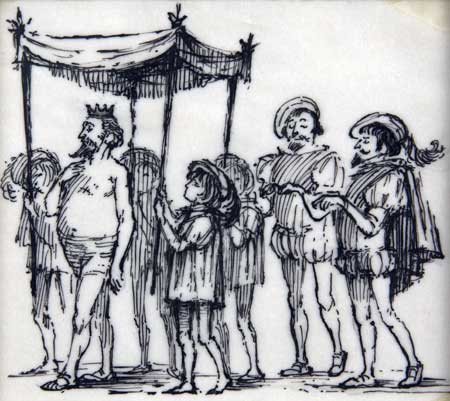
In the last couple of weeks the government’s pistons have started pumping. After a year’s worth of blue-boiler-suited (non-unionised) engineers making sure the sleek machine is primed and fuelled and oiled and ready for action, the engine has roared into life and is beginning to blow out a cloud of smoke in preparation for a screaming burnout. As it proceeds, the party has dealt its Labour opposition a decent hand of cards; you could say they’ve built a house of them, which the mighty engine is in danger of knocking down. After campaigning on a platform of returning integrity and effectiveness to the Beehive, the public are beginning to get an inkling that the emperor may lack a couple of vital articles of clothing.

hughes12

Returning to cards: the strongest card is the decision to mine the conservation estate, announced last year. Classic crony capitalism is shaping up to be the trump suit. The other cards: Hide‘s junket timed to coincide with a wedding; Harawira‘s trivial but more spectacularly mismanaged junket; Key‘s and McCully‘s mining shares; revelations that Brownlee lied about being lobbied by mining interests which would stand to benefit from his actions as a minister; attacks against Radio NZ which benefit Joyce‘s former business partners; attacks against ACC which benefit the insurance industry to which the party has well-known ties; and ministers Heatley, Brownlee and Groser who were pinged pinching from the public purse for their own private pleasure.

corporate_crooks

Mining the conservation estate is the keystone of all this, the central peg on which the whole thing hangs — because the allegations cannot be denied outright, only explained. Particularly in the cases of Key and McCully’s shares, the value of the conflict of interest is irrelevant. It probably should be relevant, but it isn’t really: either there is a conflict of interest, or there isn’t. While there would be (much) more hay to be made from a large shareholding, that isn’t necessary to plant the seed of doubt in the rich loam of the electorate’s and the media establishment’s collective consciousness.

plant-a-tree

Likewise the other issues: trivial, but they ring true and all riff on the same themes. Hide’s transgression was much more significant in actual material terms than was Harawira’s, but Harawira was punished much more harshly because he failed to recognise the symbolic matter in play: both required abject, cringing apologies. Key’s “sloppy” uranium shares, which he was “too busy running the country” to recall owning is reminiscent of John McCain‘s failure to remember how many houses he owned, for which he was rightly crucified by a country staring down the barrel of an economic crisis which would cost many people their only home. The smiling visages of the three ministers on the front page of the Dominion Post: the Minister of Economic Development who can’t be trusted with a credit card; the Fisheries Minister who likes to splash out on feeds of kaimoana for his mates and party hangers-on; the Minister for Climate Change Negotiations wining and dining the former National minister who was an integral part of the Copenhagen negotiation, and now heads the environmental branch of the OECD apparatus. And so on. These are symbolic issues, not matters of real actual wrongdoing. But the government can’t just dismiss them outright, it needs to argue the merits, and by the time you have to argue the merits on this kind of thing, you’ve probably already lost the symbolic battle. This sort of behaviour passes the public’s sniff-test about how they think about the National Muldoon gave us. And it fits the narrative of the modern Key/Brash-era Nats as wheeler-dealers, well-heeled fat-cats with a finger in every pie, feathering the nest for their secretive plutocrat mates. It brings to mind an iceberg, with the tiny, trivial transgressions peeking above a glassy surface which hides the monstrous mass below.

iceberg

The job of the opposition is to tie all this into a coherent story which people can understand and feel in their guts: a myth that trips off the tongue at the pub or in the line at the football, in the front seat of a taxi, sitting on the bus, standing around the water-cooler or in the smoko room — in as many variations as there are poets of the NZ electorate.

This post cannot end without a mention of the good work the folks at The Standard — particularly Eddie — have done toward assembling the blocks for this narrative pyramid. I am often critical of them, and their tendency toward partisan hackery frustrates me, but they do a lot of good work, and it shouldn’t go unrecognised. They’ve covered all the main aspects listed here, but they can only go part of the way: now is for the opposition parties and their allies to lurch into action. All the cards have not yet been dealt; the ace of spades may yet be seen. Although the raw material is all there, it won’t be easy writing this story — just ask Lockwood Smith, who only by dogged repetition and worrying away at the Taito Phillip Field bone managed to raise the electorate and media’s awareness of that actual and manifest case of political corruption. But this is the opposition’s job, and if they can untangle the metaphors and lay them out for people in simple, appealing, resonant terms, they will gain some traction. Then perhaps, they too will begin to belch smoke and fire, and roar down the road to victory.

L

You are only as good as your opposition.

During the years that Labour was in government, I was appalled by the lack of serious discussion on security and defense issues (or any other issue, for that matter). Instead of asking hard questions of the government about defense policy, strategic focus, the military budget, reasons for the TSA,  Zaoui’s unfair inprisonement, the competency and purview of the NZSIS, oversight of police intelligence etc., National barked about petty scandals and personal pecadillos. Its strategy was to snipe from the sidelines, make no statements of policy or specific commitments to substantitive changes, and to wait until labour self-destructed and/or voters got tired of its incumbency and opted for change for changes sake. The strategy worked.

The irony is that now in opposition, Labour has not been successful at doing the same. That affords National the political space to continue to test the winds on issues like taxation, defense, educational standards, climate change and mining of national parks without firmly commiting to a course of action. It appears to be a strategy of policy by stealth osmosis: simply announce a proposal, let the pundits and informed public debate the merits, go with the flow and shift the specifics depending on how public opinion polling shows the response to be, or offer rhetorical placations while leaching through the opposition. In some cases (GST perhaps?) that may means abandoning the proposal entirely but in most cases it means saying one thing, speaking of compromise, but doing another without meaningful concession.

The irony is that by being so wishy-washy, National prevents Labour from making political capital out of its opposition. Although it seems to have tried to copy National’s playbook for the opposition–snipe, nag, whine but not commit to a policy or course of action that would directly confront National’s proposals in antithetical terms–which may be due to a belief that the first year in government belongs to the government, with the proper role of opposition being to offer no real alternatives until closer to election day, the strategy has failed Labour.

In an interview Selwyn Manning (of Scoop fame) noted that Key and his advisors could afford to do do policy reversals and utter vague, retractable promises because there was “no cabinet-in-waiting” on Labour’s side of the aisle. The insight is spot-on: with no quality opposition pressing hard, specific, technical questions in a number of policy areas on it, and with the  front and back-benches surrounding Phil Goff populated by lightweights or mealy-mouthed opportunists,  National has the luxury of being indolent. It is the default option, the easy way out, basking in the afterglow of the “anything but Clark” attitude of many in the electorate. Given the abysmal state of political reporting in general, and majority disinterest in, if not distaste for politics, this gives National a triple dose of insulation from sharp questions and better alternatives.

However, that may have begun to change. Evidence suggests that at least some voters who shifted their preferences to National out of a sense of fatigue with Labour, or who thought that National would be more moderate and pragmatic than dogmatic in its approach to policy-making, are beginning to reconsider their support for the Key government (including those who may still like Mr. Key personally).  That in turn offers an incentive to Labour to stop playing the attack poodle role in opposition and to develop some policy bite along with its bark. For that to happen, though, Labour needs a shake up in its ranks, not so much in its Leadership (after all, is there really an attractive alternative other than Mr. Goff?), but in the seats that have potential ministerial rank should they return to power. Best to do that sooner rather than closer to election time, in order to stake out an alternative policy platform that erodes National’s policy justifications while firming up the expertese and debating skills of the pretenders to cabinet jobs in a future Labour government.

NB: I write this after a week in NZ after a year-long absence. My thoughts are preliminary and driven by my alarm at the absence of serious policy discussions, or perhaps better said, the absence of coverage of policy discussions in the NZ media (the kerfuffle over Key’s stake in a uranium mining outfit being an example of political coverage that hammers the margins rather than the meat of its policy implications). That is either a sign of mass comfort or apathy (or both), none of which makes for an informed public and accountable government. After all, a government may only be as good as the quality of its opposition, but government and opposition are only as good as what the informed public demand. At this juncture, I see little public demand and limited quality depth in NZ political society.

Week off

Dear KP readers,

After a flurry of activity over the past few days, I’ll be a bit scarce for the coming week. Pablo is also travelling and will likely not be posting. In the mean time, here’s a forum for you to bring up and discuss things you think are interesting. The usual standards apply.

Also, if anyone wants to submit a more formal guest post for consideration, email me — lew@kiwipolitico.com.

Cheers,
L