‘Blue collars, red necks’: triply flawed

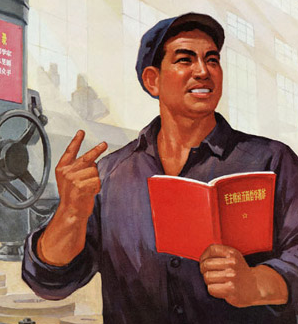
To those who stick up for their identity, socialism sticks up two fingers!

In the coming years, core tenets of socialist and indigenist faith will be tested. Labour, with its recently-adopted ‘blue collars, red necks’ strategy, has struck out along a path which requires a large slice of its core constituency — Māori — to search their political souls and choose between the renewed Marxist orthodoxy which privileges class above all else; and the progressive social movements developed over the past three or four decades which have produced a society tolerant enough to permit their unprecedented cultural renaissance.

The strategy indicated by Phil Goff’s speech appears to be substantially based on the simple calculus, most forthrightly argued by Chris Trotter, that ‘social liberals’ are fewer in number than ‘social conservatives’ among the proletariat, and therefore an appeal to ‘social conservatism’ will deliver more votes than the equivalent appeal to ‘social liberalism’. This is couched as a return to the old values of the democratic socialist movement — class struggle, and anything else is a distraction. But because the new political strategy is founded upon an attack on Māori, it requires that working class solidarity wins out over indigenous solidarity and the desire for tino rangatiratanga in a head-to-head battle. Māori must choose to identify as proletarians first and tangata whenua second. Similarly, the māori party’s alignment with National and subsequent intransigence on issues such as the Emissions Trading Scheme asks Māori to privilege their indigeneity over material concerns.

An article of faith of both socialist and indigenist movements is that their referent of political identity trumps others: that all proletarians are proletarians first, and that all indigenous people are indigenous people above all else. In the coming years, unless Labour loses its bottle and recants, we will see a rare comparison as to which is genuinely the stronger. Much of the debate which has raged over this issue, and I concede some of my own contributions in this, has been people stating what they hope will occur as if it surely will. For this reason the test itself is a valuable thing, because it provides an actual observable data point upon which the argument can turn.

A spontaneous interlude: I write this on the train into Wellington, in a carriage full of squirming, shouting, eight and nine year-olds on a school trip to the city. In a (rare) moment of relative calm, a few bars of song carried from the next carriage, and the tune was taken up enthusiastically by the — mostly Pākehā — kids in my carriage.

Tūtira mai ngā iwi (aue!)
Tātou, tātou e.
(In English:
Line up together, people
All of us, all of us.)

Read into this what you wish; one of life’s little rorschach tests.**

Clearly, I don’t believe Māori will abandon the hard-won fruits of their renaissance for a socialist pragma which lumps them and their needs in with everyone else of a certain social class, which in the long term would erase the distinction between tangata whenua and tangata Tiriti. This distinction will fade with time, but that time is not yet come. For this reason I believe the strategy is folly at a practical level. Add to which, the appeal to more conservative social values was always going to be strong among Māori and Pasifika voters, so the left and right hands (as it were) of the socialist conservative resurgence seem unaware of what the other is doing: with the left hand, it beckons them closer, and with the right it pushes them away.

My main objection to the ‘blue collars, red necks’ strategy is not practical — although that would be a sufficient cause for opposing it. The main reason is because of principle, and this question turns on an assessment of the left in politics. Trotter and other old-school socialists (and presumably Pagani and Goff and the current leadership of the Labour party) believe that the left has been hijacked over the past generation by non-materialist concerns and has lost its way as a consequence. I believe that the wider social concern with non-material matters has saved socialism from its own dogma.

Largely discredited as an economic system and its legacy irretrievably tarnished by the catastrophic failure of practically every implementation, socialist-aligned parties on the left have been forced to diversify from a strict focus on what’s in the pockets of the proletariat to what’s in their heads — what they care about and who they are, their identity beyond being ‘the proletariat’. In doing so these movements have embraced liberalism, social equality movements, and environmentalism, and the resulting blend, termed ‘progressivism’ has become part of the political orthodoxy, such that the political right must now pay at least some mind to these considerations if it is to remain viable. This broadening, and the progressive movement’s redefinition of what is right by its general and gradual rejection of racism, sexism, sexual and religious discrimination, among others, has been hugely beneficial to society. For reasons of principle, it should not be discarded out of cynical political expedience.

Furthermore, maintenance of the social liberal programme has strategic, pragmatic value. It has enabled left political movements to broaden their support base and engage with groups often marginalised from politics, breaking the previously zero-sum rules. The modern Labour party has built its political church upon this rock of progressive inclusion, broadening its support base by forming strategic alliances with Rātana from the time of the First Labour Government and less formally with the KÄ«ngitanga and other Māori groups, to which the party owes a great deal of its political success. The progressive programme has broadened to include other groups historically marginalised by the conservative establishment. For Labour to shun its progressive history and return to some idealised socialist pragma of old by burning a century of goodwill in order to make cheap electoral gains by emulating their political opponents is the same transgression many on the economic left have repeatedly levelled against the māori party, and with some justification: selling out one’s principles for the sake of political expedience is a betrayal, and betrayals do not go unpunished. In this case, the betrayal is against the young, who will rapidly overtake the old socialist guard as the party’s future; and Māori, who will rapidly overtake the old Pākehā majority in this country’s future. The socialists might applaud, but Labour represents more than just the socialists, and it must continue to do so if it is to remain relevant.

So, for my analysis, the ‘blue collars, red necks’ strategy fails at the tactical level, because it asks Māori to choose their economic identity over their cultural identity; it fails at the level of principle, because it represents a resort to regressive politics, a movement away from what is ‘right’ to what is expedient; and it fails at the level of strategy, because by turning its back on progressivism the party publicly abandons its constituents, and particularly those who represent the future of NZ’s politics, who have grown up with the Labour party as a progressive movement. It is triply flawed, and the only silver lining from the whole sorry affair is that (again, if Goff and Pagani hold their nerve) we will see the dogmatic adherence to class tested and, hopefully once and for all, bested.

L

* Of course, Goff claims it is no such thing. But Trotter sees that it is and is thrilled, and John Pagani’s endorsement of Trotter’s analysis reveals rather more about the strategic direction than a politician’s public assurance.

** I see this as an expression of how normalised Māori-ness is among young people, and as much as can be said from the actions of nine-year-olds, an indicator of NZ’s political future.

Insensitive and hypersensitive

In the Insensitivity and hypersensitivity paper I referred to previously, Raymond Nairn and Timothy McCreanor studied submissions to the Human Rights Commission in response to the Haka Party Incident in which He Taua, including one Hone Harawira, broke up an offensive Auckland University engineering school mock-haka (this is poorly documented on the internets, but see here). They found that Pākehā responded by conceding that while the students may have been insensitive, He Taua were hypersensitive. This was and remains the default mode of rationalising race relations incidents in NZ: no matter whether it’s having their haka mocked or their Foreshore and Seabed nationalised, those Māoris are always complaining about something.

The insensitive-hypersensitive contrasting pair is a victim-blaming technique: the assertion that while we may have been insensitive, they are hypersensitive. This is presented as a concession but is in fact an attack which minimises the ‘insensitive’ party’s wrongdoing and magnifies the other party’s ‘hypersensitivity’ as a character flaw:

The term ‘hypersensitive’ carries a psychological load for which there is no parallel in ‘insensitivity’. Insensitivity is represented as deriving from ignorance; as such it can be dispelled by information. It is to be regarded as transitory, incidental, and non-deliberate. From a state of insensitivity an individual can act in ways similar or identical to those who are malevolent but is less culpable because a plea of ignorance can be made in mitigation.
[…]
In contrast, hypersensitivity is represented as deriving from emotional sources and is thus internally mediated. Such psychological phenomena are seen as part of the person’s nature and are not easily accessible to adjustment. Hypersensitivity is thus regarded in the same way as aggression, introversion and other personal characteristics. […] The association of hypersensitivity with emotion and indeed with extremes of emotion facilitates the marginalising of the actions and beliefs of people so labelled in ways which removes them from serious contention in social debate.

… and it’s ‘Warrior Gene’ all over again. Moreover, the common lexical root of the terms produces a false equivalence which amplifies this imbalance:

Blaming both sides, albeit one more than the other appeals to readers’ commonsense lore. […] It doesn’t matter that the unequal weighting of the ideas of hypersensitivity and insensitivity prejudices the judgement.

The sweet irony of this device is that, where there is a genuine imbalance of offence perpetrated by one group against another, it requires the offending group to be both insensitive to their own actions, and hypersensitive to the response of the group against whom the major offence was given. So it is with Hone Harawira’s deeply foolish, divisive and unhelpful comments of late: Pākehā New Zealand took hypersensitive umbrage at the terminology while insensitively ignoring the much greater offence caused by the repeated injustices visited upon Māori. I do not defend Harawira; the purpose is only to illustrate that this remains very much the standard means of reasoning around such incidents.

And so it is with Phil Goff, who played the insensitive/hypersensitive Pākehā role to the hilt in his response to Harawira, and has compounded that ill-considered reactionary stance by extending the narrative to the Foreshore and Seabed and the māori party’s decision to coalesce with National. This implies that Labour still thinks that Māori were unreasonable to object to the mass nationalisation of resources to which they had a legitimate claim in law, and that by cutting loose and forming another party they had somehow given greater offence to Labour than the original nationalisation had justified.

The message from Goff’s Labour party is loud and clear: we make no apologies for the decisions taken while being chased by the Brash Iwi/Kiwi monster, and are now prepared to do it all again if need be. This is a damned shame for the country, and for the party. Labour had a great opportunity to mend its bridges with Māori, as the māori party is burdened with an appalling ETS and its more and more fraught partnership with National — and instead of doing so they set another charge and detonated it. The Māori electorate will not support a Labour party which has declared itself the party of blue-collar Pākehā rednecks who are sick of ‘those Māoris’ and their complaining about things which happened the century before last. Where will they go? What will Labour do without them?

L

Goff is the new Brash

Perhaps this speech is an attempt by Phil Goff to reclaim the term and concept of “Nationhood” from the clutches of rampant colonialism. If so, it is an abject failure. It compounds Labour’s cynical appeasement of National’s race-war stance in 2003 with a reactionary, resentful re-assertion of the same principles before which Labour cowered in 2004. It is the very epitome of what Raymond Nairn and Timothy McCreanor called “insensitivity and hypersensitivity“. More on this here

I had an incandescent rant underway, but I’ve said it all before. If you refer to the tag archive under the terms “Chris Trotter” and “Michael Laws” you can read most of it — which should give you an idea of the company Goff’s speech deserves to keep. And in the mean time, Idiot/Savant has summed up my thoughts in several thousand fewer words than I would have. I can do no better than to quote him (and please excuse the transitory obscenity in this instance):

This is the same cynical attempt to whip up racism so memorably used by Don Brash at Orewa. I despised it then and despise it now. Goff knows better, just as much as Brash did. But he’s willing to pander to racists to get a short-term boost in the polls, and bugger the long-term damage such pandering does to racial harmony.
Well, fuck him. Racism has no place in our society, and a proper left-wing party would be fighting against it, not engendering and exploiting it for political gain.
[…]
Despite Labour’s dear wishes, the Maori Party is not going to go away. Instead, it looks likely to be a permanent feature of our political landscape. More importantly, it looks to be setting itself up as the swing bloc which makes or breaks governments. That’s certainly likely to be the case at the next election, unless the government really screws up.
What this means is that if Labour wants to regain power, it will have to sit across the table from and work with the Maori Party. And that will simply be impossible if they are running on a racist platform. By following Brash’s path of cheap racism, Labour is alienating the party it desperately needs to win over. And the result may see it locked out of government for far longer than if it had kept its hands clean.

I’m trying very hard to find an image of that “white is the new black” All Whites poster/shirt with which to adorn this post — because that’s what Goff is driving at here: what you thought was colonial paternalism wasn’t, and what you thought was self-determination isn’t. It’s a disgrace.

L

Legal Utu in a Colonial Court?

A little over two years ago the so-called ” anti-terrorism” raids were carried out by the Police against activists in Ruatoki, Wellington and Auckland. The media frenzy that immediately followed focused on reports of “paramilitary” training camps, where, according to Helen Clark, “napalm” bombs were being made, weapons training was ongoing and plots were being hatched against a  variety of political figures, among them George W. Bush. Police affidavits were leaked to the press that detailed the “evidence” collected by covert means, and profiles of the more flamboyant of the defendants were splashed over the tabloids, radio and television. Almost immediately, multiple charges were laid under the Firearms Act 1983, but a few weeks after the raid the Solicitor General decided against laying charges under the Terrorism Suppression Act (TSA) because he deemed the TSA to be “unworkable.” This was a blow to the government’s case because much of the surveillance done in the build-up to the raids was authorised under provisions of the TSA. Even so, the government pressed ahead and in the months that followed arrested 3 more people and (a year after the raids) charged five of the original defendants with the additional count of  “participation in a criminal gang” (Tame Iti, Rangi Kemara, Tuhoe Lambert, Emily Bailey and Urs Signer). What all of the defendants have in common is that they are well-known and often outspoken critics of the NZ state, the US and capitalism in general. Beyond that they are a mixture of anarchist, environmental and indigenous sovereignty advocates (and at least one unhinged individual) united by their common disdain of the status quo. For background on the events and immediate response to the raids, see the trilogy I wrote for Scoop in the weeks that followed: here, here, and here.

With no terrorism angle to report on, the media lost interest and the story died. But what has become of the Urewera 18? (2 of the arrested have been discharged without conviction or had charges dismissed). Here I shall provide a brief update and make note of some ironies.

The Urewera 18 are represented by 14 barristers and numerous solicitors, with Rodney Harrison QC (of Zaoui case fame) recognised as lead counsel and Annette Sykes given special status by the Court with respect to the tikanga of Tuhoe and implied license. Proceedings have dragged on for more than two years, and like the Zaoui case, it is likely that they will continue for at least another year (reports are that the first available trial date is in 2011). Given the numbers of defendants and legal counsel involved, this means that the taxpayer bill for the prosecution of the case will dwarf the NZ$2 million spent in the futile attempt to refuse Ahmed Zauoi political refuge. The cost for the defendants, emotional as well as material, is similarly high.

As for the substance of the case against the Urewera 18, let us begin with the charges. Other than the criminal gang accusation and a common charge of possession of restricted weapons (presumably related to incendiary devices), all else fall under the Firearms Act of 1983. After some legal wrangling, the charges have been bundled together as ‘representative’ charges so as to make the number of charges more manageable. In other words, in early depositions each defendant was charged with possession of each gun at each camp, resulting in hundreds of charges. That has now been amended to a single charge for possession at each camp (.i.e. each individual visit to the Ruatoki bush camp resulted in one firearms charge). As an example, when arrested one defendant originally faced 3 charges, then at depositions the number of charges  rose to 13, but now has returned to the original 3 charges. Even so, the number of individual charges is in the dozens.

With regard to bail. Remember that in their original statements the Police were opposed to bail for the accused, citing the imminent threat they posed to the community. That has all changed. The most onerous bail conditions have been lifted and travel restrictions relaxed although not completely removed. It is my understanding that Tame Iti will again travel to Europe this summer to perform more Shakespeare (Iti was allowed to travel abroad earlier this year in order to participate in theatrical productions in Europe) and Urs Singer has been allowed to visit his ailing parents in Europe as well (the irony of Tame Iti doing Shakespeare in European theaters–as a sort of cultural ambassador, if you will–while on trial in NZ is not lost on me, but I shall avoid mentioning that in my summation below simply because there are other ironies worth noting. But it does point to how serious a threat to the security of Aotearoa he is considered to be by the government).

Then there is the issue of the means by which the case was constructed, to wit, the human and electronic surveillance and wiretaps used to monitor the accused. The Solicitor General’s decision to not invoke the TSA proved to be problematic for the government’s case, since much of the means by which the activists were tracked and evidence gathered were only allowable under the TSA. With no TSA charges on the menu, the admissibility of the evidence collected under its provisions was open to legal challenge. That soon came.

In August, applications  were made by the defense that all search warrants, in-person covert surveillance (conducted by the Police Special Tactics Group) and stationary covert cameras were illegal. By and large, the defendants won that part of the argument. In September the presiding judge declared at least 6 of 9 warrants illegal, specifically declaring illegal all in-person covert surveillance and stationary cameras. The latter was deemed illegal because the police trespassed onto private land in order to install the cameras (it is not currently possible to get a warrant for surveillance cameras on private property in NZ). The Police Special Intelligence Group tried to justify its actions by claiming in retrospect that they sought judicial oversight in doing so (presumably with reference to the TSA). In reality, they knew at the time that they couldn’t get warrants for such activity without the TSA, but did so anyway. Now that evidence is inadmissible. Even so, the government won on excluding text messages, and it remains to be seen whether the defense will challenge that ruling in the Court of Appeal. (A good summary of the decision is available here).

 The second stage of this application was heard in September and a decision is still pending. Under Sec 30 of the Evidence Act, in order for evidence to be ruled inadmissable, it must be found to be both illegal and unreasonable. This differs greatly from the US where it follows quite logically that activity which is illegal is by nature unreasonable, but the police in NZ are given a much greater benefit of the doubt on this matter. This is an important distinction, because that means that even if the evidence is deemed to have been illegally obtained, it still can be ruled admissible in a NZ Court if it is deemed “reasonable.” QC Harrison has consequently made submissions about why inclusion of this evidence was unreasonable. The main thrust of his argument is that the police’s trespass was sustained, deliberate and knowing. It happened over a period of nearly a year on land that was clearly private property. The judgement is still pending on this part of the defense motion. Whoever loses is very likely to appeal because the case could well hinge on the disputed evidence.

In the last weeks  the defense has making an application for a stay of the proceedings based on pre-trial publicity. In essence, that the case has been so prejudiced that the Urewera 18 cannot get a fair trial. Interestingly, the most recent  precedent for such an application was made by the same two lawyers on behalf of the two suspected Mossad agents who
were arrested for attempting to procure false passports in 2005.

The defendants are next due to appear in court in Auckland in mid-December. For those interested, the hearings are open to the public but those attending should expect increased security measures and the possibility of Crown objections to their presence if it is considered injurious to their case (the Crown has already objected to filming of the hearings for documentary purposes).

So what are the ironies of the case so far? Well, for starters there is the parallel with the Zaoui case. In both instances the government began by throwing out unfounded accusations of “terrorism,” only to see their case for it crumble under legal scrutiny.  For all the talk of terrorism, it was the Police Special Tactics Group, not the counter-terrorism component of the NZSAS or the specifically-trained Counter Terrorism Tactical Assault Group (CTTAG) who conducted the surveillance and led the raids (which indicates that the government did not take the threat of terrorism seriously enough to justify use of the forces designated for that role). The money spent on the prosecution and legal defense of both cases is also on a par, if not more in the latter instance.

Another irony is that the arms dealer who (allegedly) supplied information to some of the defendants about how to construct silencers, on how to modify a starter’s pistol into a real weapon, and who allegedly provided instruction on how to convert flare grenade launchers into the real thing, has not been charged with a single offense (reportedly due to his being a Police informant).

For its part, rather than strengthen criminal law to deal with politically-motivated criminal conspiracies in light of the “unworkability” of the TSA (thereby avoiding the authoritarian penchant to create a different category of “political” crimes labeled as “terroristic”), National has re-introduced a Search and Surveillance Bill first proposed by Labour last year in which powers of search and surveillance would be expanded dramatically (to include warrantless searches, eavesdropping and tapping of computers and phones) by a broader range of government agencies–including local administrative authorities! The irony is that, rather than use the Urewera case as an example of how NOT to conduct a criminal investigation against political dissidents, the government has instead moved to relax legal restrictions governing covert monitoring of suspects, including on private property (i.e., the exact practices that were deemed illegal in September by the presiding judge in this case).

But the ultimate irony may be this. According to defendant Omar Hamed, “October 15 was a reminder that the state is not our friend. It is a violent, colonial, racist institution that serves the interests of the corporations and the ruling class. Well organised, anti-statist, defiant communities pose a threat to the state and colonial capitalism…” (taken from a passage included in the exhibition catalogue for the Arts auction “Explosive Expression” held to raise funds for the Urewera 18 on October 16, 2009 in Wellington). And yet it is this purported colonial, racist and corporate justice system that has allowed the Urewera 18 to formulate and fund a defense that has successfully challenged the case against them so far. It would seem that, at least in this case, utu  (as both justice and revenge) does in fact come in colonial garb.

My view is that by the end of the process a majority of the defendants will be acquitted and only a handful will be convicted of minor firearms violations. It will be left for the NZ public to decide whether the entire affair was worth the effort, and whether indeed, if ever, there were the makings of a terrorist plot percolating in the Ureweras.

PS: I have some inquiries out at the moment that might allow me to update the status of the case. If so, I shall do so post haste and append a notification at the end of this post.

PPS: This post has been updated to reflect my remembering of another irony regarding the government response to its failures in this case (see irony #3 above) as well some fine points regarding the charges.

Foreshore and Seabed — indigenism, ‘One Nation’-ism, and internal division

In the first few days of July I began writing a post about the report of the Foreshore and Seabed Review Panel. Due to absurd busi-ness* I never got it finished. Since the government has this week responded to the review panel’s findings, two months after it undertook to do so, by kicking the issue to touch, I figure now is as good a time as any to examine the issue again.

First, let me begin by clarifying my position on the issue and the government’s handling of it. I have been vocal in my support of the māori party’s willingness to work with National in government, and their willingness to accept a range of lesser policy concessions in service of the repeal of the Foreshore and Seabed Act — not so much on the basis that it (the repeal) will necessarily result in a greater quantum of economic or social benefit than those other concessions might have, but on the basis that the decision is for Māori to make. The māori party, (it is often repeated, mostly by disgruntled Labour supporters) does not represent all Māori, and this is true — but inasmuch as it has kaupapa Māori foundations, it has a stronger philosophical claim to representat those māori who share that kaupapa basis than any other party in parliament; and on this issue in particular, a stronger mandate than the Labour party.

Indigenism

The striking thing about the review, and perhaps the reason for the tardy and incomplete response from the government, is that it is grounded in indigenist principles. It’s not the only indigenist policy document the government has kicked to touch in recent months: the NZGB recommendation that the spelling of Wanganui be corrected to Whanganui is another such thing. Indigenism, here used, is not so much ethnic nationalism (as it is usually given to mean) as a non-eurocentric philosophical basis; one which does not presuppose a Pākehā worldview or rules of engagement — a necessary quality in that sort of political action, but not in itself a sufficient quality. Linda Tuhiwai Smith’s book Decolonising Methodologies provides a clear explication of the practice of indigenist and indigenising research in the Aotearoa-New Zealand context.

The indigenist position derives largely from the choice of panellists (two of whom are Māori scholars) and from the scope of the inquiry, which explicitly gave the panel a mandate to assess the extent to which the FSA “effectively recognises and provides for customary or aboriginal title and public interests” in the foreshore and seabed. This accepted the facts of NZ’s constitutional and legal history and jurisprudence from the Treaty of Waitangi, the Native Land Court and more recently the Māori Land Court, the Waitangi Tribunal, and the Court of Appeal in the Ngāti Apa case: that there are customary rights; they are not a legal fiction or a ‘simple nullity’ as Prendergast had it. These were facts which Labour, claiming to be the natural party of Māori representation, needed a court to tell them — and they reached for the nuclear option of legislation when the court did so. This change is important because it lays the tracks for future legislative and legal events: because the review was conducted from an indigenist basis, the resultant action must necessarily take on an indigenist hue. This was the complaint levelled by all of the usual suspects when the panel was named — as if the job of assessing a dispute over historical rights and legal process could shomehow be neutrally conducted by those whose institutions were responsible for its ongoing rancour.

More than ‘One Nation’

The indigenist perspective embedded in the review process and its frame has resulted in the forthright rejection of “all New Zealanders” rhetoric and the homogenisation which that discourse implies. Diversity exists; different groups have different rights in custom and culture and in law; that reality needs to be carefully managed, not ignored or subsumed by a system which says “we all have the rights I think we should have, and not those which you value”. This is the central foundation on whcih the report and its recommendations stands. In the words of the panel:

the very real problem that arises from the populist notion of “one people” under one law is quite simply that it does not recognise – indeed denies – the fact of the ethnic, cultural and social diversity of our population, which we would argue considerably enriches rather than divides our society. […] We are acutely aware that the notion of “one people” is, in the main, rejected by Māori. Māori say that we are simply two peoples comprising one nation. They see the notion of “one people” emboldened within a western paradigm that is constructed upon those premises and values which underpin the majority culture, the effect of which is to deny their existence. Māori collective property rights have rarely been treated in law in the same way as have non-Māori property rights.

Indeed they haven’t. And there are different conceptions of property rights issues in play here — rights of heredity and customary usage. Submitter Edward Ellison on behalf of Te RÅ«nanga o Otakau:

What we’re talking about is the mana or rangatiratanga rather than what we might term title or ownership as in the narrow European concept. It just doesn’t do it justice and it can be easily turned against us.

It’s the same issue which resulted in widespread alienation of land in the half-century following the Treaty’s signature: Western legal paradigms of ownership didn’t recognise collective landholdings, so they assumed that lands were the possessions of a given rangatira (or just someone who claimed to be rangatira) to dispose of. The panel, again:

More importantly, throughout this country’s history Māori advocacy and claims have not been made on the basis of ethnicity but of inherited rights – just as non-Māori have made claims and had them met on the basis of inherited rights. Indeed, property and customary rights are not argued on the basis that people are ethnically Māori, but because they have historically inherited rights to specific areas and resources – in the same way as a non-Māori landowner is able to pass down his or her land and associated resources to their children, and so forth.”

This illustrates a point of framing which has shot clear through the discourse around the issue: most discussion is about entitlement or claims under the Treaty of Waitangi, underlined by the fact that tangata whenua have had to go cap-in-hand to the Crown and its authorities. This isn’t a matter of claims or entitlements: it’s about securing rights to resource access and exploitation which never lapsed. The ‘troughing modies’ argument simply ignores the fact that parts of the coast owned by private concerns can and frequently are passed undisturbed down through successive generations of landowners. Just because the resources in question have been handed down collectively in accordance with tikanga, and just because the holders of rights to those resources refuse to accept a Western paradigm of property rights, the claim should be no less valid. This is not to say, however, that the matter is strictly one of property rights. Fundamentally it’s a matter of adherence to the Treaty, which guaranteed tangata whenua the right to their cultural practices (part of ‘tāonga katoa’ from Article 2) which permit them to consider the issue in ways not limited to a strict property-rights interpretation imposed from without.

The excerpts above demonstrate a strong critique of the ‘one nation’ rhetoric, and the falsity of that discourse, in which a culture which is dominant both in terms of numbers and of power draws artificial and appropriative distinctions between transfer of rights and property which are deemed legitimate and those which are deemed illegitimate. This is the discourse which gave rise to Iwi/Kiwi and to the Foreshore and Seabed Act; they are cut from the same cloth. It is the discourse, and the self-serving assimilationism it represents against which the critique is levelled; not against the Pākehā establishment except inasmuch as the two are indistinguishable. Those Pākehā taking umbrage at the critique should, therefore, examine their own role in and allegiance to that discourse and the system which bred it; those who reject it and what it stands for have no cause for alarm from the review process.

Divisions within

But what’s curious is that indigenism, and indigeneity, were central to the review, and to the issue and its future solutions, but ethnicity was not itself a determinant of position among submitters to the review. The panel found that

It was not possible to categorise the submissions by ethnicity in a reliable manner. While provision was made for submitters to specify their ethnicity, this option was not always used, or people elected more than one ethnicity. In any case, ethnicity is not necessarily determinative of viewpoint; some Māori submitters tended towards what might be termed a “Pākehā world view”.

The Foreshore and Seabed dispute is not just a dispute between Māori and Pākehā, as Don Brash and Michael Laws and Chris Trotter would have you believe: the divisions are as much within Pākehā society and Māori society as between them. A ‘clash of civilisations’ paradigm here obscures what’s really happening, it does not illuminate it.

I’ll look more closely at this point, and its cultural and constitutional ramifications, in a future post (when I get time). To be continued.

L

* The same busi-ness which has rendered my posts rare and largely prevented me from participating in the frequently-excellent discussions which have emerged in response to them. Please read my absence as an interested ‘points noted’, and please don’t let my scarceness dissuade you from continuing as you have been.

Hōiho trading

So much of Labour and the economic left’s criticism of the māori party and its conduct in government with National is little more than the howling of self-interested Pākehā angry that the natives aren’t comporting themselves in the approved fashion. But in this case, criticism of the māori party’s support for National’s amended ETS is entirely justified — not because it goes against the principles of the labour and environmentalist movements, but because it goes against the māori party’s own stated principles and demonstrated political strategy. Idiot/Savant has a thorough fisking of the differences.

Whereas previous criticisms have mostly been leveled at the māori party for trading away tactical gains against strategic gains (going into government with National; refusing to quit any time National capitalised on its majority; etc), this decision sacrifices the strategic for the tactical, swapping a few relatively token benefits to some industry sectors in which Māori have strong interests and to low-income people among whom Māori are strongly represented, against a huge intergenerational moral hazard by which the general populace will subsidise emitters, robbing the general tax fund of revenue which could otherwise have been channeled into targeted poverty relief and social services, of which Māori are among the most significant consumers. The upshot must surely be the Foreshore and Seabed; but this seems to me a very heavy price to pay for a concession which seemed likely to go ahead in any case.

While the māori party is not — and Māori are not — ‘environmentalists’ in the western conservation-for-conservation’s-own-sake sense, a core plank of their political and cultural identity is rooted in their own kind of environmentalism, and by acceding to an ETS which does not enforce carbon limitations on industry and society, they have put this role in jeopardy and severely weakened their brand and alliances.

There is a silver lining in this for Labour and the Greens, however. The māori party’s deal has prevented Labour from succumbing to a similarly tempting compromise on the ETS, and it can retain its relatively high moral ground. Labour and the Greens now have a clear path on which they can campaign for the 2011 and future elections, a definite identity around which to orient their policies, and the real possibility of significant strengthening of the ETS in the future. Where this leaves the māori party I’m not sure; no doubt those who shout ‘kupapa!’ will be keen to consign them to the annals of history, but I don’t think redemption is impossible — especially if the māori party shepherds the FSA review through to its desired conclusion, it will remain a political force too significant to be ignored.

L

Submit!

Submissions to the NZ Geographic Board regarding the proposed change of the spelling of ‘Wanganui’ to ‘Whanganui’ close tomorrow. Whether you support the change or the status quo, I urge you to make your position (and arguments) known to the NZGB and to the country.

It will come as no surprise to readers that I support the proposed name change. The majority of my submission is drawn from the four posts I have written on the topic. There’s plenty (plenty!) more about this out there on the interwebs as well.

Submit!

L

Edit: My full submission is below the fold.

Continue reading “Submit!”

Normalising diversity

May I echo the inimitable Queen of Thorns, and say how great it is that Māori Language Week is being so well observed. Labour MPs on Red Alert are posting in te reo; Nickelodeon has done Spongebob Squarepants in Māori; Lockwood Smith is reading the Parliamentary prayer in Māori and Te Ururoa Flavell on Tuesday raised a point of order during Question Time (in Māori, no less!) to insist that the Minister of Transport pronounce “Kamo” as “Kamo” rather then “Carmow”. Even David Farrar has a post in Māori, and on that count he beats me at least. Well done.

Such usage is the thin edge of a wedge of linguistic diversity becoming normalised in Aotearoa. The wedge was first driven long ago, but one of the more memorable blows was struck by the venerable Naida Glavish who (working as a tolls operator) got in trouble for answering the phone ‘kia ora’ and generated great and unexpected support. When returning sick and exhausted, with no money and a broken shoulder from a long and abortive road trip across Asia (more on which another time), I could have hugged the (Pākehā) Air NZ cabin steward who greeted me with ‘Kia ora, bro, welcome home’. The NZ Herald has redesigned their masthead in Māori (though I can’t find a copy of it on the website just now). Māori introductions on National Radio and other media are commonplace these days and everyone knows what they mean. I recall the Māori Language Week last year, or the year before, when they were formally instituted and then – the horror! – their usage continued after the end of the week. There was apparently a bit of a backlash against it, and Geoff Robinson read some messages calling for a return to English-only introductions. Robinson, bless his English heart, had one word for the complainers: “tough”.

And that’s all they deserve. My high school German teacher had a banner above her blackboard which read “Monolingualism can be cured”, and it can be. Other languages must be used to be known, and normalisation is the first part of usage. Raymond Huo, also on Red Alert, is posting in Zhōng Wén; it is wonderful.

It goes beyond language, as well. Cultures, norms and ways of doing, approaches and modes of understanding are not monopolised by English-speaking WASP culture. I wrote earlier this year about a book by John Newton about James K Baxter and the Jerusalem commune – it is called “The Double Rainbow” and has been published. The title is Baxter’s, and Newton explains it in the introduction:

The double rainbow is Baxter’s symbol for a mutually regenerative bicultural relationship. He recognised that the Pākehā majority ignored Māori culture, not just to the cost of Māori – though few Pākehā have seen this more clearly or objected more trenchantly – but also to its own detriment. Pākehā, he wrote in 1969, a few months before he first moved to Jerusalem, ‘have lived alongside a psychologically rich and varied minority culture for a hundred years and have taken nothing from it but a few place names and a great deal of plunder.’

Diversity is both a means and an end. It is a means by which people may understand one another and live in harmony and all such wishy-washiness; but more importantly, it is an end in itself because two heads are better than one, every culture has its own irrationalities and blind spots and deleterious foibles. Humankind has achieved its primacy as a species through the constant adaptation of cultural and biological systems which spread risk rather than concentrating it. Monocultures are vulnerable; they may be unified and may even be strong against certain threats, but against uncertainty, or against threats or challenges of an unknown or unpredictable nature, homogeneity a weakness rather than a strength. Diversity is resilience. If you won’t believe me, take it from Robert A Heinlein:

A human being should be able to change a diaper, plan an invasion, butcher a hog, conn a ship, design a building, write a sonnet, balance accounts, build a wall, set a bone, comfort the dying, take orders, give orders, cooperate, act alone, solve equations, analyze a new problem, pitch manure, program a computer, cook a tasty meal, fight efficiently, die gallantly. Specialization is for insects.

Who wants a society of insects?

L

Brogressives and fauxgressives

Chris Trotter doesn’t want to debate, which is good, because there’s really no point to it – his arguments and mine are at cross purposes because we differ on a key point: whether support for independent self-determination for power minorities is necessary to call oneself a ‘progressive’. Chris doesn’t think so. As far as he’s concerned, Māori self-determination is a nice idea, so long as it doesn’t try to take a different line to the honkey Marxist agenda which he misdefines as ‘progressivism’. If that were the case, then this “well-meaning but misguided political naïf” would need to turn in his cloth cap. But progressivism hasn’t ever just been about the white working classes dictating the political agenda to other power minorities; it’s never held that the needs of all power minorities be crushed by the worker solidarity agenda. That’s why my previous post was directed at the “Marxist left”, not at the progressive movement. I’m ok with not being part of that clique – comfortable, as Danyl Mclauchlan said, having no ideological flaws that a few decades digging canals in Fiordland wouldn’t set straight.

The progressive movement has been about power minorities supporting each others’ political agendas against those who would keep political power in the hands of patrician elites. Diversity is a political strategy. You should support peoples’ right to make their own political decisions, even if you disagree with those decisions, because if you don’t you could find support for the right to make your own political decisions to be somewhat lacking. So while Chris is playing the No True Scotsman game, I can play, too: if you don’t support the rights of indigenous people to determine their own political destiny, you’re not a progressive. More in the nature of a slogan: if you’re not a brogressive, you’re a fauxgressive.*

Until we can come to some sort of sense on this matter there’s no point in continuing the discussion. Chris, by his repeated denial and denigration of indigenous rights to political self-determination, criticising the independence of the Greens from Labour, and in denying that women ought to be free from sexual predation as of right, seems well on his way to becoming one of those conservative baby-boomers which are the subject of his latest column. For shame.

Edit: I withdraw and apologise for the redacted paragraph above, as a response to Chris’ justified complaints about my conduct here. This wasn’t up to the KP standard, and I’m sorry for that. I’ve replied to Chris in the comments of his thread on the hope of more meaningful engagement.


Meanwhile, Relic and Imperial Zeppelin have posted good responses to my last post on this matter, which are worth responding to and which I think neatly illustrate the problems I have with this sell-out / kupapa / brown tories / haters & wreckers line of argument.

Imperial Zeppelin, first:

Where do the Maori and Labour Parties come into the equation? Both these political entities may well claim to advocate on class and/or race issues, but do they?
[…]
It would appear reasonable to expand on Marty Mars’ statement and contend simply that race and class issues (along with all the others) will not be resolved as long as you leave the resolution to others; never mind others who are beholden to interests inimical to class, race, gender and environmental interests.

I both agree and disagree, but this gets to the nub of the matter: power minorities need to drive their own political agendas. My view is that while neither the Labour party nor the māori party perfectly represent their nominal constituencies, they are nevertheless best-placed to advocate for those constituencies. Nobody else can do it for them; the degree of their success or failure will or ought to be be reflected in their electoral support.

Relic:

how about a quote from V.I. Lenin to back up the bus a little-“politics are the concentrated expression of economics”

This is precisely what’s wrong with the Marxist approach. Going back to a higher authority than Lenin, I consider politics to be the ‘master science’ – the discipline which governs which other disciplines are considered worthwhile. Far from being just economics, it encompasses religion, morality, ethics, war, epistemology, identity, history, actual science and more to boot. Politics is how people organise themselves in society. There are many referents of political identity, and it is for each individual to choose their own primary identity. Marxists who say it’s only economics tend to be those who, ironically, care mostly about money and the power which it brings.

The Maori Party is led by the likes of Prof. Winiata and embodies the hierarchical inclinations of certain tribal elites.

And the Labour party doesn’t embody the hierarchical inclinations of academic and public servant elites? Let’s not pretend that any party in parliament is actually a workers’ party – in the democratic systems we have, credible political vehicles are by necessity elite-dominated. So all you’re saying is that you prefer elites of one flavour to those of another.

The capitalists via their primary parliamentary representatives National/ACT recognise the need to embrace the large and growing Maori economic sector, unlikely to be sold off overseas at this stage, and needing to be diverted from potential co-operative (socialistic) forms asap. Yes, there is the parliamentary numbers game but it is not the main prize as I see it. Getting Maori to embrace the colonisers kaupapa-private property relations, is.

This is a much better point, but (like other criticisms of the māori party, it rests on two false premises: first, that Māori don’t know what’s best for Māori; and second, that Labour are substantially better.

Second issue first. With the Foreshore and Seabed Act, Labour did more damage to Māori access to resources, mana whenua status, equality before the law and collective resource control than any government of any colour had done for the better part of a century. The passage of that act was the most recent shot fired in the war of colonialism, which told Māori that they were not entitled to due process and redress in law, as other citizens were; that they had no right to even try to assert mana whenua rights to historic resources no matter how strong their claim; and that hapū-level ownership was not an option. And all this from their historic allies, whom Māori had supported without fail for generations.

It’s not that Labour had no choice, as they and their apologists claim – they had the choice of losing and retaining their principles and the loyalty of Māori, or winning without either. They chose the former, before the gauntlet was properly thrown down at Orewa, and subjugated tino rangatiratanga to political expedience, forcing Māori to once again lie back and think of Ingarangi in service of the ‘greater good’ which served the Pākehā majority. That was Labour’s decision to make, but the expectation that there would be no consequences was simply absurd, and speaks to the level of entitlement Labour felt it had to Māori loyalty. The māori party, more than anything else, was founded to demonstrate that government needs to earn the support of Māori, rather than enjoy it as of right, use it, and abuse it as convenience dicatates. So far it is doing that, though whether it will do so in the long term remains to be seen.

Many objections to the māori party decision to side with National focus solely on the losses, ignoring the possibility of gains or arguing that National have no intention of fulfilling any of their undertakings. It is true that National’s policies will probably inflict more acute economic harm on Māori in the short term, but there’s more to intergenerational indigenous politics than small-scale tactical gains and losses in economics, and the calculus is that short-term losses may be worth it for long-term gains.

The integrity of the tino rangatiratanga movement is just such a strategic gain. The first big test of the māori party’s strategy comes this Tuesday, when the Foreshore and Seabed Act review panel reports its recommendations to Chris Finlayson. Further tests will come in the next year as National and Labour begin to bid in earnest for the brown vote, supposing Labour begins to campaign at all. Even if the māori party is turfed out off parliament in 2011, if they have raised the importance and profile of kaupapa Māori politics such that no party in the future believes they can act as Labour did in 2004, they will have succeeded.

As for the argument that Labour policies help Māori because most Māori are working class and Labour policies help working class people, therefore all Māori should. This is simply a reverse ‘rising tide lifts all boats’ argument. The point is that Māori have different needs and, under the Treaty framework, different entitlements to the rest of the working class. A political movement which treats Māori simply as brown proles ignores this historical reality, and is an insult to all those who have fought for recognition and redress.

On to the first issue. After generations of relying on Pākehā elites to redress the abuses of the land wars and following, a group of Māori leaders have taken it upon themselves to develop a principled strategy to find redress by their own means. Some Māori have supported them, and if they fail to make progress toward that redress, or do so by sacrificing other, more important things (such as the kaupapa of collective ownership) then the party will (or should) lose that support. This is fundamentally the point: the decision as to whether the calculus described above is worthwhile for Māori is for Māori to make, not for “well-meaning but misguided” honkeys who want to co-opt the politics of tino rangatiratanga as part of their worker solidarity movement.

Self-determination is a fundamental component of liberty. If you approve of political self-determination only for those movements which serve your own political ends, you’re little better than the Iranian clerics, for whom any political candidate is acceptable, as long as they’re a Shi’a fundamentalist. Let a thousand political agendas bloom; that is the liberal way.

L

* With thanks to Melissa McEwan, whose blog is well and truly open for business again.