A bullet came to visit a doctor in his one safe place

In the United States on Sunday George Tiller, a doctor, was shot and killed as he attended church. Tiller, who ran one of only three remaining clinics providing late term abortions in the US, had been shot in 1993, his name has been on anti-abortion assassination lists and his clinic was bombed in 1985.

In New Zealand we have never had an abortion doctor killed, but we have had doctors, nurses and clinic staff threatened, attacked and harassed. I pray that no further anti-abortion violence comes to New Zealand, and at the same time I pray that we will progress the issue to give women the right to control their own bodies and that we will find a social consensus for a woman’s right to choose.

But right now the cost seems very high, and all I can do is pray for the safety of everyone ensuring women continue to have access to the limited choices they are given. George Tiller was a great man whose personal actions gave more to women than I could ever hope to.

I try to not end too many posts with lyrics, but today I can’t help posting a section of Ani DiFranco’s Hello Birmingham. With an echo of Pablo’s recent posts, she is talking, at least in part, of the powerlessness of electors to make the changes that matter.

           now i’ve drawn closed the curtain 
in this little booth where the truth has no place 
to stand 
and i am feeling oh so powerless 
in this stupid booth with this useless 
little lever in my hand 
and outside, my city is bracing 
for the next killing thing 
standing by the bridge and praying 
for the next doctor 
martin 
luther 
king 
  

it was just one shot 
through the kitchen window 
it was just one or two miles from here 
if you fly like a crow 
a bullet came to visit a doctor 
in his one safe place 
a bullet insuring the right to life 
whizzed past his kid and his wife 
and knocked his glasses 
right off of his face 

and the blood poured off the pulpit 
the blood poured down the picket line 
yeah, the hatred was immediate 
and the vengance was devine 
so they went and stuffed god 
down the barrel of a gun 
and after him 
they stuffed his only son

In which I support Christine Rankin

Before I start, over here I criticise her appointment as a Families Commissioner. I still believe that she is the wrong person at a time when a consensus needs to be built around the fundamentals of family in New Zealand. 

Over the last few days I have become more and more revolted by the media’s intrusion into Christine Rankin’s person life, and the analysis and commentary that has accompanied it. I’ve tried to write this post a couple of times, and I’ve finally unpacked the three issues that I find so offensive.

Stereotyping and dismissing women

75% of the commentary has focussed on Rankin’s sexuality – her skirt length, her earrings, the response of men, her relationships (frame as a seductress) – as if a woman’s only power is her sexuality. She was a senior public servant, she has run a successful lobby organisation; she is clearly an effective political and administrative operator who uses her intellect and eloquence to gain power.

Why oh why is it acceptable to reduce a woman’s power to her sexuality? As if women were no more than breasts and a vulva and all our power comes from our ability to seduce and trap men.

The growing culture of personal attacks

Over the last few years there have been more and more personal attacks masquerading as commentary. Between the reasonable accusations of divisiveness and standing in opposition to government policy, there have been loads of unjustifiable personal attacks on Rankin.

When did it become acceptable for politicians and their allies to use personal attacks? When did the media start running them with glee rather than challenging the ethics and motives of the attacks? When did the Left start to stoop that low?

Unjustifiable intrusion into personal lives disguised as political analysis 

Rankin’s marriages and relationships have absolutely no relevance to her role as a Families Commissioner. It is not the marriage-for-life commission, it’s not the the perfectly-respectable commission, it’s the families commission which is intended to look after New Zealand families in all their shapes and sizes. Rankin’s family is not the same shape as mine, but that is not newsworthy or politically significant.

What justifies the increasingly prurient intrusion into the lives of the famous (and not so famous)? Are we really a country of judgemental curtain twitchers whose only engagement with our communities is condemnatory gossip, rumour and innuendo?

There’s nothing wrong with Melissa Lee being a woman

To borrow from The Sprout for a moment

One of these things is not like the other…

  • Racist
  • Dishonest
  • Stupid
  • Shrill

When Lee is described as any of the first three it is a comment on her behaviour. When people say “shrill” of someone they are simply attacking their gender: they are saying “she sounds like a woman” and semaphoring “that is unacceptable”. Apparently they think MPs shouldn’t sound like women.

Over the last few weeks and days more and more lefties are using “shrill” to describe Lee in blogs posts and comments. What do you mean? Would it be an adjective you would use about a male candidate? Why is it negative? And, more importantly, why is a bad thing to sound like a woman?

P.S. You could consider whether writing “looks slitty eyed” would be acceptable in place of “sounds shrill”

Rational responses to trauma

The Sharks Sex Saga continues. Tania Boyd, the victim’s former workmate says the victim bragged about “bedding” players, and goes on:

It was definitely consensual, absolutely.
She is saying she is still traumatised etcetera, well she wasn’t for five days, or four days at least, after that affair.
I can’t work out what’s happened. Does it take five days for it to sink in?

Tania Boyd, having not been there, can’t know whether consent was given – only if Clare – the victim – implied (to her, after the fact) that consent was given. She can’t know the truth of the situation since the victim may well have implied to her that there was consent when there wasn’t. The question of consent is a complicated one, as well – Clare might well have agreed to some sort of sexual contact, but at each escalation consent needed to be renewed, and according to her it wasn’t. There’s a good discussion of this involving our Anita at The Hand Mirror.

Ms Boyd has begged the question of consent by assuming that a woman having been raped by a lot of powerful, famous men would act in a way which someone who hadn’t had such an experience would consider rational – that is, by immediately calling a halt, or immediately reporting the events, or whatever. But trauma, especially sexual trauma, especially when it involves power imbalance, is a complicated thing, and it does screwy things to one’s sense of reason. Incidents like this can have many responses which might seem rational to the traumatised person at the time but utterly irrational to others. Bragging about the event could be seen as a form of post-purchase rationalisation; that is, Clare may have thought it started off as a good experience and perhaps even initiated it, and tried to mask the fact that it turned nasty (to herself as much as anyone) by bragging about the event. This could also be seen as a call for attention; an invitation to workmates, friends or family to offer support. Cognitive dissonance is a powerful thing.

As to the second statement, if Clare genuinely is traumatised now, then it follows that she was traumatised in the initial four days, it just wasn’t apparent to Tania Boyd, which isn’t really surprising at all given that her response was not one of support but of disgust. Not that that wasn’t a reasonable response – I have no idea how close these people were or what the nature of the workplace was, and bragging about one’s sexual exploits is pretty polarising.

As to the third statement, the answer to Ms Boyd’s question is – yes, these things do take time to sink in. According to a family member with extensive professional experience in this field, the median period of time between incidence and reporting of rape is eighteen and three-quarter years; viewed in this light four days seems very rapid indeed.

This story is being deployed without qualification in apologia for the men in this incident, whereas articles advocating Clare’s perspective are strongly hedged so as to make clear that the facts of the case haven’t really been established. The headline goes beyond euphemistically describing the events as `group sex’ and calls it a `romp’, for goodness’ sakes.

L

Mutual exploitation

marris

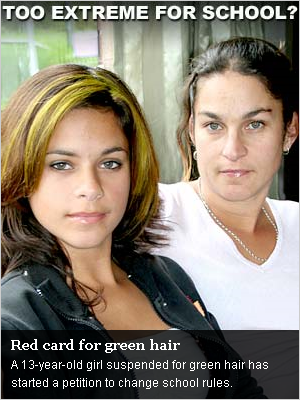
Teenager objects to school uniform policy is hardly news – unless the teenager is as photogenic as young Sheridan Marris, whose green streaks have landed her on the front page of today’s Rodney Times and Stuff’s splash image.

It works – this non-story is (as of the time of writing) on Stuff’s `Most Viewed’ list, along with stories such as “League’s group sex romps to continue”; “Man finds wife and mate on porn DVD” and “Babysitter sentenced for sex with boy”. Sheridan now has excellent publicity for her petition to have the rules at Rodney College changed, while her image has been employed to the same effect as those headlines. That’s how the mutual exploitation model of the media works; but is the payoff worth it?

Update 19:15: On the Stuff front page, the headshot of `world’s hottest woman’ Olivia Wilde is now positioned right next to the similarly-composed headshot of 13 year-old Marris.

wilde-marris
Classy.

L

Abortion – another right National will erode

In 2007 14 members of the current National cabinet[1] voted to support an amendment by Gordon Copeland which would have put an anti-abortion doctor onto the Abortion Supervisory Committee in an attempt to restrict access to abortion. Since early this decade National has been building its relationships with conservative and evangelical churches, trading policies and promises for votes even bring a minister from a conservative evangelical church into caucus.

At the same time the anti-anti-smacking lobby is regrouping around an anti-abortion campaign – a lobby National owes a significant debt of gratitude. (Try about half way down this, search for “Andy Moore” if it’s quicker than scrolling)

Restricting our right to abortion is on the agenda for National’s first term.


[1] 14 of the 19 who were able to vote at the time.

Pink things/blue things

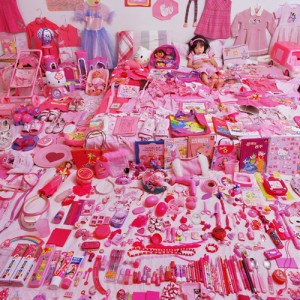
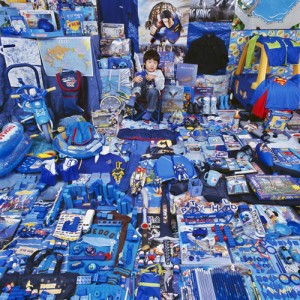
Pink and blue are the canonical respective colours of femininity and masculinity, right? Always have been, and across cultures? Well, I’ve known for ages that blue was a traditionally feminine colour in the Judeo-Christian tradition, at least since the Virgin Mary apparently wore a blue cowl. JeongMee Yoon, in her Pink and Blue Project, argues it was the opposite until post-war. Since then, however, the change has been resoundingly reinforced by a powerful consumer feedback loop; nowadays girls want pink things because pink things are for girls and girls are marked as girls by their pink things. Substitute `blue’ and `boys’ for the converse.

Two of Yoon’s stunning images from The Pink and Blue Project illustrate this:

seowoo-and-her-pink-things

seunghyuk-and-his-blue-things

L

Nurses and Police Officers

Which have trained for longer?

Which are at more day-to-day risk?

Which get paid more?

In the pay equity debates we tend to focus on the argument about the effect and value of child raising, perhaps because it’s a handy dead end. In fact, however, the gender pay gap exists between whole professions: why are police officers paid so much more than nurses? There are plenty of other examples of pairs of equally trained equally skilled professions where female dominated one is paid significantly less than the male dominated one.

There’s a straight forward gender pay equity issue, but also questions of how we value women (why is the kinds of things women do worth less than the things men do?). By extension there is a question about why we value professions which care for people lower than professions that care for things, as that tends to be the gender split in professions as well.

But to come back to original question, is it right that we pay nurses significantly less than police officers and, if so, why?

[For a broader discussion of pay equity, try Julie’s Pay Equity Hub at The Hand Mirror or Queen of Thorns who’s hosting the Down Under Feminists’ Carnival]

Pay equity faxathon

Over at The Hand Mirror Julie is co-ordinating a pay equity faxathon.

This is a great way to mark International Working Women’s day by telling Tony Ryall that women deserve pay equity, and that National should uncancel the programmes that would have addressed the pay inequality affecting female social workers and school support staff.

So pop on over to The Hand Mirror, download the fax, collect some signatures, and tell National that women are worth it!