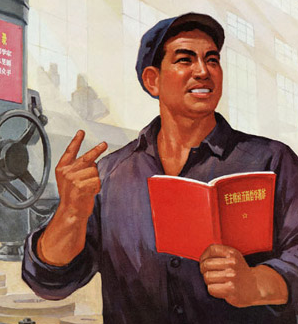
For some time I have watched the opposition to Barack Obama and his administration with growing unease. Having some familiarity with Latin American politics, I began to see parallels between the traditional behavior of conservative Latin American oppositions to Left-leaning  democratic governments and that now manifesting itself in the US. I have now pulled my thoughts together into this month’s Word from Afar essay over at Scoop. The essay has more of a polemical tone than usual, but that is a reflection of my contempt for, and concern over, such behaviour.
Winner does not take all
Peter Shirtcliffe is furious (audio), and well he might be, because the government’s plans for electoral reform are eminently sensible, subject to wide bipartisan support, and most critically, not at all hasty. This is electoral reform done right: for change, a majority of voters must reject the status quo system outright at two consecutive general elections, with plenty of time for reflection, consultation and campaigning before each.
Shirtcliffe’s proposal for a one-off vote on which electoral system to use at the 2011 election makes only one concession from his holy grail of government decisiveness: he thinks it should be preferential. His scheme aims to deliver that grail to his beloved National party wholesale and for good, by springing fundamental constitutional change upon the NZ electorate with less than two years’ notice and discussion, with no societal safety net, no cooling-off period, no opportunity for reflection. It would turn the time between now and the 2011 general election into an all-out propaganda war for the future of democracy in New Zealand, a war in which the National government and its allies hold all the strategic ground: unprecedented popular support and an opposition at its nadir; confused and rebranding environmental and social justice movements; the recent memory of an unpopular and dysfunctional government which represented all that people thought was wrong with MMP; a political environment in which many people will simply vote for what That Nice Man John Key recommends; and an anti-MMP lobby which is practiced, prepared and very well-resourced. Shirtcliffe’s careful circumspection — refusal to express opinions on such matters as what system should be adopted, and how campaign funding should be managed — and flattery of the plebiscite (“we’ve got an intelligent electorate out there”) seeks to hide this behind a high-handed neutrality of purpose, masking the fact that the process he advocates yields his own cause very great advantages.
Shirtcliffe’s decisiveness imperative insists that the winner must take all, in elections and in constitutional reform as in heavyweight boxing: a few ceremonial minutes in an enclosed space which determine who is the winner and who is the loser, and all that happens in between bouts is meaningless hype. It is not a democratic model, it is not a consultative model, it is not a model which gives adequate consideration to the views and opinions of the electorate at large; far from respecting electors as intelligent and capable actors, it reduces politics for the individual voter to a single, somewhat inconvenient event which happens once every three years, or in the case of something as important as changing the electoral system, once every generation or so if we’re very fortunate. Fortunately for New Zealand, and indeed to the great credit of the National party, he has been denied. The proposed framework should yield a legitimate and durable result, and one which should be supported even by those whose preferred option is not selected.
There’s much which could go awry yet, but this framework is as good as we could hope for. Idiot/Savant’s assertion that “if we want to protect MMP, its not enough simply to vote for no change in 2011 – we also have to chuck out National, just to be on the safe side” seems a little overwrought — National under Key has taken to MMP like a duck to water, learning to play both ends against the middle in a way the Clark government never did. And although there have been some recent cat-herding problems to do with keeping errant ministers in line, and around the rugby world cup, I can’t see a desire to return to the bad old days of one party rule. I do think National will campaign hard for SM as an it’s-the-same-really-only-better option, and this provides Labour and the Greens a good opportunity to differentiate itself — by pushing for MMP-as-it-is-now, or MMP-with-some-changes; although it must be said Labour aren’t behaving much like MMP-aware political actors these days. A larger threat from the National party, I believe, is the possibility of rolling the abolition of MÄori seats into the new electoral system, or choosing to support an electoral system in a second referendum which (they may claim) renders the seats obsolete. This will be a strong wedge, and will enable National to frame the debate in terms beneficial to its own interests.
I await the further propagandisation of electoral systems with interest. Meanwhile, I/S’s conclusion is unarguable: “we need to make it clear to both parties: our democracy is non-negotiable.” And I’m still interested in peoples’ responses to the question: what kind of electoral system do we actually want?
L
The False Promise of Asian Values.
The country that I live in is a major exponent of the so-called “Asian Values” school. This school of thought argues that Western notions of liberal democracy are not applicable to Asia because Asian values are different than those of the Anglo-Saxon world and therefore attempts to impose Western-stye democracy are ill-suited to local conditions and, what is worse, a form of cultural imperialism.
So what do Asians value? According to the official line, they value the primacy of collective rights over those of the individual, order above freedom, material security over political voice, and economic efficiency over egalitarianism. The private sphere is reified while the public sphere is circumscribed. Family and community take precedence over the individual or narrow social group interests. These are held to derive from traditional “Confucian” values. Hence civil society is not a spontaneous expression of variegated social interests but a state-structured (and state-supportive) amalgam of overlapped sectorial agents in which “volunteerism” is imposed as a social obligation rather than freely given. Conformity is enforced as the means by which to achieve upward mobility, and although meritocracy is given rhetorical championing by the state, in practice it is often subordinated to the requirements of playing along, following orders and not challenging the status quo as given. Needless to say, this reverses most of the priorities of Western liberalism.
Asian values exponents will argue that the proof of the superiority of their system is in the pudding: individually and collectively Asia is a region of rising economic powers, with their growth only checked by foolhardy attempts to impose western-style democracy on immature populations not yet ready to accept the fact that with expanded political rights come an equal amount of social and political responsibilities. They point out the “chaos” of democratic society in the West and where democracy has been attempted in Asia, as opposed to the order found in the “traditional” East. They see social hierarchies as natural and exploitation as inevitable, with attempts to ameliorate this “natural” order of things contributing to social unrest and instability. The latter are considered to be primordial dangers to “good” society, and to be avoided or suppressed at all costs.Â
What I find interesting about these claims is that they mirror claims made about Latin American societies in the 1950s through the 1980s–that they operated under a different (Catholic) social code that was authoritarian, patriarchal, racially and economically stratified, state-centric, community- and family-oriented, and was therefore more naturally amenable to authoritarian forms of rule. And yet Latin America has by and large democratised with no ill-effect other than to give space to populist demagogues along with sincere politicians (as happens virtually anywhere political competition is opened up to mass appeal). But in terms of social stability, economic growth, etc., Latin America has not been discernibly hurt (or improved) by the move towards social and political freedom. It has simply evolved in a more open direction.
So what to make of the Asian values argument? Well, living in the epicenter of its practical implementation it would appear that “Asian Values” are no more and no less than the philosophical justification for developmental authoritarianism. These values are no more natural in the East than they are anywhere else–all societies put value on family, kinship, order, efficiency and stability. It is in the imposed and contrived ways in which “Asian Values” are reproduced–from the top-down, through the State and its agents, rather than spontaneously welling up from the cultural grassroots of society at large–that we see its real purpose. The Asian values argument is in reality just a cover for the maintenance of an authoritarian status quo that otherwise would be susceptible to challenge from those that it purports to represent.
The 2009 Defense Review.
Public consultation meetings about the 2009 Defense Review, which will result in a White Paper being published in early 2010, have now concluded. Yet, although the formal submission deadline for individuals and groups has passed, the review committee would be ill-advised to ignore short-term late submissions when they have another 4-5 months to go before the final draft of the White Paper is published. Late does not always mean never. You can access the terms of reference and information about submissions here.Â
It is important that those of the Left of the political spectrum and progressives in general get involved in defence and security issues on an on-going basis, and for them to avoid knee-jerk abhorrence or avoidance of national security issues except when it is topical or effects them directly (such as in the Zaoui case or that of the Urewera 17). Ignoring defense and security issues leaves the field of  play open to security conservatives and the Right in general, including pro-nuclear and abjectly pro-US  elements within the political spectrum. Allowing their views and those of the defense and security bureaucracy to go unchallenged is to concede to them the terms of debate and skews the tone of the White Paper in a conservative-Right direction. That is not healthy for a mature democracy.
In order to do so, however, the Left needs to have something smart to say and not simply repeat the usual pacifist/anti-imperialist mantras. Having the Green Party lead the Left on defense is a non-starter (however well-intentioned the Greens may be) because of their adherence to the pacifist/anti-imperialist line, and the Labour Party is equally unrepresentative of the range of Left thought on defense issues. That leaves a void where the informed Left should be: New Zealand may be small and physically isolated, but it has real security needs and obligations to the international community that require its involvement in foreign military adventures, be they multilateral or bilateral in nature. Simple distaste for the military and police does not cut it when addressing the fundamentals of national security in a small state such as this. What is needed is a Left-progressive critique and plan for near-term security requirements, something that can involve a number of alternative prescriptions based upon notions on humanitarian assistance, non-intervention, multilateralism, peace-keeping and nation-building, non-traditional security concerns (such as environmental degradation and pandemics) and/or non-proliferation (nuclear and conventional). The Left can  (indeed, must) offer recommendations about how and when NZDF personnel are deployed abroad, under what chain of command, and for what purposes (something that at the moment is left to the government of the day). All of this requires some degree of understanding of national security and defense requirements, including strategic and technical issues.
For example, I would advise in favour of a restored close air support (CAS) /ground-attack RNZAF capability that would be used to cover NZDF troops involved in UN- or regional organisation-sanctioned peace-keeping and nation-building duties (to include counter-insurgency operations in failed states). That means that Kiwi pilots would protect Kiwi ground troops in the event that they are at imminent peril, thereby diminishing NZDF reliance on foreign air cover in circumstances when time is of the essence (since foreign air wing commanders, faced with a choice of protecting their own or allied troops in a fluid combat environment with amorphous fronts, will inevitably support their own at the expense of their allies). Such scenarios occur more frequently than the public may realise, and in fact has occurred in East Timor in the last decade (which resulted in the death of an NZDF trooper at the hands of Indonesian forces resisting Timorese independence). In any event, such a CAS capability could involve rotary or fixed wing platforms depending on budgetary constraints and operational requirementsÂ
I would love to get involved in this process but I live abroad and have not been asked. Instead, security conservatives in my former department and other NZ universities have a lock on academic submissions to the Review regardless of their actual “expertise” on such matters. Thus as it stands the Review process is stacked to the Right, and the White Paper will reflect that. For no other reason, this is why the Left needs to get involved in the Review process, because it will be too late once the White Paper is published (and it should be noted that the Review Committee is comprised of former military and/or defense officials).
I have very strong views on how the NZDF should look and how it should be deployed abroad given its international role and reputation. This includes views about the defense budget (both as a percentage of GDP as well as in terms of relative outlays to weapons acquisitions and personnel), force configuration and strategic orientation. But since I cannot weigh in on the subject, I hope that others will. I therefore urge you and your like-minded acquaintences to make your informed views known ASAP, as the deadline for submissions has passed but the Review Committees deliberations have not. Should the committee refuse your submission, enlist an MP or publicly agitate for its inclusion and consideration. Being late does not mean you should not be heard.
Democratising democracy
Speaking of headlines, that’s a good one from OpenLeft.org.uk. And an interesting article, too, by British Labour MP James Purnell, which touches on a few things I’ve been thinking about recently.
Purnell identifies three initial steps toward fulfilling Lincoln’s “of the people, by the people, for the people” ideal of democracy in British politics, and to a large extent these also apply in NZ.
First, embracing a more open politics. We need a much wider range of people becoming MPs.
Measures to ensure that the political process is not the sole domain of political elites.
Second, deepening our representative democracy.
Constitutional and electoral reform to abolish the vestiges of aristocratic privilege and making elections more proportional and representative.
Third, broadening our democratic society to make people powerful and enable people to achieve more together than we do alone.
Decentralising the political process and civic institutions and decoupling politics from financial elites.
There’s much more than that, and a lot of concrete suggestions around how these lofty goals might be achieved, why they ought to be. Although I don’t agree with all of it (it equates ‘democracy’ with ‘anti-elitism’ which is problematic) and think some is a bit glib (it’s an MP flattering the electorate, after all), it’s certainly worth a read.
L
Sue Bradford: hampered by her own effectiveness
I haven’t had a chance to read much of the matter written about Sue Bradford’s resignation today, so I apologise if I duplicate things other, wiser, faster people have said.
Sue will probably not appreciate the comparison, but she is like Roger Douglas in a way — too effective at driving a radical agenda for an orthodox political establishment to fully tolerate. Even the Greens, who for all their activist trimmings are essentially integral to the orthodox political establishment, and looking likely to become more so under the leadership of Russel Norman and Metiria Turei. As with Rogernomics, the s59 repeal was a powerfully controversial agenda against which popular opinion is strongly united. Unlike Rogernomics, though, it’s not so much because of the policy’s specific impacts (which are minimal) as the rhetoric around it which have proven poisonous. Sue made the bill her own and took a staunch position on it, and with a few exceptions (notably including Helen Clark, who also made the bill her own by adopting it as a government bill [turns out it remained a member’s bill throughout, thanks Graeme]) she was allowed to stand alone on the issue, one person drawing the sort of fire which would ordinarily be directed at a party or coalition of parties. She drew it, took it, and saw the bill through to its conclusion.
And that’s the problem; people don’t like the policy — or rather, they don’t like the idea of the policy — and as far as they’re concerned Sue Bradford is the policy.
Sue Bradford is an extremely effective advocate and a powerful organiser, but she is not the person to lead a party whose central policy plank — climate change and environmental sustainability — is ascending ever more rapidly into political orthodoxy. She is the sort of person any party would want as a #3; someone who works like a demon, is ethically above reproach, has phenomenal networks, whose credentials and commitment can be relied upon, and who has the gumption to see things through to their conclusions. She will go far; we will see and hear as much of her in the coming years as we have of people like Laila Harre and Geoffrey Palmer. But because of her forthrightness and personal investment in the s59 repeal, to elect her to the co-leadership would have struck a critical blow to the Greens’ political credibility and branded them as an activist party without a cause. They have a cause: environmentalism. Other aspects of their policy agenda are important adjuncts to that, but they are just that, adjuncts. The Greens have a great opportunity to make themselves indispensable to future governments who need to be environmentally credible, but they need to focus on doing that.
What of the other parties? Despite her strength as a champion, I don’t think the other parties on the right will be thrilled with Sue’s departure. The Greens’ credibility (and the inability to howl about nanny state lesbians for distraction purposes) is their loss, not their gain. The other parties on the left, likewise, although this change is important in that it enables Labour and the Greens to more clearly delineate themselves from one another. This opens the way to a model of left politics such as I have described; Labour as the core, with the Greens as an independent but allied environmentalist party, with very little crossover. It has potential, although it relies on Labour desisting from the current notion that it can be all things to all people, and the Greens’ former notions of activism as an end, rather than a means.
L
Bleg: what do people want in an electoral system?
I wrote most of this before DPF’s post on the threshold, including his link to Chris Bishop’s handy paper on representation and stability went up, so read that first. In fact, you’d also do very well to look over BK Drinkwater’s series comparing electoral systems: noise, wastage, proportionality, and a critique of some critiques of SM, although note that the SM numbers assume a 70-50 electorate-list split as per our MMP system at present. This is good from an apples-apples perspective, even if it’s not an option that’s actually on the table. I also wrote it before my more-recent post on the topic, for which some people have begun offering their preferred electoral modifications. Wonderful!
Much like the subtext to the s59 referendum question was ‘do you like the anti-smacking bill?’, the question above lurks behind the forthcoming debate on MMP, for which the troops are currently massing.
The likeliest contender, in my view, is the retention of MMP as we have it now, with a 5% threshold and a 70-50 split. Other less-likely contenders, again in my view, are as follows:
- STV, as employed in some local body elections and for the Australian Senate.
- SM, as apparently favoured by National and employed in the Republic of Korea.
Note that FPP isn’t in this list. I don’t think NZ would go back. Modified MMP also isn’t in the list; not that I think it isn’t a credible contender, just that the way the process is structured (referendum: MMP yes/no; if no, referendum on alternate systems) doesn’t seem likely to permit it. There are lots of other peripheral options, such as open list; run-off or instant run-off; or any number of other possibilities. Feel free to argue your corner.
But what sort of system do people actually want? As I see it, within a centralised democratic structure such as we have, relevant factors include the following:
- Transparency. Results in transparent electoral systems are clear and obvious; how a particular candidate, party or government was elected is reasonably self-evident. FPP is very transparent. STV is very opaque.
- Simplicity. Simple systems are easy for people whose political engagement stretches to ticking a box or two every three years to understand. Again; FPP is very simple, STV is not at all.
- Proportionality. Proportional systems elect candidates from parties according to the party’s share of the vote. FPP is not proportional at all. STV is often claimed to be proportional, but it’s really fauxportional, often producing results which seem proportional but were arrived at by non-proportional means. Open list is (in principle) perfectly proportional. Thresholds in proportional systems and the number of electorates in mixed systems are also relevant to this question.
- Representativeness. Similar but orthogonal to proportionality, a representative system contains mechanisms to guarantee certain segments of the electorate representation. This is a complex notion; geographical electorates are such a representative measure, ensuring that people from the geographical margins are represented, when a non-geographically-determined system (such as purely proportional open list) might marginalise them. Reserve seats for tangata whenua or other groups are another such form of representativeness.
- Low wastage/regret. Conventional wisdom is that the prospect of a wasted vote depresses turnout (or changes behaviour) among voters who believe their vote might be wasted, which is a self-perpetuating cycle. This is most evident in FPP, but is also present in proportional systems to an extent, due to the effects of a threshold.
- Decisiveness. Decisive systems produce strong, stable executive governments with few constraints on their power. FPP, except in the rare case of a hung parliament being elected, is decisive, while proportional systems which elect a number of parties and rely on coalitions are less decisive.
- Small size. Self-explanatory. Any system can be made large or small, but this frequently has huge impacts on other factors.
- Durability. Durable systems are not prone to future governments tinkering with, amending or replacing them. FPP was extremely durable. MMP has proven fairly durable. This is a meta-factor, in a sense; it seems like anyone valuing this factor highly should lobby for one of the less-extreme systems; a second-best choice, rather than a perfectly proportional system or a highly decisive system, since ‘pretty good’ is less likely to be overturned.
In principle, the relative importance a person assigns to of each of these factors should point to that person’s ideal electoral system. Could be programmed into a handy poll in the leadup to the referendum; in fact, I bet it already has been, I just haven’t found it.
There are other relevant electoral changes, as well. Here are a few; please add your own:
- Size of parliament and division of seats. Yeah, I listed it above – what I’m referring to here is the electorate-list split in mixed systems; the North/South island and rural/urban splits, that sort of thing. Also the vexed question: how many MPs overall?
- Allocation of seats. Historically, the One True Way in NZ was for seats to be allocated along population-geographic lines. Nowadays it’s a mix of population-geographic and party allegiance. But what other means of allocating seats are there? What would happen if seats were allocated according to social class? Income? Level of education? Ethnicity? Religion? The history of democracy contains precedent for all these things in one way or another.
- Decentralisation. Federation of micro-states? Balance of central and local government power? How does one dismantle centralised democracy using democratic mechanisms?
- Electoral term and other constitutional institutions. Our three-year term is quite short, and there are few checks on the executive ability of governments – as long as they have a parliamentary majority, there’s little they can’t (and won’t) do. Do we need a second chamber? A longer term? Should one go along with the other?
- Referenda and non-electoral plebiscites. What should their status be? Other representative mechanisms, such as citizens’ juries?
- The big one. What difference would becoming a republic make anyhow? A better question: if people knew that NZ would become a republic in the near future, how might their electoral preferences change?
Please, answer the question. What do you actually want in an electoral system, and why? And more than that — what do you want, and what do you think is (even remotely) plausible?
L
Update: Scott Yorke has a few choice words on the topic, as well.
Wrong objection
David Farrar falsely equivocates when he asks the following:
Why do so many people who complain that ACT got five seats in Parliament on only 3.65% of the vote, never complain that the Maori Party got five seats in Parliament on 2.39% of the vote?
The issue isn’t so much that ACT didn’t deserve seats for their share as that, for proportional consistency’s sake, NZ First deserved seats for their share as well. From there, people work backward to ‘If NZF didn’t get them, why should ACT have gotten them?’
The overhang is a misdirection away from the fact that the 5% threshold is the main source of entropy in our proportional system (and its neighbour SM). The two types of electedness he suggests are the same — winning an electorate and coming in on the list — aren’t, as David well knows, and this is a capricious argument from him. To prevent an electorate member from sitting on proportional grounds directly disenfranchises the electorate who voted for her. The solution to a system which arbitrarily disenfranchises a large number of voters on the basis of other voters’ decisions surely isn’t more disenfranchisement — it’s less.
As I’ve argued before, removing or lowering the threshold would reduce voter regret among the supporters of marginal parties, and embolden those electors to vote for their chosen party, resulting in truer representation. The possible impact on an overhang party — one which has traditionally won more seats than its share of the vote would otherwise entitle it — is an interesting case, and would force people who now vote tactically to re-evaluate their decisions.
I have an upcoming post asking what factors people value in an electoral system, and issues like these are germane to the forthcoming discussion about MMP.
L
A victory for common sense and democracy
… these are the sort of words Michael Laws would be using if the decision to spell Whanganui incorrectly had been endorsed by the NZ Geographic Board, so I feel justified in using similar language given that the decision has gone my way.
As I have argued at great length, this is a good decision. I’ll work through the details of the submissions when I get time, hopefully tonight.
L
ACC: tell ’em
I have received the following communique originated by NZ Association of Psychotherapists member Kyle MacDonald; an easy means for you to tell the Minister for ACC what you think about sexual abuse recovery rationing:
Grass Roots Political Action, a step by step recipe.
“The death of democracy is not likely to be an assassination from ambush. It will be a slow extinction from apathy, indifference, and undernourishment.â€
— Robert M. Hutchins
- Time required: 10 minutes.
- Ingredients: Four pieces of A4 paper. Two envelopes.
- Method: go to Kyle’s website www.psychotherapy.org.nz and click “Grass Roots Political Action: A step by step recipe”.
- Select which Minister, and print one out for Pansy and one for Nick.
- Read the letter; react and critique.
- Insert your details into the angle-brackets. Change the wording to your heart’s content; the more varied the letters the better!
- Print, and sign.
- All mail to Parliament is free, so simply pop in an envelope!
- Bask in the glow of flexing the democratic freedom you are lucky enough to possess, and pass both the word, and this email, on to everyone who you can possibly think of…
Update: There’s also a petition, for what that’s worth.
Grass Roots Political Action Part II – Gather Support.
“In a democracy dissent is an act of faith. Like medicine, the test of its
value is not in its taste, but in its effects.”
— J. William Fulbright.
Dear friends, colleagues and supporters of counseling and therapy in
Aotearoa New Zealand,
Many of you will now be aware of attempts by ACC to change the Sensitive
Claims Scheme which provides counseling to victims of sexual assault and
abuse. These changes are being rushed through with inadequate consultation
and the professional organizations representing the providers of this
treatment have been lobbying parliament to stop the changes.
Now there is something you can do to help! Follow this link to an online
petition and sign up to show your opposition to the proposed changes.
http://www.petitiononline.com/ACC0909/petition.html
Please also circulate this petition as widely as you can to friends, family,
colleagues, clients and your professional networks. The aim will be to
present this to The Minister for ACC Hon. Nick Smith prior to the 12th of
October.
Thank you for your time,
Kyle MacDonald
Psychotherapist
There. Easy.
L