The perils of Paul (updated).

The flap over Paul Henry’s latest remarks got me to thinking. First, why was John Key smirking and downplaying the obvious racist content of Henry’s questions about what a “proper” Kiwi should look like? Why did Key instead not point blank admonish Henry for his remark, or at least give him the rope to hang himself with by asking him what HE thought a New Zealander looked like? Why did Phil Goff say that  the incident was “Paul being Paul” rather than put the wood into him? Why did the TVNZ spokesperson claim that Henry says what other people think but do not want to say? Is that a fact that I missed somewhere? Am I being too PC in thinking that with this latest remark Henry has truly jumped the shark? Or is the silent majority in NZ really a bunch of closet bigots for whom Paul Henry is a champion? (and if so, that is too close to the Tea Party/Sarah Palin connection for comfort). Has the turn to market egotism driven so deep into the NZ collective psyche that such remarks are considered tolerable or even funny?

For a guy about to return to NZ and seek citizenship after 13 years of permanent residency, these are more than casual questions.

UPDATE: Henry really is the bigot gift that keeps on giving. In his on-air (non) “apology” the day after his first comments about the GG, not only does he not apologise for the remarks themselves (instead he apologies for any offense they may have caused), but he then goes on to use a slur for Roma (gypsy) while saying that he is of a less distinguished background than Sir Anand because he (Henry) is of half Roma descent apparently. So the bottom line for Mr. Henry is that there are in fact superior and inferior people based upon their inherent characteristics rather than their individual merits or flaws, and using pejorative slurs is Ok so long as one can claim kinship to the insulted group. In sum: Henry uses an ethnic slur while falsely apologising for a racist question. Priceless.

Voting in the Dark Ages

The voting papers arrived at my house over the weekend and present something of a dilemma. One member of our household is in the UK for the election; he still, not unreasonably, wants to exercise his vote. After ringing the assistance number on my voting paper I was told that the only possible legal way for him to vote is for me to mail or courier his papers to him, then he should fill them out and mail them back.

It is, apparently, impossible to cast any sort of vote in local body elections using faxes, scans, emails, or any other new fangled contraption, or in fact any other means to allow overseas voting. In central government elections overseas voting is entirely permitted and supported.

New Zealand Post lists international mail as 3-10 working days, so it’s impossible to be sure he could actually vote if I did mail them to him. My cheapest option is “International Economy Courier” (2-6 working days) at $30 to get the papers to him, then he’d have to courier them back presumably at a similar cost.

So, three questions:

1) What would be wrong with allowing faxed, scan-and-emailed or election office supported overseas voting in local body elections?

2) Is it reasonable that voting in our local body elections should cost someone ~$60?

3) Doesn’t this provide a rather strong incentive for some illegal (but entirely ethical IMO) voting practices in households like mine?

Frogs, toadies and tadpoles


There’s been a long and turgid discussion about the Greens’ support for the Canterbury Earthquake Response & Recovery Act (CERRA) on Frogblog, with commenters including many of the usuals from around the blogosphere, Russel Norman and Kevin Hague, and someone called BJ Chip (who I assume is a comms flack) running defence for the Green party. (I can’t figure out how to link to individual comments, sorry). Another commenter, Geoff Fischer, makes a persuasive case against the Greens’ newfound pragmatism, both on the Frogblog thread and on his own site. Whilst I don’t entirely agree with Geoff (I’m a pragmatist at heart) I think his critique is a good one, particularly for the Greens (who aren’t). But there are also strong pragmatic grounds to attack the Greens’ decision to support the CERRA; grounds which, if the Greens are serious about their new realpolitik posture, they’d do well to consider.

I’m often disappointed by the Greens’ persistent — even pigheaded — reliance on the ‘principled stand’ in politics. While valuable among a suite of tactics, it’s overused as a one-size-fits-all response which pigeonholes them as idealistic zealots who don’t compromise and can’t be worked with. But although I think its consistent use is a poor strategy in the general case, it gives the Greens a valuable trump card: the ability to say “these are our principles; if you don’t like them, go ahead on your own”. While it all too often results in other parties abandoning the Greens as irrelevant and going ahead on their own, it does build a powerful narrative about the Greens which speaks to characer and reliability and permanence. Principled politics, as Geoff says in other words, has an objectivity about it which is often lost in modern pragmatic discourse where what often passes for ‘true’ is whatever you can argue. When all the other parties in parliament — even the other parties who (however unjustly) appeal to the ‘principled’ brand, such as ACT — are falling over themselves to betray their principles, it’s all the more important that you stick to your own. Put another way: when your political strategy is to be principled, refusing to act on principle is not a pragmatic decision.

Most obviously, taking a uniquely principled stance at the time when the pressure is greatest to cave in hugely strengthens that narrative mentioned above, ensuring the long-term strength of the brand. It’s easy to be principled when nothing is on the line — the measure of a party’s commitment to principle is how it performs when the stakes are highest. That measure has now been taken.

Secondly, principled politics is what the Greens know. It’s their realm of competence. An idealistic stance would have given them the ability to critique whatever misdeeds the government undertakes in the name of this act with a clear and objectively indisputable line (“we voted against it”), whilst the best they can muster at present is the equivocal, inconsistent line which Norman is running in the Frogblog thread (“we objected to it and we don’t like it but we voted for it anyway because we thought it was the right thing to do”). BJChip demonstrates a fundamental lack of understanding how public-sphere political communication works with (her or his, I’m not sure) defence: “if they give us such idiotic cr@p [as “you voted for it”] we can give it back chapter and verse”. I replied with the following:

And not a word after “but you voted for it” will be worth a damn out there in the cold, pragmatic world of realpolitik which the Greens have now decided to enter. In that world “but you voted for it, so STFU” is the super-hero version of the “Nine Long Years” gambit which paralysed the Nats from 1999-2004 and has paralysed Labour for the term so far. You can’t beat it; in the battle of the soundbite, it’s political kryptonite because when they say it, they’re right. You voted for it: it’s your law, you swing by the same rope as the rest if and when it all comes apart. And so you should.

As much as they might believe themselves to be big-game players, the Greens have never even made a serious attempt to master the complexities of pragmatic politics, preferring to leave the cut-and-thrust to others. In the realm they have now entered they aren’t so much frogs as tadpoles. Judging by Norman and Hague’s statements and the spirited defence of BJChip (and others who use the pronoun “we” on behalf of the party), it seems they will attempt to defend the decision to support CERRA as they would any principled stance, with a clear restatement of the whys and wherefores behind the decision, omitting any discussion of the political consequences. This is impossible, because it is clear to even the most casual observer that the decision was a pragmatic one based on the politics.

Third and most importantly, at the electoral sharp end a uniquely principled stand positions the party as a ‘safe harbour’ for voters from other parties who are disillusioned by those parties’ too-enthusiastic embrace of pragmatism. This is where I think the Greens got their political calculus most badly wrong. The Greens’ own membership and support base was not going to be unduly turned off by the fact the party refused to support a bill granting dictatorial powers to Gerry “sexy coal” Brownlee; they may have taken some sort of hit, but the risk was not as dire as it is being spun. But a principled stance against this manifest assault on the constitutional framework of the country would have permitted the Greens to position themselves as the last line of defence against Shock Doctrine authoritarianism; a rallying point for liberal values. “Even if you disagree with our policy orientation,” they might say, “at least you know where we stand, and can rely on us to stand against the worst excesses of government impunity.” Coupled with the ideological moderation signalled by the departure of Sue Bradford and Jeanette Fitzsimons, I believe the Greens stood to gain considerable support from disappointed Labour voters, particularly those who wanted the party to act as a functional opposition to the government — and they might have even picked up a little bit from the other parties, as well.

So the decision manifestly fails on grounds of principle, and because the Greens are a self-declared party of principle with neither a strong history nor any particular skills in the exercise of realpolitik, it is doomed to be a failure in practice as well. One silver lining, though: since the Greens stand to gain nothing from it, their support for CERRA doesn’t really indicate that they’ve sold their principles out for power as “Tory toadies”; more that they simply lost their nerve. This stands in contrast to Labour, whose support for the act was obviously based on pragmatic grounds of political calculus, and principles of good governance be damned. This is especially the case for Christchurch-based MPs like Brendon Burns, who is leading the red team’s defence in a particularly distasteful fashion. They are complicit in the power grab. The Greens and their principles are just casualties of it.

L

Two Bicentennials, and two disappointments.

Although the NZ media did not pay much attention to them, Argentina and Mexico celebrated the bicentennials of their independence from Spain this year (Argentina on May 25 and Mexico on September 16). Much fanfare and parading happened in both nation’s capitals, and a wide array of patriotic rhetoric was heard. But the sad truth is that both states are disappointments and long time failures. They certainly are not in the same league as Somalia or Yemen, but for the majority of citizens in each country the hallowed promise of independence has come up short. The failure in both instances rests not with foreign imperialists but with the respective political and economic elites.

Argentina and Mexico are the fourth and fifth largest countries in the Western Hemisphere and blessed with abundant natural resources, a variety of climates and geography, extensive coastlines and close commercial ties to greater Europe dating to 1810. They have well defined borders and are peace with their neighbours (even if those borders are permeable and historic resentments occasionally arise–but none of this compromises trade or good relations with neighbours big and small). The strategic sectors of their economy are under state or domestic capitalist control (or both). They both exhibit considerable foreign policy independence.

Yet, 200 years after independence, neither has fulfilled its promise. Mexico is in the midst of a vicious civil war between a variety of drug cartels and the state that poses the risk of it disintegrating into neo-feudal enclaves and autonomous regions barely under the nominal authority of a failed central state apparatus. Argentina, although not the financial basket case that it was in 2001-02 or the state terrorism experiment that it was from 1976-82, remains a nation in which corruption at all levels of society is an art form and in which patronage and nepotism are the hallmarks of political life.

This really should not be. Both countries have produced, among many other lines of contribution, Nobel laureates, writers, artists, musicians, actors, medical pioneers, legal scholars, diplomats, human rights champions, renown architects and more than a few good political scientists. The number of such luminaries is disproportionate to the total population of each country, so it is clear that the talent pool runs deep in each case. Yet time and time again, year after year, decade after decade, the tides of national fortune ebb and fall so that neither country has come close to fulfilling the promise of its naturally-given and human potential. That is a pity, and a waste.

I grew up in Argentina and have spent a fair amount of time, both personal and professional, in Mexico. In my younger years, when my leftward tilt was more pronounced, I joined those who blamed the US and imperialism in general for the woes of these and all other countries in the region. Dependency theory was my theoretical crutch and, as a prescription, revolution was to me the best answer to the region’s problems.

I was wrong. Mexico had its revolution in 1917 and although the nature of its authoritarianism changed, the fundamental socio-economic and political problems underpinning it did not (the 1994 Zapatista rebellion in the southern state of Chiapas was a reminder of that). Although a looming presence, the US is not the primary source of Mexico’s ills (although its drug consumer market is certainly a part of it). Although nominally democratic for a decade, Mexican politics remains infested with cronyism, corruption (now often drug related) and a lack of transparency. Socio-economic actors of all types see the state as a trough from which to feed when in power or in favour rather than as a neutral mediator in redistributive conflicts.

Argentina has not had a revolution but not for lack of trying. I was personal witness to the Montonero/ERP campaigns of the late 1960s and early 1970s as well as the last gasp of the Peronist mythos in person (Peron died in1974 after returning from exile the year before). That only precipitated the state terror experiment and the return to shallow consumerism for which Argentines–or least those living in Buenos Aires–are famous. The attitude towards holding power is similar to that of Mexico, and the “state-as-money bag” approach is also endemic amongst the Argentine elites.

After the neo-liberal experiments in both countries, the gap between rich and poor is worse now than it was 50 years ago. Working class dissent remains a simmering pool that remains unmitigated in each case. Crime haunts the streets (more in Mexico than in Argentina, but both at much higher rates than before 1960 or even 1990), and uncertainty about the future is rife amongst all but the upper ten percent of society. Even the national soccer teams have failed to live up to popular expectations, which in of itself is symptomatic of the larger malaise each is living through. And yet the politics of elite greed continues unabated in both countries, now under ostensibly democratic aegis.

All of which is to say that as much as it is nice to celebrate longevity, it is human folly that has prevented these two countries from developing into fully mature states that are nourishing and representative of their citizens. My hope is that the younger generation of citizens exposed to the excesses of the past 25 years in both places will work harder than their parents and ancestors at giving them the political leadership that they so rightly deserve and which was sorely missing from the official grandstands during the celebrations.

Blue smoke

In my previous post on the Canterbury Earthquake Response & Recovery Act (CERRA) I lamented the conspicuous absence of outrage in response to the bill’s provisions from partisans on the right. I have since been heartened by the responses from some of the more principled commentators on the right; well done them.

But there is one most conspicuous exception. I have on many occasions in the past defended Kiwiblog’s David Farrar from allegations that he’s a bog-standard Tory authoritarian. Yes, he’s a loyal partisan; yes, he does have his authoritarian tendencies, but his typical policy alignment is clearly classical-liberal. He is is consistently more liberal than almost all of his fellow-travellers and has regularly exhibited a forthright commitment to democratic principles of the rule of law, of good constitutional practice and the importance of checks and balances. Even yesterday’s response conveyed lukewarm concern about the scope and extent of the act. But I take back all that defence of David’s character; and so, apparently, does David take back his commitment to those liberal principles.

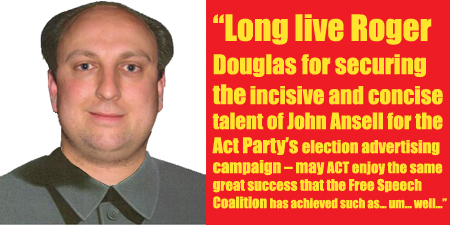
Because this morning’s post on the CERRA is nothing short of cringing, snivelling partisan apologia for dictatorship dressed up as a simplistic classical history lesson. Dictatorship, it appears, is a-ok with David just as long as the dictator wears the right coloured tie. Where now are the lofty appeals to the principles of good governance, the shrieking about attacks on the nation’s constitutional integrity, the billboards bearing the endorsements of dictators? There are plenty around, including a very explicit homage to the Free Speech Coalition campaign which David fronted, but nothing from this erstwhile and self-proclaimed champion of democracy himself.

The fact that DPF is being schooled on both the principled and pragmatic problems with this bill by some of the more wide-eyed and reactionary members of his commentariat suggests that he has taken leave of his political instincts as well as his principles; for instance, the notorious ‘burt’, who urges him to consider what might happen if (due to the collapse of ACT) National fails to win the 2011 election and a Labour minister takes over from Brownlee; a possibility he and the government had either not anticipated or don’t believe was worth considering. Nothing would be sweeter irony, but either way: David’s credibilty on these matters is up in a cloud of Tory-blue smoke; a legacy destroyed by unprincipled partisan loyalty. Such is the price of political dependence.

Update: Similar sentiments from Peter Cresswell, Danyl Mclauchlan and The Standard, from whom I purloined the image.)

Another update: More angels required to dance on DPF’s pinhead.

L

No democracy on the honour system

This morning I posited a conspiracy theory that the government would use the temporary deregulation measures undertaken in response to the Canterbury earthquake to progress another tranche of wide-ranging reforms to the resource management regime and building and construction industries after the 2011 election.

Absurdly, if the Canterbury Earthquake Response and Recovery Bill is passed without very extensive amendments of the sort proposed by the Greens and voted down by both major parties (it’s going through all three stages right now), then all that and much, much more could happen this week, no election required, and without any review by the courts. The executive powers granted to the relevant Minister (that’s Gerry Brownlee) in this bill are so sweeping as to permit him to do almost literally anything as long as it has something to do with quake recovery — amend or suspend almost any piece of legislation, overturn any electoral decision — really, Dean Knight, Graeme Edgeler and Andrew Geddis (themselves no wide-eyed conspiracy nuts) are just three of the constitutional law experts who are boggling at the possibilities; Idiot/Savant is also much more than usually incandescent, and Gordon Campbell pulls few punches, either. Geddis says the law gives him “a case of the screaming collywobbles”. How’s that for a technical term. Their argument — contra government speakers such as Nick Smith — is that, because there is no real oversight to test whether actions taken are “reasonably necessary or expedient for the purpose of the Act”, the bill’s scope is not strictly limited in black-letter law to those matters, nor indeed to the region impacted by the quake, and the minister and his commission basically enjoy immunity. These are sweeping powers such as those which might be accorded an executive head of state in a command-government situation such as a major war.

Not would happen, mind. I don’t think anyone genuinely thinks Gerry Brownlee will decriminalise murder, approve mining across all schedule 4 land, enact wartime conscription or overrule the results of the forthcoming Supercity election. I don’t. But the point is (assuming Dean Knight knows what he’s talking about) that Brownlee can. Or will be able to tomorrow, until April 2012, which astute readers will note is a good half-year after the next general election must be held. There are no real checks or balances, much of the actions taken under this legislation are able to be taken in secret, and actions taken will not — at least on paper — be subject to judicial review. This means that we are relying on Gerry Brownlee to not be evil. But democracy doesn’t work on the honour system. It can’t. It doesn’t work on the basis that you give a government power in the hope that they use it legitimately; you give it power on the basis that you have the authority and ability to wrest it back from them if they misuse it, and on the assumption they will misuse it. The honour system is fine for bouquets being sold at the cemetery gates. It’s no basis upon which to run a country.

As I’ve often argued here and elsewhere, what sets liberal democracy, with all its failings, apart from authoritarian systems is the ability for the electorate to transfer power by the exercise of these sorts of checks and balances. Under orthodox authoritarian socialism for examplem — more or less the only form of socialism ever fully implemented on a nationwide scale, in the USSR and China, for instance — the transitional dictatorship is empowered with the sole authority and means to put down any such counter-revolution as might endanger the transition to genuine communism; and because of this, the dictatorship enjoys impunity. It has no reason to work in the interests of the people it purports to serve, inevitably becoming inefficient, corrupt and brutal. (Thus, the problem with socialism is authoritariansm which accompanies it, not so much the economic aspects, but that isn’t my point here).

The Canterbury Earthquake Response and Recovery Bill, of all the ridiculous things, brings into being the potential for just such a regime in New Zealand, and we can only hope it is not used to that effect. It is a colossal, hypervigilant overreach. And if any ill comes from this, Labour — and even the Greens and the māori party — will bear as much responsibility as National; they are all supporting it out of “unity”.

Where now are those who railed against the Electoral Finance Act, who speculated darkly that Helen Clark might not relinquish power after the election, or might suspend the operation of the free press; who shrieked about the Section 59 repeal; against ‘Nanny State’ and the illusory Stalinism of lightbulbs and shower heads, drink-drive limits and alcohol purchase ages and compulsory student union membership? Here the papers are being signed to dismantle robust constitutional democracy right under our very noses, and there’s barely a whimper.

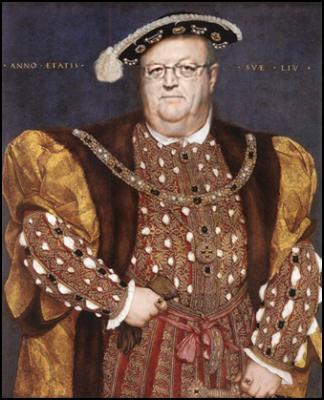
(Updated to add Lyndon Hood’s fantastic image of Brownlee VIII, link to Campbell’s article, and tidy the post up a bit.)

L

Creaky building syndrome

Here’s a conspiracy theory. Building, demolition, waste/fill disposal and other resource consent regulations are being suspended in Canterbury following the recent earthquake. Indications are that exemptions to the RMA regime will be granted by order in council, and (among other things) the norm will be to permit building and reconstruction work to take place without delay, the consents being — here’s a phrase — restrospectively validated. It’s plausible that this will serve as a pilot scheme for the government’s next tranche of deregulation in the building industry and resource management sector.

I’m not a civil engineer or an expert in either town planning or disaster reconstruction. But I have a few concerns. There are obvious concerns with the possible quality of workmanship in the immediate term given the new lack of oversight which, at its most lax, could permit any chap with a hammer and a can-do ethic to undertake their own structural work which will need to be be certified (or not) after the fact; other concerns around the likelihood that rights of objection to resource consent applications will apparently be severely curtailed in order to expedite the reconstruction.

But my main concern is over the longer term. A government which has declared itself the enemy of all environmental regulation — in the local government sector, overseen by Rodney Hide, in particular — is making a There Is No Alternative argument to use Canterbury as the test-bed for its latest massive (and this time rather ad-hoc) deregulation project. The project will have two different and contrasting sets of outcomes. In the short term, the volume of reconstruction and reconstruction work will pick up swiftly, providing a shot in the arm both to a flagging construction sector and to a region whose core industries, particularly manufacturing, were hit hard by the economic downturn. This will begin to peak through the coming year or so, coincidentally about the time it takes to get many resource consent applications underway, and not coincidentally, about the time of the next general election. The adverse consequences of a less-regulated construction and resource management sector — let’s coin the term ‘creaky buildings’ — won’t begin to appear until well after that time.

So, expect the 2011 general election to be fought substantially on this topic of deregulation, particularly of the local government sector, and to be fought on the front-foot with Canterbury as the key battleground. The predominant line in rhetoric will be “under the RMA, nothing would have been rebuilt yet”, and we’ll hear all the same assurances as we heard last time. And based on the rapid development and booming construction sector in that region, similar reforms will be proposed across the country. After all, if it’s good enough for Canterbury, why not everywhere else? And just as before, when the creaky buildings constructed under this regime begin to creak, there’s an even chance it’ll be a Labour government which picks up the pieces. Not only is there No Alternative, for a government focused on the short and medium term with an imperative to grow now and pay the bills later, there is no downside.

L

Fighting like you mean to win

I had meant to write something substantive on the politics-of-not-playing-politics evident in all aspects of the Christchurch earthquake and its aftermath, but circumstances have conspired to prevent me from doing so. I also have two deadlines in the coming week. So just a quickie, via George Darroch: What climate activists need to learn from the NRA and the gun-control wars.

fail

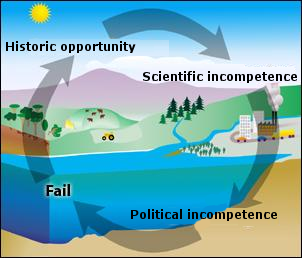
I’ve made the argument before that climate change, having as it does the weight of scientific orthodoxy behind it, should be an easy win in the battle of ideas. That it isn’t, I believe, is due less to the powerful business cartels and their conspiratist minions arrayed against it, and more down to poor strategy and coordination on the part of those responsible for ensuring that the findings of the science are adequately promulgated throughout society, and for ensuring the policy responses to the problem are appropriate.

fail

As gun control advocate Robert Walker argues in the linked post, those people — both the scientists and the political actors — can learn an awful lot from the NRA. Despite being pretty far out on the lunatic fringes even in the US political context, the NRA has simply phenomenal support both among gun users and those for whom the specifics of the debate have no direct relevance. They have this degree of support largely because they have succeeded in propagandising that issue to the point where its symbolic aspects matter more than its functional, material aspects. Doing this — breaking your topic from being a policy matter to being a symbolic matter in the public consciousness — is hard and complicated work, and you have to fight as if you mean to win; to not underestimate your enemy or permit your campaign to be hijacked by incompetence and vainglory. But if the NRA can do it with an issue like gun ownership, arguing for which on rational policy bases is deeply problematic, then surely those responsible for climate science can do as much. How they might do so is sketched in Walker’s article.

L

Sometimes the duty of the free press is to not report.

The on again, off again Koran burning planned by a small time evangelical preacher in Gainsville Florida has received world wide coverage and raised serious concern among the US military and foreign policy elite that it will cause a murderous reaction against US citizens living and fighting in the Muslim world. The issues has dominated the news in the US for days (I am currently located about 120 miles southeast of Gainsville), played out in a perverse media tag team with the so-called 9-11 mosque controversy. Official concern is so great that President Obama, Secretary of State Clinton and ISAF commander General David Petreus have denounced the planned pyrotechnics, while Secretary of Defense Robert Gates made a personal call to the preacher to ask him to cease and desist.

So far, the preacher has said that he will stop the burnings only if the 9-11 mosque supporters agree to move it someplace else. Which means that on top of the provocation and outrage he intends, he has now added blackmail.

Fueled by right wing media led by Fox News TV and Radio outlets, the issue has been debated on a free speech grounds. It is generally accepted that the wacked out preacher has a right to burn Korans, but division is over whether he has a responsibility to not do so given the larger consequences of his actions. Some officials have tried to find a way to stop him using hate speech legislation, saying that his obvious intent is to spread hatred towards all Muslims and the faith itself, something that is not protected by the first amendment. Others have responded that he should be allowed to do as he please and that the US should not kow-tow to “terrorists” just because Muslims react hysterically to the desecration of the holy book or images of the prophet.

I shall leave aside the obvious greater harm argument that clearly demonstrates why the Koran burning is a bad idea. I shall also avoid addressing the fact that Islam is not the only religion where its adherents respond violently to perceived insults to their faith. I will leave aside the argued to death free speech aspects of the case. Instead, I will address two aspects of this affair that appear to be underplayed.

The first issue is a matter of perception of the event in the Muslim world. Like it or not, most people living in Muslim nations cannot fathom the concept of a separation of church and state, or that the US government and local authorities do not have the power to just physically stop the preacher from holding the event. That is because most live in authoritarian states where religion and politics are deeply intertwined and governments regularly intervene in matters of religion (to include prohibitions on certain types of religious activity, regulations on marriage, etc.).  As a result, most citizens in the Muslim world cannot conceive of  such an event being carried out without government approval, so see it as an officially sanctioned statement of how the US views Islam. That may be ignorant or confused on the facts, but it is the reality of the context in which the Koran burning is perceived in the Muslim world. (Note to those who may take offense: this is a comment about the deeply ingrained authoritarian nature of power structures in the Muslim world rather than about the content of its faith, and refers not to the educated classes but to the broader mass of people who do not have access to the facilities and vehicles that would allow them to make discerning judgements on international issues. The same can be said about other political cultures as well).

The second issue is the reckless role of the US press. The preacher in question leads a 50 person fringe fundamentalist congregation that has in the past protested against gays and threatened to torch a copy of the Torah (since he believes that Judaism is also a “dirty” religion). He clearly has delusions of grandeur, if not being a few cans short of a six pack. The national press paid no mind to his previous antics, so why is it doing so now? Why not just ignore him? Why is this event considered front page news when his other antics were not?  In sum: why give this nutbar oxygen?

Given the sensitivities at play, the national press could have buried the story in the “odd news” section or not covered it at all given its marginal nature. To their credit, outlets like the NYT and WP have limited their coverage to the reactions and not played the story on the front pages of their respective publications. But, led by Fox and a network of Christian radio and TV outlets, the US press has covered the Gainsville Goober as if he were Sarah Palin’s running mate.

That is where they fail their obligations to the public. As with any democratic entity, the press has responsibilities along with rights. Those responsibilities include not inflaming or otherwise causing small events to bocome international incidents that have the potential to cause great harm to US interests and its citizens. It has an obligation not to stoke the fires of religious and ethnic hatred. And yet the right-wing media in the US has done exactly that, aided and abetted by conservative politicians like Newt Gingrich who see political gain being made off of the scapegoating of Muslims and (with regards to immigration and future demographics) Hispanics.

This helps explain why the tone of public debate in the US has become so vulgarised and debased. There is a large element of the press that has become “Murdochised,” (sic), that is, it will report on anything that can cause scandal, outrage and division in the interest of profit and political advantage. It has eschewed its responsibilites to the larger public interest in the pursuit of partisan gain. It is, in other words, unworthy of the constitutional guarantees under which it cloaks its behaviour.

All of which is to say that if there is a nasty fallout from this stunt, whatever blood is spilled is not only on the hands of the religious provocateur and his small band of intolerant followers, but also on the hands of their media and political facilitators who turned a backwoods hoe down into an international incident.

In the US, a return to primordialism.

In retrospect, it seems obvious. Given the venomous attacks on Barack Obama in the 2008 election campaign, the move towards a “post-racial” society was never going to happen.  Instead the reverse transpired, with race, religion and ethnicity now dominating US political debates in a measure not seen in years. Fuelled in part by the president’s overt identification with African-American culture and causes in spite of his mixed race heritage, the real instigators of the return to American primordialism are the conservative media outlets, Tea Party agitators and opportunistic Republican politicians who see political advantage in harping negatively about race, religion and ethnicity. Be it arguments about reverse racism, immigration, “socialist” health policy, religious freedom (in the case of the proposed Islamic cultural centre located 2 blocks from ground zero in New York City), the hot button issues in the lead-up to the November 2010 midterm elections are rooted in conservative white fear of cultural diversity and ethnic equality. That garrison mentality resonates in the great American echo chamber of conservative blogs, radio and television, and it has set the tone for the political debates of the moment.

The conservative view is that to be Judeo-Christian white is to be right, and the issue is whether to stand or fight. This view holds to the belief that White Christians are the carriers of superior values tied to the Protestant Ethos of hard work and entrepreneurship,  and that these values are now under siege from a variety of forces, both domestic and foreign (often working in concert). Fear of the “other” is the subtext of the day. With the nightmare of a black Kenyan Muslim in the oval office now realised (at least in the minds of some), the culturalist Right have chosen to fight. Their method for doing so is to fill the public space with racially charged interrogatives that speak to white grievances against affirmative action, poverty reduction, undocumented immigration (including so-called “anchor babies”), minority religions (especially Islam), linguistic diversity, and any other cultural characteristic that is seen as threatening to WASP values.  Cultural scape-goating is phrased as a defense of traditional values in order to cloud the message and make it difficult to refute. The Democrats and progressive elements in the electorate have been slow to stand up to the cultural bullying, and even slower to recast the terms of the political debate. Since those who set the terms of political debate are the ones who usually win the argument, this augers poorly not only for the president and his party in November, but for the future of American social diversity in general.

The return to race baiting and xenophobia is due not only to white Christian conservative fear of what the future US demographic may look like, but also to their inability to offer a policy agenda that is anything other than opposition to whatever the Democrats propose. Capitalising on anti-“big government” sentiment that conveniently overlooks the fact that the expansion of the federal government deficit was fuelled by a massive military build-up in pursuit of two wars undertaken by a conservative Republican president aided and abetted during his first 6 years in office by a GOP-dominated Congress in a context of corporate deregulation and lower taxation of firms and wealthy individuals, the white conservative backlash against Obama is visceral, vicious and anything but virtuous in intent. For some on the US Right the turn to primordialism is a return to their darker ideological roots.

The irony is that the Right’s politics of primordialism is not necessary. In spite of victories in health care and finance industry regulation, the successful rescue of General Motors and its ahead of schedule withdrawal of combat troops  from Iraq, the Obama administration has shown itself to be vacillatory and reactive across a broad range of policy issues. Rather that set a firm agenda it appears to bounce from crisis to crisis, blaming its predecessor for problems that are not of its making (such as regulatory failures that led to the Gulf oil spill, inherited federal deficits and the 2008 financial crisis). All this does is convey the image of an whinging Administration out of its depth or indecisive at the point of engagement, aided by a venal Congress disconnected from the realities of common voters.  Coupled with the usual anti-incumbent and anti-Washington sentiment and an unusual amount of hatred for the federal government, this leaves the Democrats in a perilous position in the lead up to the November midterm elections. 

Hence, in the current context of an impending “double dip” recession and mounting fiscal deficits, ongoing high unemployment and continued foreclosures and mortgagee sales as involvement in foreign conflicts drags on, the Democrats can be defeated in November on issues of policy alone, even if the alternative is incoherent on specific points of remedy. The diversion into the so-called “culture wars” consequently is not a political necessity for the GOP, but a choice.  The choice is to engage a raw backlash at everything Obama represents as a social construct.

Not surprisingly the focus on primordialism obscures and mystifies the increasing gap between the US corporate elite and investment rich, on the one hand, and the salaried middle and working  classes on the other. Cloaked in the language of individual “responsibility,” “free enterprise” and “freedom,” this is a return to the late 19th century-early 20th century era of ethnic divide- and-conquer anti-unionisation efforts played by the robber barons and their Pinkerton thugs, and which finds resonance in the anti-union, anti-immigrant, anti-Islamic militia-style rhetoric of the present day. It also is wrapped in a strict constitutionalist interpretation that sees anything not explicitly mentioned in the US Constitution, such as universal health care, as insidious attempts to undermine the White Christian foundations of the nation.

There is an irony here. The descent into primordialism could spell trouble for the GOP at a time when it should be easily crafting an alternative agenda for a return to political dominance. The libertarian and moderate wings of the Republican Party are being made to choose between the xenophobic Right and disaffiliation. The plight of Florida governor Charlie Crist is instructive.  A popular moderate Republican who is pro-choice, pro-gay marriage and reformist on immigration in a state with large Hispanic  and Black populations and a heterogeneous mix of Whites, Crist was losing badly in the polls for the Republican Party Senate candidacy in favour of a more conservative, less experienced candidate. Faced with a primary loss next week, Crist is now running as an Independent in what will be a three-way Senate race in November that looks increasingly hard for the GOP to win given the vote-splitting caused by Crist’s presence.

Similar centrifugal tendencies can be seen in the Tea Party movement, which has found its “small government” origins hijacked by a reactionary culturalist agenda that harks to the Anglo supremacist views of the 1920s, 1930s, 1950s and early 1960s. That leaves Tea Party economic liberals and fiscal conservatives at the mercy of the new segregationists and isolationists, thereby dividing the movement at a time it should be uniting around a common agenda for change. That opens space for conservative Democrats to make common cause with the economic, as opposed to socially conservative Tea Party adherents.

The Democrats are not immune from the primordialist temptation. The controversy over the proposed Islamic Cultural Centre in NYC has seen a number of prominent Democrats, including Nevada Senator Harry Reid and former DNC Chairman Howard Dean, come out against it. Spurred by electoral considerations and like the Republican primordialists, they have abandoned support for the supposedly sacrosanct freedom of religion in favour of arguments that constructing a “mosque” close to Ground Zero is a “provocation.” Turning the debate on its head, some such as Newt Gingrich and Sarah Palin have likened the “provocation” to having Nazis build a monument at Auschwitz or the Japanese building a shrine at Pearl Harbour, conveniently ignoring that the fact that the former was a political movement with genocidal pretensions and the latter was a state declaring war, whereas Islam is the religion of 11 extremists who committed an atrocity (much as Christianity was the religion of the Oklahoma City bomber Tim McVeigh).  In fact, the more appropriate analogy might be to propose to build a Christian church on the site where a murdered abortionist practiced, something that has in fact happened at the place where Dr. George Tiller had his Women’s Health Care Clinic in Wichita, Kansas. Although unsuccessful, this deliberate insult to Tiller’s memory and work on behalf of the pro-choice movement met with little outcry and more than a passing wave of approval on the part of the same people who now most avidly decry the Ground Zero “mosque” (I put the word mosque in quotation marks because the proposal is for a multi-use facility that includes prayer rooms for men and women).

Nor has the “provocation” argument had to reconcile with the fact that two established mosques are located four and six blocks from Ground Zero, respectively, or that various porn shops and strip clubs are located across the street from the hallowed site itself. Even so, few mainstream politicians have spoken out against the inconsistencies of the “provocation” argument or the defamatory tarring of Islam with the genocidal Nazi-Japanese “sneak attack” brush, in no small part for fear of being seen as pro-Islamic. That is sadly telling of the current state of affairs.

In fact, that Howard Dean and Newt Gingrich can make common cause on an issue involving religious freedom demonstrates how debased the US political debate has become. Worst yet, after initially framing the controversy as a matter of religious freedom, President Obama backtracked in the face of conservative criticism and said that it is a matter of local opinion and religious sensitivity to broader public concerns, thereby ceding the argument to the primordialists while confirming the impression that he is indecisive and thin-skinned.

The impact of the return to primordialism has yet to be seen, but two logical inferences can be made if it continues. First, that it will have an atomizing effect on US politics and society, as conservative White and minority ethno-religious communities grow increasingly alienated and see their collective fortunes in zero-sum terms. Rolling back 50 years of improving race relations is a recipe for instability and conflict which cannot be solved over the long term by Whites stockpiling arms and joining civilian militias in a country that is dependent on migrant labour and which will have a majority non-White demographic in 25 years regardless of illegal immigration controls. Secondly, the return to primordialism will confirm in the minds of foreign adversaries that the US is, in fact, a Christian White supremacist imperialist state that seeks to impose its values on non-Whites and non-Christians at home and abroad.  That means that international conflict, in its “clash of civilisations’ mode, will continue unabated until such a time as the US abandons the politics of primordialism. Nothing indicates that will happen soon.

Then there is the final implication: united they will stand, or divided they will fall.