Fighting like you mean to win

I had meant to write something substantive on the politics-of-not-playing-politics evident in all aspects of the Christchurch earthquake and its aftermath, but circumstances have conspired to prevent me from doing so. I also have two deadlines in the coming week. So just a quickie, via George Darroch: What climate activists need to learn from the NRA and the gun-control wars.
fail

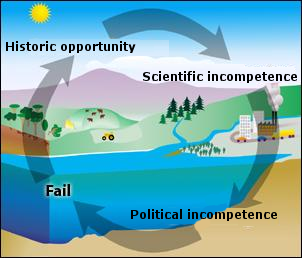
I’ve made the argument before that climate change, having as it does the weight of scientific orthodoxy behind it, should be an easy win in the battle of ideas. That it isn’t, I believe, is due less to the powerful business cartels and their conspiratist minions arrayed against it, and more down to poor strategy and coordination on the part of those responsible for ensuring that the findings of the science are adequately promulgated throughout society, and for ensuring the policy responses to the problem are appropriate.

fail

As gun control advocate Robert Walker argues in the linked post, those people — both the scientists and the political actors — can learn an awful lot from the NRA. Despite being pretty far out on the lunatic fringes even in the US political context, the NRA has simply phenomenal support both among gun users and those for whom the specifics of the debate have no direct relevance. They have this degree of support largely because they have succeeded in propagandising that issue to the point where its symbolic aspects matter more than its functional, material aspects. Doing this — breaking your topic from being a policy matter to being a symbolic matter in the public consciousness — is hard and complicated work, and you have to fight as if you mean to win; to not underestimate your enemy or permit your campaign to be hijacked by incompetence and vainglory. But if the NRA can do it with an issue like gun ownership, arguing for which on rational policy bases is deeply problematic, then surely those responsible for climate science can do as much. How they might do so is sketched in Walker’s article.

L

‘Come back Helen Clark, all is forgiven’

Thus spake John Ansell, who’s back with another cracking demonstration that he’s the nation’s pre-eminent racial fearmonger. He really is peerless in this regard.

And there’s plenty more where that came from.

Incidentally, you can read Scott Hamilton’s (and others’) thorough and systematic destruction of Ansell’s rather slippery and Victorian views on race, ethnicity, culture and religion (yes, Virginia, ‘Māori’ is a religion) in the comments thread of this post at the excellent Reading The Maps.

L

Brief thoughts

No time for anything substantive, but here are a few thoughts, in no particular order:

  • This ad for the Aussie Greens, made by Republic of Everyone for the ABC’s election campaign showThe Gruen Nation, is political-symbolic advertising done right. George Darroch tipped me off to it and describes it as “a political-emotional cluster bomb”, which is about right. It frames up some current issues in an explicitly normative, socially aspirational fashion by posing a set of questions which essentially answer themselves. It presents these issues — particularly gay marriage and boat people — in a way which permits cross-ideological consensus, opening the door to support from Coalition-supporting classical liberals. It’s so good the party itself wants to run the ad on TV, and I would too.

  • If the Climate Science Coalition wants science decided by the courts, rather than by scientists, then they’re welcome to open that door. It speaks volumes about their relationship to science; as a chap on Morning Report said this morning, neither judges nor lawyers can make this determination; if they have scientific experts who can legitimately challenge the record, let’s see them do so. But I have one proviso: They must be bound by the court’s findings. If the court rules, as I expect them to do, that there’s nothing wrong with the NIWA record, then I expect the CSC to take their lumps with good grace. But I expect instead to hear shrill shrieks about activist judges and political-ideological conspiracies. By the same token, of course, if the courts rule against NIWA then I expect the same, and will want to hear some answers from them. Science welcomes scrutiny.
  • KiwiRail continues to fail horribly, this time citing ‘unexpected complications’. The only thing ‘unexpected’, as far as I can tell, is that they’re advising commuiters of the problems in advance now, rather than days after the fact. Just another reason I’m thrilled to be working from home at the moment.

L

Just don’t think about the offspring

Misery acquaints a man with strange bedfellows, and so it is that Chris Trotter finds common cause with Peter Cresswell in selectively revising the story of Ngāi TÅ«hoe to frame them up as our very own Khmer Rouge, and the Tino Rangatiratanga movement as the mortal enemy of civil society as we know it. I do not seek to defend Te Kooti and his followers: it’s not necessary to do so to abhor the brutality of the Crown response. But even that isn’t the point of this post: I’ve covered that ground before. The point is that their reading is anitithetical to the ongoing development of a peaceful and modern Aotearoa.

Both frame up the Crown position as a matter of swordright — TÅ«hoe ‘picked the wrong side’ in their war and were justly punished for it. Should have been punished more. Both Chris and Peter seem to be of the view that the Crown would have been entirely justified in leaving not one stone upon another, not one man, woman or child alive. And more than a century later, based on their own (conveniently one-eyed) assessment of incidents surrounding Te Kooti’s succour in Te Urewera, they argue that TÅ«hoe still deserve whatever they get: nothing if they’re bloody lucky. Frankly, I expect this sort of thing from permanent-state-of-jihad Objectivists; not so much from an actual historian claiming the mantle of a peace-loving social democrat.

Because the end justifies the means, you see. The brutal and systematic dispossession and wholesale slaughter of Māori throughout Aotearoa was perhaps unfortunate, but necessary in ‘civilising’ the uncivilised hordes of savages found here by the noble white man of 1840. I asked Chris a while ago whether he thought that NZ would have been better off if Europeans had just landed with boatloads of armed soldiers and done to the natives what they did in the rest of the world. He responded by saying I was “not mentally wired for this sort of historical argument.” But I guess I have a fuller answer now.

These are people who claim to want to ‘move on’ from our colonial history, for Aotearoa to become ‘one nation’. But doing so on the basis of swordright cannot result in a nation of two people joining together as ‘iwi tahi tatou’, but of one people who set the rules and another who live by them; the former wielding the righteous sword of civilisation, the latter’s efforts to work with the former rather than under them cut down by it, and even their efforts to work within the rules viewed with eternal suspicion and distrust. This is beyond misery — it is ignorant, paranoiac hatred and fear of ghosts long passed which has brought these two bedfellows together. Just don’t think about the offspring they might bear.

Update: Fresh approval from PC.

L

The r and the e: Lobby if you want ’em

I agree with DPF, that for the sake of historical correctness, Wellington’s Majoribanks Street should probably be changed to Marjoribanks, and Nairn Street should probably be changed to Nairne, since that’s how the names are properly spelt. This is precisely the argument I made with regard to Whanganui, and as DPF says it’s no different. But as is so often the case, the idiots of the KBR are reflexively shrieking “racism” because Wellington City Council aren’t recommending a change to the NZ Geographic Board.

The lack of a change is not racism: it’s that nobody seems to care. Whanganui Māori got their name change after decades of concerted and organised lobbying, public demonstration, private petition, backroom negotiation, research and campaigning on the topic. What would be racist is to expect that these changes in Wellington — trivial though they are — should go through as of right just because one historian thinks they should. The decision to change an entrenched name is and must remain a matter of civil society deliberation: those who favour the change lobby for it; those who oppose it lobby against it, both bring whatever evidence and principled arguments they can to the discourse, and those authorities empowered to decide the matter do so in accordance with appropriate legislation and customs. So, to those who want the names of Stewart Marjoribanks and Alexander Nairne properly recognised, I say: start lobbying!

L

Send for The Wolf

(Hoping, but without any confidence, that this will be my last post on the Carter debacle).

About six weeks ago Brian Edwards observed that Labour was its own worst enemy as far as the Chris Carter debacle went. As usual, he was dead right then, and that advice is still right now, with one rather chilling update: the incompetence which saw the parliamentary Labour party keep putting Carter and his misdeeds back on the media agenda at a time when they ought to have been making mileage at the government’s expense is shared by the wider party organisation. The Dom-Post this morning indicate some vagueness about Carter’s future status in the party, while two items on Morning Report (both audio) clearly indicate that Carter’s expulsion from the party on 7 August is far from assured, and that this debacle is likely to carry on well beyond that meeting.

For one thing, August 7 is already too late. Chris Carter, and by extension the Labour party’s rusted-on uselessness and venality, has now been a central topic of domestic political news for at least four of the past eight weeks, and has been utterly dominant throughout fully two of those weeks. A government can’t buy coverage like that, but Labour have packaged it up with a little red bow and delivered it to them post-paid. With the latest events, Carter’s expulsion from the party and a campaign to refocus the political media agenda on more substantive topics — like the mining backdown, 90-day bill, ACC reforms and National Standards — ought to have been undertaken with urgency. This need not rule out adherence to the principles of “natural justice” to which Andrew Little refers; these are compatible with a swift and decisive resolution in a healthy organisation with robust organisational structures, strong networks of competent people, and a shared commitment to the wellbeing of the party.

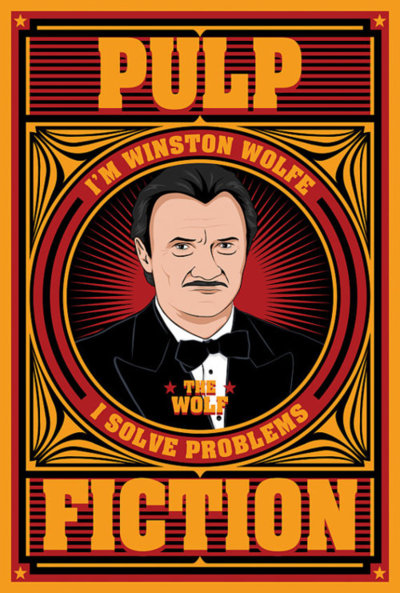
This is not really a matter of the public interest except inasmuch as Labour permits it to be. Labour needs a fixer, like Pulp Fiction‘s Winston Wolfe — an independent, dispassionate individual whose only interest is in resolving the issue quickly and quietly, and who has the mandate, ability and authority to get the damned job done. They needed to cauterise this wound back in June, and the need to do so now is all the more urgent. Further delay risks infection. That they have failed or refused to engage such a fixer shows an absence of nerve on the part of both the parliamentary and the organisational leadership and suggests that modern Labour is not, in fact, a healthy organisation with robust organisational structures, strong networks of competent people, and a shared commitment to the wellbeing of the party. And that is a matter of the public interest, because a strong opposition is fundamental to democracy and the health of the country.

Edit: I should add, if it’s not abundantly clear from the content of this post, that I disagree with Brian’s apparent endorsement (in his latest on the topic) of a “compassionate” response by Labour. While I have sympathy for Carter’s position, withstanding public and media criticism, however unjustified, without going off the deep end is a requirement of the job. In the words of a great (and recently returned!) former All Black captain: it’s not tiddlywinks. It may well be down to a choice between Carter’s wellbeing or that of the party, but Carter chose to throw himself upon the wheel, and whatever wounds he suffers as a consequence I consider to be self-inflicted.

L

Carter’s Par Avion Putsch — politics interruptus

Leaving out the utter incompetence of how Chris Carter’s abortive coup — and I hope I’m the first to coin it the “Par Avion Putsch” — was conducted, his egregious damfoolishness for following such a course of action in the first place guarantees that Phil Goff’s leadership of the Labour party is now safe, though it is critically wounded. The caucus has had to close ranks around a lame duck leader, and all the ambitions of the younger and more vibrant contenders previously mentioned here and by many others must now be shelved for the sake of party integrity. By seeking to artificially accelerate the ordinary and necessary process of leadership selection, challenge and renewal, Carter’s actions have in fact retarded it.

I agree with him that those systems were working too slowly in this case, and on the substantive point that Phil Goff can’t win the election without a fantastic political deus ex machina such as that which benefited George W Bush. But the system is what it is, and you either work with it or you cut yourself loose from it in a fashion which places the system — rather than your own conduct and the competence of the sitting leader — front and centre as the object of critique. By doing neither Carter has snookered any nascent leadership challenge and undermined Goff’s leadership into the bargain, and that practically ensures the outcome he claims to oppose.

Two possibilities present themselves. Either Carter was and remains oblivious to this, in which case he’s a fool whose long experience of party politics has taught him nothing. Or, like everyone else with a functional knowledge of NZ politics, he’s perfectly aware of this fact and has cynically exploited it in an effort to establish a lasting legacy for himself: the final ability to say, post-2011, that he was right, and Phil Goff was a dead man walking, and to be remembered for that, rather than for his taxpayer-funded jetsetting and general uselessness. Ordinarily I would assume the former — incompetence is usually a more apt explanation than malice — but I’m sorely tempted in this case to believe that, as Chris Trotter says, Carter has seen his own political end, and determined to take the rest of the party down with him (update: I think this is a more accurate assessment than Tim Watkin’s suicide by cop).

This course of action could not be more different to that taken by Helen Clark who, with her swift acceptance of the political reality in which she found herself, ensured that the party retained its dignity after the 2008 election defeat. I don’t know anything about the personal relationship between Clark and Carter, but from what I know of her political mind I suspect this will cause it considerable strain, with the episode perhaps costing Carter not only his credibility, his job, and his party membership, but the only political friend and ally he had not already alienated.

L

Hello tworld!

With the arrival of my second child, my time just got more valuable. When better to engage in a medium which brutally enforces parsimony?

(You can now follow me on twitter. No guarantees as to coherence. Yes, the message above did take me ages to cut to 140 characters.)

L