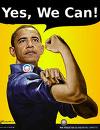
S59 referendum: a game theory approach

How* to vote: Yes, [null] or !#gh$u%WfG?

What’s a body to do, who thinks the S59 referendum question is absurd and yet supports the rights of children to be free from violence, even that perpetrated by their well-meaning parents?

Russell Brown asks the question, and elaborates on the options, but doesn’t provide an answer. Essentially, the question is about principle against pragmatism. This approach is pretty elementary (game theory isn’t a speciality) but it does enough to demonstrate my views on the matter. (It looks to me like a weird sort of Stag Hunt with a third quarry thrown in). There are also a few assumptions and assessments as to how the results will play, which I’m happy to argue. I apologise if it all seems a bit bleedin’ obvious.

mehStarting with the worst response, the third quarry or null vote. An argument of principle, advocated by Denis Welch, it holds that people should treat the s59 referendum with utter contempt and dispose of their share of the $9m expense in the circular file. This is possibly best characterised as the Ostrich Strategy, viz. “ignore it and it’ll go away”. Unfortunately, no cause which attracts signatures from the 10% of the electorate required to trigger a CIR will ever just go away on its own. Given that there are a hard core of people who are strongly motivated to vote “no” in this referendum, the adoption of this strategy will send the (incorrect) message that the bulk of the electorate doesn’t care either way, ceding the field to the “no” voters (hereafter “anti-anti-smacking” or “AAS”). We can call this “Lose For Sure”, because no matter what happens, the strategy can’t win.

chadThe main argument of principle, made most forcefully in the PAS thread by Craig Ranapia and Tom Semmens, is that the question is so badly worded that reading meaning into it and voting on the basis of that interpretation accords the question too much respect, and devalues the CIR system which should insist on properly-formed questions. This argument holds that one should respond to a meaningless question with a meaningless answer by invalidating the ballot and submitting it anyway, which I have characterised above as “!#gh$u%WfG”; in other words, leaving the chad hanging or writing something to the effect of “This question is meaningless” on the ballot and returning it. This has some history in previous referenda, and in principle if enough informal ballots were returned, could serve to discredit the question and the questioning lobby group. Which is what we want. We can call this “Win Big”, because if enough people take this approach, the anti-anti-smackers will be roundly shamed in a more thorough manner than simply losing the referendum. On the other hand, if not enough people do this and the votes are split between “yes” and “informal” the AASers will claim victory. We’ll call this “Lose”.

yesThe argument in pragmatic terms is most eloquently put by Judy Callingham: “I’m going to vote “yes” – as I see it if the bastards don’t lose we’ll never hear the end of them”. This illuminates a key aspect of the matter: the AAS lobby doesn’t have to win big, they just have to not lose in order to demonstrate that they represent the “average kiwi”. This means the primary goal of those opposed to the question or what it represents should be to win, regardless of the magnitude of the victory. Put like that it seems obvious, doesn’t it? This position is most strongly put by The Yes Vote, whose banners are currently up all around the progressive NZ blogosphere. Essentially, if enough people interpret the question in the way in which the AAS want people to interpret it and vote “yes” anyway, they will lose, and the outcome will be positive, viz. parents not being allowed to claim correction as a defence for beating their children. We’ll call this “Win”. Those so voting will have favoured the AAS with a formal answer to their ballot, thus granting them some sort of legitimacy, and if insufficient people vote this way such that it boosts turnout and the AAS still win, they will rightly be able to claim that they have a public mandate for their policy of allowing parents to assault children with legal protection. We’ll call this “Lose Big”.

So, how do things stack up? I’ve established five notional outcomes, as follows:

  • Lose For Sure: %No > %Yes > %Informal (low turnout). This would be caused by people who object to the question refusing to vote.
  • Win Big: %Informal > (%Yes or %No) > (%Yes or %No). This would be caused by enough people voting informally to outnumber those who vote any other way, rendering the referendum a public farce. This requires a great deal of work to convince those who would instinctively vote “yes” despite disagreeing with the question, out of native respect for the democratic process or for other reasons.
  • Lose: %No > (%Yes or % Informal) > (%Yes or % Informal). This would be caused by those objecting to the question being split between “yes” and “informal” such that “no” snuck through the gap, allowing the AAS to claim a plurality and thus victory. There would remain some defence in that the cumulative “yes” and “informal” votes might add up to a majority, but I don’t think this would be worth much.
  • Win: %Yes > (%No or %Informal) > (%No or %Informal). This would be caused by enough people voting “yes” to demonstrate that the AAS does not represent the “average Kiwi” as they claim. It seems likely that those who consider the question an affront to the democratic process and are inclined to vote informally or not vote at all would need to be convinced to vote “yes” instead.
  • Lose Big: %No > %Yes > %Informal (high turnout). This would be caused by enough people voting “yes” to demonstrate that those opposed to the AAS were taking them seriously, but were outnumbered by the AAS itself, thereby justifying the claim that they represent the “average kiwi” with the assertion having been properly tested. If some (but not enough) people are convinced that voting “yes” is the right idea, this will be the result. Thus there is danger in an incomplete adoption of the strategy.

So how should one vote? Well, it obviously rests on what other voters will do. Clearly the best outcome in the case of a split requires collusion – members of one group (either the “informal” voters or the “yes” voters) changing their vote. It looks to me like this:

  • Fail to vote: Many people will do this, but it won’t have any positive effect for anyone other than the AAS. P(Lose For Sure) > *
  • Vote informally: Some people will do this, but probably not enough to Win Big, and if the result isn’t Win Big, it’s more likely to be Lose. This rests on your judgement of whether the number of informal voters will be greater than the number of “no” voters. I don’t think they will. Thus in my assessment P(Lose) > P(Win Big) > *
  • Vote yes: If enough people do this, it will result in Win. If nearly enough people do this it will result in Lose Big. I think the natural tendency of voters is to vote according to what they think something means, rather than what it actually means in cold hard terms. In addition, I think voters are generally reluctant to vote informally out of respect for the institutions of democracy. In addition, I think The Yes Vote has been running a fairly good campaign – they’ve had a few mentions in the mainstream media, and their message is clear and forthright. Therefore in my assessment P(Win) > P(Lose Big) > *

So, essentially, my argument based on this is “vote yes, support campaigns to convince others to vote yes, and all those of you who are considering not voting or voting informally in protest – don’t, just vote yes, because the main danger of losing is in splitting the vote. And hope like hell the yes vote doesn’t fall short, because trying and failing will mean a worse loss than just plain old failing.”

L

* I have omitted the “no” vote. People who are going to vote thus have no need to consider the questions I raise in this post.

Smacked down

Sean Plunket delivered a stinging, if metaphorical, spank to Larry Baldock today on Morning Report (audio). Plunket challenged Baldock to demonstrate one case (just one) in which a parent was convicted of a criminal offence for smacking a child. He can’t, because there hasn’t been one. After several minutes of going around in circles arguing symbolic, rather than substantive matters and making excuses, he settles on the case of Jimmy Mason, which is explicitly not a s59 test case, since he denied striking his son at all.

What we have here is an apt and obvious demonstration that Larry Baldock doesn’t actually understand what the question means – and neither does John Boscawen. That, and the pro-smacking lobby is trying to use the referendum for symbolic purposes. They’re arguing that the question doesn’t mean what its words say it means – it means what its proponents say it means. If this was taken on by government it would be a subversion of the purpose of a CIR, which is to give the electorate a chance to answer a specific question which has clear and obvious policy implications – not to give people a chance to tick ‘yes’ or ‘no’ and then have the meaning of that response spun into whatever suits the referendum framers’ agenda. Because there is no possibility of gaining an understanding of what the electorate wants with this question there is no legitimate issue of representation, despite what anti-anti-smackers such as Dave think. John Key has seen this, and has wisely refused to allow his government to be hijacked by populist propagandists with an incomplete grasp of either the issues or the process; that is, people who figure that belief and ideology are all that matter.

Larry Baldock also reveals his larger purpose here, which is to establish himself and the Kiwi Party as NZ’s next populist vehicle, exploiting the vacuum left by Winston Peters’ absence. He started by talking about how both Phil Goff and John Key are “part of the problem” for supposedly ignoring the electorate, and finished this interview, in which he made no substantive points whatsoever in support of his case, with a petulant “the next-best referendum will be the elections in 2011”, a somewhat weak variation on “the eternal court of history will absolve me” which calls on people who believe that both Labour and National are the problem to vote for him.

Well, Larry, we’ll see. You’re no Winston. Perhaps you can sign Michael Laws up; you could use his political competence.

L

McVicar: officially reactionary, unqualified, right-wing

The BSA has upheld a complaint against TVNZ’s Breakfast on the grounds of balance after it allowed Garth McVicar the free and unopposed opportunity to rant about sentencing.

Complainant Roger Brooking argued that the programme privileged “the reactionary views of an unqualified right wing individual as if he was the oracle on sentencing law”, and that the show’s hosts were unduly sympathetic toward him. The authority upheld the complaint on the grounds that Breakfast producers and interviewers failed to challenge or question McVicar’s “controversial” views, simply accepting them at face value, and internalising them for use as a frame for viewer responses.

This is an excellent decision, for a couple of reasons. First, it reinforces the expectation that the media have a responsibility not to naïvely accept the statements of their commentators or interviewees; that the interview process ought to be adversarial. Secondly, it provides a line in the sand as to what constitutes a controversial topic of public discourse, by implicitly agreeing with Brooking’s characterisation of McVicar and his pronouncements. It goes counter to some previous decisions, such as the rather alarming case last year in which the authority effectively declared that talkback was legitimately a balance-free zone.

L

Deconstructing Democracy, Part 4: Entitlement.

One of the most divisive issues in modern democracies is the notion of entitlements. In NZ the dividing line mostly centres on interpretations of Te Tiriti and its sequels.  In this discussion I shall try to unpack the concept in order to phrase its importance to sustainable democracy in broader terms.

To that end let us clarify what entitlements are not. Entitlements are not objective rights. Objective rights are universal standards guaranteed and enforced by the State. Contrary to what many believe and the desires of constitution-makers, they are not naturally given or divinely ordained. Rights are not  “objectively” or materially given (contrary to what natural law and capitalist theorists believe).  Instead, people are born into social contexts in which the notion of inalienable or universal rights may or may not exist, and may shift depending on circumstance (think the US government stance on torture under W. Bush). Individual and collective rights are not guaranteed deus ex machina but by human invention. They are a human artifice encoded, enshrined or ensured by human instrument. Thus, be it the 1948 UN Universal Declaration of Human Rights or civil liberties statutes in any given country, universal rights standards are effectively enforced by States, which are also the primary abusers of individual and collective rights. Universal rights in principle are selectively upheld in practice depending on the disposition of States and the regimes that govern them. In reality they are not natural, innate, inherent or immutable, but instead are the intellectual product of human beings (elites, for the most part) acting upon notions of collective interest in specific historical contexts.  

Although they may overlap with universal rights and are often confused with them, entitlements do not originate in the State and are not always universal or objective. Instead, entitlements are subjectively driven assessments of what is deemed to be expected or “due” a person or group based upon their location in the socio-economic and political context. Such assessments are group and context specific in origins, although “outsiders” may believe in their validity.  Thus, Kazak goat herders may feel that they are entitled to guaranteed pasture; Taiwaneese teenagers may feel that they are entitled to MP3s; Cubans may feel entitled to first class health and education services; Singaporeans may feel entitled to cheap public housing and food; Argentines may believe that they are entitled to a daily ration of “bife” (steak); Tongan fishing villagers may feel entitled to a portion of any day’s catch; Salafists may believe that they are entitled to religious freedom in Christian societies; Pashtun fathers may feel entitled to marry off their daughters as they see fit; African-Americans may feel entitled to affirmative action; physically disabled people may feel entitled to accessible facilities; religious, ethnic and linguistic minorities may feel entitled to observe their differences in a preferential way; Maori and other indigenous groups in post colonial societies may feel that they are entitled to the land, sea and air that comprise the physical boundaries in which they exist, and to continuing the cultural practices of their ancestors.  The point is that all people have a sense of entitlement to something, and that something is a product of historical events and practice translated into current perspective, grievance, and approach, all subjectively assessed from the standpoint of the individual or group in question. Although they may be well-founded and quite necessary for the people in question to lead fulfilling lives, and may in fact be universally shared, these notions of entitlements are not, by definition, rights.

Authoritarians do not much have to worry about reconciling their political projects with notions of entitlement.  They can recognize or disregard entitlements as they please, using force as the ultimate arbiter of disputes arising from differences over who is entitled to what. For democracies however, particularly those in heterogeneous societies with past records of oppression, exploitation and expropriation, addressing the issue of selective group entitlements is central to regime stability. That is where the so-called rights (entitlements?) of the majority may run in conflict with the rights (entitlements?) of minorities. Rights are always universal and State-granted; entitlements may or not be. The question in democracies is how to reconcile them.

Depending on the political strength of any given actor, selective notions of entitlement can be pushed onto the policy-making agenda.  If successful, the promotion of entitlements can lead to legislative recognition, which in turn can lead to the treatment of entitlements as rights. The key to democratic stability is for selective entitlements to be accepted by the majority as if they were universal rights. That assumes majority consensus on the historical record that produces a shared definition and perspective on selected group entitlements as well as their means of achievement or redress. That is, above all, an ideological project.

Rights are defined, bestowed and enforced by the State, in a top-down process of elite attribution and mass application. Entitlements are construed “from below,” originating in grassroots conceptualisations of what is (historically) due to or expected by a given group or groups. In the measure that selective notions of entitlement enter into the majority consciousness as reasonable and fair given a particular history and current context, they then have the chance to become part of the policy process. In the measure that they enter into the purview of the State (as the operational agent for the implementation of policy), they can become synonymous with the general interest. At that point they become State-sanctioned and enforced.  But however conflated their usuage may become, entitlements can never be construed as rights unless they are universally shared. That is why debates on selective entitlements are so heated and divisive. Be it on matters of cultural identity, resource extraction or political representation, the conflict between selective entitlements and universal rights is a permanent feature of the social landscape in modern democratic societies. 

I admit to not having a complete grasp on how to reconcile group entitlements and universal rights in a democracy. Yet in seems that it is one of the most important and intractable issues in the reproduction of the democratic form. Better said, it is the resolution of the entitlements versus rights conundrum that lies at the heart of sustainable democracy in the early 21st century. And that, again, may be in the first instance more of an ideological project than a matter of policy.

Next post: contingency and self-restraint.

Howling at the moon

It’s not very often I get excited about a new entrant to NZ’s media ecology. The last time I did was for MiNDFOOD, based on the pre-release PR, and that only lasted until I opened the thing up and realised it was just another glossy ad-filled waiting-room mag with skinny celebrities on the cover.

But this morning I’ve read most of werewolf, the latest offering from Scoop’s Gordon Campbell and others, to be published every full moon. I’m pleasantly surprised. The debut edition features a reasonably thorough survey of Helen Clark’s little-considered but much-valued arts policy through the Oughties; a good bag of the smacking petition which drew immediate fire from petition backers Bob McCoskrie and Larry Baldock in comments; a satire primer from the dependably excellent Lyndon Hood; and a bit about the effect of electoral systems on democracy – case in point: Lebanon. Music and travel writing as well. Go read some of it.

I can only assume that Gordon’s choice of masthead is drawn from the same place as my title, the name of Ian Wishart’s publishing company. In some ways werewolf reminds me of Investigate: a niche publication which will try to carve out its niche from a critical, complicated, politically and philosophically-engaged, media-aware, somewhat geeky audience and specialising in long-format, analysis-rich material which digs a bit deeper than that published (and re,re,republished) by the usual suspects.

Like Investigate/TGIF/TBR, it has potential to bridge the divide between traditional and new media formats essentially by providing the best of both worlds – periodic, reliable and high-quality content which doesn’t demand too great a commitment in time or resource from its audience but which provides blog-style opportunities for engagement should readers want them. Since I don’t imagine Gordon and co. would overly appreciate being compared to Ian, I should note that that’s where I think (and hope) the similarity ends – NZ doesn’t need another ideologically-bound narcissistic soap-box publication, and that this first edition is not. Nevertheless, I wish them all the success Ian has had, and bring on the next episode.

L

Arr

Although I never got around to doing the follow-up post on the political-symbolic aspects of the Pirate Bay case (for which you can all blame my baby daughter), one of the consequences of the guilty verdict I considered has come to pass: the Swedish Piratpartiet has won a seat in the European parliament, gaining more than 7% of the vote in Sweden.

How much change they can make in that bureaucratic behemoth is another matter but their election as a Streisand effect-like result of the Pirate Bay verdict which gave them an immense boost in public profile, shows that this is a political issue with teeth.

L

Turns out I am a Sensible Moderateâ„¢ after all

Normally I despise and distrust political quizzes as misleading trivia, but since this one confirms my existing prejudices about myself I’ll post it anyhow.

My Political Views
I am a center-left moderate social libertarian
Left: 2.64, Libertarian: 2.48

My Foreign Policy Views
Score: -6.04

My Culture War Stance
Score: -7.51

Hat-tip: Dave at Big News; and ScrubOne (who seems to be my polar opposite) is apparently compiling another chart of the NZ blogosphere, so everyone knows which canned propaganda terms correctly apply to whom.

L

Keeping the weak ill-educated, isolated and unskilled

Adult Community Education serves two key purposes: reducing poverty and building strong skilled adults active within their communities. The National government is drastically cutting it, consigning people to lives trapped in poverty and weakening communities. 

The cuts are both deep and vicious, school ACE funding is being cut by 80% from 2010, tertiary ACE funding from 2011, and inflation indexing goes from both, and the funding to help providers develop community education vanished overnight.

National has been banging on about “moroccan cooking courses” and describing them as “hobby courses”, but the reality is very different. Firstly a quick look at any ACE provider will show a very different picture of courses from the one Anne Tolley would like to paint. My local school provider, for instance, is teaching first aid, assertiveness, anger management, effective communication, and how to teach adults – all valuable, all losing funding in 2010.

Secondly, hands on life skills courses are an effective bridge back into education. Within my extended family and network of friends I can think of several people who’ve taken a first easy step back into education through a “hobby” course, found that they could succeed in education and taken another course, and blossomed from there. A concrete example: bike maintenance -> communication skills -> effective writing -> interview preparation -> a brand new job and career. By removing the bridging courses National are consigning a whole raft of people to on-going poverty and no access to education.

Thirdly, we suffer from relatively weak communities in New Zealand: individuals are isolated, people want to help others but don’t know how, community organisations are underfunded, under resourced and lack structural skills. Community Education has been one of the more effective mechanisms for addressing this, not only do they build relationships and create community facilities and meeting places, but they also teach the skills that effective community organisations need.

Anne Tolley, by butchering the Community Education sector, has acted both to keep the weak ill-educated, isolated and unskilled, and to undermine the community organisations that try to help them.

Lawsome

David Haywood has posted a mighty mashuptastic bit of Lawsery on the Richard Worth case which you should all read. Judging by some of his (Laws’, or should that be Lawses?) comments on the wireless this morning, I’d say it’s not too far off the mark.

L

Update: The actual column is somewhat, err, flaccid by comparison.

Balance of scrutiny

One of the major issues in this Richard Worth affair, like the Tony Veitch affair, is the degree of scrutiny to which the various parties are being subjected, and the degree to which their assertions are accepted without scrutiny.

Richard Worth’s motives, alleged actions and responsibility generally have not been subjected to significant public scrutiny or discussion (although his reputation has). The victim’s motives, supposed actions and responsibility for her position as a victim have been subject to a much higher degree of investigation; that is, expected to withstand closer scrutiny in order to be considered credible, as have those of her political agent Phil Goff. In most cases this has not been subtle, although some has.

I know, who’d have thunk it. Sexual harrassment victim held to account more strongly than alleged harrasser, sky blue and water wet. But this case, where the differentials in power and standard of acceptable conduct between alleged harasser and alleged victim could not be more stark, illustrates more than most why it’s arse-backwards.

But I think we are seeing a change in the public attitude toward this sort of thing. Although Louise Nicholas, Kristin Dunne-Powell and the anonymous victim here are still subjected to undue scrutiny and speculation, the media have in each case gradually begun to treat the incidents more seriously. As John Key is discovering, it is no longer politically viable to simply ignore this sort of thing and hope it goes away.

L