In Iraq, the NZDF is there but not “there.”

Recently I was approached by reporters to comment on a report by Harmeet Sooden that reveals that NZDF activities in Iraq extend well beyond what has publicly been acknowledged.  You can read his report here. My back and forth with the reporters eventuated in an op ed (ironic, given the content of my previous post), the gist of which is below.  As readers will see, my concerns are not so much about the mission as they are about the lack of transparency on the part of the NZDF and the previous government as to what the deployment really involves.

Ethically and practically speaking, there is no real problem with what the NZDF is doing in Iraq, including the undisclosed or downplayed aspects. It is a way for the NZDF to hone its skills (to include combat skills), increase its capabilities, enhance its professional reputation and more seamlessly integrate and operate with allied forces and equipment, as well as demonstrate that NZ is willing to do its part as a good international citizen. The cause (fighting Daesh) is just, even if the context and conditions in which the war is prosecuted are prone to unintended consequences and sequels that blur the distinction between a good fight and a debacle. The issue is whether the benefits of participating in the anti-Daesh coalition outweigh the costs of being associated with foreign military intervention in a region in which NZ has traditionally been perceived as neutral and as a trustworthy independent diplomatic and trading partner. The statements of coalition partners (especially the ADF) demonstrate that they believe that the mission has been worthwhile for the reasons I noted.

Some will say that the disclosure of the NZDF “advise and assist” role in Iraq is evidence of “mission creep.’ In reality this was envisioned from the very beginning of the NZDF involvement in the anti-Daesh coalition. The training mission at Camp Taji, although a core of the NZDF participation in the coalition, also provided a convenient cover for other activities. These were generally disclosed in the months following the first deployment (TGT-1) in theatre, and it was only during TGT-5 and TGT-6 in 2016-17 that the advise and assist role was openly acknowledged. In practice, military training such as that conducted by the NZDF in Iraq does not stop after six weeks behind the barbed wire at Taji, so some advise and assist operations in live fire conditions were likely conducted before what has been publicly acknowledged (perhaps during the battles of Tikrit and Falluja or other “clearing” missions in Anbar Province).

The extended advisory role “outside the wire” is particularly true for small unit counter-insurgency operations. That was known from the start.  So it is not so much a case of NZDF mission creep as it is planned mission expansion.

NZDF collection of biometric data is only troublesome because of who it is shared with. The Iraqi authorities are unreliable when it comes to using it neutrally and professionally, so sharing with them or the ISF is problematic. Biometric information shared with NZ intelligence agencies can be very useful in vetting foreign travellers to NZ, including migrants and refugees. But again, whereas the use of such data can be expected to be professional in nature when it comes to NZ and its military allies, the whole issue of biometric data sharing with any Middle Eastern regime is fraught, to say the least.

The reasons for the National government’s reluctance to be fully transparent about the true nature of the NZDF commitment in Iraq are both practical and political.

Practically speaking, denying or minimizing of NZDF involvement in combat activities, to include intelligence and other support functions, is done to keep NZ’s military operations off the jihadist radarscope and thereby diminish the chances that New Zealand interests abroad or at home are attacked in retaliation. This goes beyond operational and personal security for the units and soldiers involved as well as the “mosaic theory” justification that small disclosures can be linked by enemies into a larger picture detrimental to NZ interests. All of the other Anglophone members of the coalition (the US, UK, Australia and Canada, as well as others such as France and Spain) have suffered attacks in their homelands as a direct result of their public disclosures. NZ authorities undoubtedly see this as a reason to keep quiet about what the NZDF was actually doing in theatre, and they are prudent in doing so.

However, foreign reporting, to include reporting on military media in allied countries, has already identified NZDF participation in combat-related activities, so the desire to keep things quiet in order to avoid retaliation is undermined by these revelations. Likewise, Daesh and al-Qaeda have both denounced New Zealand as a member of the “Crusader” coalition, so NZ is not as invisible to jihadists as it may like to be. Even so, to err on the side of prudence is understandable in light of the attacks on allies who publicly disclosed the full extent of their roles in Iraq.

The other reason why the National government did not want to reveal the full extent of the NZDF role in Iraq is political. Being opaque about what the NZDF is doing allows the government (and NZDF) to avoid scrutiny of and deny participation in potential war crimes (say, a white phosphorous air strike on civilian targets in Mosul), complicity in atrocities committed by allied forces or even mistakes leading to civilian casualties in the “fog of war.” If there is no public acknowledgement and independent reporting of where the NZDF is deployed and what they are doing, then the government can assume that non-disclosure of their activities gives NZDF personnel cover in the event that they get caught up in unpleasantness that might expose them to legal jeopardy.

It is all about “plausible deniability:” if the NZDF and government say that NZ soldiers are not “there” and there is no one else to independently confirm that they are in fact “there,” then there is no case to be made against them for their behaviour while “there.”

In addition, non-disclosure or misleading official information about the NZDF mission in Iraq, particularly that which downplays the advise and assist functions and other activities (such as intelligence gathering) that bring the NZDF into direct combat-related roles, allows the government some measure of insulation from political and public questioning of the mission. NZ politicians are wary of public backlash against combat roles in far off places (excepting the SAS), particularly at the behest of the US. Although most political parties other than the Greens are prone to “going along” with whatever the NZDF says that it is doing during a foreign deployment, there is enough anti-war and pacifist public sentiment, marshaled through a network of activist groups, to pose some uncomfortable questions should the government and NZDF opt for honesty and transparency when discussing what the NZDF does abroad.

However, in liberal democracies it is expected that the public will be informed by decision-makers as to the who, how, what and why of foreign military deployments that bring soldiers into harm’s way. After all, both politicians and the military are servants of the citizenry, so we should expect that transparency would be the default setting even if it does lead to hard questioning and public debate about what is a “proper” foreign military deployment.

The bottom line as to why the NZDF and political leaders obfuscate when it comes to foreign military operations is due to what can be called a “culture of impunity.” This extends to the intelligence community as well. They engage in stonewalling practices because traditionally they have been able to get away with them. Besides public ignorance or disinterest in such matters, these affairs of state have traditionally been the province of a small circle of decision-makers who consider that they “know best” when it coms to matters of economic, security and international affairs. Their attitude is “why complicate things by involving others and engaging in public debate?” That tradition is alive and well within the current NZDF leadership and was accepted by the National government led by John Key.

It remains unclear if there will be a change in the institutional culture when it comes to disclosing military operations abroad as a result of the change in government, with most indications being that continuity rather than reform is likely to be Labour/NZ First’s preferred approach.


An earlier version of this essay appeared in The Dominion Post on February 12, 2018. (https://www.stuff.co.nz/national/101327837/advise-and-assist-in-iraq-was-always-part-of-the-plan-for-nz-defence-force).

Letters from America, take nine: A crisis of US imperialism.

The deaths of four US servicemen in Niger has brought attention the fact that the US military operates in far more places and in far more numbers than the public, and apparently senior members of the US Congress (which supposedly has oversight responsibility for US foreign military deployments) are aware of. Estimates of US bases abroad range from 800 bases in 70 countries to 900 bases in 130 countries, with anywhere from 250 thousand to over 750 thousand troops deployed overseas a given time (the total of bases on foreign soil operated by other countries is around 30, mostly by former colonial powers). The reason that the figure varies is that the Pentagon refuses to reveal the precise number of clandestine or “lilly pad” bases (less than 200 troops on station), so the numbers publicly acknowledged are grounded in the permanent installations the US maintains in places such as Okinawa, Spain, Germany, South Korea, and the United Kingdom.  This does not include CIA paramilitary forces operating abroad, which are roughly thought to be in the hundreds.

The ambush that killed the four US Army Special Forces (SF) sergeants was staged during a routine “train, advise and assist” (TAA)/reconnaissance mission in the Southwestern border with Mali. They were part of a 12 man Green Beret team accompanying a 30 man Nigerien partner unit during a routine meeting with local leaders in the village of Tongo Tongo, part of an area in which Daesh is known to operate on both sides of the border (but which until this particular attack had not been sighted near Tongo Tongo during 29 previous patrols). The SF team was part of an 800 strong US military presence in Niger under the jurisdiction of the US African Command (AFCOM) deployed there to help the Nigerien and French militaries fight Daesh as it seeks safe havens in relatively lawless or stateless parts of Subsaharan and West Africa. The SF team/partner  platoon were attacked after they left the village on their way back to tactical HQ.

Leading figures in US Congress, including Senators John McCain (R-AZ), Chuck Schumer (D-NY) and Lindsey Graham (R-SC) claim that they were not briefed on the mission and have not been given answers as to what went wrong. Press attention has focused on the insensitive treatment of one widow by the President once her husband’s body was returned to the mainland, why one of the soldiers was left behind during the evacuation (he was later found dead a mile from the ambush site) and the fact that “no one knew” about the US military presence in Niger. In fact, most Americans and the President himself were unaware of what Niger was until the ambush. Now, partisan rebukes are being thrown and answers are being demanded. Yet, with only one percent of the US population directly connected to the US military as serving personnel or immediate relatives of those doing so, it is not entirely surprising that the public and corporate media are unaware of the full extent of US military activities outside of the open conflicts in Afghanistan, Iraq and Syria.

A bit more surprising is the apparent Congessional ignorance of what is happening in AFCOM’s area of responsibility (AOR) or the rules of engagement (ROEs) under which that SF team and other troops operate (that is relevant because it turns out that the ill-fated patrol had no US close air support and required French air assets to come to its assistance more than an hour after the ambush began). Since it is routine for the Pentagon to provide off-record briefs to the Armed Services Committees of both deliberative chambers on military operational matters abroad, this seems unusual unless there was a highly classified scenario being developed in that part of the world.

The surprise and arguments about the ambush in Niger–“Trump’s Benghazi,” as some are calling it–obscures an underlining fact: US imperialism is in crisis. It may or may not be terminal and it may or may not be positive for world peace, but the reasons for the crisis are worth exploring.

The crisis of US imperialism (or neo-imperialism, should one want to be pedantic) is rooted in both domestic as well as international factors. Domestically, the long era of “liberal internationalism” is over, and so far nothing as emerged by way of a coherent foreign policy and military strategic doctrine to replace it. Liberal internationalism, which emerged during the Cold War and remained as the guiding principle of the US approach to international relations until Donald Trump entered presidential office, is premised on the belief that the US has a special responsibility to engage in the international system in order to safeguard and expand a liberal democratic order based upon market capitalist principles. This was evident in the US role in creating international institutions such as the UN, WTO and IMF but also in its role as the ‘world’s policeman.” The idea was that the US, as the world’s superpower, had the responsibility to promote and maintain a system that, if not made in its image, was supportive of the liberal mores that it espoused, especially when these were challenged by actors with less noble motives. Many might disagree with both the premise and practice of liberal internationalism, but that is what guided US foreign policy and military diplomacy for almost a half century.

The liberal internationalist (some call it interventionist) consensus spanned both major parties and the foreign policy elite in Washington and in academia. But with the emergence of an economically nationalist and neo-isolationist “America First” Alt-Right led by the likes of Steve Bannon and endorsed by Trump, the consensus has broken down. Where American neo-conservatives and neo-Wilsonians, neo-realists, idealists and constuctivists could all paper over their differences under the umbrella of liberal internationalism in pursuit of US global hegemony, they are repudiated in their entirety by the America Firsters. However, other than the appeal to economic nationalism, xenophobia and a “strong military,” the latter are themselves unsure how to approach world affairs. This is seen in the Trump administration’s ad hoc approach to assorted foreign policy issues as well as in the lack of high and upper management level appointments in the foreign policy and national security bureaucracies (over 250 such positions remain unfilled ten months after Trump’s inauguration).

By way of default, the US imperial reach is increasingly maintained by the military rather than the diplomatic corps. Secretary of State Rex Tillerson has decimated the upper ranks of the foreign service in favor of relying on a small cadre of trusted advisors, only a few of whom have the type of diplomatic experience that a career foreign service officer would have. In parallel, Trump has staffed the White House and Pentagon with retired and active duty generals, even in positions traditionally filled by civilians. The combination, when added to the lack of strategic vision and baseline foreign policy principles, has resulted in the conduct of US diplomacy led by military threat or fiat, as opposed to military diplomacy being subordinated to and guided by broader strategic and diplomatic objectives.

This is a major sign of weakness because the role of global hegemon requires that the majority of other states and international actors support US leadership and eventually accept and share its values as organizing principles for the international order. That is how the difference between “super” and “great” powers is drawn: “super” powers intervene in the international community in order to maintain and defend systemic interests grounded in the promotion and acceptance of shared perspectives and values, whereas “great” powers intervene in the international community to promote national interests in the absence or rejection of universal standards. Both approaches are grounded in realpolitik, but only the former is hegemonic because it relies more on diplomatic cooperation than military coercion.

Evidence that the US is declining in influence and moving from a “super” to a “great” power is seen externally. The return or rise of old and new powers has shifted the international system towards multipolarity after a decade or so of post-Cold War unipolarity. The US may still be central to the strategic equation inherent in the emerging mulitipolar system but it no longer dominates it. The endless wars since 9/11 have sapped its finances and public morale and demonstrated that its much proclaimed capability to fight and win 2.5 major regional conflicts (MRCs) was baseless in fact (the 2.5 MRC scenario was premised on the US simultaneously fighting and winning two major and one minor conventional regional conflicts alone and against any combination of adversaries. Unfortunately for US military planners and the troops that were deployed under that strategy and unlike Saddam Hussein’s forces, various enemies refused to cooperate by fighting the way they were expected to fight). And while its blood and treasure were and are drawn in dozens of conflicts such as that in Niger, other states push economic development and  military modernization as the path towards great power status.

Although it remains a potent, perhaps unchallenged fighting force under the right conditions, the impotence of the US when it comes to imposing a preferred political solution in the wake of military conflict has been noted by allies and adversaries alike. The latter now challenge the US more and more, in places both far from and near to what should be essential US national interests. They include states as well as non-state actors, and they undertake covert and overt hostilities against the US on several dimensions across multiple fronts, be they cyber, kinetic, economic or diplomatic. The US is increasingly unable to respond symetrically and effectively to these challenges even with a forward military presence spread across the globe.

The problem of US challengers acting with relative impunity in a multipolar world is not its only concern. US allies no longer see its as a reliable partner. This is largely due to the deleterious impact of the Trump presidency on the US reputation, but it is not reducible to it. Allies and adversaries can all see the political polarization within the US, the increase in racial and ethnic tensions, the growing economic inequalities, the culture clashes over traditional values, the overtly tribal nature of interest group intermediation, and the overly violent nature of a popular culture enabled and promoted by weapons manufacturers and the lobbies that use fear-mongering and mythology on their behalf to keep the culture of violence alive and growing. These internal contradictions all spell out the weakness of a society in decline. For many at both home and abroad, the US gives all the appearance of being Rome before the Fall.

It seems that the mainstream media and the public that watches it are slowly cottoning on to this fact even if the political class does not want to admit it. The lack of victories abroad, the lack of information about what the US military does and where it does it (even as the Trump administration authorises expanded CIA paramilitary operations, including drone hunts of suspected extremists), and the notion that the more the US tries to maintain its international position the more it weakens itself on the home front, appear to be gaining traction in the social consciousness. There is more open wondering about “why are we there and what purpose is being served” as opposed to the “if not us, then who” rationales that have dominated public discourse for the past decades. And even though concerns about terrorism remain strong, it is harder for people in the US to rationalize and support policies that claim that tribespeople with pre-modern social organizations in West Africa (or Afghanistan for that matter) are, through a long string of connections, a potential existential threat to the US mainland and its way of life.

Eroded from within and challenged from without, it appears that for this era of US (neo) imperialism, twilight has arrived. The question is what comes next, because if one thing is proven in history is that Empires in decline seldom go quietly into the night. And night is approaching, fast.

Postscript: The radio interview that prompted this reflection (and which covers more than this particular subject) can be found here.

Letters from America, take six: Flirting with disaster.

The theme of the week in the US is “flirting with disaster.” Trump did well on his return to Texas for a second time after Hurricane Harvey–he looked a bit more presidential and at least went to the affected areas to hand out relief packages and hug displaced babies (of color, to boot!). Upon his return to DC his decision to repeal DACA, the so-called “Dreamers Act” (which gave limited legal protection to foreign born children without criminal recrods who were brought to the US by their parents) has enough support in Congress to see it upheld and replaced within the six month time frame Trump has specified for its implementation (although like everything else Trump does, the court challenges are already being filed). So for first time in months Trump had a week devoid of major scandal, crisis or controversy.

But now Hurricane Irma is headed to South Florida after hitting the Leeward Islands, including the US Virgin Islands and Puerto Rico (a US territory with a population of 3.4 million). The Dominican Republic, Haiti and Cuba are in its path before it is predicted to make a direct hit on the larger Miami area (with a population of 6.7 million). It remains to be seen what Trump’s response to this storm will be given the heavily Hispanic demographic in the impact areas and the fact that he did not carry South Florida in last year’s elections (unlike SE Texas where Harvey hit). He might order full scale federal help given that even Mar el Lago will be affected, but so far he has done nothing and left it to the territories and states to deal with emergency prep.

Irma is stronger than Harvey, being a full fledged category 5 storm with sustained winds of 185 miles per hour and gusts to 225 mph (nearly 300 kilometers per hour) and a storm surge of up to 30 feet. Harvey was a Category 3 storm when it made landfall and turned into a rainbomb, but neither in terms of winds or surge is it comparable to the punch that Irma is packing. Like SE Texas, South Florida is low lying (and even below sea level in some places), so the catastrophic potential is huge. The number of people who could be affected in the Florida, Puerto Rico and the island territories is more than double that of those impacted by Harvey, and the demands for recovery assistance both in US territories as well as foreign neighbors will be astronomical.

So Hurricane Irma will be a big test for Trump. He ordered US$ 7.5 billion in federal disaster relief to Texas for Harvey recovery efforts (a drop in the bucket of what is estimated to be a 150 billion dollar recovery cost), but that will now need to be increased exponentially for Irma recovery efforts even in the face of GOP misgivings about disaster relief spending. Recall that the Texas congressional delegation opposed federal relief for the Mid Atlantic areas affected by Hurricane Sandy a few years ago, but are now clamoring for federal help (Ted Cruz and John Conrnyn come to mind). More generally, many Republican congresspeople are loathe to increase the US debt ceiling in order to fund recovery efforts outside their own districts, something that Treasury Secretary Mnuchin claims is an abosolute necessity (and a direct betrayal of Trump’s campaign promise to reduce the US debt ceiling). Faced with GOP opposition, Trump has sided with congressional Democrats in calling for a temporary elevation of the debt ceiling in order to finance disaster relief (a Faustian bargain if there ever was one,), much to the annoyance of GOP leaders such as House Speaker Paul Ryan. In view of these differences it will be interesting to see how the Republican majority in Congress reacts to pleas from Florida and US territories for federal receover aid, but what is certain is that the debate over it will be contentious at best.

Almost unnoticed in Washington amid all the hurricane news is the fact that another major disaster is unfolding in the US west. Nearly 60 large scale wildfires  covering hundreds of thousands of acres are burning in seven Western states, and both property and lives have been lost in them. Although the region is drought- and hence fire-prone and therefore has signficant deployable fire-fighting resources at the state and federal level (e.g. via the US Park Service and other branches of the Departments of Interior and Homeland Security), budget cuts have reduced the federal ability to contribute to fighting simultaneous large fires, some of which have reached the outskirts of major cities such as Los Angeles. With no end to the fire season in sight and seevral of these conflagrations still out of control, the possibility exists that a fire disaster can be declared this year. If that happens the arguments about natural disaster recovery funding will only get more intense and partisan.

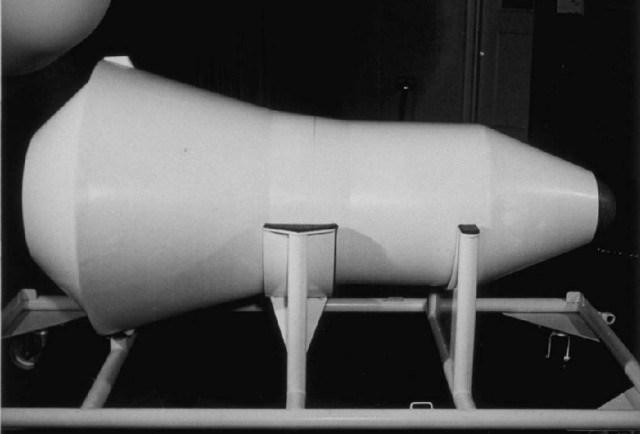
And then there is North Korea. The test of what the DPRK claims is a thermonuclear or hydrogen bomb is a significant step forward in its nuclear testing program. Unlike more primitive fission or “atomic” bombs, these type of munitions are used by all of the major nuclear weapons states save India. The shape of the warhead that Kim Jung-un is seen posing with in photos appears to be similar to a US mid 60s-mid 70s Teller-Ulam  “peanut” design. Hydrogen bombs are two-phased fission-fusion devices that do not need advanced triggers because of their plutonium (or sometimes U-235) primary fission cores, which are more easily “ignited” by conventional high explosives (Pu-239 is used in both the primary and secondary sequences, although the bulk of the thermonuclear explosion comes from ignition of the U-238 “tamper” surrounding the Pu-239 “sparkplug” in the secondary sequence). The size of the prototype shown in DPRK propaganda photos demonstrates that it can fit into the nose cone of their recently tested ICBM (which seems to be a Chinese knock-off similar to Pakistani designs). So they have made a quantum leap towards having a lauchable weapon.

The issue remains as to whether they have the re-entry trajectories down so as to not burn up the nosecone and/or booster at too steep an angle, and whether the US and allied missile defense are up to the task of intercepting the booster before re-entry or upon re-entry on a flatter trajectory slope. Since the DPRK will have only one warhead on the booster (as opposed to the multi-warheaded nature of MARV’d and MIRV’d strategic strike missles deployed by the US, UK and Russia), a successful intercept can push the DPRK back both operationally as well as politically (since it will take some time to mount and fire another warhead, and that will likely not be allowed to happen because a launch in anger makes the DPRK vulnerable to a retaliatory response, be it conventional or not).

The more important question is whether, upon intelligence showing preparations of a live nuclear missile launch, the US will trigger (most likely conventional) pre-emptive strikes against DPRK missile launch facilities, or whether it will wait until a “live” launch is confirmed (which reduces the time avaliable for a response but which can allow more accurate tracking and intercept by ABM defenses such as the recently deployed Terminal High Altitude Area Defense (THAAD) systems, and which provides data for early detection of the trajectory of future launches, should they occur). Either way, the result will be war between, at a minimum, the DPRK, ROK and the US, with more states such as Japan likely to get drawn in because of direct engagement or alliance commitments. And then of course, there is China.

It is an open question as to where the DPRK got its warhead design. But Pakistan comes to mind simply because it already has nuclear weapons and has a history of clandestine nuclear weapons design and parts proliferation. That poses some thorny diplomatic and security questions for those who have tried to engage Pakistan in the effort to have it moderate its behaviour on a number of fronts.

In the face of a DPRK willingness to launch, the US has very few options left short of pre-emption and or interception upon launch. Trump as usual has backed himself into a corner by tweeting that “the time for talking is over,” and the response from China and Russia to his demands for stronger sanctions has been equivocal at best. Trump’s barking at South Korea for its alleged policies of “appeasement” vis a vis the  DPRK are not only factually incorrect but alarming to regional allies, since the ROK has been anything but appeasing even while urging bi- and multi-lateral talks with the DPRK on a regular basis. Secretary of Defense Mattis and the Joint Chiefs of Staff have emphasised that the US is not interested in annihilating the DPRK, but they and the rest of the foreign policy establishment have not dropped the long-standing demand for regime change and reunification under ROK rule, which is simply a non starter from the DPRK point of view. So the walls are closing in on non-military options.

The threat to stop all trade with countries that trade with the DPRK is an idle one given the negative impact on the US economy that such an action would entail (particularly in the case of China), but smaller DPRK trading partners (perhaps including NZ, which purportedly has small backdoor dealings with it), could suffer as a result. The big issue is whether China will put the squeeze on the DPRK in light of recent developments. So far, other than rhetorical condemning of the test and the clear embarrassment it feels at having been ignored by its client when it came to not going forward with the nuclear test, it has shown a relcutance to do so. The Russians flat out refuse to cooperate in any increased sanctions regime. So the US is left with few cards to play short of the military ace in the hole.

In sum, the US is flirtng with disaster on several fronts, three natural and one man made. How Trump handles them is going to impact his standing before Congress and of course have an impact on domestic support as well as international relations. Options on all fronts seem limited and the consequences dire, both for him politically as well as those affected by his decisions. The moment is one where, as Machiavelli noted,successful handling of  the viccisitudes of fortuna (fate) requires the commitment of leadership virtu (virtue).

When it comes to leadership virtue, Trump has so far displayed none. It remains to be seen if the tests now before him will uncover what has never been seen before.

Addendum: Here is an interview that I did with Selwyn Manning of eveningreport.co.nz as part of a video series that parallels/complements the written series here.

Deja Vu all over again?

According to press reports US Defense Secretary James Mattis is considering sending between 3000-5000 additional US troops back to Afghanistan to bolster the 13,450 already there. Last week he is reported to have asked NATO members and non-NATO military partners to commit additional troops up to the desired threshold of 1,200. Fifteen NATO members and partners have apparently committed to the task, with the UK (which has nearly 600 troops in theatre) promising an additional 100 soldiers and Norway and Lithuania publicly stating their intention to do likewise (without revealing numbers or units involved). Given that New Zealand has non-member partner status with NATO, is a member of the International Security Assistance Force (ISAF) in Afghanistan and is a bilateral US military partner that earlier agreed to a request to send a handful of soldiers back to Kabul, it is certainly possible that it has also been asked to consider bolstering its presence in that country. Mattis conceded that in retrospect the earlier US drawdown of troops from Afghanistan was too large and too sudden given the prompt resurgence of the Taliban (especially in Kandahar province) and the rise of Daesh as a new adversary in theatre. So what he is asking is for reinforcements to re-stem the extremist tide and continue the mentoring and advising that, along with selected hunter/killer missions, have been the mainstay of the ISAF role since the drawdown began a few years ago.

The question is: has NZ agreed to this latest US request to send more troops back to Afghanistan and if so, in what capacity? Given Donald Trump’s demands that US military allies “do more and pay more” for their common “defense,” is it prudent for NZ to refuse the US request?

On a related topic, reports are now regularly surfacing that Iraqi troops and federal police are committing war crimes on a significant scale in the battle to push Daesh out of the country, including torture and summary executions of unarmed suspects. Many of the war crimes are being committed by Shiia members of the Iraqi armed forces, who see their acts as revenge for the atrocities committed by Sunni Ba’athists during and after Saddam Hussein’s regime (since many Daesh fighters in Iraq are Iraqi Sunnis with ties to the deposed regime). No mention has been made of where these personnel were trained, but given the urgent need to commit troops to battle, is it not possible that some of the 20,000 Iraqis trained by NZDF personnel at Camp Taji outside of Baghdad since 2015 might be involved in these war crimes? (the NZDF is now in its fifth rotation at Camp Taji and claims that its training involves instruction on “fundamental human rights law and the Law of Armed Conflict”). This question is particularly relevant given that the NZDF admits that most of the soldiers it has trained have been committed to the battle for Mosul where war crimes have recently been documented (WARNING: the link contains nasty imagery).

Given that the NZDF has in the past had problems with some of its foreign security partners with respect to the treatment of prisoners (such as the NZSAS handing over detainees to the Afghan secret police, who then tortured and purportedly killed some of them), is it not possible that its combat training at Camp Taji (which emphasises infantry skills) has overshadowed the ethics training component of the mission given the urgent need to commit Iraqi troops to battle? Or do the Iraqis simply ignore the ethics part of their training or go rogue afterwards? Could this have contributed to the commission of war crimes by graduates of Task Force Taji’s training program? Since a NZDF officer is serving as a spokesperson for the anti-Daesh coalition in the battle for Mosul (and has had to explain the use of white phosphorous munitions in urban areas), and NZSAS personnel are believed to be serving as intelligence gatherers and target designators in the theatre, it is likely that the NZDF would know if its Task Force Taji graduates are involved in committing war crimes.

The culture of secrecy and denial within the upper ranks of the NZDF will make finding honest answers to both sets of questions difficult, but they are certainly worth asking.


PS: I shall leave aside the incidental question as to why a senior NZDF officer is serving as the Coalition spokesperson for the Battle of Mosul when the ostensible role of the NZDF in Afghanistan is limited to training Iraqi soldiers at Camp Taji and a few other bases.

“You can’t handle the truth!”

Well, no one should have been surprised that the government opted to not convene an inquiry into the allegations made in the Hager/Stephenson book Hit and Run. It preferred to let those accused “investigate” themselves and come up with an exoneration, then let the PM bad mouth the authors while wrapping himself in pseudo-sentimentality about the impact the accusations had on military families. SOP from National and the NZDF, especially in an election year.

Even though they may have forced a delay in ascertaining the truth as to what happened that August night in Afghanistan, they may have set themselves up for a bigger fall, albeit one that will cost taxpayers far more than if the inquiry had been done under the aegis of the Solicitor General, Inspector General of Intelligence and Security or some other reputable and independent local jurist. That is because if a state refuses to investigate allegations of war crimes committed by its troops, then that bumps up the matter to the International Criminal Court in The Hague. The ICC can be petitioned to open an investigation and launch prosecutions against those suspected of war crimes if a state refuses to do so, and that may eventually be the case here.

The government strategy at this point seems to be to refuse an inquiry and force interested parties to make a case under the Inquiries Act, in the courts under one or more Acts, or in international bodies like the ICC. That is expensive and time consuming, so those willing to challenge the NZDF’s self-exoneration must be well resourced and prepared for a lengthy legal battle. In the meantime crucial evidence may disappear, sources for the allegations may change their minds out of fear of reprisal, material inducements for non-cooperation with investigators may be offered–no one should be so naive as to think that those under potential scrutiny would not stoop to such things.

The government is also clearly banking on political pressure for an independent investigation waning rather than increasing in the weeks and months ahead. It is confident that political parties will focus on the election and the media will move on to other things over the next few news cycles and that the claims will be forgotten by the public in short course. There are grounds to believe that it may be correct in these assumptions, but that depends on how interested parties feel about matters of truth and accountability in public institutions such as the military.

The government could well be daring the likes of Rodney Harrison QC, Deborah Manning and Richard McLeod, who are representing the survivors of the alleged attacks and who successfully represented Ahmed Zaoui against the then-government’s mischaracterisation and detention of him as a dangerous terrorist, to take the case to the ICC. That is because although New Zealand is a member of the ICC, the US is not. Since the US Army provided the close air support for the raids and is implicated in the killings of civilians in the Hit and Run narrative, this means that a key part of any investigation–US complicity in the killing of innocents–will not receive US support or cooperation. In fact, the US is not a member of the ICC precisely because it does not want to see its soldiers or the authorities who command them ever face prosecution in The Hague. And without US participation, the presentation of the NZ side of the story would be incomplete at best, and thereby not a full account of what went down that fateful night. It is hard to mount an investigation or a prosecution, much less secure a conviction, without the participation of one of the principles involved. For a case to stand up in court a partial account of events is simply not enough without corroboration by others involved in the actions in question. This may be true for NZ courts as well as the ICC.

Even so, I am not sure that banking on US non-membership in the ICC is a winning strategy even if it adds to the costs and delays involved in establishing the truth and achieving justice for those needlessly harmed without cause. Refusal to participate in an ICC investigation could be worse for NZ’s reputation than agreeing to it and finding out that not all was as depicted by the NZDF version of event–even if war crimes were not committed.

The bottom line is that the government appears to be running scared with its quick acceptance of the NZDF clean up job. One video from a US helicopter and the NZDF report on the raid–a chronicle of events that leaves numerous questions unanswered, as pointed out by Selwyn Manning in the previous post–is all that it took to convince PM Bill English that all was hunky dory that night. Given that there were likely to be multiple camera angles and audio communications recorded during the raid by both the NZSAS as well as US forces for after-action de-briefings, the fact that just one served to convince the PM of the veracity of the NZDF account leaves me with only one simple conclusion with regard to Mr. English. In the words of Jack Nicholson playing a Marine Colonel under investigation for covering up a homicide at the Marine detachment stationed at Naval Base Guantanamo in the movie “A Few Good Men:”

YOU CAN’T HANDLE THE TRUTH!

ANALYSIS: Lieutenant General Tim Keating’s Operation Burnham Account Highlights Key Legal Concerns.

Guest Post by Selwyn Manning – Editor of EveningReport.nz.

KP Note: The issue of what the NZSAS did or did not do in Operation Burnham, a 2010 raid in Afghanistan that became the subject of the controversial book Hit and Run by Nicky Hager and Jon Stephenson, must not be buried and forgotten by the next news cycle. The issues at stake go to the core of democratic civil-military relations: issues of accountability, transparency and civilian oversight of the armed forces. In the following guest post veteran journalist Selwyn Manning (formerly of Scoop and among other things co-founder of 36th Parallel Assessments) dissects the NZDF response to the allegations in the book and takes a close look at some important discrepancies in the official version of events. Readers are encouraged to carefully consider what he has uncovered.

There’s an overlooked aspect of the New Zealand Defence Force’s account of Operation Burnham that when scrutinised suggests a possible breach of international humanitarian law and laws relating to war and armed conflict occurred on August 22, 2010 in the Tirgiran Valley, Baghlan province, Afghanistan.

For the purpose of this analysis we examine the statements and claims of the Chief of New Zealand Defence Force (NZDF), Lieutenant General Tim Keating, made before journalists during his press conference on Monday March 27, 2017. We also understand, that the claims put by the Lt. General form the basis of a briefing by NZDF’s top ranking officer to the Prime Minister of New Zealand, Bill English.

It appears the official account , if true, underscores a probable breach of legal obligations – not necessarily placing culpability solely on the New Zealand Special Air Service (NZSAS) commandoes on the ground, but rather on the officers who commanded their actions, ordered their movements, their tasks and priorities prior to, during, and after Operation Burnham.

*******

According to New Zealand Defence Force’s official statements Operation Burnham ‘aimed to detain Taliban insurgent leaders who were threatening the security and stability of Bamyan Province and to disrupt their operational network’. (ref. NZDF rebuttal)

We are to understand Operation Burnham’s objective was to identify, capture, or kill (should this be justified under NZDF rules of engagement), those insurgents who were named on a Joint Prioritized Effects List (JPEL) that NZDF intelligence suggested were responsible for the death of NZDF soldier Lieutenant Tim O’Donnell.

Lieutenant General Tim Keating, Chief of New Zealand Defence Force.

When delivering NZDF’s official account of Operation Burnham before media, Lieutenant General Tim Keating said:

    “After the attack on the New Zealand Provincial Reconstruction Team (NZPRT), which killed Lieutenant Tim O’Donnell, the NZPRT operating in Bamyan Province did everything it could to reduce the target profile of our people operating up the Shakera Valley and into the north-east of Bamyan Province.

“We adjusted our routine, reduced movements to an absolute minimum, maximised night driving, and minimised time on site in threat areas.

“The one thing the PRT [NZPRT] couldn’t do was to have an effect on the individuals that attacked Lieutenant O’Donnell’s patrol. For the first time, the insurgents had a major success — and they were well positioned to do so again.”

For the purpose of a counter-strike, intelligence was sought and Lt. General Keating said: “We knew in a matter of days from local and International Security Assistance Force (ISAF) intelligence who had attacked our patrol [where and when Lt. O’Donnell was killed].”

The intelligence specified the villages where the alleged insurgents were suspected of coming from and Lt. General Keating said: “This group had previously attacked Afghan Security Forces and elements of the German and Hungarian PRTs.”

The New Zealand Government authorised permission for the Kabul-based NZSAS troops to be used in Operation Burnham.

“What followed was 14 days of reliable and corroborated intelligence collection that provided confirmation and justification for subsequent actions. Based on the intelligence, deliberate and detailed planning was conducted,” Lt. General Keating said.

Revenge, Keating said, was never a motivation. Rather, according to him, the concern was for the security of New Zealand’s reconstruction and security efforts in Bamyan province.

As stated above, Operation Burnham’s primary objective was to identify, capture or kill Taliban insurgent leaders named in the intelligence data.

We know, from the New Zealand Defence Force’s own account, Operation Burnham failed to achieve that goal.

Continue reading “ANALYSIS: Lieutenant General Tim Keating’s Operation Burnham Account Highlights Key Legal Concerns.”

Media Link: Some thoughts on “Hit and Run.”

I have done a fair share of media interviews about the Nicky Hager/Jon Stephenson book “Hit and Run.” Needless to say, the claims in the book are damning of the NZDF, although I believe that the criticism is more focused on the command leadership rather than on the troops involved in the operation that is the subject of the book. In any event, this is a an interview I did with radio New Zealand on the matter.

War for war’s sake?

An article in a US magazine about the Senate confirmation hearings of US Secretary of Defense nominee General (ret.) James Mattis struck a chord. The author pointed out that the hearings basically involved patsy questions that were designed to elicit the standard responses about the US having the “greatest” military on earth but (somehow, given that it spends more on the military than the next eight countries combined) needed much more money to counter myriad threats. That allowed Senators to push weapons programs being built in their home states such as the F-35 fighter jet and the next generation of nuclear submarines (all of which Mattis said the US needed and the acquisition of which he supported). The sense one gets from the hearings is that it was a stitch up so long as Mattis threw the usual sops to the usual pork barreling crowd.

No questions were asked of Matthis as to why the US goes to war and why, after being constantly embroiled in wars big and small for a quarter century and currently involved publicly in at least eight conflicts (Iraq, Syria, Libya, Yemen, Afghanistan, Somalia, Nigeria, Sudan), the US has failed to achieve a victory in any of them. What is the point of going to war if the result is inconclusive (Libya), a stalemate (Afghanistan) or a defeat (which Iraq can be considered if one looks at the national and regional situation before and after the US invasion)?  Or is the purpose now simply to feed a military-industrial complex that increasingly occupies a vanguard position in the US economy (even more so than when Dwight Eisenhower warned against the dangers of the complex that led him to coin that phrase)?

It seems that the answer is the latter. But it is worth delving into the backdrop to war-mongering for war and profit’s sake.

There are wars of necessity, wars of opportunity and wars of convenience. Justification for war is usually made on the grounds that they are fought defensively for existential purposes, in the face of grave threats to the nation-state. This is the basis of Laws of War (Jus ad Bellum) arguments. Even so, larger powers may engage (“expeditionary”) wars of offensive opportunity or convenience, most often against smaller or weaker states, if they feel that they can produce an outcome that enhances their international position or achieve a specific goal (political, military or economic). The US invasion of Iraq was a war of opportunity, as the neocons leading the US security apparatus thought that they could redraw the post 9/11 political map of the Middle East by removing Saddam and placing, as it was referred to at the time, a land based aircraft carrier full of US troops in between Iran and Syria that would intimidate both of them. Afghanistan may or may not have been a war of necessity. Taliban-controlled Afghanistan itself did not pose an existential threat to the US, but its aiding and abetting of the 9/11 conspirators, to say nothing of the repercussions of the attacks themselves, advised in favour of a strike against the al-Qaeda safe havens located in that country. Then the conflict morphed into something else. Nation-building, peace enforcement, counter-insurgency, regime support–you name it, but all of these renamed conflict justifications have one common theme: no victory or end in sight.

Russia’s incursions into Georgia and the Ukraine were and are wars of opportunity that have allowed it to reinforce its border buffer areas, something that has been a tenet of Russian geopolitical thought dating back to the Czars. Likewise, Russian involvement in Syria is opportunistically designed to defend the Alawite regime (with or without Assad at its helm), protect Russian interests in Syria (including 100,000 Russian citizens as well as the naval base at Tartus), and increase Russian influence throughout the Middle East in the face of US reluctance to commit significant force in Syria during the Obama administration.

China has claimed that any move to deny it possession of the disputed artificial islands it has built on reefs in the South China Sea will be seen as an existential threat leading to a major regional war. Whether a bluff or not, it is clear that China has used the opportunity provided by US reluctance to confront it early in the island-building process as a means of expanding its littoral claims in accordance with the “three island chain” or “string of pearls” maritime strategy it has long promoted but until recently has not been able to implement (and in which the South China Sea is considered to be Chinese territorial waters within the first or innermost island chain).

Generally speaking, the syllogism upon which wars are fought goes like this: geopolitical position (including diplomatic, economic and security partnerships)–> threat environment–> strategic orientation–> force composition–> weapons acquisition–> tactical orientation–> force deployment–> operational tempo. Depending on the specific nature of this syllogism, nation-states wage wars of an existential, convenience or opportunistic sort. For example, as a small isolated maritime nation New Zealand should, by virtue of the logic embedded in this syllogism, have a naval dominant defensive force structure that emphasis anti-access/area denial capabilities over its littoral waters and sea lines of communication.

However, in practice the NZDF is an Army dominant force with limited blue water naval projection, no air supremacy component and a special operations branch (the SAS) that mainly serves in overseas expeditionary roles that are unrelated to existential threats to the homeland. The reason is that force composition is not just product of physical defense needs but also of alliance commitments and international politics, something that has seen the NZDF deployed in foreign combat zones that are unrelated to existential threats to the homeland since the end of World War 2.

That returns us to the US and its penchant for continuous war without victory. Regardless of what US politicians say or how “great” its military is, the US is a declining super power transiting from unipolar dominance to great power status in a multipolar world. Yet even when it was the international hegemon it was not clear that it had a full grasp of the need to have strategic coherence before it went to war. For example, for the entire post Cold War period and existing yet to this day, the US claims that it has a “2.5 major regional war” fighting capability (2.5 MRW). That is, it can simultaneously fight two and a half (whatever that means) major regional wars unassisted and prevail in all of them. But the reality is clearly not the case. The US not only cannot fight and prevail in the 2.5 MRW scenario, but it has needed multinational assistance to fight (and still not decisively prevail) in those that it has fought in the last 15 years.

The US makes weapons procurements that are designed to counter a mix of threats without establishing a hierarchy amongst them. The US spends more money on weapons technologies than any other country by a far stretch. In fact, US “defense” spending and the justifications for it are akin to the arguments about the US health system–and the results are similar (high costs tied to corporate manipulation, much technological innovation, excellent high-end delivery systems but less than desired outcomes across the board for the nation as a whole).

US strategic incoherence is rooted in broader disagreements about the thrust of US foreign policy.  Realists, neo-realists, neoconservatives and liberal interventionists compete for foreign policy dominance, yet no single school of thought has prevailed since the mid 1980s (idealists and constructivists had a brief moment in the sun under the first Clinton administration but were soon smothered by the weight of international events). Both the political elite as well as the foreign policy and national security bureaucracies are rendered by divisions amongst these competing theoretical camps, something that has made impossible a coherent approach to the application of armed force in foreign theatres (let it be noted that the US foreign policy and strategic approach has largely been guided by liberal interventionist precepts since the Bush 43 administration, but not to the extent that it has coalesced into a comprehensive theoretical framework for the conduct of US international affairs).

That is the crux of the matter. It is not just, as vulgar Marxists would say, that the military-industrial complex dominates US foreign policy because of its neo-imperialist imperative. There is something to that, but the real bottom line is that without a coherent strategic vision that connects the resort to war to the national, as opposed to corporate interest, then the latter will step into the vacuum and prevail in discussions about national security.

Wrap those discussions in nationalist/patriotic rhetoric festooned with flags and military paraphernalia at everything from car dealerships to football games, add incessant rhetoric about valour and sacrifice defending “freedom,” “democracy” or the US “way of life,” push the uncritical veneration of a “hero” or “warrior” military culture, and you have, in the absence of a genuine strategic rationale for going to war, the trumped up (yes, I did go there) reasons for turning the US into an incessant but ineffectual war machine. Glorification of war as a PR exercise over the course of decades and commercially tied to the minutia of American life is the opiate that feeds public delusion that the US should be the world’s laws enforcement agency and can in fact win any war.

The result is that the US increasingly looks and acts like a jumped up version of the former USSR–a steroid-jacked muscleman with deteriorated internal systems having trouble coping with anger management issues. Yet unlike the USSR, which tested its muscles selectively and avoided constant physical engagement in wars of convenience (and still fell), the US is a muscleman that is always looking for trouble. And trouble it has found.

The strategically incoherent yet endless resort to war in pursuit of profit is one major reason for the US decline. I shall address others in a post to follow.