When the opponent goes high, you go low.

No, this is not what you think. It is not about morality or ethics, as in taking the “high road” or “low road” in partisan debates. I am more of a “politics is war by other means” type of person so my adherence to the Clausewitzian axiom reversed perspective pretty much dictates how I view the situational ethics involved when it comes to political cut and thrust. But that is a discussion for another day.

Instead, this is a tale of two stories. One immediate and material, the other a blast from the past by way of tactical advice.

More immediately, after years of living comfortably with older gadgets and machines, in recent years I have bought a modern car and a smart phone. I used to drive manual transmission vehicles that could accomodate my sporting gear (wagons and 4WDs, mostly). But I married a person who does not drive but wants to, so we traded in for an automatic transmission vehicle. I hated it but she felt that it would make her learning to drive easier. That proved somewhat true but I always felt a sense of loss of control because I could not downshift and clutch brake as I had done for many years. In any event, within the last year our family vehicle needs expanded what with the pre-adolescent in the house, so we bought a newer 4WD vehicle with all sorts of gadgets–rear cameras, proximity sensors, all sorts of screens, switches, dials and settings, self-adjusting mirrors and lights, multi-positional electronic seats, etc. It is all fine and dandy, but as I said to the automobile salesperson, I feel like I am in an airplane cockpit at times. In fact, I get distracted by instrumentation that did not exist 15 years ago. All to just get from point A to point B (my racing car enthusiast days ended many moons ago). In any event I am getting used to the amenities even if I still do miss the old pedal press-and-shift days.

Even more recently I was forced to buy a smart phone. My service provider, and in fact most all NZ service providers, are moving away from 3G networks and to 4-5G systems. My old 3G compatible circa-2000 phone, which was only good for text and calls and which did not even have an operating GPS, had to be replaced by the end of next month. Now I have a gadget that talks, changes colours, offers reminders and gives directions, takes videos, surfs the internet, offers me a zillion absolutely mindless “apps” as well as a few useful ones, and is, as I am sure you well know, a hand-held computer. If I could only get my pudgy fingers to accurately hit keyboard keys and links I might be able to actually use the darn thing for more than–you guess it–calls and texts. Because that is all that I needed.

The salesperson whom we dealt with to upgrade my phone said it was more a museum piece than a functional gadget in this day and age. That was exactly the point of having it. Let me explain.

At a time and a place long ago I held a position in a government security agency that had a keen interest in a hostile country (truth be told, the hostility was more ours than theirs). As part of the job , my duties included analysing intelligence streams about that country from assorted dedicated agencies, including what are known as “signals and technical” (sigint/techint) intelligence agencies. These agencies use various technologies to acquire information from designated targets, including infrared and thermal signatures, satellite imagery, acoustic eavesdropping, electronic tapping and hacking and a number of other non-human acquisition platforms (I was more connected to the human intelligence side of things due to my non-technical expertise but in that particular job was the consumer of signet/techint flows because it played a policy-making role).

Signals and technical intelligence collection happens from space to the seafloor. It is quite literally a full spectrum, multi-dimensional enterprise. It covers tapping/hacking into bulk data flows like those in undersea fiberoptic cables now being targeted in the Baltic Sea (such as via the PRISM program exposed by Edward Snowden) to individual cell phones and laptops possessed by targeted people and agencies (be they public, private, non-governmental, religious, etc.).

When I assumed that governmental role I was briefed on its intelligence capabilities in that country. What I found was interesting, to say the least. At that time, all of the human intelligence agents in the country had been revealed to be working as double agents for its government, so we were being fed bogus information while they received precise and detailed information about networks, sources and methods. That problem took years to rectify and led to some spectacular sequels years later.

With no reliable human intelligence (known as “nonofficial cover”) assets in the country, we were forced to rely exclusively on signet/techint capabilities, of which we had many of high degrees of sophistication, both near and far from targets. Among these were acoustic sensors and intercepts designed to pick up conversations by the senior leadership of the country. The leadership was a very small circle of confidants and insiders led by two people in particular, so we put a lot of effort into listening to them. We were pretty good at that, and I got to know waaaaay too much about the bathroom and bedroom habits of some of those targeted individuals.

However, we could never get a bead on the private conversations of the two main leaders even though we had their offices under acoustic and visual surveillance (the latter can be used for lip-reading purposes, among other things). That baffled us until we began to more closely study their daily routines and habits. Among them was a weekly, sometimes more than weekly, lunchtime walk by the two main principals to plazas within walking distance of the main government building where their offices were located. Once at these locations they would sit on park benches a few dozen meters across from each other while their security details discreetly cleared space around them. They cleared space not so much as a crowd control exercise because although my government saw these leaders as the enemy, their people did not (at least at that time). So it was not unusual for members of the public to walk up to the leaders and hug them, shake their hands and engage in conversation with them. The leaders usually left time for that, but at some point they needed quiet and space in order to have their own private conversations. It was a type of hiding in plain sight exercise.

Once the security guys moved people away from their respective park benches (and that was not hard to do since this walking routine was familiar to residents of the streets around the government offices and had become an accustomed sight), the leaders would take out cheap walkie-talkies sold as a children’s toy and speak to each other that way about highly sensitive matters. Since we had no lip reading assets in their vicinity (who would have been uncovered anyway), and out signing/techint means did not extend to or pick up the frequencies of the walkie-talkies in those locations, we remained deaf to their chats for years.

Which brings me to the moral of this story. When I asked the signet/techint agency specialists why this was an effective counter-intelligence tactic, they responded by saying that “when we go high tech, they go low tech.” They explained that if you really want to keep something secret in this (then!) day and age, you have a conversation and commit it to memory, not paper and certainly not to digitalised data. A note or letter that can be destroyed is a second-best option, old fashioned land lines are a third best option (because the tap on the phone line had to be physical and relatively close to the phone in question), and then resorting to what is known as espionage tradecraft (dead drops, unwitting messengers carrying information in different guises, etc.), would have to suffice. But the latter is not apt for official government communications unless that government is under serious siege (perhaps like Venezuela or Iran recently).

A an aside, some of the idiocy that is now on display in Washington DC is apparent in the lack of communications security awareness by senior government officials. The use of apps like Signal and Telegram by such people displays a grotesque disregard for basic common sense, much less situational awareness of the perils of using social media to conduct business about matters of State. I guess walkie talkies are not available at their locations.

My old cell phone was one such low tech device. It could not be followed, it could not geo-locate, it could not accept apps, it did not do email or internet. In a word, it was a”dumb” phone that I held in my hand. I liked it that way because even though I do not have State secrets to share, I do not like the idea of commercial actors like telecommunications companies acquiring and then selling my personal data just because I need to use the bloody phone and require use of their devices in order to do so. As it is, I am already getting bombarded by advertising and links suggestions just because I added my social media accounts (just two of them) to my new phone. That sucks.

Which brings me back to the original purpose of this post. Whether your approach to politics is to go high or to go low, when it comes to modern day telecommunications, take a tip from that old adversary of my former government by keeping your most sensitive thoughts off high tech platforms no matter how convenient they are (this is true for those who use VPNs as well, as that only partially disguises address and data flows but not the entirety of communication patterns for those with the knowledge and capabilities to decrypt or decode them). It may seem quaint, but if you must save things in writing, best to write a poem or letter on paper instead. Because file cabinets and desk drawers can still serve a purpose other than as computer stands or old junk repositories.

In the end convenience comes at a cost, and that cost is measured by the price of your privacy being made publicly available by the owners of the technologies that now control our daily routines.
2025 Stats.

I am a little late to the year end summary due to the Venezuela crisis but here are some stats for last year.

I wrote 45 posts, an average of 3.75/month. My busiest month was February with nine posts and my slowest was July, with none. Not sure why I was uninspired to write in mid-winter.

KP received 23.4 thousand views during the year, November being the busiest month and July the slowest for viewership. It attracted 14 thousand visitors and 193 comments. The number of daily readers varied between 50-100 people. The majority of viewers came form NZ, the US, Australia and the PRC, although the distribution was global. Besides search engines, the biggest referring sources were Kiwiblog, The Standard and X. Most of the comments were from regular readers, to whom I owe thanks for their support, with a lesser amount coming from occasional visitors and trolls.

As always, NZ related posts received the most views. An April post about the Green’s identity politics (520 views) and last month’s post about the Bondi shootings (395) received the most views., with other NZ-related posts occupying most of the following top ten spots (average of 339.2). The blog retains its niche in the political blog ecosystem but does not appear to be growing readership in any significant measure.

Overall KP remains in a holding pattern. I am the sole contributor and pay the bills (to Word Press and Dreamhost). I continue to ask that if anyone is interested in contributing, particularly those with a female/feminist and Maori/Pacifika angle, please get in touch. These areas are beyond my competence to discuss in depth, so any help in that regard, within the boundaries of humility and courteousness, is welcome. (I say this because past requests like this have brought about interest from egotists, polemicists and just plain malignant personalities).

On a positive note albeit tangental to this blog itself, it looks like the “A View from Afar” podcast will re-start in February. For those who may be curious, although my partner and friend Selwyn Manning was always prepared to continue, a combination of personal circumstances and ideological despair overwhelmed me after Trump’s re-election and subsequent events, so I decided to take a prolonged break. AVFA was humming along in its own niche, but I just was not up to putting in the prep and presentation time even if Selwyn was. He was very understanding and just told me to get in touch when ready to resume. We have now spoken and will do just that next month if things go as planned.

All the best to all of your for the New Year.

Personal Link: The Cool One has Gone.

Most KP readers will not know that I was a jazz DJ in Chicago and Washington DC while in grad school in the early and mid 1980s. I started at WHPK in Hyde Park, the U. Chicago student radio station. In DC I joined WPFW as a grave shift host, then a morning drive show host (a show called Sui Generis, both for its meaning and as a hat tip to the Argentine rock group of that name). I also had a carrell at the Library of Congress (LoC), first up under the dome of the main building with its extraordinary views of the Mall looking west towards the Lincoln Memorial, and then in the building behind the dome when refurbishments were made on it.

At some point I met one of the few other white DJs at WPFW (part of the Pacifica network that had stations in LA and NYC), which was a community sponsored black majority-staffed public radio station that still operates and features jazz, blues, world music and plenty of progressive news shows, including one hosted by the Nation of Islam (a guy called Askia Muhammed was the host). It was a cool place in which to to do music and after a short bumpy start with some of the old-timers I was well received and had good listenership numbers.

It turns out the other white guy, whose show was named Sounds of Surprise, worked in the Library of Congress in its Recorded Sound division. That division was located on the lower floors of the Law Library across Independence Ave from the main building. I used to go over there because I had a stacks pass for the foreign law archives given to me by the LoC’s Hispanic Division, something that I needed for my Ph.D. thesis research on the Argentine State because it was the only place where the complete records of Argentina’s Boletin Oficial were located (since various Argentine military regimes were prone to destroying all records of previous governments, especially those of the 1946-55 Peronist regime that was the starting point of my research). Since the LoC records were the most complete in the world, better than what could be obtained in Buenos Aires, I was very fortunate to have applied for and received that carrell as a LoC Visiting Scholar.

I mentioned this to the white DJ guy at WPFW and we started doing lunches at the Law School penthouse cafeteria (nice views to the south) and, during the warmer months, at his apartment in a brownstone down the street SE of the Library in Capitol Hill. He played incredibly rare old records (even 78s!) for me from his personal and the library collections that he was working on, and because he knew that I was especially a fan of Thelonious Monk, he always had some Monk on tap as well as a cold bottle of beer with which to enjoy the music. Those were some special days.

We stayed good friends during that time (1982-85) even though I travelled to Argentina regularly for field research and eventually gave up my WPFW show to write up the thesis in residence back at the University of Chicago. Whenever I was in DC we would catch up for more music (sometimes live gigs) and liquid lunch sessions where he opened my eyes and ears to a range of music and technologies (such as CDs) that I would not have understood had he not guided me through the intricacies of them. During that time he introduced me to his long-standing Eastern European partner (a journalist) and his newer apartment off of Dupont Circle in a building that they shared with Christopher Hitchens, among others of political bent.

Most notably, he came down to Rio for Carnaval when my first wife and family and I were living there in early 1987 during a Fulbright Scholarship research trip to Argentina and Brazil. Let’s just say that it was an eye-opening experience for him on a number of fronts, but he did get to enjoy some baile das panteiras (dance of the panthers–think of it as a lot of women and guys wrapped in very tiny lepoard skin outfits) close up and personal. He did not drink much but learned the joys of cacacha and the constant drumbeat of the street batucadas that echoed throughout the 10 days of Lent. That trip left an indelible impression on him and he even got some sun (unusual, for such an indoors kind of guy).

Sadly, after I moved to California, then Arizona, then Florida and then to NZ over the ensuing decade, we slowly lost touch, although we did communicate through a music blog that he ran in parallel to all of his other endeavours. We talked about his coming to NZ but it never came about because his health began to fail and I got wrapped up in triathlons and security related things that compounded the tyranny of distance that prevented us from maintaining closer ties. I regret that very much. In any case, you can find his extraordinary blog Lets Cool One here (its name comes from a Monk song): https://larryappelbaum.wordpress.com/

His name was Larry Appelbaum, and he was an extraordinary person.

May there always be a rhythm and musical surprise wherever you are, querido Larry!

https://www.nytimes.com/2025/03/11/arts/music/larry-appelbaum-dead.html?fbclid=IwY2xjawI-08xleHRuA2FlbQIxMQABHYL9tRk_UaMZqN5KSQxY64SKrnhOzG6wNoMvgq0BHffWVQyqkwCShhOZAg_aem__jD224k3NskcWJtwXzq7cQ

Reader suggestions for “A View from Afar.”

My friend Selwyn Manning and I are wondering what to do with our podcast “A View from Afar.” Some readers will also have tuned into the podcast, which I regularly feature on KP as a media link. But we have some thinking to do about how to proceed, and it is for that reason that I am inviting KP reader feedback.

As readers may know, AVFA has no sponsors, advertisers, subscribers or crowd-sources and generates no revenue. To do the show Selwyn and I sit in our home offices and connect via video link since we live in different parts of NZ We have the occasional visiting guest but the usual format is Selwyn and I having a conversation about something of international interest, including NZ foreign policy when appropriate or pertinent. But most of our conversations are about global events and trends.

The show has been going for five years and gotten some decent recognition amongst those with an eye to geopolitics and strategic analysis from a South Pacific perspective, and has a dedicate core of viewers/listeners who follow the show. AVFA tends to average +/- 500 views on YouTube, which makes it a micro-niche podcast in a world of giants.

I would therefore be interested in reader suggestions as to what to do with AVFA. Selwyn and I will be talking soon about how to proceed, and any input is welcome. As things stand we can close shop and shut down, do an occasional “special edition” broadcast when significant global events happen, do a semi-regular or regular limited broadcast schedule (say, once a month), or try to do weekly or biweekly broadcasts. TBH, I believe that we do not have the resources to do anything more than once a month, as we do not have research assistance or external funding that would allow at least one of us to dedicate our time to the broadcast, and have other things to do in order to keep financially solvent. Selwyn does all of the technical work on top of his business ventures, and I have consultancy commitments that take me away from the more general-but-specific type of analysis that we offer on AVFA.

So the question is: from where to from here?

Xmas then and now.

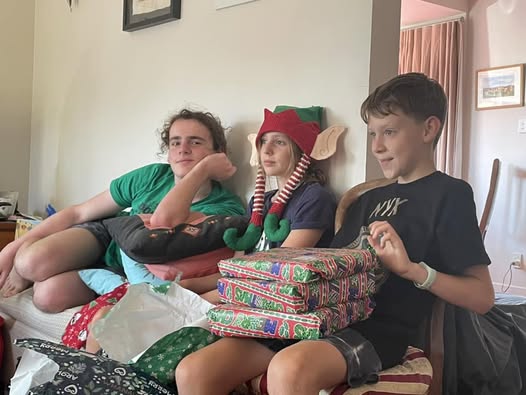
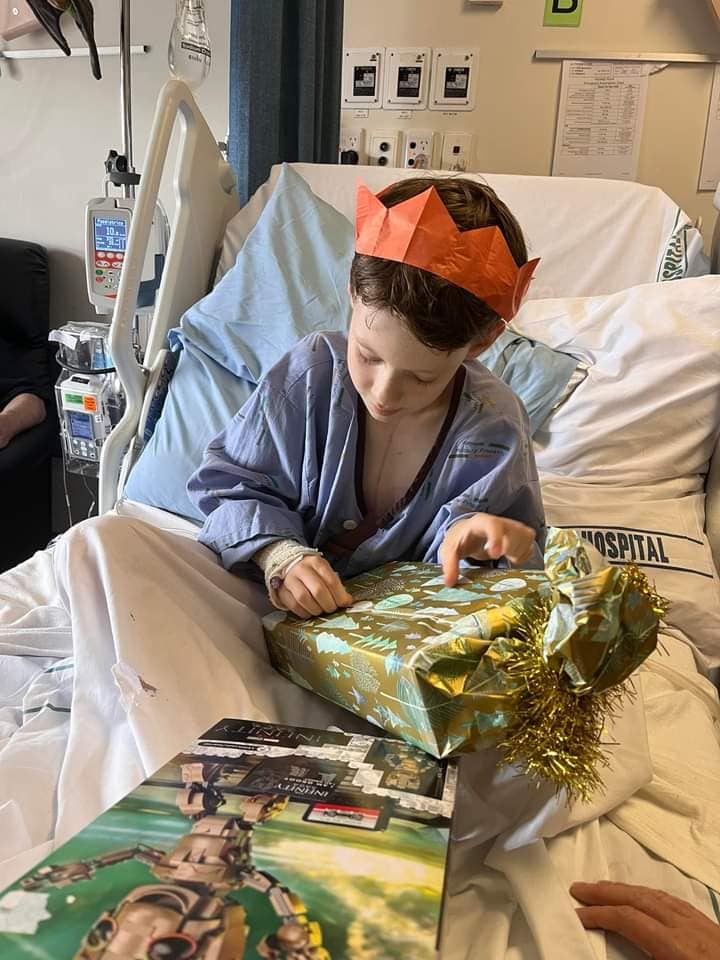
I realise that this breaks my usual rule about not putting personal photos on KP, but the relief I feel compels me to do so. Please forgive the transgression. Without delving into details but in order to give readers a sense of the year that was, I thought I would offer the study in contrasts that are Xmas 2023 and Xmas 2024:

Xmas 2023 in Starship Children’s Hospital (after third of four surgeries).

Even opening presents was an exercise in pain management.

Xmas 2024

With cousins at the in-laws, a clean bill of health and his spirit intact.

KP 2024 year end review.

KP continues to putt-putt along as a tiny niche blog that offers a NZ perspective on international affairs with a few observations about NZ domestic politics thrown in. In 2024 there was also some personal posts given that my son was in the last four months of a nine month medical odyssey that involved two major open chest surgeries (six hours each) and three keyhole surgeries, all involving a lot of time spent in Starship children’s hospital in Auckland (including Xmas) and more pain than any child deserves. The good news is that the boy is fully recovered and given a clean bill of health, so thanks to all who offered their good wishes.

I wrote 56 posts, an increase over 2023. The lowest monthly total was two (twice) and the highest was ten, with the average monthly output being +/- 5.5 posts. By far the most viewed post was the January 2024 post titled “The New Zealand Junta,” which even caught the negative attention of a cut and paste political commentator in Wellington who used it as evidence of “Luxon Derangement Syndrome” because in it I described the approach to governance of the Coalition of Chaos. As it turns out, I was pretty prescient about what was going to happen on the policy front, and I would rather be accused of having some sort of mythical syndrome that being known in fact for being a sycophantic boot-licker of the powers that be.

Other posts about Te Pati Maori and NZ identity took three of the top five viewed posts and NZ-focused posts occupied nine of the top ten viewed (including posts about boot camps and about the different media and legal treatment of former MP Golriz Ghahraman versus the still named-suppressed teen rapist former rightwing political party pakeha male president), so the audience bias in favour of NZ-focused essays is quite clear and follows a long-term trend of KP readers preferring to read about their domestic politics. After that, posts about NZ foreign and security policy, especially those about AUKUS Pillar 2, NZ security/intelligence and NZ support for Israel and the campaign against the Houthis in Yemen, garnered the most foreign affairs-based attention, followed by various international relations and security-intelligence-focused posts and posts about the US political scene. If KP views are any small measure of NZ political attention spans, then it is clear why foreign affairs, military relations and intelligence matters do not occupy much bandwidth on the local news. People just seem largely uninterested. That may be a small country syndrome, or a distance-from-the-fray syndrome or just a “could care less in this age of social media narcissism” syndrome, but as far as I can see on KP understanding of the impact of “global” (where global and local meet) and “intermestic” (where the international overlaps with the domestic) phenomena are the province of a very select few.

The posts that got the least attention tended to be the more theoretical and academic types. The excerpts from my long-dormant book project received close to no attention, with other more complex discussions, say, about the limits of realism as an analytic construct, voting as a multi-order process of choice and the misuse of the term “fascism” to describe any form of authoritarianism receiving only cursory treatment. Interestingly, the posts about my son’s medical journey had more views than the theoretical/academic discussions, and the links to the “A View from Afar” podcast series that I do with Selwyn Manning occupied the lower middle strata of views. Also in that general category was my post about being “honoured” by the Russian government by its banning me from stepping on Russian soil, presumably because of something that I have said or wrote. Luckily, I did not have to change my travel plans as a result of the ban.

Overall KP received 22.4 thousand views and 305 comments (a fair few of which were my replies and many others were return visitors) from 92 countries. This represents an increase over 2023. KP received the most views in February (3971) and the least in September (888). Overall, KP averaged around 40-50 views per day. Besides search engines, the most common referrers were Kiwiblog, The Standard and Twitter/X. The vast majority of KP viewers come from NZ, followed by the US, Australia, the PRC, UK and India. I see a healthy contingent from Singapore (presumably due to my past connections in that country) but very little from Latin America, where I grew up and about which I have researched, taught, written, consulted and served in relevant government policy-making positions over the last four decades (Argentina provided the most views from Latin America with just 37). Perhaps that is due to not writing that much about Latin America, the link to an external article about South America’s strategic situation notwithstanding.

The same general profile goes for commentators. NZ-based people replied the most, followed by Ozzies and Yanks, and some have become welcome interlocutors on these pages (the two Barbaras, Anne and Di Trower especially). As one might expect, most people from overseas comment on posts that address topics close to them, and a few of these are trolls who get blacklisted pretty quickly (most from the PRC but some from NZ as well). Although most readers seem to come from Left perspectives, we have at few who come from the Right as well, and if I might say so, a couple have treated me with considerable empathy and decorum during a trying year (you know who you are). So thanks for that.

All in all, it was a a status quo year at KP in spite of the personal dramas. I still wish that someone would join this team of one to write about issues that I am not competent to address, with former KP luminary Lew remaining as the gold standard when it comes to being a blogging colleague. KP could use a bit more diversity in topics addressed, although the social democratic or left-leaning perspective of the blog likely invites more trouble than it is worth because of the internecine arguments on the Left about what it is to be a “progressive” in the post-industrial, post-post-modern age.

For the time being I will continue plugging along since writing (even in this short form) provides a vehicle of release for me. By agreement amongst the original KP collective members (Anita, Peter, Lew and myself) back in 2008, the blog does not have advertising and does not actively seek sponsors or subscriptions. It has therefore become somewhat of a labor of love, or some might say vanity project for myself. Whatever it is, it provides me with an outlet so I willingly defray the costs of operating the site.

All that having been said, I wish all KP resides a healthy, happy and productive New Year. Un abrazo a todos!

The boy is home.

It a remarkable turn of events my son is home 8 days after surgery. The contrast with his September surgical and post-operation experience is stark: what too 5-7 days in September (removal of most IVs and draining tubes, catheter, getting up to walk and use the loo, diminishing of painkillers on demand) now happened in just 2-3 days. His final drain was removed on Sunday and his final IV yesterday. His last chest X-ray was clear. He was then discharged last night. I am truly staggered at the contrast in recoveries and it is only now that we realise how close we came to a disaster last spring.

So four surgeries (two open chest) in 5.5. months later, we now have a basis for hope. Although his energy levels are still low–he feel asleep in the car during the hour+ drive from the city to our homestead, something that he has not done since he was five–the colour is back in his skin and he is already talking about going back to school. We will ease him into that with a visit on Friday, but it looks like the worst is over. He has a few tears in his left lung where it adhered to his inner chest wall when deflated, and his phrenic nerve may have been nicked during the procedure to remove the cystic mass enveloping it, but his diaphragm is working, his lung is inflating and both the tears and nerve should heal in time. Again, the whole process has been a study in contrasts.

It was interesting to see people from all walks of life in the wards. Some clearly have had a rough go of it. I found it refreshing that even though the rules specified just two visitors per patient at a time, the nurses were relaxed about extended family visitors circulating through. The general ward has a steel drum and xylophone available for anyone to use, and because the weekend was brilliant the instruments were moved out to a big veranda overlooking the helicopter pad. The kid in the next room had abut 25 members of his whanau out there lounging under makeshift tents made from bedsheets (the sun was blazing), playing music on the instruments and basically offering not only support to the child patient but also to his parents. In that sense it reminded me of Irish or Italian (my heritage) wakes–attendees are not only there for the departed, but for those that they leave behind. In this case the child is the priority and alive, but the family support extends well beyond the bedridden. When it comes to family values, let’s just say that some folk know how to walk the walk.

Needless to say we owe a deep debt of gratitude to the Starship staff. During the seven day stay my son was in the heart ward, the general surgery ward, the paediatric ICU as well as the cardiac operating theatre and recovery room. Every step along the way the doctors, nurses, counsellors, psychologists and ward orderlies were there to help. That even extended to a multidisciplinary effort to help the kid deal with his fear of the very painful removal of the deep drains at the bottom of his mainline scar and in between his left side ribs. Between the anaesthetists, surgeons and play specialists, he had a much better experience this time around and emerged as a free boy unencumbered by his tubes or the drip trolley.

As a bonus my son spent the last three days in a single room opening onto that wide veranda overlooking the helicopter pad. He not only got to watch the choppers come and go, which allowed us to discuss the various models involved and to speculate on the patients and how crews worked in difficult circumstances for the betterment of others. But he also got to play the xylophone and make friends with some resident pigeons on the veranda, two of which he named “Bob” and “Uncle.” I am a bird fancier and the kid has followed in my footsteps in that regard, plus we have birds at home, so he quickly became buddies with the feathered residents, to the point that he was feeding them out of hand and they were perching on his arm by the time he left. To be honest, the best use of hospital food turned out to be when taming the resident birds.

We have all come out the experience much wiser in many regards, and completely thankful for the skills and compassion of others. I extend that thanks to all of you who offered your support as well. Now back to normalcy!

An atheist finds his God.

Given the intensity of the last few days I thought that I would share what I wrote on a personal page because of the kindness displayed by family and friends, including KP readers. It basically summarises the core of the experience. Here it is:

When it comes to my son, for this atheist there is a god and it is plural. God is two teams of human surgeons working in tandem to save his life from a slow death. The saints are a staff of nurses and clinicians who do the before and after surgery work. It is very early days yet–it is less than 48 hours since he entered the operating theater–but if not a full miracle it has been a revelation of sorts.

The surgery took 6 hours, and then it took 2 hours to slowly wake him up given what transpired. The surgery was a mix of keyhole and open chest (sternotomy, for those into the lexicon). They drained him first using the keyholes while looking at the mass in real time through the telescopic micro-camera before opening him up. They went through the original scar, which was tough because there was scar tissue and metal to work through. They excised the bulk of the mass via resection (“debulking” is the term), then focused on the phrenic nerve. The cystic mass came off the nerve and they do not believe that it is damaged, although it will take time to tell whether it is intact or will regain function. But he is breathing from his diaphragm so the outlook is positive even if it takes a few months to confirm.They also found that the mass was moving to the upper right side of his chest so that was removed as well.

They then proceeded to the carotid artery. They found that it was easier to remove the enveloping mass than they expected. Think of an arm warmer being slowly unwrapped. As before (after the first surgery), his heart was not compromised by the mass. The overall outcome is to my mind astounding–complete removal of the cystic mass with only the possibility of microscopic bits left. This is way beyond our hopes.

The down side is that they scraped and cut more extensively than during the first surgery, so the kid is in agonising pain when the painkillers are wearing off. They have him on a cocktail of things normally associated with junkies because he is allergic to morphine (the cheapest and crudest painkiller), which causes him an excruciating full body itch (it turns out the entire class of opioids that morphine is part of is allergic to him). So they are working on mixes that also have a sedative effect, as he has developed a full-on phobia about tubes and drains regardless of whether they are being placed or pulled. Since we can see the vital signs monitor readings on screens connected to the cables attached to his six monitor points (electrodes connected via adhesive plastics), we can see that his heart rate, blood pressure and breathing spike at the very thought that someone is going to “mess” (his words) with the tubes.

Worse than that is hearing his cries of pain when they actually do it. The experience of hearing his cries is both blood curdling and agonising because although his phobia is mental the pain is real, even if it is just the pulling of a tape holding one of his tubes. He now has 3 big ones to go. And to be clear: this is a boy who has a very high tolerance for pain and who is steadfast and resolute when dealing with adversity. He is not a snowflake of any sort. But we also have a sense of perspective, because his are not the only cries we hear in the ward, and they are not just from children.

The best news is that when compared to his first big surgery he is in far better shape and recovering much faster. They have removed 3 tubes including the catheter (a major negative event) and he has now gotten off the bed and sat in chair twice as well as used the bathroom in a normal way. Those are major milestones that he did not achieve until a week after the first surgery and now it is just a day and a half since he got out of theater. All of his vitals are good except when he freaks out, so he has been moved from ICU to an observation room and should be sent to the general heart ward if things continue along the same trajectory. If that is the case he may, in fact, be discharged earlier than expected.

They are working on a protocol to sedate him when they take out the last big drains, which should happen in 2 days. The psychologists and pain relief people are very much involved at this point, even as the surgical teams take a step back now that the most their work is done.

The boy has a few lacerations on his left lung where it adhered to his inner chest wall when deflated, and it is leaking air, but the consensus is that the leaks will seal in the next days and weeks. The lung deflated before the first surgery and did so again before this one, so it was good that they got in before further damage was done. They cannot be sure how much it will re-inflate but the fact that he was doing deep breathing right out of the operating room is a very good sign the the phrenic nerve is working and the leaks are not major.

Anyway, we are much relieved and thankful for the surgical skills displayed by the cardio-thorax and internal medicine teams working together. It is amazing what people can do when working towards a common goal, especially at a global moment when all appears to be just the opposite.

Thanks to all of you who have offered support and empathy for what we are going through. He is not out of the woods yet and there’s a long road ahead to being whole again, but to completely jump the shark on this mix of metaphors, there is light at the end of the tunnel that leads to my son’s future.

Another forced break.

Well, the time has come yet again for my son to go back into Starship for another major surgery (the fourth in five months). The mass in his chest is growing and has enveloped his left carotid artery as well as his phrenic nerve and assorted other blood-carrying vessels and nerve linkages. His left chest cavity has filled with fluid, putting pressure on his left lung and causing him pain. After many consultations the surgeons feel there is no other option but to try and excise the mass. That will involve a cardiac team as well as an internal medicine team, both led by senior surgeons. The surgery is scheduled for this upcoming Monday and will last a long time as it is a full open chest affair. Needless to say, my wife and I are anxious and, to be perfectly honest, scared. I have a sense of hope but also of foreboding.

We have not told our son about what is about to happen because he is already anxious and stressed out after hearing the bad news (that of needing another surgery) in early Feb. We have consulted with a senior Starship child psychologist and she agrees that waiting until Saturday morning is the best way to break the news. That way he will only have one sleepless night before we head to the hospital on Sunday afternoon (they need to do a lot of prep on him so we head to Starship the day before the surgery).

Basically this is a repeat of what the boy went through late last Sept., when the hard mass on his sternum was removed. But the more fibrous/gelatinous “tendrils” that have branched out along his upper left rib cage have continued to grow rather than ceased growing, much to the surgeon’s dismay. Again, this is a very rare and aggressive type of benign cyst–some of you may remember that it is a congenital multilocular thymic cyst that should have naturally atrophied when he was a toddler–so the surgeons are discovering things on the go, and so far they have not been good. The remaining mass must come out if my kid has any chance of a normal life.

There are all sort of side effects in play, but for the moment the plan is to try and resect the mass without damaging what it is clinging to. It is a complicated and risky process.

The irony is that my son is actually doing quite well at the moment, acting like a normal kid, running around and doing his best to be active. We believe that this is more a case of him trying to be tough in the hope that exercise and pain management will make the fluid pressure on his left lung go away (as was initially hoped last year). Alas that is not what has happened and his brave front notwithstanding, only surgery can help him. We admire his resolve and, to use that much abused term, resilience in the face of this adversity. He is strong and in some respects wise beyond his years, but it is the strength and wisdom of the battle scarred at a very young age.

Assuming that he makes it through the surgery and recovers, we are concerned about the psychological impact this will have on him. Let’s just say that, from being a kid who could get vaccinated and undergo blood tests without a whimper, he now does not like hospitals and is afraid of needles and drains (which are very painful when removed from his torso). I just hope that we can offer the support he needs to get his head right if and once this is over.

I have had some bad moments in my life but looking at the boy’s face when he was told the news that he would need another big surgery is one of the worst things that I have experienced. It was compounded by the lead surgeon’s look when he told us because it had a sense of hopelessness written all over it. He is a good and honest man, and he simply said that because of its rarity and complicated presentation, they are very much in the dark about how to proceed and are just doing what they think is best after extensive consultations with colleagues in NZ and abroad. Apparently this is a case that no-one wants.

All of which is to say that my mind is not on political blogging at the moment, or much anything else for that matter. So I will take a break from KP, focus my attention on my wife and child, and put my faith and trust in the staff at Starship. They have been excellent so far and understand what we are going through.

Please keep my boy in your thoughts. I will check back in when I can.

2023 Summary.

I thought that I would start off this New Year with a summary of KP stats for the past year. It has been a tough year for my family and I what with the cyclone and son’s illness, but somewhat surprisingly I managed to keep posting fairly regularly. I wrote 38 posts so averaged a bit over three per month. New Zealand-focused posts received the most views, with the post about Kiri Allen’s political demise racking up 498 views, followed by posts on NZ’s culture wars and PM Ardern’s resignation at 491 and 487 respectfully. Interestingly, a post from a previous year (“Miscalculation, escalation and the law of unintended consequences”) topped the list with 562 views. The post with the most comments, 36, was about NZ’s rightwing culture wars. Posts about the storms and NZ elections also got a fair bit of attention. Current events-themed posts topped the more theoretical/analytic ruminations, and the link to the “A View from Afar” podcast series received small but dedicated attention.

We received 21,399 views from 10,587 visitors in 77 countries who generated 290 comments. New Zealand, the US and China were where most of our visitors originated, although viewers came from all parts of the world (only six from Argentina, though). Kiwiblog and The Standard were our main referrers, although social media platforms contributed a fair bit. Also a special shoutout must be made to Ele at Homepaddock, which generated 202 referrals but mostly for her kindness with regards to my son in spite of our ideological differences.

KP gained some new regular readers while some longer-term readers went quiet, and was relatively free from trolls this past year. Thanks to Barbara and Di, we have more regular female commentators than in previous years, although use of pseudonyms makes an accurate count difficult even if I have access to email and IPN addresses. The latter I only scrutinise in the event of trolling so again, it was not as necessary to use the tracking tools in 2023 as it has been in previous years.

Lew is no longer associated with the blog, very regrettably in my opinion, as he focuses on other endeavours. I have been unable to secure more teammates at KP, especially those who can write from a Left perspective on gender and environmental issues and domestic political intrigue. I assume that is partly because other blogs cover those topics in spades and also because people believe that I view KP as a bit of vanity project and am unwilling to share differences of opinion. There may be some truth in that since I am the last one standing from the project begun in 2009 by Anita, Peter, Lew and I, but in my own defense I can say that it is not differences of opinion that I dislike but instead, uninformed or bad writing, especially on topics that I am familiar with on both practical as well as scholarly grounds. It reminds me of my days as a jazz radio announcer and program director in the US when I would warn new DJs that enjoying the sound of their own voices was not the point of their shows, but instead it was about the music. As a result, those who talked (too much), walked. Same with KP. Having said that, if anyone would like to take a stab at joining KP, just write me an email at pablo@kiiwpolitico.com.

We shall see how 2024 turns out. It will be a year of trial for my family for reasons that are well known, but our hope is to surmount the obstacles and get on with life. As for topics to write about, well, there are plenty of those. In fact, as I was reviewing the stats I found a post from Anita dated January 2009 that was about Israel and Gaza. ‘Nuf said. As the saying goes, “plus ca change, plus c’est la meme chose”–the more things change, the more they stay the same.e

PS. And as if on cue this fellow Slater shows up to engage in some Muslim-bashing. I have a feeling that he will not be long for this place.