The passive revolutionary contribution to Middle Eastern unrest.

This week I attended a talk by Kiwi journalist Yasmine Ryan, currently based in Tunis. Yasmine previously worked for al-Jazeera and now freelances from her Tunisian base. Her talk was about the state of affairs in the Arab world, and more specifically, North Africa.

She had many interesting things to say but I garnered three main points from her talk. First, the the so-called Arab Spring has failed to open Arab politics in any meaningful way. Second, levels of corruption in the Arab world are so high and so pervasive that reform is virtually impossible, especially when foreign interests back the entrenched power elites. Third, state capacity (measured by public infrastructural development, enforcement of norms beyond simple repression and provision of goods and services) is woefully lacking throughout the region, something that contributes to pervasive discontent amongst disempowered groups.

Her bottom line was that although Tunisia is touted as an Arab Spring success story, it is in fact not and yet is the best of a sorry lot of post-dictatorial regimes now governing in North Africa.

As Yasmine spoke, I found myself pondering her use of words. She referred to the Tunisian “revolution” and to the “democratisation” of Arab politics. Her use of these terms reflects standard journalistic practice although she knows well that nothing of the sort has happened in North Africa. Let me explain why.

“Revolutions” properly conceived are popular uprisings that lead to the armed overthrow of the state and the imposition of a paradigmatic change on society under a new political regime in the wake of the overthrow. The first key to revolutionary success is victory over the repressive apparatus, either as a result of combat or because the repressive apparatus switches its allegiances to the new sovereign contenders. The second key to revolutionary success is the scope of paradigmatic change covering political society, civil society and the economic structure of the nation-state. Needless to say, none of this happened as a result of the so-called Arab Spring.

So what did happen? Well, if revolution does not eventuate and democracy does not obtain, then other outcomes are possible. The regime being challenged can use its repressive superiority to reassert its authority and crack down on dissent, thereby quashing the seeds of popular uprising. This occurred in Bahrain, although it took Saudi Arabian troops to help repress the mostly Shiia uprising against the Sunni elite in that country. To a lesser extent it occurred in the 2009-10 election protests and the 2011-12 Arab Spring-inspired “Day of Rage” protests in Iran.

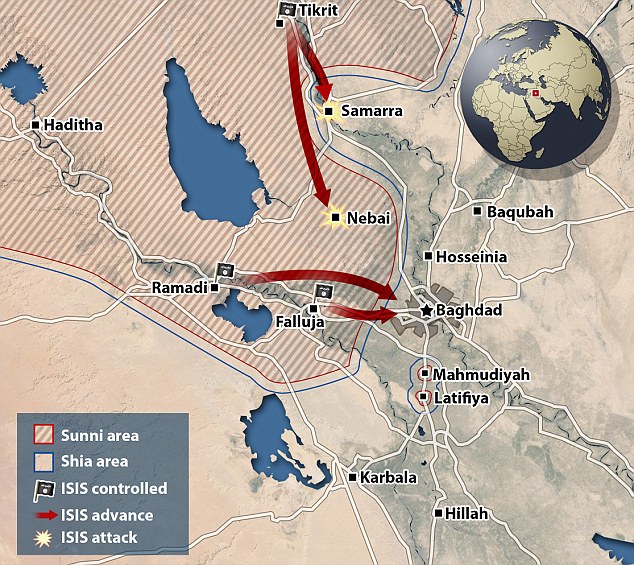
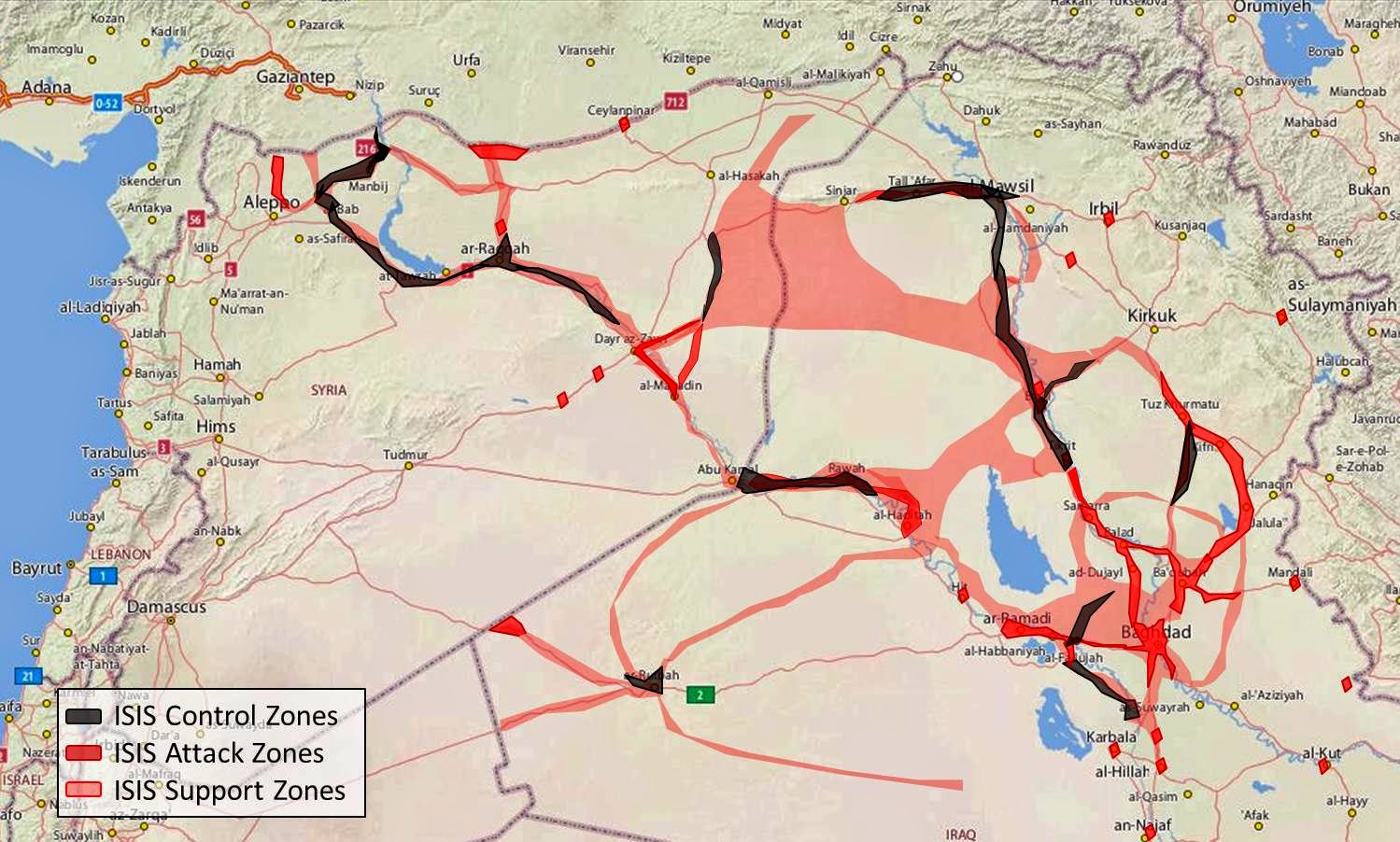
Another alternative outcome is a civil war where the challenged regime is forced into an armed struggle with rebel groups or in which the old regime is overthrown but new power contenders fight each other in order to establish their claim to being the new sovereign. The former is happening in Syria and the latter is happening in Libya.  Iraq is a variation on this, with foreign intervention rather than popular unrest being the gateway (if not cause) for post-authoritarian internecine violence marshalled along sectarian lines.

A third option is for the authoritarian regime being challenged to engage in what is known as a “passive revolution.” “Passive revolution” is where the regime elite adopts cosmetic changes and engages in reform-mongering to appease popular discontent but does not fundamentally alter the power elite or the institutional bases of their power.  One of the cosmetic changes is electioneering rather than democratisation (which involves more than elections and encompasses institutional, social and economic life). This, sadly, is what has happened in Tunisia after the fall of Zine El Abidine Ben Ali and in Egypt after the respective ousters of Hosni Mubarak and Mohamed Morsi. In both cases the power elite underpinning the ousted authoritarian leaders regrouped under an electoral facade that allowed them to cloak their rule in a mantle of “democratic” legitimacy. In Egypt’s case the scenario had a twist in that Morsi was allowed to become the first freely elected president in Egyptian history, but when his Muslim Brotherhood government pushed its Islamicist-backed constitutional project and Morsi granted himself unlimited executive powers not subject to judicial or parliamentary review, they were deposed in a military coup. The leader of the coup and then head of the Egyptian military, Abdel Fattah el-Sisi, is now president of Egypt.

However, for a passive revolution to work it must, along with continuing to selectively repress dissent, deliver goods otherwise not obtained by the discontented masses. Be it as a short term or longer term strategy, the passive revolutionary approach is more than political window dressing because it hinges on giving the appearance of progressive change by providing public goods and services, and material benefits, that previously were unavailable. Yet, in Egypt as well as Tunisia, none of that has occurred because of rampant corruption, lack of state capacity, and an absence of economic opportunity under the power elites that ruled before the regime changes and who continue to rule today. What has occurred is the resumption of repression of those who wish to push for a further and more substantive political opening.

This means that the root causes of popular discontent remain unaddressed, which makes the passive revolutionary approach inherently weak. It is akin to putting a sticking plaster on an arterial bleed–it may staunch some short term dissent but it cannot contain the surge of discontent over the long term.

But there is a twist to the story. It turns out that Tunisia has supplied the largest contingent of foreign fighters to the Islamic State. Egypt also has proved to be a fertile recruiting ground for jihadists, and Libya is overrun with them fighting to overthrow the central government in Tripoli. Why would alienated individuals in Tunisia and Egypt opt to join a foreign war rather than continue to fight for progressive political change at home?

I believe the answer is that those who choose to leave to fight for IS or al-Qaeda see the results of the Arab Spring for what they really are: a reassertion of the traditional status quo under different guise. Understanding the impossibility of affecting significant political, social and economic change at home, these disaffected fighters migrate to foreign conflicts in which the enemy is clear (be it the West, Israel, Iran or Shiia Islam in general) and in which their skills in the management of organised violence can be honed for future use at home should they survive combat. Should they not, they will have died for what they believe to be a good cause.

That is the crux of the “returning jihadi” problem. They pose no existential threat to the West or even stable authoritarian regimes (barring an overreaction by the state and society that makes it appear as if there is in fact a “war” between Islam as a whole and the non-Islamic world). They do not pose an existential threat to stable Muslim dominant societies such as Indonesia and Malaysia. But they do pose a potential existential threat to the passive revolutionary regimes in North Africa as well as in failing or failed states such as Yemen, Somalia and/or those in which civil war is occurring (to include Nigeria even if Boko Harum is comprised of indigenous fighters who for the most part have not traveled abroad).

That is why I see al-Qaeda  and the Islamic State as regional rather than global problems–they may have a world wide impact given the decentralised nature of terrorist tactics outside of the Middle East, but their real strategic impact stems from the existential threat they pose to the Middle East itself. After all, even if they use the US, the West, Israel and/or Iran as foils for their violent ambitions, al-Qaeda and IS have their eyes focused squarely on the Gulf petrolarchies as much if not more than they do on any other territorial and political objective.

In the end, it has been the failure of the Arab Spring to deliver on its theoretical promise and popular expectations for real change that has led to the rise of IS and the spreading wave of violent unrest throughout the Arab world. After a moment that promised a thawing of old political structures and the germination of new ideas about the relationship between state and society, the region has proven yet again to be barren ground for peaceful, progressive and lasting social change.

PS: Here is something I wrote in 2011 about Tunisia and other Middle Eastern transitions. Although I do not claim any particular expertise on the Middle East or Arab world, I think that by and large my observations of four years ago have stood the test of time.

Repost: The torture-terror doctrine.

Release of the US Senate Intelligence Committee’s report on the CIA “enhanced interrogation” program has once again brought to the fore arguments about the ethics and efficiency of torture when used as part of interrogations. The ethical question reduces to a lesser evil versus greater good argument: as a lesser but necessary evil torture is used to prevent a greater evil in defense of the public good. Hence, torturing someone who knows where a bomb with a fifteen minute timer is planted in a shopping mall is both necessary and good because it will save countless lives.  Torture of someone who is believed to have rigged a car bomb outside a Kabul hotel is seen as unfortunate but just if lives are saved.  The issue is one of tactical urgency, and the value is in the tactical intelligence obtained under duress: the location of the bomb.

However, even if torture might work in some instances in extracting real-time tactical intelligence that saves lives, it is of little use in obtaining strategic intelligence on longer-term of broader based events.  Given the cellular nature of irregular warfare operations, torturing someone to get information, for example, about Osama bin-Laden’s whereabouts is simply time and resource wasting. Instead, what is required is a long-term piece by piece build up of plausible scenarios based on the corroborated evidence provided by multiple sources. Torture simply cannot provide that. And as it turned out, it was old fashioned human intelligence “gumshoe” work that revealed bin-Laden’s hideout.

As for efficiency, the record on torture as an interrogation tool is poor. Hardened zealots would rather than die than betray their comrades. Innocents and weak-willed individuals will say anything to get the punishment to stop, which means wasting time and resources (and risking exposure) tracking down spurious leads.

So why did the US resort to torture after 9/l11? I have written a fair bit about this in the past but have a hunch that its use was much more about punishment than it was about obtaining information.

I have not written much about the subject here on KP. The one essay that addressed it centrally can be found here.  However, in 2005 I published an essay that explored the symmetry between torture and terror in post 9/11 US security doctrine as part of my late “Word from Afar” series in an on-line media outlet .  Although if written today I would make some modifications to the argument and the conclusions, the thrust would remain pretty much the same. Hence I have re-published it below:

“The Symmetry between Torture and Terror.”

(First published April 21, 2005 in Scoop.co.nz)

Revelations about torture of political prisoners held in US prisons in Afghanistan, Guantanamo Bay, Cuba, Iraq and the lower fifty have sparked debate about what is permissible in grey area, irregular conflicts such as the fight against Islamicist terrorism. Brutalisation of terrorist suspects and sympathisers is allowed by a raft of post 9-11 legislation that also authorises their indefinite detention without charge and the practice of “extraordinary rendition” (whereby those suspected of involvement in terrorist activities are refouled to the country of charge or origin, to be detained, interrogated and juridically administered under local conditions).

President Bush explicitly stated in the days immediately following the 9/11 attacks that the US would stop at nothing to locate, bring to justice or eliminate those who organized, sponsored, supported or in any way collaborated in the planning of those events, as well as previous assaults on US interests around the globe. He was roundly applauded at the time by the shell-shocked US public, and it was in that environment that the legal framework for handling terrorist suspects, along with the Patriot Act and Department of Homeland Security, were born.

Subsequent divisions over the use of torture in US detention centres have surfaced along the intersection of practical versus ethical considerations. Torture is considered to be a forced necessity imposed by the ungentlemanly nature of the opponent, or is seen as a moral indictment of the US approach to the “war on terror” that descends into the barbarism that it purports to fight. The subtext of the ethical debate swings both ways. Zealotry and unilateralism in the Bush administration are seen as evidence of both moral elevation or moral decay. Faith in the moral virtue of the current US leadership prevailed among its voting public in the November 2004 national elections (by 52 to 47 percent), something not that dissimilar from the vote totals received by Richard Nixon at the time of his re-election in 1972. Then and now it is comforting for the voting majority to know that the United States Government is legally justified in authorising acts that violate international conventions on the rules of engagement. For Nixon, legal justification of the secret extension of the Vietnam War into Cambodia was grounded on such a means-ends rationale, and so it is with today’s US approach to the war against Islamicist irregulars and jihadis.

Politicians, jurists and pundits are left with the unhappy task of morally justifying inhumane acts committed against suspected enemies or ideological criminals. Myriad others have reason to wax indignant about the perversity of such arguments. Yet, beyond the pressing ethical dilemmas posed by the use of torture against suspects, there are very organic reasons for doing so. These reduce to a question of symmetry in war and the reciprocal utility of torture as a weapon.

Military planners prefer their wars to be symmetrical. Symmetrical wars are those in which opponents are arrayed along a roughly comparable range of force, with similar weapons and tactics. Although contested, the political objectives of symmetrical wars, as well as the strategic rationales used in their pursuit, are grounded in shared understandings of the limited utlity of war. Generally comparable military capabilities and comon expectations of combat and post-conflict behaviour define the physical boundaries of the armed engagement. That leads to the adoption of norms governing the behavior of belligerents, resulting in, among other things, the Hague Convention on Laws of Warfare and the Geneva Convention regarding treatment of prisoners of war. It is adherence to a general set of conventions regarding the conduct of combat operations within bounded levels of force that determines the difference between so-called “conventional” and “unconventional” or “regular” and “irregular” conflicts.

The use of force is conditioned in conventional or regular wars by its relative symmetry, which serves to reduce chaos (and the reach of combat) by providing rules of the game that serve as the ethical and legal foundation for the formulation of military policy and application of armed force in pursuit of political objectives. Incremental qualitative gains and relative quantitative advantages in weapons and troops constitute the physical parameters of war. Within those lines elements of comparative resource base, collective will and technological innovation determine military victory. Adherence to ethical guidelines for wartime conduct is expected of all belligerents.

Asymmetrical wars are those in which the military capabilities of opponents, defined as weapons systems, logistical infrastructure, troop numbers and other indexes of armed might, vary markedly. One side dwarfs the other, militarily speaking. Of itself, that is not what makes such wars unconventional. What does is the combination of ideology, interest and tactics used. If the ideological motivation of opponents is diametrically opposed (say, a choice between submission to secular infidels or defeat by medieval heathens), where the weaker actor is fighting for its national, cultural, religious or ethnic survival whiles the stronger actor is not, then the strategic rationales used by military adversaries will differ considerably. This brings in issues of pure and situational ethics, and the tactics used in pursuit of them.

Guerrilla wars are the highest expression of asymmetric wars. They are fought unconventionally by highly motivated volunteer irregular troops against conventional militaries (often those of nation-states or foreign occupiers, and in many cases paid professionals). In these types of war the distinction between combatant and non-combatant, symbolic versus military targets, and offensive versus defensive operations is deliberately blurred and often reversed by the weaker party (of which there is often more than one, which requires tactical, if not strategic coordination between them–an obvious Achilles Heel). For the weaker party contestation of territory is of secondary importance. What matters is cultivation of popular support and weakening of the opponent’s determination to continue to fight in pursuit of its political interests in a given geographic area. The Iraq conflict is a microcosmic distillation of that fact.

Conventional military planners prefer that force asymmetries be in their favour, understood as superior military technology, training, organization and tactics brought to bear within a given continuum of force on an enemy that agrees to play by the “rules.” For the irregular warrior, the object of the exercise is to use time, tenacity and psychological impact as instruments to wear down the will of the militarily superior opponent. Symbolic acts figure very highly in the guerrilla strategist’s tactical priorities, and terrorism against so-called “soft” civilian targets is central among them because it is designed to produce paralysing fear and a desire to acquiesce among the enemy’s support base. This extends the conflict outside the purely military realm into the area of social cohesion.

The firebombing of Dresden and atomic bombing of Hiroshima and Nagasaki were designed to do more than kill the thousands that they did. The bombings were designed to demoralise the German and Japanese human reserve and erode civilian support for continuing the war. So it is with suicide bombers in vehicles or on foot, even if they operate in wars that are undeclared. The difference is that in one instance a warring nation-state utilises terror by extending the non-military reach of conflict via conventional military means, whereas in the other case a non-state actor uses non-conventional methods to do the same thing.

Against an agile and elusive opponent who refuses to fight in conventional symmetry, a militarily superior actor is muscle-bound. Naval fleets, strategic airpower, armoured divisions and thousands of troops are of little use against terrorists operating in dispersed, decentralized fashion in and among civilian populations. If used, they are overkill when confronted by the networked cells that are the organizational latticework of transantionalised terrorism. Sometimes overwhelming force is simply too much force given the character of the opponent and the contextual circumstance in which she is engaged. Should the irregular, unconventional actor refuse to be drawn out into conventional symmetry, the only option for a stronger conventional actor is to engage on her terms. This is the realm of Special Operations and Low Intensity Conflict (SOLIC), which in US practice has evolved new features in the form of CIA para-military squads and contract interrogators not beholden to the rules of engagement governing military intelligence and police.

This is what lies behind the US resort to torture. Along with the deployment of special forces teams and CIA squads in areas in which Islamicists congregate, the US is attempting to get down to the level of its Islamicist opponents in order to bring symmetry to the conflict. The operative belief is that if Islamicists want to play “dirty” by terrorising civilians world-wide, then the US government will demonstrate that it can bring to bear all of its power and resources on those terms. It does so by using the legal, military, administrative and political assets of a superpower to expand the range of allowable state and para-state violence while justifying and institutionalising extra-judicial treatment of terrorist suspects. Legal vetting of the wording of a variety of coercive interrogation techniques that require cabinet-level authorisation is emblematic of the US approach in that regard.

That the US releases many suspected terrorists without charge is beside the point. The objective is symbolic and systematic, or phrased differently, to terrorise in return. Those subjected to the new standard of detention and interrogations who gain release will inform others. They will detail the cruelty as well as the seemingly endless bureaucratic procedures required to seek redress, and they will expound upon their fear. What will be impressive about their stories is the banality of the reciprocal evil practiced in pursuit of “freedom,” and the sense of hopelessness and despair they felt while in its embrace. That condition of atomised infantilisation, whereby the subject is physically isolated, punished and scared while being powerless and utterly dependent on the whim of the captor, is a state of terror.

Torture of Muslims in US detention centres may inflame passions amongst Islamicist hard -liners (defined as those who will commit bodies to the conflict given sufficient provocation). Their mobilisation is justified as an acceptable variant on the honey trap theme, whereby an attractant (or provocation) prompts passive al-Qaeda cells to attempt further terrorist attacks. At that point they can be identified and hunted down, although some will wreak damage before doing so. In the scheme of things, that is held to be an acceptable cost of victory.

More importantly, public dissemination of the torture-terror doctrine will serve to dampen the passion of other would-be jihadis, and deter many who thought to join the Islamicist cause. The point is to demonstrate to the unconventional enemy and its supporters that the superpower, as well as other states, can well fight irregularly and systematically as well, if not better. After all, the most common–and effective–type of terrorism in history is state terror, not that practiced by today’s Islamicists.

This explains the why of using torture-terror as a combat weapon against terrorism. What it does not address is the issue of objective. If the objective of using torture on terrorist suspects is to extract valuable strategic and tactical intelligence from otherwise uncooperative subjects, the results have been poor. Sorting out the wheat from the chaff amid the hundreds of desperate stories told under duress by US detainees has been a difficult process, with relatively little valuable intelligence garnered from it. Thus, as a information gathering technique torture has not been a panacea for the US intelligence community, and given media exposure has become a public relations liability for the US–at least in the West. However, an alternative objective might better explain the rationale as well as the pragmatic criteria upon which to choose it.

If the objective is to wear down the will of jihadis to persist in their global armed challenge while at the same time removing their recruitment base, the systematic use of legally-sanctioned torture-terror by the US may bear fruit. In the measure that it achieves symmetry, it raises the costs of the engagement to the jihadists. In the measure that it turns the tables and weakens the will of the Islamicist irregulars to continue to fight, it will prevail over the long term. In the measure that it prevails it re-establishes the relationship between the West and “the Rest,” especially the Muslim world. In doing so it reconfigures the geopolitical landscape of the Middle East and elsewhere by extending the cultural boundaries of Western influence to the necessity of recognizing the need for symmetry in war. That, it seems, is the political syllogism underpinning the torture-terror doctrine.

Temporary, discriminatory and an admission of failure

The PM says that the legislation his government proposes to pass under urgency allowing for the confiscation of passports of NZ citizens in order to combat the threat of returning foreign fighters will be “tightly focused” on those traveling to the Middle East in order to join jihadist groups. That phrase “tightly focused” is code for “Muslim Internationalists” as opposed to, say, Christian or non-religious fighters joining in foreign conflicts in the Middle East or elsewhere.  So if Kiwis of Croatian descent were to return to their homeland to fight Serbs they would be free to do so and then return without risk of having their passports confiscated. The same goes for Christian Nigerians who wish to return home to fight Boko Haram as members of community self-defence organisations.  And of course Jewish Kiwis already do so by traveling to join the Israeli Defense Forces.

To say the least, this law is by its nature discriminatory and temporary unless the government proposes to make it illegal for anyone to go and fight for any cause anywhere. And that clearly is not what it has in mind.

More tellingly, passing such “tightly focused” legislation under urgency is an admission of failure.

On the one hand, it tacitly is telling us that criminal law, including all of the anti-terrorist legislation passed in the last ten years, is inadequate to deal with this particular type of suspected criminal enterprise (or better said, intended criminal enterprise). On the other hand it implicitly recognises that the combined resources of the GCSB, SIS, Immigration, Customs, NZDF, Police and other security agencies, as well as those of NZ’s main security partners, are unable to monitor the activities of the dozen or so Kiwis who may have jihadist pretensions, this despite the fact that New Zealand is an isolated and relatively small archipelago with no land borders and limited access or egress by air or sea, with a very small Muslim community from which potential jihadists are drawn.

Reading between the lines of the PM’s statement, it seems that the extension of antiterrorism laws, powers of search, surveillance, seizure and domestic intelligence collection over the last decade, much less the existence of a vast array of criminal law statutes as currently exit on the books, have had no impact on the ability of the NZ security community to detect, deter and/or monitor a small group of  young men interested in fighting abroad. Hence the need for more “tightly focused” laws that if nothing else violate the presumption of innocence and freedom of movement that presumably are basic rights in liberal democracies.

That makes me wonder two things: what good do the expanded security powers awarded the state during the last decade serve if they cannot fulfil the basic functions of detection, deterrence and monitoring? And what does that say about the competence of the agencies whose powers have been expanded given New Zealand’s geopolitical location?

The answers are simple: none and a lot.

Beware the sucker ploy.

A few years back I wrote about the strategic utility of terrorism. One thing I did not mention in that post was the use of a tried and true guerrilla tactic as part of the terrorist arsenal: the sucker ploy.

In guerrilla warfare the sucker ploy is a tactic whereby the weaker irregular forces stage an incident in order to provoke an over-reaction from their stronger adversaries. Examples include killing a local official so as to have the security forces engage in mass repression of the people in the locality in which he worked. Another is firing at enemy aircraft or armour from inside villages in order to have them retaliate indiscriminately against the entire village. The objective is to alienate and erode support for the enemy by the victims.

For the last five years or so, the international jihadist movement spearheaded by al-Qaeda and now the Islamic State have evolved their tactics to suit the strategic environment they are confronted with. No longer able to carry out large scale attacks such as 9/11 or the Bali, London and Madrid bombings, would-be jihadists have been encouraged to engage in self-radicalised “lone wolf” or small-cell attacks within their respective countries using their familiarity with the local terrain and knowledge of local customs and symbology. These are low level, highly independent and autonomous operations, as was seen in the Boston Marathon bombings last year.

Attacks of this nature are tactically opportune but strategically insignificant. They do not present an existential challenge to any established state. By themselves they are tragic but politically inconsequential.

The motives and desired impact of the perpetrators may differ from those of the Islamicist leadership. Perpetrators may wish to strike a blow and sow localised fear while achieving martyrdom. The Islamicist leadership desires a strategic victory. The only way that it can do so is to use these types of attacks as a sucker ploy.

If governments respond to lone wolf and small cell low level terrorism with blanket increases in mass surveillance, national threat levels, expansion of security and anti-terrorism laws and restrictions on freedoms of association, movement and speech by groups associated with the perpetrators by virtue of religion, ethnicity or the like, then the strategic objectives of the Islamicist leadership are being served. That is because such measures target innocents, not only on an indiscriminate mass scale but often because of who they are rather than anything they have done. That further alienates and marginalises previously passive but increasingly disaffected sectors of society, thereby delegitimising governmental authority while breeding new recruits to the cause.

The temptation for democratic governments responding to such attacks to engage in large scale security tightening is overwhelming, which is of course what the Islamicists are banking on. The public needs reassurance, security agencies see opportunity and conservative politicians want their pound of flesh. Few opposition politicians want to appear soft on the threat of terrorism,  much less by opposing moves to “tighten” security in the wake of lethal attacks in the West motivated by Islam. But that urge, even if given carte blanche by the media-fed hysteria of the moment, needs to be tempered with a broader perspective and deeper analysis of what is at play.

Of course security measures need to be in place in order to thwart such low-level attacks. In Ottawa they clearly were not. But this is no excuse to engage in a knee-jerk over-reaction that results in the type of divisive measures that serve the purposes of the Islamicists more than the population at large. To do so is to fall into the trap set by the Islamicst leadership when they ordered the shift in tactics towards decentralised low level operations conducted by “home-grown” jihadis.

A couple of points worth mentioning: The Canadian threat environment and exposure to Islamic terrorism is different and greater than that of New Zealand and has been for some time. IS had directly threatened Canada before the attacks because Canada has actively joined the conflict by sending ground attack aircraft and special forces troops to the fray.

The perpetrators responsible for this week’s crimes were not returning from the killing fields of Syria or Iraq. They were native born Quebecois, evidencing mental halt issues, with prior criminal records who were known to the Canadian authorities. They were recent converts to Islam, one of whom had been placed on a so-called “watch list” and had his passport revoked because of his overt Islamicist sympathies. The other, a recovering drug addict, was waiting for a passport application to be processed, was living in a half way house, and was frustrated by the delays in securing the passport.  Unable to leave Canada, both turned their murderous gaze inwards.

This should serve as a lesson on several levels. But the foremost one is simple: beware the sucker ploy.

Media Link: The revolution will not be televised.

I had the opportunity to do a long interview with Olivier Jutel, host of the Dunedin Radio One show “The revolution will not be televised.” It is a rare occasion when one gets to converse at length about a variety of subjects on radio or television, so this was a nice opportunity to air my views on a number of issues, to include the conflict with the Islamic state, New Zealand’s potential role in it, fear mongering as a political strategy, the impact of social media on political behaviour, etc.

The podcast can be found here.

Should NZ renounce lethal drones?

The Diplosphere event on lethal drones held in Wellington last week was a good opportunity to hear different views on the subject. The majority consensus was that legal, moral and practical questions delegitimate their use, although one defended them and I noted, among other things, that they are just one aspect of the increased robotization of modern battlefields, are only efficient against soft targets and are seen as cost effective when compared to manned aircraft.

At the end of my remarks I proposed that we debate the idea that New Zealand unilaterally renounce the use of lethal drones in any circumstance, foreign and domestic. I noted that the NZDF and other security agencies would oppose such a move, as would our security allies. I posited that if implemented, such a stance would be akin to the non-nuclear declaration of 1985 and would reaffirm New Zealand’s independent and autonomous foreign policy.

Alternatively, New Zealand could propose to make the South Pacific a lethal drone-free zone, similar to the regional nuclear free zone declared by the 1985 Treaty of Rarotonga. I noted again that countries like Australia and Chile would oppose the move (both have drone fleets and do not discount using them in anger), but that many of the Pacific Island states would likely welcome the idea.

Either declaration would in no way impact negatively on the use of non-lethal drones, whose utility is obvious. It would also leave open to interpretation whether NZ based intelligence could be used in drawing up targeting lists for foreign lethal drone strikes, a subject currently in the public eye as a result of claims that the GCSB does exactly that in places like Yemen. The PM says he is comfortable with the intelligence-sharing arrangement as well as the legitimacy of drone strikes, and added that similar intelligence was provided for ISAF drone strikes in Afghanistan (where the US and the UK deploy lethal drones on behalf of ISAF).

His confidence notwithstanding, many Kiwis are opposed to any cooperation with lethal drone programs, so the debate could be expanded to include indirect NZ involvement with them.

I think this is a debate well worth having. I realize that the security community will want to keep all options open and be very opposed to ceding any tactical advantage in future conflicts, and that extending the ban to indirect cooperation would have a negative influence on NZ’s diplomatic and military-intelligence relations with its security partners.

I am cognizant that it may be a hard thing to actually do given the balance of political power currently extant in NZ and the hurdles needed to implement it should the proposition be accepted. One of the other panelists dismissed the idea of unilateral renunciation as simply impractical and said that the proper forum in which to advance it was the UN (cue Tui ad here).

Some may say that is silly to debate something that does not exist. New Zealand does not deploy lethal drones. However, UAVs are already present in NZ skies, both in civilian and military applications. This includes geological surveys and volcanic research, on the civilian side, and battlefield (tactical) surveillance in the guise of the NZDF Kahui Hawk now deployed by the army. The military continues its research and development of UAV prototypes (early R&D worked off of Israeli models), and agencies as varied as the Police, Customs and the Navy have expressed interest in their possibilities. Since non-lethal UAV platforms can be modified into lethal platforms at relatively low cost, it seems prudent to have the debate before rather than after their entry into service.

I am aware that the revulsion voiced by many against the lethal use of unmanned aerial vehicles might as well be shared with all manned combat aircraft since the effects of their deployment ultimately are the same–they deal in death from the sky. Given that commonality, the preferential concern with one and not the other appears more emotional than rational, perhaps responding to idealized notions of chivalry in war. That is another reason why the subject should be debated at length.

Such a debate, say, in the build up to a referendum on the matter, would allow proponents and opponents to lay out their best arguments for and against, and permit the public to judge the merits of each via the ballot box. That will remove any ambiguity about how Kiwis feel about this particular mode of killing.

UPDATE: Idiot Savant at No Right Turn has kindly supported the proposition. Lets hope that others will join the campaign.


Something to do in Wellington.

On May 20, 2014 from 6PM-7:30PM Diplosphere is hosting a panel discussion titled “Drone Strikes: Are They in New Zealand’s Interest?” The event will be hosted by Dr. Kennedy Graham MP-Green Party and will take place at the Theatrette, Parliament Buildings, Wellington. The hosts ask that people register for the event, which they can do by contacting Maty Nikkhou-O’Brien at the following email address: mnobrien@diplosphere.org

The panel Chair is Dr. Roderick Alley of Victoria University, who has just published a thorough examination of drone warfare. The panelists are Professor Richard Jackson of the National Centre for Peace and Conflict Studies at the University of Otago, investigative journalist Nicky Hager and myself.

It should be an interesting discussion. I will try to place the emergence of drone warfare in context before debating its legality and utility.

Media Links: Kiwi killed in drone strike.

I did interviews on TV 3 and Radio NZ about the drone strike that killed a Kiwi dual citizen in Yemen last year. There are many questions raised by the incident, but time constraints precluded addressing all of them. The headline of the TV 3 interview is misleading of what I actually said. The RNZ interview is more straight forward and has a slightly different angle.

Monitoring Syrians and Supplicants.

The subject of spying is back in the news this week, but the coverage has been inadequate. Allow me to clarify some issues, first with regard to those who want to join the Syrian conflict and second with regard to politicians trying to ingratiate themselves with Kim Dotcom.

Contrary to the thrust of the coverage, not all those seeking to join the Syrian conflict are Syrian or descendants of Syrians. The Syrian War is a civil war between Shiia and Sunnis, where the minority Alawite-backed Assad regime is fighting to maintain its grip over a majority Sunni population (Alawites are a sub-sect of Shiia Islam). For a variety of affective and strategic reasons Iran (a very large Shiia dominant country) supports the Assad regime while Sunni-controlled Saudi Arabia and Gulf oligarchies back the armed opposition. This opposition is divided into what can be loosely called secular moderates (such as those grouped in the Free Syrian Army) and Islamicists (such as those in the al-Nusra Front and Al-Qaeda in Iraq and the Levant).

The latter have come to dominate the military side of the opposition due to their superior combat skills and determination. Their ranks include Sunni internationalists from all over the world (including New Zealand) who see joining the struggle as a religious imperative. Egyptians, Jordanians, Pakistanis, Britons, Australians and French nationals are among those fighting in Islamicist ranks. That has led to serious clashes with the moderate secularists (who do not have as many internationalists in their ranks, although there are some), to the point that the fighting between the armed opposition factions has allowed the Assad regime to re-gain the upper hand in the overall struggle after being near collapse just six months ago.

Where the armed opposition is winning, it is the Islamicists who are doing so.

In the last nine months the Prime Minister has made repeated reference to would-be New Zealand jihadis joining the fight in Syria. Some are already there and others have been barred from going. They may or may not be Syrian in origin, but his use of the “Syrian trump card” is a naked political ploy designed to use fear-mongering as a justification for extension of domestic espionage and, perhaps, as a way of pre-emptively steeling public opinion against the negative consequences of the inevitable revelations from Edward Snowden about New Zealand’s foreign espionage role within the Five Eyes/Echelon signals intelligence collection network. The trouble with the PM’s ploy is that the proclaimed threat does not match the facts.

According to the government ten New Zealand passports have been revoked since 2005 and a handful of Kiwis are in Syria fighting. The PM makes it sound as if all these have associations with extremist Islam. Perhaps they do, but the Syrian conflict only heated up as of early 2012, so the Syrian card does not explain why passports were cancelled prior to that. Moreover, the PM says that passports were cancelled in order to prevent “radicalized” Kiwis from returning and making trouble at home. That begs the question as to what the frustrated wanna-be jihadis are going to do now that their plans are thwarted and they are forced to remain in the country under heavy scrutiny.

A Syrian community spokesman has said that two brothers had their passports revoked after their parents informed authorities of their plans to travel back home to join the fight. He also accused the PM and his government of “racial discrimination.” The latter claim is ridiculous and shows a gross misunderstanding of how democratic governance works. John Key did not personally order the revocation of any passports nor does he have the power to rescind the cancellation order. New Zealand authorities did not cancel the brother’s passports because they were Syrian but because of their purported intentions. They did not target the entire Syrian community for who they are.

In fact, under current legislation the government is well within its rights to revoke passports on the grounds that the individuals involved intend to become or are part of a criminal enterprise, of which terrorism is one. Since the Islamicists fighting in Syria are considered terrorist organizations by the New Zealand government, any intent to join them could be construed as an attempt to engage in criminal activity. One might argue that the definition of terrorism is too broad (and I believe that it is), but as things stand the government’s concern about returning, combat experienced jihadis is a legitimate motive for canceling passports.

I shall leave aside the fact that the chances of survival of those joining the Syrian conflict is quite low* and they are being monitored in any event, so mitigating the potential threat posed by returning jihadis is not as formidable as Mr. Key implies. There are technical means of tracking the location of passports, and the individuals who are in Syria or want to go there have been identified already via domestic intelligence gathering. In fact, allowing suspects to travel while being secretly monitored is a standard intelligence collection method, so one can reasonably assume that the handful of Kiwi internationalists in Syria as well as their as of yet to travel brethren are the focus of both human and signals intelligence collection efforts by local espionage agencies in conjunction with foreign counterparts.

However, Mr. Key’s repeated public use of the Syrian card certainly has alerted any would-be extremists in the New Zealand Muslim community that they have been infiltrated by the Police and SIS and that there are informants in their midst. In fact, the New Zealand Muslim community is a bit of a sieve since 9/11 because personal, sectarian and financial vendettas as well as legitimate concerns about ideological extremism have seen the accusation of “terrorist” thrown around quite freely within it. This has been well known inside security circles (who have to separate bogus from legitimate accusations of terrorist sympathies), but the PM’s public disclosure has given potential jihadis a clear signal to exercise increased caution and diligence when planning future violence (should there be any).

The most important issue, however, is the selective application of the passport revocation authority. If would-be Islamic internationalists have not been convicted of crimes in New Zealand, and barring clear evidence that they intend to engage in crime abroad, then they should be allowed free passage to travel. If they engage in war crimes or crimes against humanity during a foreign conflict (be it in Syria or elsewhere), they can be charged upon their return, or even detained on the suspicion of complicity in said crimes. This is not a far-fetched speculation because both the Assad regime and its armed opposition have committed a raft of atrocities that fall under both definitions of illegal war-time behavior.

This applies equally to those who may choose to join non-Islamicist groups in other foreign conflicts (for example, by joining Christian militias in the Central African Republic), so specifically targeting those intending to go to Syria to fight is, in fact, selective if not discriminatory application of the relevant law. As far as following the Australian example and making it illegal to join a foreign conflict under penalty of imprisonment or revocation of citizenship, one can only hope not.

The simple fact is that would-be jihadis and other internationalists should be free to join any foreign conflict. They assume the risk of doing so and understand that they give up the diplomatic protections usually reserved for citizens traveling abroad. Should they be deemed a potential threat upon their return (in the event that they do), then it is the responsibility of local law enforcement and intelligence agencies to mitigate that threat within the rule of law. As I have alluded to above, that is not particularly hard to do in the New Zealand context.

As for politicians meeting with Dotcom, the issue is far more simple than sinister. Dotcom is a NZ permanent resident who is a fugitive from US justice still under extradition warrant (which is being argued in court). The authorities may well consider him a flight risk because he certainly has the means to do so. They may believe that he is continuing his criminal associations or practices while his court case is being heard (I shall refrain from making bad jokes about those who have flocked to his side during the GCSB Bill debates, or about the politicians who have knocked on his door). Given his penchant for partying and those he associates with when doing so, they may want to catch him in possession of illegal drugs.

Thus the Police would have legitimate reason to run ongoing surveillance operations on him, and can do so legally with or without the help of the SIS and now, thanks to the passage of the GCSB Bill, the GCSB. In doing so, they would monitor and record the comings and goings of visitors to his mansion, with that information passed up the chain of command.

That is why Mr Key’s version of how he came to know about Mr. Peters’ treks to the Coatesville property is odd. He claims that he got his information about Dotcom’s political visitors from Cameron Slater working with or independently from a Herald gossip columnist. That is troubling.

The Right Honorable John Key is the Minister of Intelligence and Security, so presumably he is aware of the status of security operations and the Dotcom case in particular given its history. But he claims that he received domestic espionage information about Dotcoms’s visitors from a right-wing, admittedly partisan “attack” blogger, rather than from the security agencies for which he is responsible and who have a legal right to monitor Mr. Dotcom. That is a sign of incompetence or willful ignorance on his part.

I have shares in a Bolivian gold mine I am willing to sell at a very affordable price to readers who believe a sociopath was the first source of the Dotcom visit data provided to the PM.  Perhaps I am wrong and it is simply too much for domestic law enforcement and intelligence agencies to pursue the monitoring of Dotcom for a supposed copyright infringement when so many Syrian-focused terrorists abound. But given the amount of resources expended and the reputational stakes involved, it would not be surprising and in fact legal for security agencies to do so.

I would suggest that if people like Winston Peters are concerned about being spied on when visiting Mr. Dotcom, then they should look at their own roles in allowing that to happen. Since 9/11 the legal powers and practical reach of the domestic espionage apparatus have been increased incrementally yet extensively under both Labour and National governments. Other than a relatively small number of Left activists and the Green Party (as well as ACT while Rodney Hide was still around to lead it), neither the majority public or the majority of political parties did anything to oppose this extension.

In fact, although Labour party figures and Winston Peters joined Kim Dotcom on the stage at various anti-GCSB Bill protests last year, and the bow-tied buffoon with a pompadour posing as a political party objected to having his personal communications accessed during the course of an investigation into leaks of confidential government information, Labour is responsible for the majority of the extensions and Dunne and Peters supported all of them. National has merely deepened the trend towards a surveillance society.

Hence, whatever Labour, NZ First or United Future may say now as a way of partisan point-scoring, they are full accomplices in the erosion of Kiwi privacy rights over the last decade. Any current whinging about violations of their personal and the larger collective privacy should be dismissed as cowardly rank hypocrisy.

In any event, when it comes to intrusions on basic freedoms of association, privacy and travel, not only Syrians living in New Zealand have reason to feel aggrieved.

* This is due to the immutable Buchanan rule of ground warfare: if you are firing your weapon over your head, or firing blindly around corners in the general direction of the enemy, you will not last long once s/he closes in. Should that rule be miraculously violated without consequence, the fifth Buchanan rule of asymmetrical warfare comes into effect: strapping explosives or amulets to your body in the hope of divine intervention is based on a false premise.