Blue smoke

In my previous post on the Canterbury Earthquake Response & Recovery Act (CERRA) I lamented the conspicuous absence of outrage in response to the bill’s provisions from partisans on the right. I have since been heartened by the responses from some of the more principled commentators on the right; well done them.

But there is one most conspicuous exception. I have on many occasions in the past defended Kiwiblog’s David Farrar from allegations that he’s a bog-standard Tory authoritarian. Yes, he’s a loyal partisan; yes, he does have his authoritarian tendencies, but his typical policy alignment is clearly classical-liberal. He is is consistently more liberal than almost all of his fellow-travellers and has regularly exhibited a forthright commitment to democratic principles of the rule of law, of good constitutional practice and the importance of checks and balances. Even yesterday’s response conveyed lukewarm concern about the scope and extent of the act. But I take back all that defence of David’s character; and so, apparently, does David take back his commitment to those liberal principles.

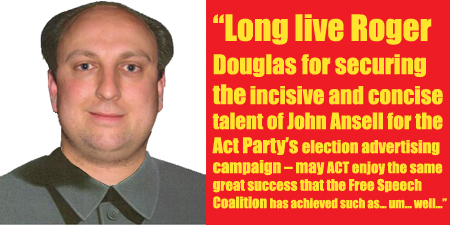
Because this morning’s post on the CERRA is nothing short of cringing, snivelling partisan apologia for dictatorship dressed up as a simplistic classical history lesson. Dictatorship, it appears, is a-ok with David just as long as the dictator wears the right coloured tie. Where now are the lofty appeals to the principles of good governance, the shrieking about attacks on the nation’s constitutional integrity, the billboards bearing the endorsements of dictators? There are plenty around, including a very explicit homage to the Free Speech Coalition campaign which David fronted, but nothing from this erstwhile and self-proclaimed champion of democracy himself.

The fact that DPF is being schooled on both the principled and pragmatic problems with this bill by some of the more wide-eyed and reactionary members of his commentariat suggests that he has taken leave of his political instincts as well as his principles; for instance, the notorious ‘burt’, who urges him to consider what might happen if (due to the collapse of ACT) National fails to win the 2011 election and a Labour minister takes over from Brownlee; a possibility he and the government had either not anticipated or don’t believe was worth considering. Nothing would be sweeter irony, but either way: David’s credibilty on these matters is up in a cloud of Tory-blue smoke; a legacy destroyed by unprincipled partisan loyalty. Such is the price of political dependence.

Update: Similar sentiments from Peter Cresswell, Danyl Mclauchlan and The Standard, from whom I purloined the image.)

Another update: More angels required to dance on DPF’s pinhead.

L
No democracy on the honour system

This morning I posited a conspiracy theory that the government would use the temporary deregulation measures undertaken in response to the Canterbury earthquake to progress another tranche of wide-ranging reforms to the resource management regime and building and construction industries after the 2011 election.

Absurdly, if the Canterbury Earthquake Response and Recovery Bill is passed without very extensive amendments of the sort proposed by the Greens and voted down by both major parties (it’s going through all three stages right now), then all that and much, much more could happen this week, no election required, and without any review by the courts. The executive powers granted to the relevant Minister (that’s Gerry Brownlee) in this bill are so sweeping as to permit him to do almost literally anything as long as it has something to do with quake recovery — amend or suspend almost any piece of legislation, overturn any electoral decision — really, Dean Knight, Graeme Edgeler and Andrew Geddis (themselves no wide-eyed conspiracy nuts) are just three of the constitutional law experts who are boggling at the possibilities; Idiot/Savant is also much more than usually incandescent, and Gordon Campbell pulls few punches, either. Geddis says the law gives him “a case of the screaming collywobbles”. How’s that for a technical term. Their argument — contra government speakers such as Nick Smith — is that, because there is no real oversight to test whether actions taken are “reasonably necessary or expedient for the purpose of the Act”, the bill’s scope is not strictly limited in black-letter law to those matters, nor indeed to the region impacted by the quake, and the minister and his commission basically enjoy immunity. These are sweeping powers such as those which might be accorded an executive head of state in a command-government situation such as a major war.

Not would happen, mind. I don’t think anyone genuinely thinks Gerry Brownlee will decriminalise murder, approve mining across all schedule 4 land, enact wartime conscription or overrule the results of the forthcoming Supercity election. I don’t. But the point is (assuming Dean Knight knows what he’s talking about) that Brownlee can. Or will be able to tomorrow, until April 2012, which astute readers will note is a good half-year after the next general election must be held. There are no real checks or balances, much of the actions taken under this legislation are able to be taken in secret, and actions taken will not — at least on paper — be subject to judicial review. This means that we are relying on Gerry Brownlee to not be evil. But democracy doesn’t work on the honour system. It can’t. It doesn’t work on the basis that you give a government power in the hope that they use it legitimately; you give it power on the basis that you have the authority and ability to wrest it back from them if they misuse it, and on the assumption they will misuse it. The honour system is fine for bouquets being sold at the cemetery gates. It’s no basis upon which to run a country.

As I’ve often argued here and elsewhere, what sets liberal democracy, with all its failings, apart from authoritarian systems is the ability for the electorate to transfer power by the exercise of these sorts of checks and balances. Under orthodox authoritarian socialism for examplem — more or less the only form of socialism ever fully implemented on a nationwide scale, in the USSR and China, for instance — the transitional dictatorship is empowered with the sole authority and means to put down any such counter-revolution as might endanger the transition to genuine communism; and because of this, the dictatorship enjoys impunity. It has no reason to work in the interests of the people it purports to serve, inevitably becoming inefficient, corrupt and brutal. (Thus, the problem with socialism is authoritariansm which accompanies it, not so much the economic aspects, but that isn’t my point here).

The Canterbury Earthquake Response and Recovery Bill, of all the ridiculous things, brings into being the potential for just such a regime in New Zealand, and we can only hope it is not used to that effect. It is a colossal, hypervigilant overreach. And if any ill comes from this, Labour — and even the Greens and the māori party — will bear as much responsibility as National; they are all supporting it out of “unity”.

Where now are those who railed against the Electoral Finance Act, who speculated darkly that Helen Clark might not relinquish power after the election, or might suspend the operation of the free press; who shrieked about the Section 59 repeal; against ‘Nanny State’ and the illusory Stalinism of lightbulbs and shower heads, drink-drive limits and alcohol purchase ages and compulsory student union membership? Here the papers are being signed to dismantle robust constitutional democracy right under our very noses, and there’s barely a whimper.

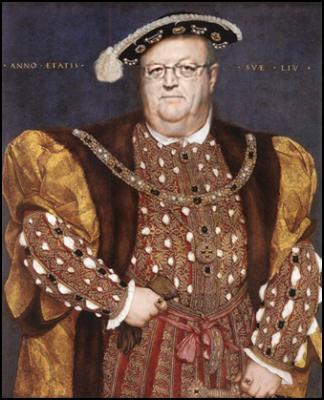
(Updated to add Lyndon Hood’s fantastic image of Brownlee VIII, link to Campbell’s article, and tidy the post up a bit.)

L

Send for The Wolf

(Hoping, but without any confidence, that this will be my last post on the Carter debacle).

About six weeks ago Brian Edwards observed that Labour was its own worst enemy as far as the Chris Carter debacle went. As usual, he was dead right then, and that advice is still right now, with one rather chilling update: the incompetence which saw the parliamentary Labour party keep putting Carter and his misdeeds back on the media agenda at a time when they ought to have been making mileage at the government’s expense is shared by the wider party organisation. The Dom-Post this morning indicate some vagueness about Carter’s future status in the party, while two items on Morning Report (both audio) clearly indicate that Carter’s expulsion from the party on 7 August is far from assured, and that this debacle is likely to carry on well beyond that meeting.

For one thing, August 7 is already too late. Chris Carter, and by extension the Labour party’s rusted-on uselessness and venality, has now been a central topic of domestic political news for at least four of the past eight weeks, and has been utterly dominant throughout fully two of those weeks. A government can’t buy coverage like that, but Labour have packaged it up with a little red bow and delivered it to them post-paid. With the latest events, Carter’s expulsion from the party and a campaign to refocus the political media agenda on more substantive topics — like the mining backdown, 90-day bill, ACC reforms and National Standards — ought to have been undertaken with urgency. This need not rule out adherence to the principles of “natural justice” to which Andrew Little refers; these are compatible with a swift and decisive resolution in a healthy organisation with robust organisational structures, strong networks of competent people, and a shared commitment to the wellbeing of the party.

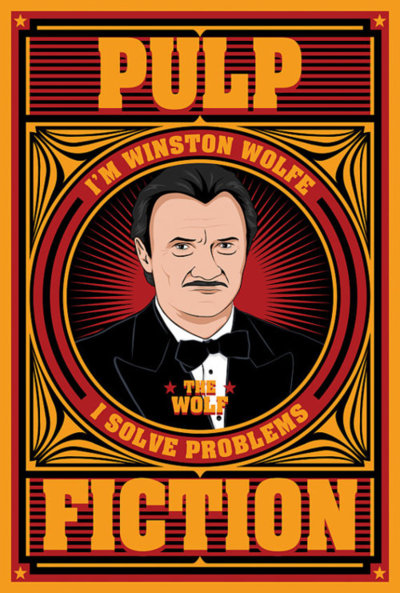
This is not really a matter of the public interest except inasmuch as Labour permits it to be. Labour needs a fixer, like Pulp Fiction‘s Winston Wolfe — an independent, dispassionate individual whose only interest is in resolving the issue quickly and quietly, and who has the mandate, ability and authority to get the damned job done. They needed to cauterise this wound back in June, and the need to do so now is all the more urgent. Further delay risks infection. That they have failed or refused to engage such a fixer shows an absence of nerve on the part of both the parliamentary and the organisational leadership and suggests that modern Labour is not, in fact, a healthy organisation with robust organisational structures, strong networks of competent people, and a shared commitment to the wellbeing of the party. And that is a matter of the public interest, because a strong opposition is fundamental to democracy and the health of the country.

Edit: I should add, if it’s not abundantly clear from the content of this post, that I disagree with Brian’s apparent endorsement (in his latest on the topic) of a “compassionate” response by Labour. While I have sympathy for Carter’s position, withstanding public and media criticism, however unjustified, without going off the deep end is a requirement of the job. In the words of a great (and recently returned!) former All Black captain: it’s not tiddlywinks. It may well be down to a choice between Carter’s wellbeing or that of the party, but Carter chose to throw himself upon the wheel, and whatever wounds he suffers as a consequence I consider to be self-inflicted.

L

Carter’s Par Avion Putsch — politics interruptus

Leaving out the utter incompetence of how Chris Carter’s abortive coup — and I hope I’m the first to coin it the “Par Avion Putsch” — was conducted, his egregious damfoolishness for following such a course of action in the first place guarantees that Phil Goff’s leadership of the Labour party is now safe, though it is critically wounded. The caucus has had to close ranks around a lame duck leader, and all the ambitions of the younger and more vibrant contenders previously mentioned here and by many others must now be shelved for the sake of party integrity. By seeking to artificially accelerate the ordinary and necessary process of leadership selection, challenge and renewal, Carter’s actions have in fact retarded it.

I agree with him that those systems were working too slowly in this case, and on the substantive point that Phil Goff can’t win the election without a fantastic political deus ex machina such as that which benefited George W Bush. But the system is what it is, and you either work with it or you cut yourself loose from it in a fashion which places the system — rather than your own conduct and the competence of the sitting leader — front and centre as the object of critique. By doing neither Carter has snookered any nascent leadership challenge and undermined Goff’s leadership into the bargain, and that practically ensures the outcome he claims to oppose.

Two possibilities present themselves. Either Carter was and remains oblivious to this, in which case he’s a fool whose long experience of party politics has taught him nothing. Or, like everyone else with a functional knowledge of NZ politics, he’s perfectly aware of this fact and has cynically exploited it in an effort to establish a lasting legacy for himself: the final ability to say, post-2011, that he was right, and Phil Goff was a dead man walking, and to be remembered for that, rather than for his taxpayer-funded jetsetting and general uselessness. Ordinarily I would assume the former — incompetence is usually a more apt explanation than malice — but I’m sorely tempted in this case to believe that, as Chris Trotter says, Carter has seen his own political end, and determined to take the rest of the party down with him (update: I think this is a more accurate assessment than Tim Watkin’s suicide by cop).

This course of action could not be more different to that taken by Helen Clark who, with her swift acceptance of the political reality in which she found herself, ensured that the party retained its dignity after the 2008 election defeat. I don’t know anything about the personal relationship between Clark and Carter, but from what I know of her political mind I suspect this will cause it considerable strain, with the episode perhaps costing Carter not only his credibility, his job, and his party membership, but the only political friend and ally he had not already alienated.

L

A Diplomatic Dilemma: Kowtow or Confront?

The manhandling of Green Party leader Russell Norman by Chinese security guards as they escorted a high-level delegation into Parliament raises some thorny questions for the government. Norman was protesting in favour of a free Tibet when his flag was taken from him and he was shoved to the ground. Technically speaking, he was exercising his democratic right to free speech and protest on parliament grounds, so the minute the guards laid hands on him they were guilty of assault. Of course, it remains to be seen if Norman did anything to provoke the guards reaction, such as by rushing at the visiting officials or uttering threats (neither of which appears at this juncture to have happened). Some commentators believe that he deserved what he got because he was being provocative merely by protesting , or because the whole episode was a PR stunt anyway. Even so, if the assault on him was provoked by his holding the flag or shouting “free Tibet”  rather than him posing an immediate physical threat to the delegation, then the guards were in fact violating his rights as well as NZ criminal law and parliamentary protocol. So what is the government to do?

China is now the second largest trading partner of NZ, which has secured the first bilateral free trade agreement between China and a Western country. The National government has worked hard to deepen ties with the PRC, to the point that it is working on the details of a military exchange program with the Asian giant and has not opposed the sale of strategic assets to Chinese consortia. In the past the 5th Labour government has coordinated with visiting Chinese delegations to prevent protesters from getting close to the visitors. There is, in other words, a history of NZ officials working to appease Chinese sensitivities about protest and dissent within a larger context of improving relations between the two countries.

But there has never been a direct confrontation between members of a Chinese entourage and NZ citizens, much less a shoving match between Chinese nationals and an MP inside of parliament itself (as far as I know previous protests by Ron Donald never escalated this far). So a precedent is about to be set. If the NZ Police charge the security guards with assault, or if the government declares them personae non grata and expels them, then NZ runs the risk of having these strengthening ties disrupted by a Chinese diplomatic backlash. Even of short lived or partial, any retaliatory curtailment of trade and investment could end up costing NZ millions of dollars in lost revenue (and the jobs that go with it). But if the Police or government do nothing, then they send the signal that NZ’s commitment to civil rights is secondary to its commitment to trade. Some might see that as kowtowing to an authoritarian one party state in the pursuit of profit. So far the Police have said that they will investigate Norman’s complaint about the incident, but  that does not mean it will result in charges being laid.

One line of argument could be that NZ has to look at the broader and longer-term picture and not jeopardise a relationship that is crucial to NZ’s future prosperity over a trivial incident. A counter-argument is that NZ has more to lose if it abandons its democratic principles in favour of the ethereal promise of cash down the road. One rationale privileges principle over practicality; the other privileges the reverse.

So, what is to be done? What should be Labour and ACT’s responses be (as the majority opposition party and supposed champion of individual rights, respectively)? Should pragmatism triumph over principle, or should principle outweigh economic and diplomatic considerations? Is there a compromise solution in which face is saved all around? Will the Police go through the motions of an investigation but do nothing, and if so, what will National do by way of official follow up?

Less one think that this conundrum could only occur because of the nature of the Chinese, consider this scenario:

A protester attempts to approach US Vice President Biden and/or Secretary of State Clinton at the Beehive entrance in order to deliver a petition demanding closure of Camp X Ray at Guantanamo, or better yet, a summons to the International Court of Justice for complicity in US “war crimes” in Iraq and Afghanistan. What do you think the Secret Service response would be, and if the Secret Service agents surrounding the US dignitaries were to react in a physical manner, would the NZ Police or government press charges against them?

Such are the quandaries of being an elf amongst giants.

John 8:7-11 (a.k.a. I don’t care about Shane Jones’ movie viewing)

To all the people to whom I have said today “Yes, I am a feminist, but I really don’t care” I would like to offer this longer explanation…

I care a great deal about how politicians behave in the roles, and how they spend public money – what they do with their credit cards and their appropriations. I also care a great deal about the exploitation of women, men and children. But I don’t care that Shane Jones watched porn, I really don’t.

There are many terrible things about so much of the porn industry, about the ways it exploits the women and men on film, the way it perpetuates damaging stereotypes about sex and gender.

Before you judge Shane Jones for viewing the products of that exploitation, however, look down at yourself for a moment – where were those clothes made? Any sweatshop labour in there? Any women, men and children exploited for your convenience?

The media and commentator focus on the porn films are because it’s “naughty” or “dirty”; after all it’s about sex and that is something we must never admit wanting or enjoying, and that we must never ever talk about.

And you know what? That there, that exact taboo – strengthened today in all the prurient chatter – does far more damage to New Zealand women than all the porn watching put together. That taboo is responsible for many teen pregnancies, for much sexual abuse being hidden, and for a lot of STD transmission. It also results in (and this matters too) many people having a far less joy from sex than they could.

So, when you express outrage about Shane Jones watching porn and expect me to back you up because I’m a feminist you can expect me to check your clothing labels, and make sure that you know it’s ok to talk about sex, and even to want and enjoy it.

Fire in the House

The opposition was strong in Parliament today. I’m stuck for time, so what follows is somewhat stream-of-consciousness.

Front and centre was the government’s failure to perform on unemployment and wage growth, the subject of criticism from both flanks. Bill English had led off with “the budget will be about the many, not the few”, and then “but seriously …”, to a stinging rebuke from David Cunliffe, who listed the government’s failings as he saw them. This adoption by the government of Labour’s own tagline looks like an attempt to muddy the counter-campaign and poach their emphasis, trying to set up National as the party representing “the many”, rather than the policy merits of the government’s program, but if so it’s a fairly ham-fisted one. While “the many” looks on its way to becoming this election cycle’s “hard-working Kiwis”, the government’s attempt here to muscle in indicates that National has accepted Labour’s rhetorical framing, although they disagree with it. If you adopt your opponent’s narrative, you need to be able to make it your own — either that, or you need to dismantle and discredit it. English did neither.

Cunliffe was strong, also raising the variance between English’s aspirational and controversial “Plain English” ad and the policy track he has delivered. Sir Roger Douglas also took aim, and was forced by the Speaker to rephrase the question (to Paula Bennett): “Which is more important? Young people getting jobs, or pandering to the Left?”.

Bennett also took a bit of a pasting on the matter of the identity of one Peter Saunders. The Standard has picked this up so I’ll not elaborate more. Wayne Mapp, standing in for the Minister of Agriculture also stumbled on a line of questioning from Sue Kedgley regarding AgResearch’s GM cattle trials. Not exactly a shock since, not being the minister himself, that information wasn’t top of his mind, but it contributed to the general atmosphere.

Then it was all on in General Debate, with Goff, King and Cunliffe leading off on the same topic matter (jobs/wages) with a couple of fiery speeches, and re-emphasising the “smile and wave/photo-op/government by poll” meme and the retrenchment of the government’s mining plans. Judith Collins concentrated on David Cunliffe’s lack of orthodox economic credibility, and purported concern for Goff having to shoulder the dual burden of leading a party in which Cunliffe was both the finance spokesperson and a leadership contender. Nice concern troll, but what’s more interesting is how much she was looking forward to seeing Cunliffe’s expenses records — and the threats hurled across the House while she thought she was not miked — “You wait, just you wait! …” Some irony in this given that it was just yesterday Collins raised the most threadbare defence of her (or someone else’s) extensive use of the ministerial self-drive car: “All the travel is within the rules – that’s all I’m prepared to say on it.”

So, while superficially an ordinary sort of Wednesday (albeit one where the Member’s Day was not clobbered by urgency), I think this has provided a few glimpses of the 18 months to come: a robust focus on core materialist issues from the Labour party, ahead of the budget, and a clear desire to debate the policy merits; combined with continued attacks on the credibility and perceived competence of English and Bennett in particular; the government attempting to subvert the opposition’s framing rather than exclusively arguing the merits; Collins v Cunliffe shaping up as a key battle. Nothing flash, but it’s starting to look like something resembling a threat. Most importantly, something to require the government to rethink its own gameplan. Until now they’ve had the ability to act almost with impunity, their errors going unpunished. If today’s performance is any indication, no longer.

L

Apologies to those who hate rugby metaphors

… but they’re really useful. Here’s another one.

After the election, I ruminated upon the future of the Labour party, employing a fairly hackneyed rugby analogy to describe the crossroads at which they stood. I’ve been meaning to follow it up and write about the fact that they’re very much playing the Crusaders game, rather than the Hurricanes game, but I’ve struggled to find the motivation to do so because it’s just so bleeding obvious that that’s what they’re doing.

But yesterday’s comment by Trevor Mallard on the “Mr Key goes to Washington” story is pretty revealing — especially from such a die-hard Hurricanes fan:

In Super 14 terms this is like a loss with a bonus point.
And what are the odds of the President putting his head into the meeting to give John another chance to smile and wave to the cameras.
Will almost certainly happen but will still be a loss with two bonus points.
Sort of like the Hurricanes rather than the Crusaders –- may be a bit of feel good but no one believes they are really going to be there when the real business is done.

And he has a good point: who wants to back the Hurricanes if they can’t actually do the business, win the matches and bring home the silverware? All the razzle-dazzle in the world is hollow if it doesn’t yield results.

But Trevor could just as well be describing Labour’s performance in opposition. He characterises National and its government as playing the Hurricanes game, while it’s clear that Labour are playing the Crusaders game — but the problem is that Labour are playing the Crusaders game badly. They’re trying to be defensively strong, but they’re not really; the consensus is just that their opponents lack strike power out wide. They’re struggling to win even their own set-piece ball. Despite plenty of opportunities they’ve been almost singularly unable to punish mistakes — and the mistakes they’ve taken aim at have often been the wrong ones. They’ve tried various tactics which are analogous to infringing at the ruck, but have been caught out by the ref, making them look desperate rather than enterprising.

So what’s the half-time talk? I don’t know. It would probably be worse to try to change the gameplan at this stage than to persist, but absent a stunning second-half rally, it’ll be a long and humiliating off-season. Good thing relegation isn’t a possibility.

Update: Naly D reckons I’ve described the Chiefs game, rather than a poor version of the Crusaders game. So if that suits you, imagine it thus. But it sort of ruins the symmetry. Too much accuracy in an analogy isn’t always a good thing.

L

Outsourcing Counter-Espionage.

The SIS recently released its 2008-2009 annual report. I will be analyzing it in further detail in a future “Word from Afar” column over at Scoop. However, I thought I would provide readers with a glimpse of one aspect of its activities that called my attention.

On page 14 (out of 29) of the report, in the section titled “Intelligence and Advice to Government,” under the heading “Counter-Espionage,” the following quote summarizes the SIS approach towards countering foreign espionage activities in NZ: “The Counter-Espionage (CE) efforts identifies and frustrates acts of espionage against New Zealand or New Zealanders. We give advice to internal and external stakeholders and disrupt, where appropriate and usually via a third party, espionage activities prejudicial to New Zealand’s national security” (emphasis mine).

Beyond the fact that the SIS does not mention whether, in fact, any foreign espionage actually occurred during the time period in question (I would assume that it did), much less the precise nature of such activities, two points in that sentence are worth noting. First, the mention of external stakeholders. Who might they be? It is obvious who the internal stakeholders are-the government and other NZ agencies. But who, exactly, are the external stakeholders? Who would have a “stake-holding” interest in foreign espionage activities in or involving NZ: Australia? France? The US? UK? Private agents/ies?

That brings up the second and more interesting point. The SIS claims that it usually disrupts foreign espionage via “a third party.” Again, who is this party or parties? We can assume that the SIS uses the Police, the GCSB (for electronic and technical counter-measures), the NZDF and perhaps Customs and other government security agencies as part of this effort (since it would be alarming if it it used just one third party for all of its counter-espionage “disruption” tasks). But does the reference to third parties include foreign governments and/or private or non-governmental agencies such as private security firms? Given that private security agencies have recently spied on environmental activists on behalf of  public and private corporations in NZ, it is not a stretch to wonder if this type of out-sourcing is also used by the SIS. Such a privatization of intelligence operations opens a potential cans of worms with regards to civil rights and the blurring of the lines between proper governmental authority and profit-driven interest. If indeed private agencies are used for counter-intelligence operations, who are they? Does that include foreign firms as well as NZ privateers (such as Xe, the re-branded name for Blackwater, which has its own intelligence and counter-intelligence branches)? Hence, an explanation as to who are these third parties appears to be in order (not that I expect that we will receive one).

Moreover, could it be possible that the SIS also contracts to foreign governments counter-intelligence tasks on NZ soil or on behalf of NZ “interests?” Is that not a violation of sovereignty? Or is it simply expedient to do so given NZ’s lack of capabilities in this field?  Does the public have a right to know about such things? More specifically, does the parliamentary committee on intelligence and security (all 5 members) have knowledge of who these third parties are? If so, are they content with the arrangement, and on what specific grounds (such as oversight and accountability)? Again, the questions raised by this simple mention in the SIS report are both numerous and troubling.

I will leave for the larger essay the implication that the SIS does not have the capability to engage in counter-espionage operations on its own, particularly in its human component. That is worrisome in itself, but also is the reason for the third party outsourcing.

The full report is here: http://img.scoop.co.nz/media/pdfs/1002/nzsisar09.pdf

The limitations of N.8 wire, and how the political/policy talent bench is so thin.

As some may remember, I have been in NZ on a mix of research and personal business (truth be told, I am in NZ accompanying my partner on her research leave. The title of this post is her idea, with a hat tip to Brian Easton). As part of my project on the security politics of peripheral democracies (which has NZ as a case study), I have been interviewing a cross-section of people involved in political life both in and outside the Wellington beltway: politicians, journalists, academicians, policy analysts, community and political activists, opinion-makers, bloggers (!) and a few very smart friends. Oh, and Lew (albeit informally, over a very enjoyable lunch). Some of those conversations were illuminating, some were lucid, some were disappointing and some, well, forgotten in the haze of a very good time.

Notwithstanding the fogginess of my recollection of a few of those conversations, one coherent theme has emerged. NZ’s so-called “number 8 wire attitude,” supposedly evidence of Kiwi pragmatism and resourcefulness, is actually the logical result of a chronic and perpetual lack of planning and an ex post, ad hoc approach to policy-making. One interlocutor phrased it as “policy by anecdote,” where politicians relate stories they have been told as proof that similar approaches elsewhere can work just fine in NZ (such as the repeated mention of Singapore as a developmental model for NZ because it is a small island economy, ignoring the obvious fact that it is authoritarian, stratified and in fact a state capitalist welfare state rather than a true market economy). Others simply noted a lack of vision, or a lack of reward for innovation. Some blamed the NZ character, others colonialism and imperialism, partisans blamed their opponents, analysts blamed the politicians, politicians blamed the analysts, journalists blamed the tabloidisation of news ….the range of explanations ran the gamut.

Be they on the political Left or Right, time and time again these keen observers of and participants in NZ politics and policy-making, some with storied histories of commentary and involvement in the debates of the last 25 years, noted that NZ political elites continually re-invent the wheel, adopt quick fix or knee-jerk responses and plaster solutions to concrete problems, and generally go with the cheapest option regardless of the complexities and repercussive consequences involved. There appears to be no full appreciation of the consequences of any given policy decision (including the shift to market economics and adoption of a nuclear-free status), and whatever sucess NZ has in the global arena is more a product of luck and chance (fortuna) rather than strategic planning and foresight (virtu). The current government is no exception and in fact is considered by this select crowd to be one of the shining examples of the syndrome.

In the view of these participant/observers, the situation is compounded by the lack of political and policy talent available. Beyond those who move overseas, the problem is generally seen as a product of the dunmbing down of political and historical knowledge in schools, media disinterest in anything other than scandal, risk-adverse cultures and abject mediocrity within the public bureaucracy, a gross lack of intellectual acuity and political nous on the parliamentary backbenches, and a general attitude of the part of both policy bureaucrats and politicians that “she’ll be right” regardless of what they do. That, and a loss of ethics, principle and integrity amongst the NZ elite in general.

I invite readers to ponder and comment on this. Given the range of people I have spoken to, this is not just the comments of a small group of disgruntled personalities. At another time I will reflect on what was specifically said about those people and agencies involved in security policy–that the MoD is less than useless, that the NZDF is a bastion of short-sightedness and political ignorance, that the NZSIS is a politicised, vengeful, incompetent cesspit, that the EAB is worthless and deservedly ignored, that the Police are as much a problem as they are a solution to domestic security issues, that the advice of all of these agencies and others are routinely ignored by the politicians in government at the moment–the list of grievances is long but the consensus amongst the consiglieri is strong: NZ needs a serious change in political and policy-making culture if it is going to really “punch above its weight” rather than simply muddle along–or be relegated to the lower tiers of democratic capitalist development within the next ten years.