Rats fleeing a moral slum.

Apropos the Washington Post/CNN stories regarding Pete Hegseth verbally instructing the Joint Special Operations Command (JSOC) Commanding Officer (Admiral Frank Bradley) and SEAL Team 6 to “kill them all” when survivors of a missile strike were seen clinging to the wreckage.

Well, the inevitable happened once the story got out. After weeks bragging about ordering attacks on supposed drug-running boats that have killed 81 people so far (no tangible evidence of drug-smuggling has been provided and even if they were involved in such activities, the penalty for drug-smuggling is imprisonment, not summary extrajudicial execution at sea), Trump and Hegseth are  trying to distance themselves from the order to kill shipwrecked survivors of a US military strike on a unarmed civilian boat by throwing Admiral. Bradley under the bus. 

Trump says that Hegseth told him that he did not order the strike and that he (Trump) would not have ordered it if he knew about it. Hegseth says that he did not give the “kill them all” order and did not watch the live feed coverage of the second strike (aka “double tap”) that killed the survivors even though he watched the rest of the operation up until that moment. They both pointed the finger for giving the “pull the second trigger” order at Admiral Bradley, who according to the original story passed it down the chain of command to SEAL Team 6, who then fired the Hellfire missile that killed the two people treading water. In total, 11 people died in the two strikes. No drugs were located.

This sequence of blame-shifting was predictable because Trump and Hegseth have no sense of honour or ethical compass guiding their actions in what conservative writer George Will calls a “sickening moral slum of an administration.” We can only hope that Admiral Bradley, whose career is finished regardless of who ultimately gave the double-tap kill order, has receipts or a document trail that will provide evidence of where the illegal order came from and who, precisely, gave it. Because killing shipwrecked survivors, during times of war and certainly doing times of peace, is a war crime, a crime under US and International law, and a violation of the Geneva Conventions and US code of military justice. That the people in question were defenceless civilians not engaged in a real conflict with the US makes things worse and opens up the possibility of criminal liability for those involved in giving and executing the order.

Interestingly, Admiral Alvin Holsey, the previous commander of the Southern Command (SOUTHCOM), which is the lead command involved in the military pressure campaign against Venezuela and its supposed drug-running activities, tendered his resignation 45 days after the Sept. 2 double tap strikes. He was not involved in the chain of command that conducted the strikes so likely was ignorant of operational details (SEAL Team Six was answering to JSOC, not SOUTHCOM). He had not yet completed the first year of his three year term and may have to forfeit the fourth star promotion to Admiral that came with his appointment to be the Southern Command boss (that is significant in terms of his retirement benefits). It could well be that Admiral Holsey resigned in protest against the illegal extrajudicial kills of mariners at sea. Should he be called before Congress to testify under oath about what he knew and when he knew about the double-tap and other kinetic operations carried out in the SOUTHCOM Area of Responsibility (AOR), things could get interesting.

Likewise, the Post story claims to be quoting two people in the room when Hegseth gave the “kill them all” order, with corroborating statements by five other people with direct knowledge of the operation. Given the high level decision-making involved, these are likely to be senior military officers and/or civilian Defense Department personnel. Should they be requested to appear before Congressional investigations committees and be questioned under oath, things could well get dicey for Hegseth in particular, but potentially for Trump as well if he knew about the “kill them all” policy in advance of the strikes.

As things stand, while Admiral Holsey will retire honorably, Admiral Bradley could well wind up court-martialed, sentenced and imprisoned, dishonorably discharged and all retirement benefits forfeited. For a 35 year service naval office and former SEAl, this is a tremendous fall from grace. The same could well happen to others in the chain of command that fateful night.

Which is why I hope that they carry receipts in the form of documentary evidence about the mission.

Even so, the Supreme Court has ruled the Trmp is immune from prosecution for actions taken in his official capacity as President (including murder). Trump can use his pardon powers to shield Hegseth, Bradley and others in the chain of command who participated in the operation. Trump has already demonstrated his willingness to exercise his pardon power as he deems fit, including pardoning war criminal Eddie Gallagher, a former SEAL.

Whatever happens, one can only hope that this is the beginning of the end for the corrupt and incompetent (yet dangerous) deck of cards known as the MAGA White House. Because just like the garish gold decor now festooning its walls like it was a Liberace showcase in Vegas, the term “gilded” in its original sense seems most appropriate. 

Shiny on the outside, rotten on the inside.

Return to the Big Stick, with some carrots thrown in.

A while back I wrote about Trump’s nostalgia for the “gilded” era (defined by tariffs and wars) and his return to a “neo” version of Gunboat Diplomacy with his threats to annex Greenland, Canada and the Panama Canal. The term “gilded age ” was bestowed before but came to focus on William McKinley’s time in office by none other than Mark Twain, who noted that by “gilded” he meant all glittery on the surface and thoroughly corrupt underneath. How prescient he was, because what was true then certainly is true now.

Here I propose to extend the US imperialist theme that was part of that era by moving onto a famous phrase from McKinley’s successor, Teddy Roosevelt. McKinley was assassinated while in office and Roosevelt, as Vice President, at age 42 assumed the presidency. More than his extensive political career, including serving as governor of New York, he was famous for his leadership of the Rough Riders during the Spanish-American War and had served as an assistant secretary of the Navy before joining McKinley on the 1900 Republican presidential ticket. In 1906 he was awarded the Nobel Peace Prize for his mediator role in ending the 1904-05 Russo-Japanese War., so perhaps that is another legacy of that era that Trump (he of “I have ended eightor nine wars” fame) would like to emulate. Roosevelt was also the president who authorized the building of the Panama Canal, so the historical tie-backs do not end with Trump’s preposterous fixation on the Nobel Peace Prize or on (re) claiming pieces of other country’s territory..

Roosevelt coined the phrase “speak softly and carry a big stick.” This aphorism guided his approach to relations with the Western Hemisphere, where it came to be known as the Roosevelt Corollary to the Monroe Doctrine. The corollary stated that beyond declaring the Western Hemisphere off-limits to non-hemispheric foreign military powers such as Spain, France, Germany and Russia (the Monroe Doctrine) , Roosevelt added the notion that the US would be the hemispheric policeman enforcing that doctrine as well as imposing peace on “uncivilized” and restive post-colonial Latin American societies.

The “Speak Softly/Big Stick” approach had five component parts:  First, it was essential to possess a serious military capability that would force adversaries to tread carefully when it came to challenging US power, especially in Latin America. At the time that meant a world-class navy (not only was Roosevelt a former Assistant Secretary of the Navy but he had written a book on the 1812 naval war between the US and England as well as several articles on naval power projection that were deeply influenced by the pioneering naval geopolitical analyst Alfred Thayer Mahan). The other qualities of the Speak Softly/Big Stick posture were to act justly toward other nations, never to bluff, to strike only when prepared to strike hard, and to be willing to allow the adversary to save face when being deterred, or when demurring, or if push comes to shove, in defeat.

It should be clear that Trump is incapable of speaking softly in any setting and that he bluffs, lies and dissembles as a matter of vulgar and bullying course. It is also clear that Trump is following Steve Bannon’s advice to “flood the zone” with an endless barrage of inane and serious initiatives, to the point that it is hard to disaggregate and differentiate between them in order to discern the details of the content because every day brings another scandal, Executive Order, or presidential musings on any number of things.

But in the approach towards what his former national security advisor (and now indicted defendant in a Trump political relation scheme) John Bolton called the “Triangle of Tyranny” (Cuba, Nicaragua, Venezuela), now expanded to include Colombia, Trump is clearly brandishing the big stick of US intervention, including of military attack, against them. At the same time, he is bestowing selective favors (let’s call them “carrots”) on rightwing governments like those of Javier Milei in Argentina and Nayib Bukele in El Salvador while overtly and covertly providing assistance to rightwing opposition leaders in states led by leftists, such as the case with the (reportedly) CIA-backed, recently announced Nobel Peace Prize recipient Maria Corina Machado in Venezuela. This regional foreign policy approach is worth breaking down in further detail.

Since the early 1960s US foreign policy in Latin America has been dominated by Cuba, Cuban exiles and anti-communism. The exiles are an important domestic lobby with deep reach into the Republican Party but they also line the pockets of Democrats in key districts and recently have now been joined by anti-Chavez/Maduro (anti-Bolivarian) Venezuelan exiles, anti-Sandinista exiles from Nicaragua and rightwing nationalists from other Latin American countries, Chileans most recently. Concentrated in places like South Florida, New Jersey and the Washington DC area, these groups of voluntary and involuntary expatriates wield disproportionate influence over US foreign policy in the region. And a fair few of them, Cuban and not, are violently inclined.

The Trump administration is not just brandishing the Big Stick in Latin America. It is welding it to bash its perceived enemies and hapless people caught up in its machinations. It began by broadening the definition of terrorism to include narco-traffickers, who it argues sow fear in the US by supplying drugs and via associated criminal activities. It has particularly focused on Mexican cartels like those in the Northern states of Sonora and Sinaloa, Venezuelan gangs like Tren de Agua and Salvadorean gangs like MS-13 that, ironically, grew and became powerful syndicates inside the US rather than their countries of origin. The expansion of the term terrorist to include drug gangs allows the US latitude when engaging them with force, because irregular warfare groups like ideological non-State actors (say, ISIS) that use terrorist tactics are not covered by the Laws of War and Geneva Convention. Labelling criminal drug traffickers “narco-terrorists” therefore clears the way for the US to engage in extra-judicial execution of those suspected on being so. But in order to do so, the US must ignore the fact that under US, international and regional national laws, drug running is not a capitol offence even if due process is followed. So, as Trump himself has openly said, they “are just killing them.”

Perhaps in recognition of this and not wanting to be charged as a war criminal, the 4 star admiral who leads the US military command responsible for Latin America, the Southern Command or SOUTHCOM, is taking early retirement, perhaps forfeiting his fourth star retirement pay because he did not serve out a full year in that rank after promotion. He may also had in mind Secretary Hegseth’s advice to the assembled general and admirals this month that if they had any “cringe” about his order, then they should do the honorable thing and resign.

The US pirate approach to the use of force at sea has led to the murder of over 50 individuals (Colombian, Ecuadorian, Venezuelan and Trinidadian citizens) by US forces without charge, arrest, trial, sentencing or any evidence of drug-smuggling (e.g. no floating bales of drugs after the strikes even while other debris was observed on the surface). In fact, imagery of the targeted vessels indicate that they were wooden outboard motor boats that could not reach the US mainland from Venezuela (which the US claims without evidence was the originating point) without multiple refuelling stops at sea or on land, (where they could be detained with relative ease by any number of regional law enforcement agencies). The same is true for the boats presumably coming our of Colombia that have been targeted in the Eastern Pacific. By its actions the US choses to be judge, jury and executioner without warrant, which effectively make its behaviour acts of piracy. The fact that none of the countries whose nationals were killed in these extrajudicial strikes are at war with the US only highlights the outlaw impunity with which Trump’s Big Stick is wielded.

Eight of the twelve kinetic operations against” narco-terrorists” happened in the Caribbean off the coast of Venezuela in international waters. Four strikes have killed people in wooden boats in the Eastern Pacific off the coast of Colombia (the Colombians claim one of the strikes was in Colombian territorial waters) and Central America. Trump is threatening to expand US military operations onto land in Venezuela and Mexico, where left-centre president Claudia Scheinbaum has clashed with Trump over his immigration and border control policies. Now Trump has cast his malevolent eye on Colombia, apparently because president Gustavo Petro, the first left centre president to survive and win a presidential election campaign in decades, had the temerity to criticise Trump’s immigration policies and join anti-ICE protests in New York City during the UN General Assembly meetings at which he spoke. That angered Trump, who revoked Petro’s visa and began to launch baseless accusations that Petro was somehow in cahoots with the narco-traffickers. The message was then backed with the kinetic strikes off Colombian shores.

Ironically, Colombia has traditionally been the US’s strongest ally in Latin America, especially as part of the so-called “War on Drugs,” and it definitely has the most experienced armed forces in the region thanks to its decades-old wars with various leftist guerrilla groups like the FARC and ERP. US special forces embedded with their Colombian counterparts for many years and the Colombians use US weapons platforms, equipment and training doctrine. They are no push-over military with generals sporting good conduct medals. They are also very proudly nationalistic, so they will not be walk-overs in the event the US decides to up the ante with them. It is therefore doubtful that the US will significantly step up physical attacks on Colombian territory and nationals, limiting itself to personal, diplomatic and economic sanctions, and, of course, noisy bluster from the loudmouth-in-chief.

The image of the fat armchair general that Secretary of Defence/War Pete Hegseth railed about in his talk to the US military brass a few weeks ago is more suited to Venezuela, which has slid from the lofty “pink tide” aspirations of the Bolivarian Revolutionary colonel and president Hugo Chavez in 1999 to a venal, bloated, corrupt one party “elected” kleptocracy under his former Vice President and one-time bus driver, now fraudulently re-elected president, Nicolas Maduro. Recognising the deep weakness under the veneer of Bolivarian solidarity, the US has threatened to invade Venezuela and Trump has openly claimed that he has authorized CIA covert operations in that country. The not-so-subtly declared objective is clear: regime change and replacement with a US-friendly leadership.

That would not be surprising given that several US -backed plots have been uncovered against both Chavez and Maduro, but in this instance Trump appears to be playing a crude psychological pressure game designed to foster paranoia and factionalism with the Venezuelan political and military leadership. And if the reports of Nobel Peace Prize winner Machado’s links to the CIA prove true, then those leaders have good reason to be concerned. After all, rightwing Cuban, Nicaraguan and Venezuelan exiles are openly plotting and scheming along with rightwing US groups to overthrow their respective home governments as soon as possible, and organising to that end in enclaves like Weston, Florida, northwest of Miami. The CIA is on friendly terms with these groups. Could this be the makings of Bay of Pigs 2.0 even if the exiles think of scenarios like the invasions of Grenada or Panama? We shall see.

Interestingly, although the US is putting direct heat on Colombia and Venezuela at the moment, it has taken as more subdued approach to Cuba and Nicaragua. On a scale of openness, Colombia is clearly first–it is democratic after all–but Cuba is in a slow process of liberalisation itself, while Nicaragua has regressed into a quasi-Stalinist kleptocracy much like Maduro’s Venezuela. So why the difference when it comes to waving and welding the Big Stick? In fact, Cuba, Nicaragua and Venezuela all have close ties with Iran, the PRC, Russia, North Korea and assorted non-state actors like (what is left of) Hamas and Hezbollah. And yet Colombia is lumped in with Venezuela as a narco-terrorist State according to the Trumpian world map. The answer may lie in domestic politics–Trump has made numerous false claims about Venezuelan gangs taking over US cities, including Tren de Agua, while the US cocaine trade is largely controlled by Colombians–and personal hubris: Trump hates Petro because the latter showed up at a demonstration against Trump and Stephen Miller’s version of the Gestapo, while Maduro is an easy to ridicule tinpot clown posing as a revolutionary strongman.

Cuba and Nicaragua, on the other hand, are getting the kid glove treatment in comparison. This may be an admission that the White House does not see them as easy push-overs, worth confronting, or as places against which the MAGA base will rally. Perhaps they simply are seen to be undesirable scapegoats given their low drug-running profiles, even if the truth is that both autocracies have hand-in-glove connections to the narcotics trade.

The dissimilar approaches are made odder by the ongoing presence of a Russian naval base in Cuba (Cienfuegos) and Nicaragua’s expansion of ties with obvious US adversaries. One would think that the Trump Big Stick would be applied equally to all of the leftist “Fearful Foursome” countries, but perhaps this is just a reflection of Trump’s personalist policy making and attention span rather than ideological enmity or geopolitical calculation. Alternatively, perhaps the US thinks that regime change in Venezuela will stop the flow of oil and other resources from it to its regional allies, thereby indirectly squeezing them as well.

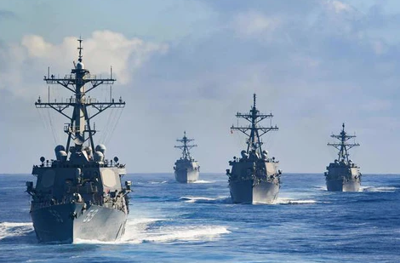
What is most ominous in the evolving scenario is that Trump appears determined to forcibly impose regime change on Venezuela. He obviously does not understand the lessons of Afghanistan, Iraq, Libya, and Syria in recent years and instead is hell-bent on showing his toughness by picking on a country that cannot put up a legitimate fight against US forces. His pretext is the claim of drug-running out of Venezuelan bases, although there has been no concrete proof yet provided to that effect. To buttress his bully move (which is an odd stance for a guy who campaigned on withdrawing the US from foreign conflicts), Trump has ordered the deployment of a carrier task force (a carrier with 5000 sailors, +/-100 aircraft, including 70 warplanes, 5 destroyers, a submarine and tenders) to the Southern Command area of operations (AOR) where an additional 8 warships are already stationed along with a US Marine Expeditionary Force. SOUTHCOM also uses Army, Marine, Navy and Coast Guard assets on specific occasions as deemed warranted, and is already conducting strategic and tactical bomber runs near Venezuelan airspace by B-52s and B-1s stationed on the US mainland.

One can get a sense of what US forces have deployed to the Caribbean to date here.

US Navy ships in Southern Caribbean. Source: Trinidad Express.

What all of this means is that the game is on. Moving this amount of assets to the Caribbean Basin, especially given the presence of land forces in the deployment, is no bluff. Trump seems to think that he can make an example out of Venezuela, contrary to historical precedent when it comes to the forced regime change going as planned or producing the desired results. One things is certain. It will be Venezuelans who suffer the most from any eventual escalation, and their scotch-swilling wealthy exile “leaders” will do nothing to shield them from a US assault.

In contrast to all of this Big Stick manoeuvring, Trump has offered Argentine president Javier Milei a USD$40 billion bridge loan as a form of bailout for Milei to make interest payments on outstanding public loans. No international lender like the IMF or World Bank would do so because of concerns about Milei’s reckless fiscal and macroeconomic policies (at one point he wanted to dollarize the Argentine peso and shipped off Argentina’s gold reserves to England on a private plane). Private investors took advantage of Milei’s public sector asset sale program to strip them of what value they held, repatriated the profits from the re-sale of those assets, then left the economy. What private investors remain are engaged in dodgy crypto schemes and destructive enterprises like critical mineral mining (lithium, in particular) where regulation is lax and where profits are largely sent abroad.

Milei himself is embroiled in an investigation into a memecoin “pump and dump”/”rug pull” scheme concocted along with Trump-allied US crypto billionaires, where he touted on social media a specific coin called $Libra that rapidly rose, then fell in value, making the 9 founding $Libra accounts around USD$82 million and leaving 72 thousand other investors with USD$251 million in losses in just over 3 hours. Milei later distanced himself from the scheme but it was discovered that he was one of the 9 founding accounts, which as per usual were managed by his sister and chief personal advisor, otherwise known as “Ms. 3 percent” for the price of the “commissions” she demands of entities doing business with the Argentine State (the most recent involving a pharmaceutical company). Milei’s sister, Karina, is also being investigated for links to–surprise!–narcotraffickers and assorted other dark forces in the Argentine landscape.

The Trump bridge loan bailout for Argentina was in fact a political rescue line thrown to Milei. His party (Libertad Avanza or Freedom Advances) did very poorly in provincial and first round congressional elections in September and at the time of the bailout it was assumed to be posted to suffer a similar fate, or at least not improve its minority Congressional representation in the national midterm elections this past weekend. That would jeopardize his reform agenda for the remainder of his presidential term, making him a lame duck and paving the way for a return of either a Peronist party faction leader or a newer centrist coalition-backed candidate. Either of these option would spell the end of the “chainsaw” approach to public sector restructuring as well as Milei’s pro-US (and pro-Israel and anti-climate change) position, something that Trump seeks to avoid.

As it turns out, Libertadad Avanza won 41.7 % of the congressional electorate vote, defeating the opposition coalition, which won 40.4% of the total number of party votes. This improves the government’s bloc position in Congress and strengthens Milei’s hand in imposing more reforms, but it also sets the stage for ongoing deadlocks and resort to rule-by-Executive decree on the part of the Argentine president. But for the moment, chalk this up as a win for Trump’s bailout carrot/election interference gambit because even if short term in nature, it may have influenced things in a US-favorable way when it comes to Argentine foreign policy. Since Trump threatened to rescind the bailout of Milei’s party did not win, it is quite possible that tis weighed significantly on the minds of voters (who still turned out in record low numbers–67.8%– in spite of voting being mandatory).

What is also interesting is not that the bailout was given for political rather than sound economic reasons. That happens. What is of note is that the bailout comes at a time when US tariffs on Chinese goods resulted in retaliatory tariffs on US agricultural products, especially soybean exports. Most of these are grown in Red Trump-voting states. When the retaliatory tariffs kicked in Argentina dropped its export taxes on soybeans, and along with Brazil rapidly took advantage to increase soybean exports to the PRC. In just a few months Argentine and Brazilian soybean exports have taken over the previous US share of the PRC soybean import market. So in effect Trump has bailed out a foreign government for ideological reasons even though it directly hurts a core voting block in the MAGA coalition. That makes neither economic or political sense.

In response to criticism of this deal, Trump puzzlingly announced that he would reduce tariffs on Argentine beef imports so that it could increase its US market share. At a minimum that means reducing US beef prices in the face of Argentine import competition., which is now the stated intention of the plan (beef price reductions across the board). Once again, US beef is mostly produced in Red states, so here too the economic and political logic at play appears to be contrary to the interests of key MAGA voters. It seems that for Trump ideological buttressing of an ally abroad is more important than the material fortunes of US farmers, and he does not fear electoral retribution as a result. That is another oddity, unless he has a plan for avoiding electoral backlash in the first place, which may be what the overall beef price reduction plan is all about..

In El Salvador, Trump has courted Nayib Bukele, the self-styled “world’s coolest dictator” who offered to house US deportees at his infamous CECOT prison in exchange for money, diplomatic favours and the betrayal of several FBI informants tied to the Salvadorean gang MS-13. Regarding the latter, Secretary of State promised the FBI that he would not divulge the informant’s names to Bukele but then did so, whereupon Bukele demanded they be returned to El Salvador rather than stay in US detention. Secretary Rubio obliged and it is now presumed that the informants are dead. Here the Big Stick was wielded on behalf of a foreign government in conjunction with domestic objectives rather than used against it for strategic gain.

Further afield, MAGA operatives have close links to former Brazilian president (and coup plotter) Jair Bolsonaro’s party and his revanchist sons while the Trump administration has imposed a 50 percent across-the-board tariff on Brazilian goods as well as travel sanctions against the judges that convicted Bolsonaro and sentenced him to six years in prison for sedition earlier this year. The Trump connection to Latin American opposition groups includes rightwing Chilean figures, adherents of the old Pinochet dictatorship and new tech moguls, as it is reported to be quietly influencing the policies of Paraguay (led by a conservative) and rightwing opposition factions in Peru. In effect, in these instances the Big Stick used by one foreign policy hand is complemented by a more subtle and covert velvet glove approach on the other.

In the end, Trump’s return to a US gilded age is very much true in the original Twain sense of the phrase, and its adoption of a crude form of Gunboat Diplomacy characterised by a Big Stick/Carrot approach is playing out in contradictory but obvious ways in what Trump considers, to Latin American revulsion, to be the US’s backyard where the Roosevelt Corollary to the Monroe Doctrine gives it the right to act with wanton disregard for International law and imperialist impunity with regard to the rights of individuals and States. Much like demolishing of the White House East Wing serves as an allegory for the destruction of the US constitutional system and social fabric, the return to the Big Stick and selective carrots is symbolic of an increasingly feckless approach to US foreign policy, regionally defined.

As the saying from former Mexican president Porfirio Diaz goes (amended here to include the entire region): “Poor Latin America. So so far from God and so close to the United States.”

Que Pachamama los proteja!

Declaration: I was the Regional Policy Analyst for the Interamerican Region and Caribbean Desk Officer in the Office of the US Secretary of Defense (OSD/ISA/IA), co-Team Leader of the Cuba Task Force and a consultant to the CIA, US Southern Command, US Air Force Special Operations and US Navy Special Operations Commands in the 1990s. In those roles I was engaged in exactly the sort of exercises that go into this type of war-planning/preparation and am well aware of the long history of US anti-drug campaigns in the region as well as the US military involvement in them (including the infamous Pablo Escobar/Cali Cartel years). My commentary is informed by those experiences and by the certain knowledge that the norms and restraints that governed the actions of my colleagues and I no long apply when it comes to the application of US military force.

The real enemy within.

Rather than a measured analysis delving into complex and intricate political issues, this post winds up being a bit of a rant. That is because the subject is simple and deserves our disdain. I shall start out gently, then get to the heart of the matter. Here goes.

One unfortunate human trait is to not learn the correct lessons from history or from personal experience and past mistakes, and to instead draw different conclusions that end up compounding the original problem or creating new ones. In politics one of the more loathsome traits is for politicians to observe what works in a different political context and then try to transpose that behaviour onto their own approaches regardless of whether the local political history and culture remotely resemble that of the different context . Another is to think that an original sin (say, genocide) can be improved upon or go unpunished with better preparation, determination and technologies, and so rather than avoid committing a similar transgression, the actor in question seeks to improve upon it. These are particularly noxious forms of conceptual stretching because they have real-life consequences rather than just be a methodologically improper substitute for legitimate conceptual transfer.

One tried and true example of this unfortunate syndrome is the “enemy within” attack on domestic political “opponents” (although in truth these “enemies” most often tend to be scapegoats and marginalised social groups). Most people are aware of the Nazi use of the term to justify their approach to Jews, Roma, Communists and homosexuals. South American dictatorships referred to dissidents and political opponents in such terms as well, labelling them a “cancer” that had to be “forcibly extirpated” in order for the body politic to survive. This led to torture, “disappearances” and mass murder as tools that enforced social compliance with regime edicts.

In NZ we now have a Kiwi version of the “enemy within” trope. It is part of a broader borrowing of US and other foreign rightwing concepts. For example, ACT emulates the Elon Musk/DOGE and Argentine president Javier Milei approaches to public sector dismantlement in the name of cost-cutting. NZ First leaders Winston Peters and Shane Jones have opted for importing US culture wars while disregarding basic environmental science, discovering that “woke” is bad and that scapegoating immigrants and non-binary people is good cover when helping pad the bottom lines of their industry benefactors (fisheries and mining, specifically). National opts for US-style corporate welfare and voter suppression ploys, trying to outlaw prisoner voting and reduce or eliminate Maori wards.

The structure of parliament helps in this regard because minor parties only need to focus on gaining five percent of the popular vote in order to achieve representation and, should the National Party win a plurality of seats and reach agreement with its minor ideological counterparts, be part of a coalition government such as the one that governs now. In short: appealing to base retrograde prejudices and ignorance works well as a MMP threshold target strategy for rightwing parties. Leftwing parties? Not so much (although te Pati Maori is doing its level best to emulate their rightwing antagonists when it comes to performative politics for their target electoral demographic)

Although the why in “why do they do it?” is pretty clear (hint: because it works), the use of US political culture imports in Aotearoa is problematic because it is underwritten by violence and the threat thereof. There is nothing debatable about this. The US has a long sordid history and culture of political violence, something that has been exacerbated in recent times by Trump’s malevolent personality and MAGA’s mean mendacity, traits that are echoed by a legion of rightwing enablers in and out of public office, cheered on by “influencers’ and commentators in the corporate and social media landscape/ecosystem.

This sewer is awash in conspiracies, disinformation, misinformation and outright lies seeking to foment social division and partisan advantage. It revels in dog-whistling, stochastic violence and projecting evil character and intent to ideological rivals when in fact, it is the Right that commits the majority of political violence in the US (and arguably NZ as of late. Think of our local neo-Nazis). And as the Charlie Kirk murder and repeated attacks on liberal-progressive “enemies” of Trump have shown (including elected officials) , it can be deadly (interestingly, after denouncing Kirk’s murder, the attack on a Mormon temple in Michigan and the staged attack on Trump in Butler, PA as the work of leftists, the US rightwing–including the White House–has gone very quiet once it was revealed that in all three instances the perpetrators were MAGA adherents and/or held extreme rightwing views).

The influence of US non-state ideological actors like Steve Bannon, Curtis Yarvin, Jordan Peterson (although Canadian born), the Atlas Institute and Koch brothers front agencies first came to light in NZ during the pandemic and run-up to the 2022 parliamentary protests. Although Australian, the Christchurch terrorist had a sympathetic circle of Anders Breivik-worshipping fellow travelers who, although unmentioned in the whitewash that was the Royal Commission Report on the attacks, were well-known to security authorities (even if he was considered a minor player before he made his move). These various ideological strands came together to meld anti-vaccination, anti-Semitic, male supremacist, QAnon and Deep State conspiracies into a broad anti-government message tailored to the NZ context.

With a mixture of foreign and domestic funding and massive coverage from local news outlets, rightwing extremist views were then mainstreamed in parliament and in corporate media megaphones. People like Winston Peters rubbed shoulders with conspiracists who brandished signs calling for Jacinda Ardern and Ashley Bloomfield’s executions. Racist agitators like David Seymour spoke of Stalinist “gulags” and loss of individual freedoms due to Covid lockdowns and vaccination mandates while seeking to upend the nation’s foundational documents enshrining Treaty rights for Maori. Lesser bozos (e.g. Peter Williams, Sean Plunket, Michael Laws and various bloggers) were given platforms in the media landscape regardless of the truth behind their arguments (social media was and is the worst in this regard). For media bosses, (themselves rightwing-adjacent in spite of accusations of “leftist bias”), clicks and eyeballs mattered more than the content of the conversations themselves.

More broadly, if we consider the term “demos” (people) as the root concept in our understanding of democracy (as rule of the people), NACTFirst policies are anti-demos at their core. Denying pay equality to women, refusing to negotiate in good faith with nurses and teachers on matters of wage and working conditions, cutting health leave for non-permanent (annual contract) workers, removing nicotine and fossil fuel taxes while ending electric vehicle subsidies, raising speed limits, opening conservation land to invasive mining, loosening fishery regulations, re-opening off-shore gas and oil exploration, trying to make English the only official language of NZ and removing te Reo from official documents and public spaces, and of course the assault on Treaty rights and attempts to enshrine the primacy of private property rights rather than the collective good in law, these and other usurpations of the demos commonweal in favor of the narrow-minded desires of special interests–most of them pushed under urgency without proper consultation and deliberation—demonstrate a callous indifference, even disdain, for the people of NZ at large, especially non-dominant and marginalized groups.

Lately the ogres have turned their dark attention to non-binary people, “wokesters” of various stripes, feminists, environmentalists, immigrants (not just Muslim) and assorted “communists,” “Marxists” and “socialists” that they see as NZ’s subversive “enemy within.” And when the targets of their malevolent attention push back, the Right go all snowflake and complain about harassment, cancel culture and intimidation. We must say it again: projection much?

The move from calling people “woke” and hippy-dippy luddites who do not share NZ “values” to calling them perverts and domestic extremists is a dangerous slope towards incitement of violence against them. It is also hypocritical. Let us be clear. The NZ Right are not directing their venom at seditious outfits like Voices for Freedom or Counterspin media or astroturf disinformation organisations like Groundswell, the Taxpayers “Union” and Free Speech Coalition. To the contrary, these entities constitute part of the rightwing hate network that includes media like The Platform and Reality Check Radio, to say nothing of the more subtle reactionary messaging on mainstream outlets like Newstalk ZB and Stuff.

The NZ Left need to stop being defensive, get their shambolic houses in order, grow some spine and call out the rightwing hate-mongers for what they are. National may be more incompetent than intolerant, but ACT and NZ First are more intolerant than incompetent. Their use of US culture war language provides excellent recruitment material for narrow-minded, prejudiced and ignorant people on their side of the ideological street, but also works insidiously to incite violence against the supposedly extremist progressive enemy on the other side of that street. This gives the NZ Left a window of opportunity in the form of speaking the truth about Peters, Seymour, Luxon and their lesser associates. They are petty tyrants whose interest in democracy is instrumental, not intrinsic, and who are quick to drop democratic niceties if they feel that their social and political status is challenged by “woke” progressives.

Put another way. When a militant or agitated Left protester wants to send an ideological message, they put a crowbar or an axe through a politician’s window or pour syrup on a foreign agitator. When a Right protester wants to send a message, they seek to hurt someone by words and deeds. They say as much, and as the Christchurch massacres, attack on James Shaw and recent arrest of a murderous punk demonstrates, they are prepared to assault and kill for their “cause.” The parliamentary protests were a good example of that simmering hate and violence eventually spilling out into the open.

When it comes to political violence and rightwing claims of victimhood, the proven truth is contrary to their claims. The real snowflakes are those who specialise in race baiting, xenophobia and misogynistic insults who now cry crocodile tears about opponents “inciting” violence against them. Their hypocrisy is real and the double standard is evident.

In the end, under the cover of their vacuous rhetoric and mean-spirited actions, it is actors like ACT and NZ First who are the worst enemy of NZ democracy. They corrode it from the inside, playing by the rules as given where they are exploitable, but at heart are an anti-democratic, foreign-inspired and -supported enemy inside the walls of NZ political society that try every means possible to rig and play the political system (say, by exchanging political donations for narrowly focused political favours and by trying to alter basic constitutional principles) in order to thwart the fair and equitable distribution of scarce societal resources for the benefit of the common good.

They can shout US derived slogans and point their fingers at opposition parliamentarians as an invitation to intimidation, but the hard truth of NZ politics is palpable and cold. The enemy within NZ politics does not come from the Left. It comes from an increasingly anti-democratic Right influenced from abroad and corrupted at its core. It has a visible name in ACT and NZ First, and a willing accomplice in an enfeebled National leadership.

Shame on the lot of them. They need to be electorally booted to the curb. It remains to be seen if the parliamentary Left, such as it is, has the starch to do so.

Kash Patel comes to town.

This week FBI Director Kash Patel arrived in Wellington to open a full time Legal Attache office (previously Legal Attaches rotated from offices at the US embassy in Canberra depending on need). Like excited children government ministers lined up for photo ops and the corporate media breathlessly reported on what Patel had to say. What he had to say, and how it was reported, was a mixture of circus side-show and fawning toadying, all uncritically covered by click-bait obsessed media scribes.

In view of that, please allow me to correct the record.

To begin with, the FBI is a law enforcement agency with powers of arrest, not an intelligence agency that does not have arrest powers. It is not a secret spy agency. Its NZ partner agency is the NZ Police, not the SIS or GCSB. In that role the FBI is a consumer of intelligence streams coming from 5 Eyes agencies (in NZ, the GCSB) as well as the NZ Police and SIS, but is not part of the 5 Eyes network. 5 Eyes is a signals and technical intelligence gathering and sharing network to which the FBI does not belong. INTERPOL is an international law enforcement partnership that the FBI is a member of. Although INTERPOL may share intelligence that originates in 5 Eyes, it has a distinct organisation, function and role. As 5 Eyes partners, the GCSB counterpart in the US is the NSA, and the US partner of the SIS ( a human intelligence agency) is the CIA.

In short, the FBI is an altogether different type of security agency and should not be confused with intelligence agencies properly defined.

Patel’s talk of direct FBI/5 Eyes links is therefore PR spin pushed by the US and Trump’s entourage that has no actual basis in fact. Using the LEGAT office ribbon-cutting ceremony in Wellington as an excuse, Patel’s visit was an overdue “show the flag” exercise by a US senior official more than 6 months after Trump entered office, and rather than Secretary of State Marco Rubio the US sent a conspiracy theorist-turned-second tier executive branch official instead, who then ran the anti-PRC/5 Eyes line even if Legal Attaches (FBI agents) deal with transnational crime, not strategic balancing or geopolitical competition and do not participate directly in 5 Eyes activities. (Note to readers: the FBI director is not a US cabinet position and is subordinate to the Attorney General in the US Department of Justice, so trotting out NZ cabinet ministers for a meet-and-greet, including those involved in intelligence matters, was obsequious in the extreme).

Be that as it may, Patel engaged in a bit of diplomatic performance art using the NZ government and media as props with which to push Trump’s anti-PRC agenda rather than focus on the relatively mundane business of opening a stand-alone LEGAT office, which are common in most US embassies and which, again, other than intelligence sharing on transnational crime via INTERPOL and partner agencies in foreign countries like the NZ Police,, do not directly engage in espionage or other forms of intelligence gathering (the fact that the office is outside the main US embassy complex and has undergone a slight name change does not mean anything particularly significant other than the need for more dedicated space and Trump’s obsession with putting his branding on everything. But a “law enforcement attache” is just a LEGAT by another name, and having separate office space may simply be a matter of re-allocating physical resources).

Patel’s remarks about the LEGAT office opening being a counter to the PRC that bolstered the 5 Eyes was a purposeful distraction from what should have been a low-key affair and should have been treated as such because for NZ bringing in an adversarial take on the PRC in an otherwise unremarkable and unrelated matter makes for disproportionate diplomatic discomfort. Neither the US embassy or MFAT press releases mentioned the PRC or 5 Eyes., so the cringe factor must have been high amongst the diplomatic corps. Then again, Patel likely knew that, but since hype and showmanship is what Trump is all about and Patel’s main audience was the one in the Oval Office, the NZ government and corporate media dutifully obliged by indulging the dog-and-pony show about the PRC and 5 Eyes. It was a pitiful display of diplomatic supination that may well have adverse consequences down the road.

To be clear. The significance of Patel’s visit to open a dedicated full time LEGAT office in NZ lies in the fact that it is official recognition that transnational crime is now a major problem in the Southwest Pacific and hence a priority for the US and other Western security agencies. In the measure that the PRC is involved in things like drug smuggling and cyber crimes in the region, it will be on the radar of these agencies, but in that regard it is just one of many state and non-State actors operating in what are known as “grey area” zones where criminal organisations and some State actors cooperate out of mutual interest. North Korean and Russian use of South-Pacific flagged ships to circumvent sanctions and smuggle oil is one example of this, as is the cyber-hacking activities of criminal entities tied to the Kremlin, Iran and PRC (among others). Likewise, transnational crime networks presence in island States like the methamphetamine trade in the Samoas (where drugs sourced in the US and Mexico are smuggled from American Samoa to Samoa across their common land border) require better resourced and coordinated regional law enforcement responses. The new US LEGAT office in Wellington is part of that effort.

As for terrorism and people smuggling (other designated priority areas announced by the US embassy during Patel’s visit), the role of the PRC is marginal at the very worst. And yet Patel placed it front and centre in his remarks at the opening ceremony

Regardless of the US spin so slavishly reported in NZ, opening a dedicated LEGAT office in Wellington is not about countering the PRC or bolstering 5 Eyes. It is about strengthening bilateral crime-fighting capabilities between the US and NZ in the Southwest Pacific. And if there is anyone other than criminals tracked and caught by the enhanced inter-agency law enforcement cooperation and regional presence of the FBI in the SW Pacific who have most to fear by the upgrade, it is those who may have extradition warrants issued by the US for their arrest. That is because Legal Attaches are the main vehicle for executing US warrants in any given country.

Kim Dotcom, are you paying attention?

A presidential crypto pump-and-dump.

This may be rhetorical but here the question goes: did any of you invest in the $Libra memecoin endorsed and backed by Argentine president and darling of the global Right Javier Milei (who admitted to being paid a fee for his promotion of the token)? You know, the one that soared above $4 billion in worth after his Friday night announcement and then collapsed entirely within 24 hours after the original memecoin sponsors (3-4 in number on a cryptocurrency web site) cashed in their stake, leaving dozens of investors with unsecured million dollar losses in what was basically a crypto Ponzi scheme? Hmm.

When confronted Milei said that investment is about risk and people should have gauged the level of risk exposure that they could sustain. He would not say what his fee was or whether he was part of the original memecoin sponsor group (others in the know suggest that he was). He disavowed any responsibility for pumping up investor interest on Fridaay night via social media (you can imagine whose platform was used) before the token was dumped by the sponsors, in what is known in the crypto world as a rug-pull.

In his defence some have pointed to the fact that memecoins are like figurines or troll dolls: they have no intrinsic value and are purchased just for fun. But Milei pushed $Libra as a genuine investment, one that could presumably help small and medium sized Argentine businesses by allowing them to raise funds at low investment costs (the buy-in of $Libra started at USD$.1.00). Less than 12 hours later he deleted his original post on social media.

The fact that the sitting Argentine president was promoting a crypto currency of any sort–or any other financial asset or scheme–seems dodgy at the very least. That he was promoting a rug-pull pump-and-dump as a legitimate investment opportunity is Trump-level criminally audacious.

But maybe that was the play all along? Phrased differently and to pervert an honorable saying, the NZ Special Air Services (SAS) have as a motto “he who dares, wins.” Perhaps Trump, Musk and Miley have their own version of that. Does it not occur to anyone that the moral character of all of these people playing on the public trust is the same–that they are a kinship of immoral miscreant sociopaths? In NZ, is not David Seymour not the same?

Milei îs now being investigated for financial crimes and is facing the possibility of impeachment (juicio politico) over the scheme. But this is Argentina we are talking about so it is anyone’s guess how justice will be served.

When he said that he was going to take a chainsaw to public finances and remove “the caste” from politics perhaps he meant something a bit different than cleaning up the public sector under conditions of austerity. Maybe he just meant that the nature of official mendacity and corruption, and the beneficiaries of it, would simply change with him in office, not that it would go away entirely. I tend to believe, having been raised and socialized in that country, that the latter is the case.

You can read up on the scam details here.

On the DOGE data sweep.

Among the many other problems associated with Musk/DOGE sending a fleet of teenage and twenty-something cultists to remove, copy and appropriate federal records like social security, medicaid and other supposedly protected data is the fact that the youngsters doing the data-removal, copying and security protocol and filter code over-writing have not been properly security vetted and have at best been temporarily deputised into public service to do the retrieval tasks. They are loyal to Musk first, second and third and MAGA/Trump fourth. They are not loyal to the US public whose data they have now appropriated. This means that all that data collected is potentially being compromised or at risk of wider exposure and can even be data-mined, gifted or sold off to third parties for purposes other than public sector auditing or transparency.

That is pretty mind-boggling. As someone who held a S/TS/SCI clearance before leaving the US for a better life overseas, I had to undergo two polygraph and background checks conducted by the Defence Intelligence Agency before being granted the clearances, and upon leaving the security community I was placed under a 20 year gag order on what I had seen/done, with any material that I wanted to use after the 20 year gag window period ended subject to DoD censoring and editing (should I have decided to write or speak about topics that included using classified materials). I say this because I handled material that was just pertinent to my official duties, not wide swathes of data about everything under the sun, so the lack of security vetting of Musk’s minions is, again, astonishingly wrong.

This has the potential to end very badly, not just for the US government or what will be left of it after this reckless DOGE wrecking ball is done with it, but for the millions of people whose data can now be manipulated and used for untoward ends. We must remember that Musk is a dishonest and unscrupulous person, his cult minions and other “techbros” subscribe to variant of an anti-democratic and Social Darwinistic ideology known as “neoreactionism,” and MAGA acolytes like Stephen Miller, Pete Hegseth, Tulsi Gabbard, Pam Biondi and the authors of Project 2025 now installed in the corridors of power are all too happy to use any means to pursue the Trump/Musk agenda. Since all of these people are disreputable curs, none can be trusted to prevent misuse of personal confidential data for revenge, profit or other non-accountable purposes.

The questions then become: who benefits from the data-grabbing move? The GOP? Putin? The techbro oligarchy? What is the end game?

Whatever it is, it is a disaster in the making.

About boot camps.

I am not a criminologist or organisational sociologist, so I cannot offer a data-driven opinion on the effectiveness of military-syle so-called ‘boot camps” when it comes to rehabilitating juvenile delinquents and youth offenders. They are popular in the US and other cultures where a premium is placed on using institutionalised discipline and punishment in order to enforce compliance with social norms, even at an early age (needless to say, Michel Foucault has much to say on this subject-he has a book on the subject–so I shall refer readers to his work). Now they have been resurrected in NZ by the ruling coalition, with the first ten inmates–all considered to be “serious youth offenders” convicted of at least two major crimes–scheduled to begin their 12 month rehabilitation trial starting early next week. It will be interesting to see how that works out for them.

I must admit to being unfamiliar with the specifics of the program that is about to be trialed, so am happy to be educated about it. I should also note that the NZDF declined to participate in the program, so whatever it is modelled on may not reflect current NZDF “boot camp” practices. Perhaps it is modeled on foreign juvenile delinquent “boot camp” programs and/or staffed by ex-NZDF or NZ police or a private security company that has expertise in such matters. Again, I am all ears on the who/what/how of the project (since it is just a trial according to the government). But for the moment and whatever the relative merits, I find the whole concept of using boot camps as models for rehabilitating miscreants somewhat perplexing.

Allow me to explain why.

“Boot camp” is a euphemism for military basic training. In basic training, which lasts approximately six weeks in most countries, followed by assignment to other military units, civilian recruits are isolated from civil society and psychologically “broken down” in order to install in them new military values and technical skills. The emphasis is reducing the individual’s notion of “self” and subordinating it to the notion of “service” via the harsh inculcation of rote obedience to authority, reflexive adherence to orders and submission of the ego to the collective good of a larger whole that is united by its common training in the skills of armed combat, i.e., the military unit. The purpose of this is to turn former civilians, with all of their notions of individuality, community and the fluid relationship between them, into soldiers, that is, a cohesive group of anonymous members of a larger hierarchical entity (the armed forces) dedicated via specialised training and political purpose to destroying designated enemies of the State.

Put bluntly, boot camps turn civilian recruits into sociopathic killing machines aimed at State-designated enemies in which their psychological reorientation and education in the techniques and instruments of organised murder serve the interests of the State and the society from which they came and which the State purports to defend. Loyalty is to the in-group above all else (hence the saying that soldiers fight for each other and have “espirit d’corps”), and their collective murderous intent is fixated on designated ‘others” by the powers that be, as expressed by the military chain of command.

One might say that if anything basic training boot camps are exercises in learning the ultimate form of mass anti-social behaviour (collective violence), but with organised features and specific targets. They are anything but rehabilitative in orientation.They simply replace the “looseness” of civilian life with the discipline and technical skills required to kill and be killed in battle.

In fact, when soldiers near the end of the service careers they are put through re-orientation programs designed to prepare them for the return to civilian life. These involve de-programming soldiers of most of what was learned in basic training boot camps and re-programming them with a more social-oriented ethos conducive to their better reintegration into civil society. In other words, they are taught to unlearn the sociopathic traits learned in boot camps in order to become contributing members of society.

It therefore strikes me as odd that anyone would think that it is a good idea to give youth offenders boot camp-style training. It seems that–not to be frivolous about the issue–it would only make them better (more disciplined, organised and prepared) criminals down the road. On the other hand, if the emphasis is on the non-sociopathic aspects of basic training–service to a higher good, sense of shared community, adherence to universal norms and values, subsuming of self to society, etc.–then perhaps the “tough love” approach might work, especially if it emphasises the re-integration aspects of military end of service separation programs.

But if the emphasis is on scary drill sergeants barking orders and enforcing physical compliance, 5AM wake-up calls and 8PM lights out rules, cold showers, detention mandates, forced schooling routines, hard physical exercise and endless drills and chores interrupted by short meal breaks, then it seems that is as much about punishment as it is about discipline and consequently not conducive to the individual’s comfortable transition into being a contributing member of the community (unless one believes that punishment itself is a form of rehabilitation. That appears to be the view of those responsible for the abuse in care atrocities recently detailed in a Royal Commission Report on the treatment of minors under state care in postwar NZ. Let’s just say that when it came to rehabilitation and social reintegration of the abused children, the results were not positive, so the irony of introducing the boot camp scheme shortly after the Royal Commission’s Report should not be lost on anyone).

In any event, the emphasis on military basic training as a model for young criminal rehabilitation seems suspect given the nature of military basic training. Perhaps the emphasis should be on offering a strong hand that helps and a firm shoulder on which to lean rather than on using the boot.

Still the 5 Eyes Achilles Heel?

The National Cyber Security Centre (NZSC), a unit in the Government Communications Security Bureau (GCSB) dedicated to cyber-security, has released a Review of its response to the 2021 email hacking of NZ members of the Inter-Parliamentary Alliance on China (IPAC, a global organization of parliamentarians) and Professor Anne-Marie Brady, the well known China expert and critic. A number of problems were identified, both operational and (yet again) with regard to accountability and transparency, so I thought I would briefly summarise them.

The Review states that too much focus was placed by the NCSC on “technical” solutions to the email phishing probes instead of considering the “wider” context in which the hacking occurred. In layman’s terms that is akin to saying that the NCSC got busy plugging holes in the parliamentary server firewalls after breaches were detected without considering who was being targeted and what purpose the hacking may have served. This is remarkable because the hacking came from ATP-31, a unit linked to PRC military intelligence well known for having engaged in that sort of activity previously, in NZ and elsewhere. Moreover, the NCSC had to be alerted by a foreign partner that the email phishing efforts were part of a progressive hacking strategy whereby the ultimate target was not the emails of MPs but of the IP addresses that were being used by those MPs. In fact, the NCSC currently does not have procedures for how to respond to reports that foreign, including state-sponsored, actors are targeting New Zealanders. The NCSC found out about the parliamentary email servers hacking from Parliamentary Services in the first instance, and then from foreign partner intelligence that was passed on to it by the NZSIS.

This is of concern for several reasons, not the least of which is that it took a foreign 5 Eyes partner to alert the NCSC to something that it should have been well aware of itself (progressive hacking), and because the NCSC initially assumed, for whatever reason, that the phishing was done by ordinary criminals rather than foreign intelligence units. It also assumed that MPs were already engaged in providing their own security, even after Parliamentary Services flagged potential breaches of its email servers to the NCSC. In fact MPs were apparently told more by Parliamentary Services than the NCSC about their being targeted (albeit after the fact), and the University of Canterbury, Professor Brady’s employer, apparently was never contacted about potential security breaches of their servers.

Since MPs may have sent and received emails from multiple IP addresses attached to their official and personal devices, the security breach implications of the email hacks could be considerable given the potential cross-over between personal and official MP communications. Put bluntly, it is incredible that a dedicated cyber-security unit that is an integral part of the GCSB and through it the Anglophone 5 Eyes signals/technical intelligence network did not consider the membership of the targeted MPs in IPAC and that the phishing occurred at the same time that Professor Brady’s emails were targeted (Brady is known to have close contacts with IPAC). This is basic 1+1 contextual stuff when it comes to operational security in cyberspace, so one gets the sense that the NCSC is made up of computer nerds who have little training in geopolitics, foreign policy, international relations or how the world works outside of WAN and LAN (hint: these are basic computer terms). They simply approached the hacking attacks as if they were plugging a leaking dike rather than consider what may be prompting the leaks and red-flagging them accordingly.

The advice given by the Review was for the NCSC to engage more with the targeted individuals in real time, who only found out about their exposure long after the fact. Moreover, the Minister of Intelligence and Security was not briefed on these intrusions, much like the targeted MPs and Professor Brady were not. Again, this defies the notion of democratic oversight, transparency and accountability within NZ intelligence agencies. Worse yet, it follows on the heels of revelations that for a few years a decade ago the GCSB hosted a foreign partner “asset,” presumably a signals or technical intelligence collection platform, at GCSB headquarters in Wellington without the knowledge of the then Minister or even the GCSB Director-General. Operational control of that platform, including specific taskings and targets, were done by the foreign partner. Imagine if one of the taskings was to geotrack a foreign human target in order to eliminate that target. If word was leaked about GCSB’s hosting of the tracking platform, it might cause some diplomatic tensions for NZ. At a minimum it is a violation of both NZ’s sovereignty as well as basic notions of intelligence agency accountability in a democracy. It seems that, almost a decade later, the much vaunted reforms designed to increase intelligence community accountability embedded the 2017 Security and Intelligence Act had not filtered down to the NCSC dike-plugging level.

This is a very bad look for the GCSB, both in the eyes of its domestic clients as well as those of its 5 Eyes partners. NZ already had a reputation for being the “Achilles heel” or “weak link” of the 5 Eyes network due to its lax security protocols and counter-intelligence capabilities. This may only confirm that belief in spite fo significant efforts to upgrade GCSB capabilities and toughen up its defences, including in cyberspace. And, judging from the reactions of the targeted MPs and Professor Brady, domestic clients of the NCSC, who are both private and public in nature, may not feel too reassured by the Review and its recommendations.

It is known that the GCSB is made up of an assortment of engineers, translators and computing specialists. It has a remit that includes domestic as well as foreign signals and technical gathering and analysis, the former operating under the framework of NZ law under the 2017 Act (most often in a partnership with a domestic security agency).This brings up a question of note. If the staff are all of a “technical” persuasion as described above, then it follows that they simply adhere to directives from their managers and foreign partners, collect and assess signals and technical intelligence data as directed by others, and do not have an in-house capacity to provide geopolitical context to the data being analyzed. It is like plugging leaks without knowing about the hydraulics causing them.

In that light it just might do good to incorporate a few foreign policy and comparative political analysts into the GCSB/NCSC mix given that most of NZ’s threat environment is not only “intermestic” (domestic<–>international) but “glocal” (global and local) as well as hybrid (involving state and non-state actors) in nature. Threats are multidimensional and complex, so after the fact “plugging” solutions are temporary at best.

Given their diversity, complexity and sophistication, there are no “technical” solutions that can counter contemporary threats alone. Factoring in the broader context in which specific threats materialise will require broadening the knowledge base of those charged with defending against them or at a minimum better coordinating with other elements in the NZ intelligence community in order to get a better look at the bigger picture involved in NZ’s threat environment.

The NCSC in-house Review is silent on that.

Setting things straight.

Seeing that, in order to discredit the figures and achieve moral superiority while attempting to deflect attention away from the military assault on Rafa, Israel supporters in NZ have seized on reports that casualty numbers in Gaza may be inflated by Hamas (even if corroborated by international agencies), I thought I would recap the truth behind this spin game.

On October 7 Hamas fighters attacked Southern Israel from the Gaza Strip. They were initially said to have killed more than 1500 people (mostly civilians), but after scrutiny that figure was reduced to below 1200 (including military personnel). At least some of the deaths attributed to Hamas were later found to be the result of friendly fire from responding Israeli (IDF) forces. Israeli sources claimed that babies were cooked in microwaves, women were sexually tortured and mutilated and that mass rapes were carried out, but that has not been independently substantiated. Scores of hostages (closest reliable count is 250) were supposedly taken back into Gaza, presumably to serve as human leverage in subsequent negotiations with Israel. A few have been released but many of those have died, not just at Hamas’s hands but as a result of IDF assaults on the places that they were being held captive.

Here are some facts. The killing of IDF soldiers by Hamas is not a crime, as it can be classified as the product of clashes between an armed resistance to an illegal occupying force on Palestinian land (one look at the 1947, 1967, 1973 and recent maps of Palestine/Israel demonstrates the steady annexation of Palestinian land regardless of the formal agreements in place). In other. words, as ugly as that sounds, in a fight with an armed opponent IDF soldiers were fair game.

What is a war crime is if Hamas tortured, raped or murdered soldiers after they surrendered. But in order to prosecute the Hamas individuals or units involved would require international recognition of Hamas as a legitimate fighting force acting on behalf of a recognised State or political community. Although Hamas has a political wing that is related to but separate from the armed wing and has been the de facto government of Gaza since its victory in the 2006 Palestinian elections, leading to the 2007 Hamas-Fatah war that resulted in Hamas gaining control of Gaza while Fatah and other Palestinian Authority factions retreated to the West Bank, the International community (read: the West) does not recognise it as a State or government and instead has designated it a terrorist entity because of the irregular warfare operations, including terrorist attacks, conducted by its armed wing. That may be convenient for Israel and its Western supporters, but it makes it more difficult to hold Hamas accountable for the actions of its members, armed and unarmed (because not all Palestinians, or Hamas supporters for that matter, are fighters). So, in spite of the obvious fact that Hamas was a governing entity in Gaza at the time the war started, charging Hamas fighters with war crimes is difficult because they are not seen as representative of any duly constituted political organisation. They are just terrorists, and if one is to believe the Israel apologists, so are the people they are ostensibly fighting for.

Here I must pause for a brief aside about non-recognition. There is irony in non-recognition of Hamas as a legitimate representative of at least some Palestine people. Hamas exists as a political movement with an ideology (nationalist-religious in this case), as well as a physical presence that extends beyond its armed wing. It will not go away just because it is not recognised abroad, is not liked by many, or if its armed cadres are decimated. And it holds equal if not more legitimacy than the Palestinian Authority of which Fatah is part, which is a corrupt gerontocracy that serves as a laptop of the Israelis in the West Bank. Moreover, Israel itself is not like in many quarters and is not recognised by a number of Muslim-majority States, but it certainly exists and is not going anywhere no matter what other’s may wish or think. In addition, the State of Israel was created in part due to the “terrorist” operations of the likes of the Irgun (which was designated as a terrorist organization by the British), so not recognising Hamas because of its irregular warfare activities in the contemporary era is a hypocritical specious reasoning.

The bottom line is this. Non-recognition may be an attempt at de-legitimation and ostracism, but it is more akin to closing ones eyes and putting fingers in one’s ears while shouting “you are not there” to someone you dislike. The reality says otherwise, and in the international arena non-recognition only serves to absolve political actors from assuming full legal responsibility for their actions. Not recognising Hamas as having a legitimate claim when it comes to representing Palestinians is therefore an own-goal (remember, Hamas won the largest plurality in the parliamentary elections of 2006 and would have been required to form a coalition government before Israel, the US and other Western states backed Fatah’s rejection of the results and subsequent armed assault on Hamas in Gaza. This only played into the hands of the hardline Hamas cadres and strengthened their resolve to prevail in the fight against Fatah, which they did. That set up the subsequent chain of events that has led to the current disaster).

In any event, killing, raping and abducting civilians are crimes against humanity even if the actions of the Hamas fighters are not technically classified as war crimes when it comes to their treatment of IDF soldiers. Remember that it is not the method or instrument of violence that defines a war crime or a crime against humanity. Nor is it the number of victims. Instead, it is who commits atrocities (war crimes are committed by military forces) and who is targeted. Regardless of who the material authors may be, for there to be war crimes or crimes against humanity, the victims must be defenceless. In the case of Israelis attacked by Hamas on October 7, most but not all of them were, so the scale of the atrocities was significant and cannot be downplayed.

In response, Israel unleashed a scorched earth collective punishment approach to the residents of Gaza, and has meted out come collateral punishment to Palestinians in the West Bank as well. Some see the IDF military campaign in Gaza as genocidal in intent–and it may well be–but at a minimum it is ethnic cleansing in effect: entire swathes of Gaza have been cleansed of their inhabitants. The NZ apologists for the IDF approach want to make it seem that 15,000 or 20,000 Palestinian dead is significantly different than 30,000 or 40,000 dead claimed by Hamas (never mind the wounded and maimed or those now enduring mass starvation due to Israeli (including Jewish settlers!)) interference with aid convoys. But at the same time they use the malleable 1200+/- Israeli body count to argue that the IDF response is proportionate to the October 7 attacks. They also clamour for the release of the Israeli hostages but are silent about the thousands of Palestinians detained by Israel since October 7. It seems that Israel also understands the hostage-taking-as-leverage game. Perversely, for the Israel supporters scale and scope of dehumanisation only matters when the numbers favour a particular victimisation narrative. In other words, 1200 Israeli dead is comparable with 20,00 rather than 40,000 Palestinian dead, so moral equivalence applies. That is not a winning argument.

That is in large part due to the fact that collective punishment is illegal under international law and classified as a war crime, most specifically Convention 4, Article 33 of the Geneva Convention. The same convention, article 34, notes that the taking of hostages is prohibited, even if it does not specify the means by which hostages are taken by belligerents (presumably the 3,000 or so Palestinians held in “administrative detention” without charge by the Israelis since October 7 would fit into this category regardless of the institutional/legal facade used to cloak their real status). So although only Israel is guilty of violating the convention when it comes to collective punishment, both sides are in violation of the Geneva Conventions when it comes to hostage taking.

That brings up the truth of the matter. Both Hamas and the IDF have committed war crimes and/or crimes against humanity. Both have committed serious breaches of international law. Fiddling with and sniping about numbers do not alter this fact. Moral relativism does not alter this fact. Trying to comparatively scale and scope the atrocities does not alter this fact. No amount of spin alters this fact.

Most of all, both Israel and Hamas apologists cannot escape this fact.