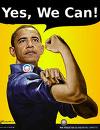
Brogressives and fauxgressives

Chris Trotter doesn’t want to debate, which is good, because there’s really no point to it – his arguments and mine are at cross purposes because we differ on a key point: whether support for independent self-determination for power minorities is necessary to call oneself a ‘progressive’. Chris doesn’t think so. As far as he’s concerned, Māori self-determination is a nice idea, so long as it doesn’t try to take a different line to the honkey Marxist agenda which he misdefines as ‘progressivism’. If that were the case, then this “well-meaning but misguided political naïf” would need to turn in his cloth cap. But progressivism hasn’t ever just been about the white working classes dictating the political agenda to other power minorities; it’s never held that the needs of all power minorities be crushed by the worker solidarity agenda. That’s why my previous post was directed at the “Marxist left”, not at the progressive movement. I’m ok with not being part of that clique – comfortable, as Danyl Mclauchlan said, having no ideological flaws that a few decades digging canals in Fiordland wouldn’t set straight.

The progressive movement has been about power minorities supporting each others’ political agendas against those who would keep political power in the hands of patrician elites. Diversity is a political strategy. You should support peoples’ right to make their own political decisions, even if you disagree with those decisions, because if you don’t you could find support for the right to make your own political decisions to be somewhat lacking. So while Chris is playing the No True Scotsman game, I can play, too: if you don’t support the rights of indigenous people to determine their own political destiny, you’re not a progressive. More in the nature of a slogan: if you’re not a brogressive, you’re a fauxgressive.*

Until we can come to some sort of sense on this matter there’s no point in continuing the discussion. Chris, by his repeated denial and denigration of indigenous rights to political self-determination, criticising the independence of the Greens from Labour, and in denying that women ought to be free from sexual predation as of right, seems well on his way to becoming one of those conservative baby-boomers which are the subject of his latest column. For shame.

Edit: I withdraw and apologise for the redacted paragraph above, as a response to Chris’ justified complaints about my conduct here. This wasn’t up to the KP standard, and I’m sorry for that. I’ve replied to Chris in the comments of his thread on the hope of more meaningful engagement.


Meanwhile, Relic and Imperial Zeppelin have posted good responses to my last post on this matter, which are worth responding to and which I think neatly illustrate the problems I have with this sell-out / kupapa / brown tories / haters & wreckers line of argument.

Imperial Zeppelin, first:

Where do the Maori and Labour Parties come into the equation? Both these political entities may well claim to advocate on class and/or race issues, but do they?
[…]
It would appear reasonable to expand on Marty Mars’ statement and contend simply that race and class issues (along with all the others) will not be resolved as long as you leave the resolution to others; never mind others who are beholden to interests inimical to class, race, gender and environmental interests.

I both agree and disagree, but this gets to the nub of the matter: power minorities need to drive their own political agendas. My view is that while neither the Labour party nor the māori party perfectly represent their nominal constituencies, they are nevertheless best-placed to advocate for those constituencies. Nobody else can do it for them; the degree of their success or failure will or ought to be be reflected in their electoral support.

Relic:

how about a quote from V.I. Lenin to back up the bus a little-“politics are the concentrated expression of economics”

This is precisely what’s wrong with the Marxist approach. Going back to a higher authority than Lenin, I consider politics to be the ‘master science’ – the discipline which governs which other disciplines are considered worthwhile. Far from being just economics, it encompasses religion, morality, ethics, war, epistemology, identity, history, actual science and more to boot. Politics is how people organise themselves in society. There are many referents of political identity, and it is for each individual to choose their own primary identity. Marxists who say it’s only economics tend to be those who, ironically, care mostly about money and the power which it brings.

The Maori Party is led by the likes of Prof. Winiata and embodies the hierarchical inclinations of certain tribal elites.

And the Labour party doesn’t embody the hierarchical inclinations of academic and public servant elites? Let’s not pretend that any party in parliament is actually a workers’ party – in the democratic systems we have, credible political vehicles are by necessity elite-dominated. So all you’re saying is that you prefer elites of one flavour to those of another.

The capitalists via their primary parliamentary representatives National/ACT recognise the need to embrace the large and growing Maori economic sector, unlikely to be sold off overseas at this stage, and needing to be diverted from potential co-operative (socialistic) forms asap. Yes, there is the parliamentary numbers game but it is not the main prize as I see it. Getting Maori to embrace the colonisers kaupapa-private property relations, is.

This is a much better point, but (like other criticisms of the māori party, it rests on two false premises: first, that Māori don’t know what’s best for Māori; and second, that Labour are substantially better.

Second issue first. With the Foreshore and Seabed Act, Labour did more damage to Māori access to resources, mana whenua status, equality before the law and collective resource control than any government of any colour had done for the better part of a century. The passage of that act was the most recent shot fired in the war of colonialism, which told Māori that they were not entitled to due process and redress in law, as other citizens were; that they had no right to even try to assert mana whenua rights to historic resources no matter how strong their claim; and that hapū-level ownership was not an option. And all this from their historic allies, whom Māori had supported without fail for generations.

It’s not that Labour had no choice, as they and their apologists claim – they had the choice of losing and retaining their principles and the loyalty of Māori, or winning without either. They chose the former, before the gauntlet was properly thrown down at Orewa, and subjugated tino rangatiratanga to political expedience, forcing Māori to once again lie back and think of Ingarangi in service of the ‘greater good’ which served the Pākehā majority. That was Labour’s decision to make, but the expectation that there would be no consequences was simply absurd, and speaks to the level of entitlement Labour felt it had to Māori loyalty. The māori party, more than anything else, was founded to demonstrate that government needs to earn the support of Māori, rather than enjoy it as of right, use it, and abuse it as convenience dicatates. So far it is doing that, though whether it will do so in the long term remains to be seen.

Many objections to the māori party decision to side with National focus solely on the losses, ignoring the possibility of gains or arguing that National have no intention of fulfilling any of their undertakings. It is true that National’s policies will probably inflict more acute economic harm on Māori in the short term, but there’s more to intergenerational indigenous politics than small-scale tactical gains and losses in economics, and the calculus is that short-term losses may be worth it for long-term gains.

The integrity of the tino rangatiratanga movement is just such a strategic gain. The first big test of the māori party’s strategy comes this Tuesday, when the Foreshore and Seabed Act review panel reports its recommendations to Chris Finlayson. Further tests will come in the next year as National and Labour begin to bid in earnest for the brown vote, supposing Labour begins to campaign at all. Even if the māori party is turfed out off parliament in 2011, if they have raised the importance and profile of kaupapa Māori politics such that no party in the future believes they can act as Labour did in 2004, they will have succeeded.

As for the argument that Labour policies help Māori because most Māori are working class and Labour policies help working class people, therefore all Māori should. This is simply a reverse ‘rising tide lifts all boats’ argument. The point is that Māori have different needs and, under the Treaty framework, different entitlements to the rest of the working class. A political movement which treats Māori simply as brown proles ignores this historical reality, and is an insult to all those who have fought for recognition and redress.

On to the first issue. After generations of relying on Pākehā elites to redress the abuses of the land wars and following, a group of Māori leaders have taken it upon themselves to develop a principled strategy to find redress by their own means. Some Māori have supported them, and if they fail to make progress toward that redress, or do so by sacrificing other, more important things (such as the kaupapa of collective ownership) then the party will (or should) lose that support. This is fundamentally the point: the decision as to whether the calculus described above is worthwhile for Māori is for Māori to make, not for “well-meaning but misguided” honkeys who want to co-opt the politics of tino rangatiratanga as part of their worker solidarity movement.

Self-determination is a fundamental component of liberty. If you approve of political self-determination only for those movements which serve your own political ends, you’re little better than the Iranian clerics, for whom any political candidate is acceptable, as long as they’re a Shi’a fundamentalist. Let a thousand political agendas bloom; that is the liberal way.

L

* With thanks to Melissa McEwan, whose blog is well and truly open for business again.

Watching the watchers

Via Eric Crampton, of all people (his “interesting” sidebar is, well, interesting, and incidentally his co-fisk of the BERL booze report is brutal), the news that (in US prisons, at least) guards commit more rapes than inmates is pretty sobering.

Although sexual abuse of prisoners is widespread, rates vary across facilities. For example, 10 facilities had comparatively high rates, between 9.3 and 15.7 percent, whereas in six of the facilities no one reported abuse during that time period. More prisoners reported abuse by staff than abuse by other prisoners: 2.9 percent of respondents compared with about 2 percent. (Some prisoners reported abuse by other inmates and staff.)

Victims and witnesses often are bullied into silence and harmed if they speak out. In a letter to the advocacy organization Just Detention International, one prisoner conveyed a chilling threat she received from the male officer who was abusing her: “Remember if you tell anyone anything, you’ll have to look over your shoulder for the rest of your life.”

This isn’t a report from some two-bit bunch of pinko soft-on-crime liberal nancies – The National Prison Rape Elimination Commission was formed in 2003 by the (then-majority Republican) US Congress, by a unanimous vote in conjunction with the passage of the Prison Rape Elimination Act. It is a large-scale demographic and consultative research project intended to first determine the scale of the problem of prison rape, then to develop policy and procedure by which to eliminate it and standards to which prison operators must adhere in ensuring its elimination. As Senator Edward Kennedy, one of the initiative’s sponsors, said “it is not a liberal issue or a conservative issue. It is an issue of basic decency and human rights.” The research has been almost six years in the making.

So, for the benefit of David Garrett and Judith Collins:

Crowded facilities are harder to supervise, and crowding systemwide makes it difficult to carve out safe spaces for vulnerable prisoners that are less restrictive than segregation.

In other words: dorm-style and double-bunked prisoner accommodation means more rapes. Further:

In Farmer v. Brennan [1994], the Supreme Court ruled unanimously that deliberate indifference to the substantial risk of sexual abuse violates an incarcerated individual’s rights under the Eighth Amendment. As the Court so aptly stated, sexual abuse is “not part of the penalty that criminal offenders pay for their offenses against society.”

If it’s good enough for the USA, with the world’s highest incarceration rate per capita, then it’s good enough for New Zealand, which under the previous government as much as the current one, looks determined to challenge that record.

L

Welcome Standardistas

Lynn has linked through to us while The Standard is down – thanks. I won’t have time today to put much up, so in order that you’re not disappointed by the relative lack of content, here are a few other unusual suspects worth your attention:

  • BAGnewsNotes, because politics sometimes needs to be seen to be believed.
  • The Dr Seuss propaganda cartoon archive.
  • My old mate Gabe runs a radio show on FleetFM called Playing Singles, Drinking Doubles, dedicated to outlaw country, honky tonk, gospel, rock & roll, western swing and the blues.
  • The Objective Standard, whose watchword is Exploit The Earth Or Die. Magnificent in its delusion. Even the ad links on this site are interesting – here’s one to a book called The Values of Harry Potter: Lessons for Muggles. Who knew Harry Potter (by implication: JK Rowling) was a Rand cultist? Or wait, is it that Rand cultists are actually wizards? Clearly, since I can’t figure this out, I’m a muggle.
  • Here’s a wonderful montage of Fox News screengrabs. It’s a big file, but truly the gift which keeps on giving.
  • Save The Media – career journalist Gina Chen blogs on how old media can learn from new media.
  • The Peoples Cube – life behind the irony curtain. So overdone it initially made me wonder whether it was propaganda or ironic counter-propaganda, but nevertheless, an almost-endless trove of remarkably original material. Particularly righteous is the Pascal’s Global Warming Wager.
  • Submit on the Auckland local government reforms. Last stop today; train’s going to keep on rolling until it reaches the end of the line or the engineer dies.
  • Why Obama really won the Democratic primary.

Add your own unusual suspects in comments, if you like.

Cheers,
L

[If anyone has a post they’d like us to put up please email us (kiwipolitico @ kiwipolitico.com) and we’ll get it posted! Anita]

Identity is more than class

Marty mars, commenting at The Standard, nails down the problem with Eddie’s and IrishBill’s latest bit of anti-māori party propaganda in one brief sentence:

You cannot fix any class issue until the race issue is sorted and that won’t be sorted while you are still working everything from the class angle.

Until the Marxist left realises that Māori have their own political identity and generally don’t (won’t and shouldn’t) identify en bloc with non-Māori political movements which require their Māori identity to be subsumed by a transnational class identity, it can’t reliably count on Māori support, and can’t really consider itself an inclusive movement.

Substitute ‘Māori’ for other political minorities if you like – the internationalist movement will only be successful when it learns to accommodate diversity and turn it to political advantage, rather than trying to squash it.

The Clark Labour government’s fundamental inability to realise this (by passing the Foreshore and Seabed Act, most notably) is why the māori party is trying other options. They and their people have had seventeen decades worth of out-of-touch honkeys telling them how to achieve the sort of political and economic progress they want, and at the same time largely denying them the resources with which to achieve such progress. Time for a new strategy, and creating a bidding war between the two main ideological blocs doesn’t look like a bad one, to me.

Hone is right, though – the party is going to have to get a lot more than they have if they want to retain their people’s loyalty and not be seen, come 2011, as the Brown Tories.

L

The problem with stupid questions

… is that they tend to beget stupid answers. Or at least unexpected answers.

Via James at Editing Teh Herald, it seems the UK’s Daily Mail (whose egregious abuses of truth and decency are legend) has gotten bit by this simple truth, with an online poll receiving a response 96% in the affirmative to the question “Should the NHS allow gipsies to jump the queue?” The Daily Mail, bless ’em, wouldn’t stand for this and it now shows 100% in the negative.

Now, I’m not saying that the s59 poll is that insultingly loaded, and obviously we can’t use twitter to vote in referenda, but groups like The Yes Vote are counting on people being similarly insulted by the dishonest and misleading question that they’ll consider how the framers clearly want people to vote and vote the reverse in order to demonstrate that they don’t appreciate being treated like democratic cattle to be herded in the direction the lobby wants.

So here’s another meaningless poll: have the AAS lobby over-egged their question?

L

Coddington makes sense on smacking

Words I never thought I’d write, but good grief, The Yes Vote has linked me to proof-positive that despite her previous crimes against logic and argumentation, not to mention evidence, Deborah Coddington can write wisdom from time to time. Her HoS column today makes a strong liberal* case against the S59 referendum by killing** the sacred cow that cries of “nanny state!” are pure and unassailable positions of principle, and arguing that when it comes to discipline there’s a gap between principle and implementation into which society must not permit children to fall.

Act’s John Boscawen has a bill to amend Section 59 – again – so it will be “no longer a crime to use reasonable force” if parents discipline a child.
Here we go, loop de loop. Boscawen says he’s sick of nine years of Labour’s nanny state telling parents what to do, but isn’t this more of the same? You can use a light smack, but not a hard smack? Why not a good, old-fashioned razor-stropping like my father used to give me, followed by Mum with the wooden spoon, and while you’re at it John, bring back six of the best in schools for bad girls like me – never did us any harm, did it?
Truth is, no matter how hard politicians try to flannel, they’re always telling us what to do. Paula Bennett said she didn’t think a smack as part of good parental correction should be a criminal offence and she didn’t want to go into homes and tell people how to parent.
Oh really? Not even when they’re disciplining with the jug cord or vacuum cleaner pipe?

But for the last sentence, this could pass for the usual sort of faux-outraged don’t-tread-on-me doggerel. But what’s remarkable about the last sentence is that it rejects the typical anti-statist line that all intrusions into private affairs are equal and equally meritless – it recognises that the state has a role to play in protecting children from the (however well-meaning) depredations of their parents and that there is a strong public good in the appropriate exercise of that role.

This is based on a deeper argument about the rights of the individual – and the assertion that children are individuals with rights of their own, not their parents’ belongings to be treated according to parents’ sovereign wishes.

It’s no wonder children are not valued as individuals in this country, but instead as some sort of chattel belonging to adults until they reach some magic age – 16 or 18 or 20. We do not own our children, a fact that has yet to be driven home to those selfish individuals who fight their way through the Family Court over who has the offspring, ensuring any remaining family happiness is destroyed forever.
Sadly, I don’t ever see a future in this country where all children are treasured, despite all the good work done by many organisations and individuals.
It’s not just about eliminating the beatings, it includes respecting young people’s presence. I hate it when parents don’t introduce their children to me, as if they don’t exist.

Because, in truth, nobody believes that parents have an unassailable right to treat their children as they please*** – it’s just that people of various political stripes like to be seen to support parental sovereignty without also being on the hook for the hard decisions such a position requires.

Policy is about value judgements, and if the AAS lobby were honest they’d be arguing the value of corporal punishment in parenting: arguing that it will strengthen families, grow good children and create a better society; and how it will do so. To an extent Larry Baldock has tried (33 minute audio), but only to an extent, because even those at the heart of the AAS lobby recognise the weakness of their position in strict analytical terms. So they fall back on symbolic arguments they don’t really believe in, but which are malleable enough to be twisted around to support their misguided cause.

People who claim pure and unassailable statements of principle in terms of policy implementation is usually selling you a bill of goods, but it’s nice for someone so strongly (shall we say) ideological to be pointing it out. More power to your typing fingers, Deborah.

L

* The classical kind, not the latte-sipping kind.
** Or at least beating it with a jug-cord.
*** Ok, some people seem to.

Stealth march

A few thousand primary school kids, dressed mostly in high-visibility gear and carrying (or wearing) makeshift traffic cones, lollipop signs and banners, have just marched through Wellington CBD escorted by police motorcyclists, ambulances and led by a highland band (bagpipes and all).

I work in a media office. Most of us spend hours every day scouring the news as it comes in – on paper, over the airwaves and on the interwebs – as a matter of our daily work. Not one of us had the faintest inkling what the march beneath our window was about, who had organised it or what end it aimed to achieve. We guess from the (excellent) adornments worn by the wee nippers and their guardians that it’s to do with proposed speed limit reductions around schools. But that’s just a guess.

Whoever organised this has achieved a remarkable feat: coordinating thousands – ok, maybe it was hundreds – of kids (which is like herding cats), gaining approval from their parents, the police, the City Council and signing up a marching band, without anyone in our esteemed media establishment hearing a word about it. That person should probably be put in charge of corporate communications for a big company or government department with a lot of bad news – one of the power companies, perhaps, or a trading bank.

Incidentally, if school speed limits is the cause being protested, then I fully support it. There’s a school near where I live which is at the bottom of a 70k/h hill, and the thought of sending their precious dear things down that road each day must give local parents conniptions. I have it on good authority that the local AOS sergeant, who has a kid at the school, spends his off hours parked up there issuing tickets in addition to his ordinary policing workload. Not ideal.

L

S59 referendum: a game theory approach

How* to vote: Yes, [null] or !#gh$u%WfG?

What’s a body to do, who thinks the S59 referendum question is absurd and yet supports the rights of children to be free from violence, even that perpetrated by their well-meaning parents?

Russell Brown asks the question, and elaborates on the options, but doesn’t provide an answer. Essentially, the question is about principle against pragmatism. This approach is pretty elementary (game theory isn’t a speciality) but it does enough to demonstrate my views on the matter. (It looks to me like a weird sort of Stag Hunt with a third quarry thrown in). There are also a few assumptions and assessments as to how the results will play, which I’m happy to argue. I apologise if it all seems a bit bleedin’ obvious.

mehStarting with the worst response, the third quarry or null vote. An argument of principle, advocated by Denis Welch, it holds that people should treat the s59 referendum with utter contempt and dispose of their share of the $9m expense in the circular file. This is possibly best characterised as the Ostrich Strategy, viz. “ignore it and it’ll go away”. Unfortunately, no cause which attracts signatures from the 10% of the electorate required to trigger a CIR will ever just go away on its own. Given that there are a hard core of people who are strongly motivated to vote “no” in this referendum, the adoption of this strategy will send the (incorrect) message that the bulk of the electorate doesn’t care either way, ceding the field to the “no” voters (hereafter “anti-anti-smacking” or “AAS”). We can call this “Lose For Sure”, because no matter what happens, the strategy can’t win.

chadThe main argument of principle, made most forcefully in the PAS thread by Craig Ranapia and Tom Semmens, is that the question is so badly worded that reading meaning into it and voting on the basis of that interpretation accords the question too much respect, and devalues the CIR system which should insist on properly-formed questions. This argument holds that one should respond to a meaningless question with a meaningless answer by invalidating the ballot and submitting it anyway, which I have characterised above as “!#gh$u%WfG”; in other words, leaving the chad hanging or writing something to the effect of “This question is meaningless” on the ballot and returning it. This has some history in previous referenda, and in principle if enough informal ballots were returned, could serve to discredit the question and the questioning lobby group. Which is what we want. We can call this “Win Big”, because if enough people take this approach, the anti-anti-smackers will be roundly shamed in a more thorough manner than simply losing the referendum. On the other hand, if not enough people do this and the votes are split between “yes” and “informal” the AASers will claim victory. We’ll call this “Lose”.

yesThe argument in pragmatic terms is most eloquently put by Judy Callingham: “I’m going to vote “yes” – as I see it if the bastards don’t lose we’ll never hear the end of them”. This illuminates a key aspect of the matter: the AAS lobby doesn’t have to win big, they just have to not lose in order to demonstrate that they represent the “average kiwi”. This means the primary goal of those opposed to the question or what it represents should be to win, regardless of the magnitude of the victory. Put like that it seems obvious, doesn’t it? This position is most strongly put by The Yes Vote, whose banners are currently up all around the progressive NZ blogosphere. Essentially, if enough people interpret the question in the way in which the AAS want people to interpret it and vote “yes” anyway, they will lose, and the outcome will be positive, viz. parents not being allowed to claim correction as a defence for beating their children. We’ll call this “Win”. Those so voting will have favoured the AAS with a formal answer to their ballot, thus granting them some sort of legitimacy, and if insufficient people vote this way such that it boosts turnout and the AAS still win, they will rightly be able to claim that they have a public mandate for their policy of allowing parents to assault children with legal protection. We’ll call this “Lose Big”.

So, how do things stack up? I’ve established five notional outcomes, as follows:

  • Lose For Sure: %No > %Yes > %Informal (low turnout). This would be caused by people who object to the question refusing to vote.
  • Win Big: %Informal > (%Yes or %No) > (%Yes or %No). This would be caused by enough people voting informally to outnumber those who vote any other way, rendering the referendum a public farce. This requires a great deal of work to convince those who would instinctively vote “yes” despite disagreeing with the question, out of native respect for the democratic process or for other reasons.
  • Lose: %No > (%Yes or % Informal) > (%Yes or % Informal). This would be caused by those objecting to the question being split between “yes” and “informal” such that “no” snuck through the gap, allowing the AAS to claim a plurality and thus victory. There would remain some defence in that the cumulative “yes” and “informal” votes might add up to a majority, but I don’t think this would be worth much.
  • Win: %Yes > (%No or %Informal) > (%No or %Informal). This would be caused by enough people voting “yes” to demonstrate that the AAS does not represent the “average Kiwi” as they claim. It seems likely that those who consider the question an affront to the democratic process and are inclined to vote informally or not vote at all would need to be convinced to vote “yes” instead.
  • Lose Big: %No > %Yes > %Informal (high turnout). This would be caused by enough people voting “yes” to demonstrate that those opposed to the AAS were taking them seriously, but were outnumbered by the AAS itself, thereby justifying the claim that they represent the “average kiwi” with the assertion having been properly tested. If some (but not enough) people are convinced that voting “yes” is the right idea, this will be the result. Thus there is danger in an incomplete adoption of the strategy.

So how should one vote? Well, it obviously rests on what other voters will do. Clearly the best outcome in the case of a split requires collusion – members of one group (either the “informal” voters or the “yes” voters) changing their vote. It looks to me like this:

  • Fail to vote: Many people will do this, but it won’t have any positive effect for anyone other than the AAS. P(Lose For Sure) > *
  • Vote informally: Some people will do this, but probably not enough to Win Big, and if the result isn’t Win Big, it’s more likely to be Lose. This rests on your judgement of whether the number of informal voters will be greater than the number of “no” voters. I don’t think they will. Thus in my assessment P(Lose) > P(Win Big) > *
  • Vote yes: If enough people do this, it will result in Win. If nearly enough people do this it will result in Lose Big. I think the natural tendency of voters is to vote according to what they think something means, rather than what it actually means in cold hard terms. In addition, I think voters are generally reluctant to vote informally out of respect for the institutions of democracy. In addition, I think The Yes Vote has been running a fairly good campaign – they’ve had a few mentions in the mainstream media, and their message is clear and forthright. Therefore in my assessment P(Win) > P(Lose Big) > *

So, essentially, my argument based on this is “vote yes, support campaigns to convince others to vote yes, and all those of you who are considering not voting or voting informally in protest – don’t, just vote yes, because the main danger of losing is in splitting the vote. And hope like hell the yes vote doesn’t fall short, because trying and failing will mean a worse loss than just plain old failing.”

L

* I have omitted the “no” vote. People who are going to vote thus have no need to consider the questions I raise in this post.

Smacked down

Sean Plunket delivered a stinging, if metaphorical, spank to Larry Baldock today on Morning Report (audio). Plunket challenged Baldock to demonstrate one case (just one) in which a parent was convicted of a criminal offence for smacking a child. He can’t, because there hasn’t been one. After several minutes of going around in circles arguing symbolic, rather than substantive matters and making excuses, he settles on the case of Jimmy Mason, which is explicitly not a s59 test case, since he denied striking his son at all.

What we have here is an apt and obvious demonstration that Larry Baldock doesn’t actually understand what the question means – and neither does John Boscawen. That, and the pro-smacking lobby is trying to use the referendum for symbolic purposes. They’re arguing that the question doesn’t mean what its words say it means – it means what its proponents say it means. If this was taken on by government it would be a subversion of the purpose of a CIR, which is to give the electorate a chance to answer a specific question which has clear and obvious policy implications – not to give people a chance to tick ‘yes’ or ‘no’ and then have the meaning of that response spun into whatever suits the referendum framers’ agenda. Because there is no possibility of gaining an understanding of what the electorate wants with this question there is no legitimate issue of representation, despite what anti-anti-smackers such as Dave think. John Key has seen this, and has wisely refused to allow his government to be hijacked by populist propagandists with an incomplete grasp of either the issues or the process; that is, people who figure that belief and ideology are all that matter.

Larry Baldock also reveals his larger purpose here, which is to establish himself and the Kiwi Party as NZ’s next populist vehicle, exploiting the vacuum left by Winston Peters’ absence. He started by talking about how both Phil Goff and John Key are “part of the problem” for supposedly ignoring the electorate, and finished this interview, in which he made no substantive points whatsoever in support of his case, with a petulant “the next-best referendum will be the elections in 2011”, a somewhat weak variation on “the eternal court of history will absolve me” which calls on people who believe that both Labour and National are the problem to vote for him.

Well, Larry, we’ll see. You’re no Winston. Perhaps you can sign Michael Laws up; you could use his political competence.

L

McVicar: officially reactionary, unqualified, right-wing

The BSA has upheld a complaint against TVNZ’s Breakfast on the grounds of balance after it allowed Garth McVicar the free and unopposed opportunity to rant about sentencing.

Complainant Roger Brooking argued that the programme privileged “the reactionary views of an unqualified right wing individual as if he was the oracle on sentencing law”, and that the show’s hosts were unduly sympathetic toward him. The authority upheld the complaint on the grounds that Breakfast producers and interviewers failed to challenge or question McVicar’s “controversial” views, simply accepting them at face value, and internalising them for use as a frame for viewer responses.

This is an excellent decision, for a couple of reasons. First, it reinforces the expectation that the media have a responsibility not to naïvely accept the statements of their commentators or interviewees; that the interview process ought to be adversarial. Secondly, it provides a line in the sand as to what constitutes a controversial topic of public discourse, by implicitly agreeing with Brooking’s characterisation of McVicar and his pronouncements. It goes counter to some previous decisions, such as the rather alarming case last year in which the authority effectively declared that talkback was legitimately a balance-free zone.

L