Psychic’s Advocate

Poneke has another post up about Sensing Murder. Just for the record, I agree with the core argument of the post, and its somewhat famous predecessor. It should come as no shock to most of you that I also agree that the worst bit is that some journalists and current affairs directors treat them as newsworthy — but that’s the newsmakers’ failure, not the psychics’.

But here’s a comment from Falafulu Fisi I think could use a little unpacking:

People earn money for a living by being honest and hard work.
Business men are successful by being brilliant in running their businesses.
Paranormal practitioners (psychics etc,…) earn money via people’s stupidities and gullibility’s. They can become rich of course. Put them into the real world to try and earn an honest living they would be the laziest and incompetent wherever they are.

And in response, this from Klytemnestra:

I would have to disagree somewhat with Falafu Fisi. Excluding those cranks who actually believe they can talk to the dead, these ‘psychics’ are really quite successful business people. Getting rich by exploiting niche markets with false services no one really needs; this is a feat worthy of a degree of respect, even if they are repugnant in every other way.

Contra both of them, I’d argue that their “honest living” isn’t as psychics, or necessarily as providers of false services; it’s as entertainers. After all, those who actually use those “services” are a tiny fraction of those who consume the televised or stage-managed product which results. I also don’t accept Poneke’s suggestion that these consumers necessarily believe they have psychic powers — after all, it doesn’t follow that people who watch vampire movies actually believe in vampires. But even if they did, it ultimately doesn’t matter: taking advantage of peoples’ credulity isn’t wrong in and of itself, and for doing it these folk don’t deserve any more — and in general considerably less — criticism than financial advisers, real estate agents and talk radio hosts. They give a great many people who want such things something to watch of an evening, and something to believe in and make them feel all warm and fuzzy inside. In this regard it’s little different from — say — soap operas or romantic comedies. There’s a fair argument that it’s ghoulish, and perhaps hurtful to the real people involved, but in this regard it’s little different from — say — the cheesier end of TV current affairs or other reality programming.

Even if you don’t personally see any value in it, that’s an honest living, wouldn’t you agree?

L

What not to say

NZ Herald website’s lead story:

Telecom spokesman Mark Watts says this morning’s 111 emergency calls system failure “shouldn’t have happened” and is “a bad look” after the company’s recent repeated XT failures.

My emphasis. This illustrates that Telecom views the failure of an essential service — the only genuinely essential service they provide — as an image problem rather than a matter of public safety. Don’t get me wrong — it is an image problem, and a colossal one at that, and the fact that this fault was apparently unrelated to the ongoing XT failures underlines the brittleness of the country’s telecommunications infrastructure and undermines Telecom’s brand even more than it already has been. But treating it as an image problem for the company rather than a real problem for the country is the surest way of turning it into an even more serious image problem. You see what people are made of when they come under prolonged duress. Telecom’s senior staff are starting to crack.

Not that NZ Police communications are much better, with Inspector Karen Wilson saying that the Police were “unaware” of any cases where the need for emergency services had gone unmet. Well, they would be unaware, wouldn’t they? Given that the system for making them aware was nonfunctional.

This line (“Police are unaware …”) has become the NatRad bulletin lead, which means Telecom’s PR failure is reflecting on the Police, who bear no blame here. (Though, in fairness to Inspector Wilson, her remarks were a response to a suitably incensed Philippa Tolley, who first used the word “unaware”.) Still, better for the Police to more strongly emphasise the fact that they would be unaware due to Telecom’s failure, but that coping regardless was their responsibility.

It might be worth turning this into an ongoing series. There’s no shortage of material.

Update: By Checkpoint time, Mark Watts had changed his establishing point to “not a good thing”, which is much better, for just one word different. But his talking points were clearly thus:

  • The system works close to 100% of the time (therefore: don’t complain when it doesn’t.) This is a somewhat specious argument, but very necessary given Telecom’s situation, and it’d fly if the general position taken was one of contrition and regret.
  • Nobody was left hanging; everyone who made a call got called back to make sure they were ok. This is good; unfortunately, he refused to answer Mary Wilson’s repeated questions as to how long it took for people to get called back. That leaves the response a bit hollow. He also gets a bit arsey about it.
  • “The systems worked as intended.” WTF? This would be a plausible position if the Police had been informed, but they weren’t, and Telecom has no explanation for why not.

For their part, the Police have their act a bit more together, with Superintendent Andy McGregor emphasising the importance of public confidence in the system and Telecom’s failure to ensure it.

L

Are we?

While at the Save Radio NZ lunch-at-parliament today, it occurred to me that we’re probably the only country in the first world where you’re allowed to climb the trees on parliament grounds. Is this true?

If so, I think it says a lot about us.

L

Unmix these metaphors

ace_of_spades

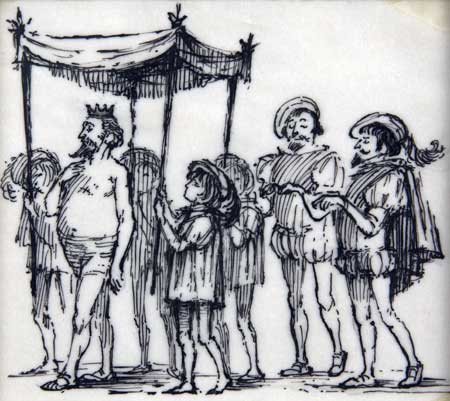
In the last couple of weeks the government’s pistons have started pumping. After a year’s worth of blue-boiler-suited (non-unionised) engineers making sure the sleek machine is primed and fuelled and oiled and ready for action, the engine has roared into life and is beginning to blow out a cloud of smoke in preparation for a screaming burnout. As it proceeds, the party has dealt its Labour opposition a decent hand of cards; you could say they’ve built a house of them, which the mighty engine is in danger of knocking down. After campaigning on a platform of returning integrity and effectiveness to the Beehive, the public are beginning to get an inkling that the emperor may lack a couple of vital articles of clothing.

hughes12

Returning to cards: the strongest card is the decision to mine the conservation estate, announced last year. Classic crony capitalism is shaping up to be the trump suit. The other cards: Hide‘s junket timed to coincide with a wedding; Harawira‘s trivial but more spectacularly mismanaged junket; Key‘s and McCully‘s mining shares; revelations that Brownlee lied about being lobbied by mining interests which would stand to benefit from his actions as a minister; attacks against Radio NZ which benefit Joyce‘s former business partners; attacks against ACC which benefit the insurance industry to which the party has well-known ties; and ministers Heatley, Brownlee and Groser who were pinged pinching from the public purse for their own private pleasure.

corporate_crooks

Mining the conservation estate is the keystone of all this, the central peg on which the whole thing hangs — because the allegations cannot be denied outright, only explained. Particularly in the cases of Key and McCully’s shares, the value of the conflict of interest is irrelevant. It probably should be relevant, but it isn’t really: either there is a conflict of interest, or there isn’t. While there would be (much) more hay to be made from a large shareholding, that isn’t necessary to plant the seed of doubt in the rich loam of the electorate’s and the media establishment’s collective consciousness.

plant-a-tree

Likewise the other issues: trivial, but they ring true and all riff on the same themes. Hide’s transgression was much more significant in actual material terms than was Harawira’s, but Harawira was punished much more harshly because he failed to recognise the symbolic matter in play: both required abject, cringing apologies. Key’s “sloppy” uranium shares, which he was “too busy running the country” to recall owning is reminiscent of John McCain‘s failure to remember how many houses he owned, for which he was rightly crucified by a country staring down the barrel of an economic crisis which would cost many people their only home. The smiling visages of the three ministers on the front page of the Dominion Post: the Minister of Economic Development who can’t be trusted with a credit card; the Fisheries Minister who likes to splash out on feeds of kaimoana for his mates and party hangers-on; the Minister for Climate Change Negotiations wining and dining the former National minister who was an integral part of the Copenhagen negotiation, and now heads the environmental branch of the OECD apparatus. And so on. These are symbolic issues, not matters of real actual wrongdoing. But the government can’t just dismiss them outright, it needs to argue the merits, and by the time you have to argue the merits on this kind of thing, you’ve probably already lost the symbolic battle. This sort of behaviour passes the public’s sniff-test about how they think about the National Muldoon gave us. And it fits the narrative of the modern Key/Brash-era Nats as wheeler-dealers, well-heeled fat-cats with a finger in every pie, feathering the nest for their secretive plutocrat mates. It brings to mind an iceberg, with the tiny, trivial transgressions peeking above a glassy surface which hides the monstrous mass below.

iceberg

The job of the opposition is to tie all this into a coherent story which people can understand and feel in their guts: a myth that trips off the tongue at the pub or in the line at the football, in the front seat of a taxi, sitting on the bus, standing around the water-cooler or in the smoko room — in as many variations as there are poets of the NZ electorate.

This post cannot end without a mention of the good work the folks at The Standard — particularly Eddie — have done toward assembling the blocks for this narrative pyramid. I am often critical of them, and their tendency toward partisan hackery frustrates me, but they do a lot of good work, and it shouldn’t go unrecognised. They’ve covered all the main aspects listed here, but they can only go part of the way: now is for the opposition parties and their allies to lurch into action. All the cards have not yet been dealt; the ace of spades may yet be seen. Although the raw material is all there, it won’t be easy writing this story — just ask Lockwood Smith, who only by dogged repetition and worrying away at the Taito Phillip Field bone managed to raise the electorate and media’s awareness of that actual and manifest case of political corruption. But this is the opposition’s job, and if they can untangle the metaphors and lay them out for people in simple, appealing, resonant terms, they will gain some traction. Then perhaps, they too will begin to belch smoke and fire, and roar down the road to victory.

L

Week off

Dear KP readers,

After a flurry of activity over the past few days, I’ll be a bit scarce for the coming week. Pablo is also travelling and will likely not be posting. In the mean time, here’s a forum for you to bring up and discuss things you think are interesting. The usual standards apply.

Also, if anyone wants to submit a more formal guest post for consideration, email me — lew@kiwipolitico.com.

Cheers,
L

False mean

idt20070815
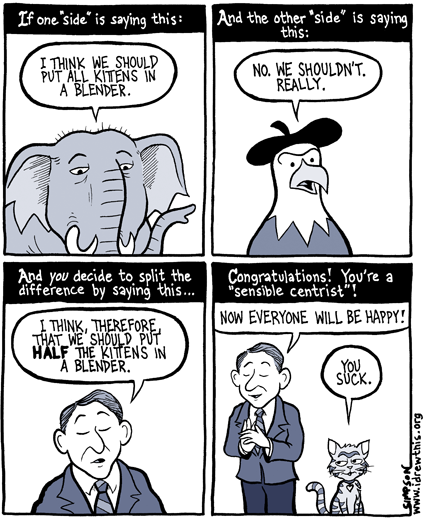
I never get tired of this cartoon. It reminds me what being a Sensible Moderateâ„¢ is not at all about.

The latest proposal for the foreshore and seabed is PC gone mad — put it in the public domain, but not really the public domain per se, and everyone’s happy. Or not unhappy. Hopefully. And if they are, they’re just being unreasonable.

It’s blending half the kittens in order to avoid tackling the complex and painful political and historical problem which the issue represents. It’s the cop-out option which aims to offend nobody, but really only achieves that goal on the surface. It’s like a butchered mihi delivered by someone who’s not really well-meaning but wants to appear so, ignorant of the fact that wairua matters.

This has Peter Dunne’s fingerprints all over it, and he’s the one tying himself in verbal and conceptual knots: “no one owns it but we all own it and so therefore we all have an interest in it”. The unnamed sources are no better, arguing that since there are no rights, “everyone’s rights are protected.” You couldn’t make this up.

The trouble is that Māori — and the māori party in particular — don’t just want everyone to get along; they want their historical claims to the takutai moana tested and upheld, or negotiated to mutual satisfaction. This will necessarily include some positive determination as to the ownership status of those stretches of land and sea, from which will derive other rights — to development, to exercise kaitiakitanga, and so on — which can and should be negotiated on the merits of the original determination. This proposal commits a similar legal fallacy to the Foreshore and Seabed Act, in reversing the legal test as to customary title. Prior to the FSA all land was presumed to be in customary ownership unless alienation could be proven — the FSA reversed this, forcing claimants to prove that their rights to the foreshore and seabed had not been alienated. To be satisfactory to Māori, any resolution must address this change, and either provide recourse to that pre-existing legal framework, or a negotiated framework which satisfies all parties. Māori don’t want a Clayton’s solution in which they gain nothing except by losing slightly less than the Foreshore and Seabed Act took away, while things literally do not change for Pākehā.

Let me be clear, though: I don’t so much mind the function of the proposal as its justification. I prefer Hone Harawira’s proposal — full customary title, inalienable, with guaranteed access for all New Zealanders in perpetuity — but recognise that this is probably too ambitious in reality. A solution which mimics public domain in function while resolving the question of customary title could work. But this isn’t such a proposal. There is no short-cut, no easy way out of this. It’s time for both major parties to stop avoiding this fact, and face up to the responsibilities — and the opportunities — these historical times present.

Update: Yikes, even Marty G sort-of agrees with me!

L

The glow of the furniture, piled high for firewood

There’s been much analysis, wisdom, whimsy, and snark about Gerry Brownlee’s plans to mine the conservation estate. But rather than talk about it, I’m going to repair to a rather dubious poll from stuff.co.nz:
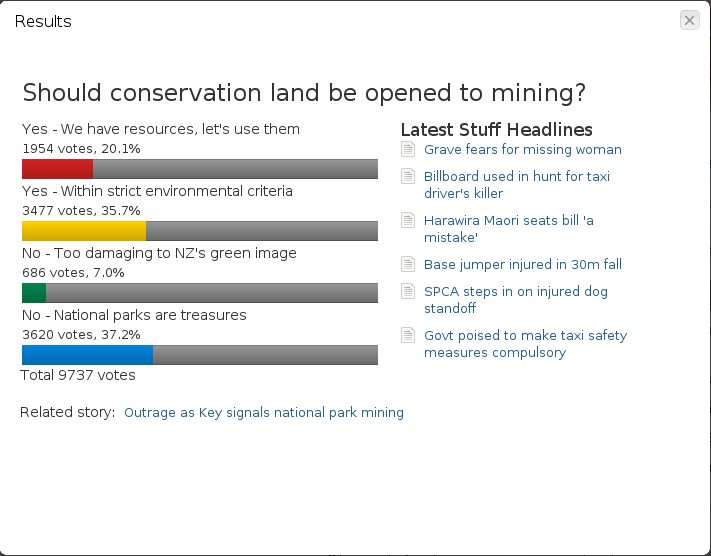
stuffminingpoll

Two things are interesting about this poll. First, for an internet poll, the options are uncharacteristically nuanced. This leads to the second interesting thing: these results are deeply incoherent.

I’m going to work from two assumptions (both of which are pretty arguable). First, I’m going to go out on a limb and assume that stuff.co.nz poll respondents are pretty similar to NZ Herald poll respondents and the commenters on “Your Views” and Stuff’s equivalent — putting it very charitably, let’s just suppose that they’re somewhat further economically to the right, less environmentally conscious and with stronger authoritarian tendencies than Gerry Brownlee. Second, I’m going to assume that a poll like this should break roughly along partisan lines, since it’s a government policy opposed by the opposition, part of an overall strategy to mimic Australia, a complex topic of national significance with which people generally have little first-hand experience (the sort of thing they tend to entrust to their representatives), and the poll answers are heavily propagandised using the government and opposition’s own sorts of terms.

The poll result is incoherent because it doesn’t break along (rightward-slanted) partisan lines, although it initially looks like it does. A total of about 56% of respondents approve of mining in principle, and this is roughly what I would expect given this framing, the current government position on the topic, and the demographic characteristics of this type of poll. It’s what the government is banking on in terms of support with this policy: if it drops much lower, they’ll probably back down. But where it gets incoherent is in the other two options. The third option (“too damaging to NZ’s green image”) is about what the Green party is polling, and the fourth (“National Parks are treasures”) is about what the Labour party wishes it was polling. That’s bass-ackwards, because the third option is the Labour party’s actual position on many environmental matters (even Carol Beaumont’s passionately-titled post falls back on NZ Inc. reasoning), while the fourth position is the Green party’s actual deeply-held position of principle. A second source of incoherence is the political framing of the second (most popular) question. By definition, if conservation land is mined it’s not being conserved any more.

Both Labour and the Greens have huge opportunities here, but they need to position themselves to properly take advantage of them. Labour, for its part, needs to tone back the NZ Inc. reasoning which plays into all the assumptions of the second question: that it is a simple trade-off of one type of economic value against another type and come out looking good on the margin. This is classic trickle-up politics, rationale which appeals to the brain instead of the gut. The people who are picking options one and two probably think they’re doing so on solid rational bases: more money, more efficient use of resources, etc. — but the real reasons are probably more to do with ideology (mastery of the environment) and nationalism (catching up with Australia). Labour’s best move here is to appeal to peoples’ identity: New Zealanders think of themselves as people who live in a wild and pristine country, and they like having that country to go and ramble about in (even if they hardly ever do it). The Greens could also adopt such a position, abandoning the wonkery for things which matter to people. Russel Norman tried with his speech in reply yesterday, but I swear, whoever wrote it needs the ‘G’, ‘D’ and ‘P’ keys removed from their keyboard. He needs to take a few hints from the team who got an organic farmer elected to the Senate in Montana on an environmentalist platform by telling him to stop talking about environmentalism and start talking about how much he loved the land. The Greens also need to rethink their deeply confused firearm policy, but that’s a minor thing. In a country with such a strong constituency of outdoorsfolk and wilderness sportspeople it’s an absolute travesty that the MP who represents the hunting lobby is the urbane Peter Dunne, and the only party who genuinely values wild places is represented by earnest city-dwelling vegetarians.

But Labour and the Greens can’t divide this constituency between them; they need to make this appeal positive-sum, and steal back some of those who voted option two. The way to do this is to attack the implicit logic of option two, the idea that you can mine something and still be conserving it, and to remove the idea that this sort of thing is for a government to decide, that it’s somehow too complex or technical for ordinary people to understand. This shouldn’t be hard to do — it’s a plain old political education campaign. But it requires framing and a narrative whereby reasonable people can really only bring themselves to choose the wilderness; causing them to lose faith in the assurances of the government’s “strict environmental criteria”. The narrative needs to be about who we are in New Zealand, and it needs to be one which appeals to socially-conservative rural and suburban folk who would never think of voting for earnest city-dwelling vegetarians even though they share many of the same bedrock values. It needs to be like the lyric in the title: we are burning our furniture, and that’s not what civilised people do. New Zealand is not a nation of environmental degenerates, except when insufferable environmentalist smugness forces them to choose degeneracy as the less-bad identity position.

This is an issue on which the left can win, because it’s already a pretty marginal issue for the government. It cuts against a long-standing bipartisan reverence for National Parks, and it cuts against New Zealand identity as New Zealanders see it. Even on what should be a pretty reactionary online poll, the government only wins by 6%. Turn one in six of those people around and the issue gets put on ice for good.

L

Musical interlude

I’m snowed in with work today (as I was yesterday), hence lack of commentary on the speeches and such.

But thanks to Simon Sweetman, I know that the mighty Gil Scott-Heron has released his first album in a decade and a half, titled I’m New Here. And it’s good. The Guardian is streaming the whole thing. Go and listen to it.

L

The “I” thing

iAs much as there are great expectations on John Key’s statement to Parliament today, the pressure on Phil Goff is only slightly less. He may not have the responsibility of running a country, but that’s the problem: little or nothing indicates he will have a country to run in the foreseeable future, the optimism of the activist left notwithstanding. Goff’s reply needs to be a game-changer; it needs to reframe the past year, foreshadow the coming “middle year” when the policy engine runs at full noise, and it needs to demonstrate that Goff has got some game and is willing to bring it.

It looks like Labour have just such an event in mind, but I have substantial misgivings about Goff’s planned reply to Key’s throne speech.

If the article in the Sunday Star Times is to be believed, the speech’s greatest asset will also be its greatest weakness: it’s to be delivered in the first person. There’s going to be a lot of “I have failed to” and “I should have” sort of statements coming out of Goff’s mouth which will undoubtedly be taken out of context, and on a more subtle level, it will reiterate the fact that Goff is in a pretty impotent position at present. Labour is disconnected from key constituencies, and there remains a perception that it still doesn’t really get why it lost. People will more naturally associate “failure” and “sorry” and so on with Labour than with National. The task of this speech and the coming months is to turn that around, but it will be hard work to sufficiently remind the audience that these things relate to Key rather than Goff himself, given that they’re coming from Goff’s mouth and because it runs counter to the established narrative about Key and what people want to believe about him.

He’s staking his own personal and political appeal against that of the PM. It’s a big risk, but hey, boldness is what’s needed. It’s not as if Goff has much to lose, and if he can make it work, it has potential to reframe the debate from being about the opportunities of the future to the missed opportunities of the past.

L