Local Government Elections 2010

Just bullet points from me:

  • Len Brown by 60,000 votes over John Banks for Supercity Mayor. How about all those people who said his so-called outburst would be the death of him? Len Brown knows who his people are; he knows how to speak to them, and now he speaks for them. I can’t take any credit for the prediction, but this looks to me like the tale of differing personal narratives.
  • But the biggest surprise isn’t Brown’s win: it’s Annette Main narrowly beating Michael Laws’ sock-puppet and long-term deputy Dot McKinnon for the Whanganui mayoralty. McKinnon apparently didn’t stand for council, so she’s gone. Main is an utterly different politician from Laws and his lot; this represents a genuine change of direction. Laws will remain as a councillor, and his being forced to submit to the leadership of a woman he can’t control will be worth the price of admission on its own.
  • It pays to vote. Some results tweeted by Philip Lyth make this clear: election contests decided by 23, five and just three votes in Upper Hutt and Carterton. More crucially, for the Wellington mayoralty, Celia Wade-Brown is just 40 votes behind incumbent Kerry Prendergast, with about 900 specials still to count. Damn, that’s a lot of policy difference resting on very little. Stephen Judd tweets the following: “I’m totally serious: if Celia WB needs to lawyer up for a recount etc, I’ll donate.” I’ll bet he’s not alone, and if it’s this close after the specials are counted it’ll be a worthy cause.
  • On the other hand, Eric Crampton makes a reasonable case about why he doesn’t vote. It’s as good an argument as I’ve seen, but I still don’t really buy it.
  • Jim Anderton: I’ve got a lot of time for you, but honestly, you were well beaten by Bob Parker and there’s no use complaining about the earthquake and your inability to campaign. It’s churlish. Shut up, step down gracefully, and be remembered for your many good deeds rather than for being an inveterate whinger. Even Banksie is putting you to shame.
  • People, hope springing eternal, will be keen to call this a ‘swing to the left’ and similar; especially given wins by Brown and people like Main and Duynhoven, and Celia Wade-Brown’s strong performance. I don’t think there’s sufficient evidence to support such an argument at present; at the very least, translating local body election results into central political partisan loyalty is something of a fool’s errand.
  • Christine Prentice got predictably thrashed by Tim Shadbolt in Invercargill. But rumours I’ve heard from down that way suggest the point wasn’t ever to win, but that the candidacy was a profile-raising exercise to enable Prentice to mount a credible campaign to replace sitting National MP for Invercargill Eric Roy when he retires. I’m not sure how much credence to give these rumours; given Roy’s 7,000-ish margin and the milk boom Southland is currently enjoying they could probably stand a dairy cow with a blue rosette and win.
  • Andrew Williams failed to even win a ward seat in the North Shore, which is a testament to his powers of self-delusion in standing for the Supercity Mayor. More frightening, though, is the fact that Cameron Slater, who entered the race late as a joke (probably conceived during a boozy lunch with DPF and Cactus Kate) got more than a thousand votes.Yikes. Watch out for him in 2013.
  • Phil Quin remarked that local body politics is a de-facto retirement scheme for former (Labour) MPs: Harry Duynhoven has won in New Plymouth; Martin Gallagher in Hamilton; Paul Swain in Upper Hutt, and George Hawkins in South Auckland are among those he mentions. Duynhoven’s beaten rival for the mayoralty, Pauline Lockett, complained on Radio New Zealand that he had ‘name recognition’ on his side. I expect that has an awful lot to do with it.
  • Daljit Singh didn’t get elected to the Otara-Papatoetoe Local Board. Thank goodness for that.

That’s all I’ve got. All in all, a pretty big day capping a pretty fierce election.

L

Hang ’em high

Labour Supercity candidate Daljit Singh, standing for election to the Otara-Papatoetoe Local Board, has been revealed as one of those charged with voting fraud-related offences. As Idiot/Savant says, it’s awful that this information didn’t come out earlier so that he could be punished electorally as well as judicially, but this is part of the price we pay for a robust justice system.

However, the fact that Singh has avoided his due scrutiny thus far (and, farcically, may yet be duly elected to the board) makes strict attention to his case all the more important, and places a heavier burden on those who are associated with him –and in particular on the Labour party whom he represents — to respond swiftly and decisively to divorce themselves from Singh and his alleged misdeeds. This must take cognisance of the fact that he has not yet been convicted of anything and it may be conditional and hypothetical, but if Labour have learned anything at all from the Taito Phillip Field scandal, it’s that a lesser test than ‘convicted in a criminal court’ must apply with regard to such matters.

In the interim Singh’s erstwhile allies must assess the evidence and base their response on judgements as to its veracity, but the moment his guilt is admitted or proven, they must be the first to call for his (figurative) hanging; because they stood to benefit from his fraud, they must condemn it all the more loudly. Singh and Labour’s enemies can be relied upon to do so; his allies must also. Andrew Little has initially done so, and this is heartening. IrishBill at The Standard, as an allied third party, has done likewise.

It is also perfectly legitimate to draw links between Singh and others’ alleged wrongdoing and Labour’s own fundamental standards and character, since candidates by definition represent the party. While one rotten apple does not (as many will certainly argue) imply a party of inveterate crooks, this latest incident on top of the Field affair, Labour’s steadfast support for Winston Peters through the Owen Glenn donation scandal, and continuing perverse behaviour by Chris Carter (I could list more examples) do certainly speak to crucial failures of judgement when it comes to the party’s selection and endorsement of both candidates and allies. If the rumoured pecadilloes of Richard Worth, the overt bigotry and criminal background of David Garrett, and the blundering damfoolishness of Melissa Lee (there are more examples here also) can be said to illustrate the character of the ACT and National parties (and I believe they can) then the same must surely hold true for Labour. Whatever speaks to character speaks to the heart and soul of a political movement, and by this standard Singh’s implication in voter fraud, if proven, will be a lifelong stain on the party which admitted and endorsed him.

And if anyone so much as breathes words like courageous corruption in apologia for Singh and whoever else, hoist them by the same rope. Democracy’s ends are only as good as the weakest part of its means.

L

Anchor me

Indian-born Hawkes Bay-resident overstayers Sital and Usha Ram are to be deported with or without their three children, who are New Zealand citizens aged eight and six. These are not ‘anchor babies’ in the US sense that that hate-term is employed; no attempt has been made by the Rams to mislead Immigration or to hide from the authorities, nor are they using their childrens’ citizenship status to thumb their noses at the powers that be. This is, for all intents and purposes, a model New Zealand family.

The children, as New Zealand citizens, have a “cardinal and absolute right of residence” according to a 2008 judicial ruling, which means they can on no account be deported. This is where they belong, it’s where they live, the only place in the world they can do so in full legality, since it is impossible to exchange their New Zealand citizenship for Indian citizenship until they turn 18 (and indeed, nobody can force them to do so).

As the article says, they face a terrible choice: return to India and condemn their children to a life of poverty, or return to India alone and leave their children behind. But it’s not really much of a choice: they can’t simply abandon their children in either sense. Fundamentally, the terrible choice is faced by the government, who must decide whether to tear a family quite literally apart, permanently. To demonstrate their loyalty both to their children and to their country and therefore to win this battle in the public view, the Rams need do nothing more than peacefully resist being separated from their children. Call the government’s bluff. Let Immigration enforcers tear apart mother and daughter, father and sons. Let them carry the parents bodily to the paddywagon, and from the paddywagon to the waiting aircraft. Let it be known that this is the government’s doing; their choice, not that of the parents. This is a chance to force the government to actually do the dirty work of eviction and deportation, to undertake the harsh deeds which their tough-on-everything rhetoric implies. And they should be forced to put their actions where their words are.

So my advice to Usha and Sital Ram is: invite John Campbell into your home. Let him and his camera crew be present at the time of the forcible separation; in your living room and at the airport, and let the whole world watch, and listen to the wailing. The narrative will be big bad Muldoonist Daddy State jack-boot dawn raids, breaking down doors and wrecking families in 2010 as in 1980, and the country will need to decide: is this who we are? Does this represent us and our aspirational, compassionate, multicultural society?

And, as Pablo suggests in his recent post about Paul Henry, it’s a question which needs to be answered.

Update: As usual it’s occurred to me that a poet has previously expressed my core argument in two lines:

Do not go gentle into that good night,
Rage, rage against the dying of the light.
(Dylan Thomas)

L

Things that scare me

Today I was waiting in my doctor’s waiting room and, as my older daughter played with the water machine, I espied in the hands of a kindly, grandmotherly looking woman, a copy of the July edition of Investigate magazine — the one about how Obama is going to eat everyone’s babies. But also the one with the article about whether North & South got their recent report on vaccination right.

The North & South June edition, which contained the report on vaccination, was also on the magazine table. I’ve read it, and it’s sound investigative journalism about an important topic: how some diseases we thought were dead and buried are enjoying a resurgence because some otherwise sensible people decide not to vaccinate against them. I haven’t read the Investigate article in question, because my life is short enough as it is, and at any rate I refuse to fund Ian Wishart.* But the Investigate editorial position on vaccination — pretty well documented in previous articles which I have read — is just the sort of thing which raises the spectre of doubt in the minds of parents already nervous about having to hold their little treasures down so a nurse can stick a needle in them. Finding such a hysterically anti-science tract as Investigate in a doctor’s surgery bestows upon it a medical legitimacy it does not deserve. There’s a time and a place for this sort of material, but a medical context is not appropriate. It’s like the proverbial smoking doctors whose habits were supported by Big Tobacco in exchange for reassuring their patients that smoking didn’t do them any harm.

The other daughter? At the time, she was in the nurse’s office getting her jabs. I had a word to the nurse about it; she was almost as alarmed as I was and said she’d remove the offending rag. That’s something.

L

* I’m sure this entitles me to a free bout of Wishartian pig-wrestling and not-at-all-veiled implications about the standard of my professional work such as Scott received, but I’ll pass, thanks all the same.

Most important event of the millennium so far

Astronomers have apparently discovered — for the first time — a planet which is both the correct size and the correct distance from its star to support life. And it’s only (all intended irony) 20 light years away!

Gliese 581g is the first world discovered beyond Earth that’s the right size and location for life.
“Personally, given the ubiquity and propensity of life to flourish wherever it can, I would say that the chances for life on this planet are 100 percent. I have almost no doubt about it,” Steven Vogt, professor of astronomy and astrophysics at University of California Santa Cruz, told Discovery News.

Ever-pessimistic, I await the inevitable debunking of this epochal development. But I’m not as bad as some people on twitter, who believe that we’ll just give up on the planet we currently have as we redouble efforts to reach the new one. Sheesh.

Update 20101014: Another group of astronomers, searching for the same planet, have been unable to find any evidence that the planet even exists. Oh well.

L

‘Ethnographic’ TV: compare & contrast

At the risk of courting Pablo’s disappointment, I’m descending briefly from lofty theoretical heights to make a few rather rambly observations about two new examples of ‘ethnographic’ reality television in New Zealand: How the Other Half Lives and Are You My Tribe? (both of which screen on TV One, Monday nights).

First, the similarities: Both shows follow a pretty well-established format popularised most thoroughly by Louis Theroux: ‘gonzo anthropology’ for the television audience. Both are journeys of discovery undertaken by middle-aged celebrities who have made their names and reputations by being all-round Kiwi blokes — former All Black Marc Ellis and broadcaster Mikey Havoc. Both have enthusiastically embraced their ignorance of those aspects of life in New Zealand which form their shows’ subject matter. Both possess the superficial characteristic required for such an endeavour: the ability to establish and maintain rapport with people whilst simultaneously objectifying them; or, put another way, the ability to make the objectification not seem quite so objectionable.

In HTOHL Ellis is explicitly using his status as a cultural elite to investigate defined sub- or counter-cultures within New Zealand society. In AYMT Havoc uses the same cultural elite status to gain entry to te Ao Māori in an attempt to make up for 38 years of having (as one Ngāi TÅ«hoe kaumatua put it) not bothered. Both Havoc and Ellis speak to — and for — ordinary Pākehā middle-class New Zealand; that swathe of folk who are, by any objective definition, in charge of the country economically, politically and culturally; and who yet harbour considerable uncertainty about whether they are or not. There’s an unselfconscious normative aspect to this; HTOHL’s blurb declares that Ellis “reckons he’s pretty normal” but in the show “he jumps the fence of normality”; the word ‘other’ is even in the show’s title. AYMT pointedly started with the most ‘scary’ iwi for its first show, which went to some lengths to emphasise TÅ«hoetanga as a distinguishing characteristic. So the clear subtext of both shows is to firm up that shaky sense of cultural identity by emphasising the fact that the cultural objects of his investigation — those, by definition, with a strong and distinctly-articulated identity — are on the margins, outside society’s norms and not really wholly accountable to them. The screening of the two shows back-to-back is a bit troublesome here; I’m vaguely disturbed by the equation of Māori with the sort of fringe subcultural ‘others’ which are the objects of Ellis’ investigations — Neo-Nazi survivalists, witches, born-again Buddhists and so on.* One of the key things the last few decades should have taught Aotearoeans of all hues is that Māori aren’t just another fringe group.

So much for the similarities. There are some pretty fundamental differences between these two shows, which are also emphasised by their consecutive timeslots. The first and most obvious of these is the specific objects and the host’s relationship to them. Ellis is lighthearted and superficial; he’s more interested in the gonzo than in cultural engagement, and the choice of fringe subcultures as his objects permits him to be flippant and dismissive when it suits. Havoc, playing for much higher stakes, doesn’t have this luxury: he can’t treat his objects as cultural curiosities or as a freakshow. He has to take his objects seriously, and this requires him to engage more deeply and more honestly with them than Ellis does, to put more of himself on the line, drawing more out from the objects of his investigation.

That difference gives rise to the second major difference: the presence and extent of judgement as to life according to ‘other’ norms. The heart of programming like this — and of comparative ethnography in general — is in the carefully-contained judgement of the investigator. The point is to examine the cultural fronts, where norms butt up against each other; and the key attribute of a host isn’t so much to be a jovial wise-cracking ‘good bloke’, it’s to do so whilst gaining genuine insight into where the cultural fronts lie, how they might be negotiated, and indeed whether it’s possible to negotiate them. This is a pretty rare quality; one which Louis Theroux has in spades and which permits him to make such eye-opening television: the objects of his investigation don’t feel like they’re being objectified. As a rule they are disarmingly frank, and sometimes frighteningly so. Theroux achieves this sort of dynamic by carefully constraining his judgement, but not abandoning it altogether. Theroux asks the question which needs to be asked and holds his own cultural ground, but does so in a way which does not threaten or attack his objects. Theroux refuses to become complicit in admiring whatever edifices of self-delusion his objects erect, but also does not make it his business to tear them down.

For all that Havoc exhibits maudlin and faintly embarrassing envy for the strong and rooted sense of identity possessed by Ngāi TÅ«hoe (honestly, how many generations will it take for people to realise that being Pākehā is not the absence of culture; it is a culture in and of itself!), he enters into the discourse in good and robust faith to find out what that identity is, and what it tells him about his own. His aim is not to disabuse them of their stranger notions, but nor is it just to impassively observe. Havoc puts himself in uncomfortable situations (such as powhiri and a raucous kitchen-table drinking session) but does not relinquish his own cultural ground, finding ways to ask the question — like addressing the fact that one in four young Māori end up in prison, and asking “how is ‘exclusive’ different from ‘racist’?” — and expecting good answers, without alienating those who must provide them.

Ellis, on the other hand, is not required to do anything more than the superficial, so he doesn’t. He exhibits a much stronger sense of his own identity than than Havoc does, but there’s almost nothing of it in the programme. His own reality is never challenged: the cultural front never emerges because instead of engaging and standing firm on his own ground, he withdraws into jocular trivialities, avoiding the conflict which is necessary for this sort of exercise. Discomfort is limited to banalities like sitting through three-hour chanting ceremonies and sleeping rough in the bush. He gets through the entire first episode of this season with Kyle Chapman, former leader of the National Front and probably New Zealand’s best-known neo-Nazi, without once initiating discussion about the ideological and racist foundations of Chapman’s Survive Club. What’s more, when one of the club members talks about how the ‘maaris’ — and Ngāi TÅ«hoe in particular — are the leading threat to New Zealand’s civil society, he fails to ask the question (in fact, judging by a posting on Survive Club’s website it seems that not being a “media hate monger” was part of the deal.) It takes a special sort of obliviousness to not remark on the irony of a group of racial-supremacist armed wannabe commandos training for the coming apocalypse in a remote part of the Southern Alps who think some other group are the real threat.

You don’t get to be Louis Theroux without asking that question.

L

* I can certainly see the counter here: Tūhoe training camps; rongoa Māori and modern religions like Hauhau and Ratana.

Frogs, toadies and tadpoles


There’s been a long and turgid discussion about the Greens’ support for the Canterbury Earthquake Response & Recovery Act (CERRA) on Frogblog, with commenters including many of the usuals from around the blogosphere, Russel Norman and Kevin Hague, and someone called BJ Chip (who I assume is a comms flack) running defence for the Green party. (I can’t figure out how to link to individual comments, sorry). Another commenter, Geoff Fischer, makes a persuasive case against the Greens’ newfound pragmatism, both on the Frogblog thread and on his own site. Whilst I don’t entirely agree with Geoff (I’m a pragmatist at heart) I think his critique is a good one, particularly for the Greens (who aren’t). But there are also strong pragmatic grounds to attack the Greens’ decision to support the CERRA; grounds which, if the Greens are serious about their new realpolitik posture, they’d do well to consider.

I’m often disappointed by the Greens’ persistent — even pigheaded — reliance on the ‘principled stand’ in politics. While valuable among a suite of tactics, it’s overused as a one-size-fits-all response which pigeonholes them as idealistic zealots who don’t compromise and can’t be worked with. But although I think its consistent use is a poor strategy in the general case, it gives the Greens a valuable trump card: the ability to say “these are our principles; if you don’t like them, go ahead on your own”. While it all too often results in other parties abandoning the Greens as irrelevant and going ahead on their own, it does build a powerful narrative about the Greens which speaks to characer and reliability and permanence. Principled politics, as Geoff says in other words, has an objectivity about it which is often lost in modern pragmatic discourse where what often passes for ‘true’ is whatever you can argue. When all the other parties in parliament — even the other parties who (however unjustly) appeal to the ‘principled’ brand, such as ACT — are falling over themselves to betray their principles, it’s all the more important that you stick to your own. Put another way: when your political strategy is to be principled, refusing to act on principle is not a pragmatic decision.

Most obviously, taking a uniquely principled stance at the time when the pressure is greatest to cave in hugely strengthens that narrative mentioned above, ensuring the long-term strength of the brand. It’s easy to be principled when nothing is on the line — the measure of a party’s commitment to principle is how it performs when the stakes are highest. That measure has now been taken.

Secondly, principled politics is what the Greens know. It’s their realm of competence. An idealistic stance would have given them the ability to critique whatever misdeeds the government undertakes in the name of this act with a clear and objectively indisputable line (“we voted against it”), whilst the best they can muster at present is the equivocal, inconsistent line which Norman is running in the Frogblog thread (“we objected to it and we don’t like it but we voted for it anyway because we thought it was the right thing to do”). BJChip demonstrates a fundamental lack of understanding how public-sphere political communication works with (her or his, I’m not sure) defence: “if they give us such idiotic cr@p [as “you voted for it”] we can give it back chapter and verse”. I replied with the following:

And not a word after “but you voted for it” will be worth a damn out there in the cold, pragmatic world of realpolitik which the Greens have now decided to enter. In that world “but you voted for it, so STFU” is the super-hero version of the “Nine Long Years” gambit which paralysed the Nats from 1999-2004 and has paralysed Labour for the term so far. You can’t beat it; in the battle of the soundbite, it’s political kryptonite because when they say it, they’re right. You voted for it: it’s your law, you swing by the same rope as the rest if and when it all comes apart. And so you should.

As much as they might believe themselves to be big-game players, the Greens have never even made a serious attempt to master the complexities of pragmatic politics, preferring to leave the cut-and-thrust to others. In the realm they have now entered they aren’t so much frogs as tadpoles. Judging by Norman and Hague’s statements and the spirited defence of BJChip (and others who use the pronoun “we” on behalf of the party), it seems they will attempt to defend the decision to support CERRA as they would any principled stance, with a clear restatement of the whys and wherefores behind the decision, omitting any discussion of the political consequences. This is impossible, because it is clear to even the most casual observer that the decision was a pragmatic one based on the politics.

Third and most importantly, at the electoral sharp end a uniquely principled stand positions the party as a ‘safe harbour’ for voters from other parties who are disillusioned by those parties’ too-enthusiastic embrace of pragmatism. This is where I think the Greens got their political calculus most badly wrong. The Greens’ own membership and support base was not going to be unduly turned off by the fact the party refused to support a bill granting dictatorial powers to Gerry “sexy coal” Brownlee; they may have taken some sort of hit, but the risk was not as dire as it is being spun. But a principled stance against this manifest assault on the constitutional framework of the country would have permitted the Greens to position themselves as the last line of defence against Shock Doctrine authoritarianism; a rallying point for liberal values. “Even if you disagree with our policy orientation,” they might say, “at least you know where we stand, and can rely on us to stand against the worst excesses of government impunity.” Coupled with the ideological moderation signalled by the departure of Sue Bradford and Jeanette Fitzsimons, I believe the Greens stood to gain considerable support from disappointed Labour voters, particularly those who wanted the party to act as a functional opposition to the government — and they might have even picked up a little bit from the other parties, as well.

So the decision manifestly fails on grounds of principle, and because the Greens are a self-declared party of principle with neither a strong history nor any particular skills in the exercise of realpolitik, it is doomed to be a failure in practice as well. One silver lining, though: since the Greens stand to gain nothing from it, their support for CERRA doesn’t really indicate that they’ve sold their principles out for power as “Tory toadies”; more that they simply lost their nerve. This stands in contrast to Labour, whose support for the act was obviously based on pragmatic grounds of political calculus, and principles of good governance be damned. This is especially the case for Christchurch-based MPs like Brendon Burns, who is leading the red team’s defence in a particularly distasteful fashion. They are complicit in the power grab. The Greens and their principles are just casualties of it.

L

Blue smoke

In my previous post on the Canterbury Earthquake Response & Recovery Act (CERRA) I lamented the conspicuous absence of outrage in response to the bill’s provisions from partisans on the right. I have since been heartened by the responses from some of the more principled commentators on the right; well done them.

But there is one most conspicuous exception. I have on many occasions in the past defended Kiwiblog’s David Farrar from allegations that he’s a bog-standard Tory authoritarian. Yes, he’s a loyal partisan; yes, he does have his authoritarian tendencies, but his typical policy alignment is clearly classical-liberal. He is is consistently more liberal than almost all of his fellow-travellers and has regularly exhibited a forthright commitment to democratic principles of the rule of law, of good constitutional practice and the importance of checks and balances. Even yesterday’s response conveyed lukewarm concern about the scope and extent of the act. But I take back all that defence of David’s character; and so, apparently, does David take back his commitment to those liberal principles.

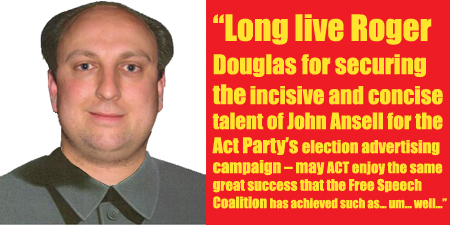
Because this morning’s post on the CERRA is nothing short of cringing, snivelling partisan apologia for dictatorship dressed up as a simplistic classical history lesson. Dictatorship, it appears, is a-ok with David just as long as the dictator wears the right coloured tie. Where now are the lofty appeals to the principles of good governance, the shrieking about attacks on the nation’s constitutional integrity, the billboards bearing the endorsements of dictators? There are plenty around, including a very explicit homage to the Free Speech Coalition campaign which David fronted, but nothing from this erstwhile and self-proclaimed champion of democracy himself.

The fact that DPF is being schooled on both the principled and pragmatic problems with this bill by some of the more wide-eyed and reactionary members of his commentariat suggests that he has taken leave of his political instincts as well as his principles; for instance, the notorious ‘burt’, who urges him to consider what might happen if (due to the collapse of ACT) National fails to win the 2011 election and a Labour minister takes over from Brownlee; a possibility he and the government had either not anticipated or don’t believe was worth considering. Nothing would be sweeter irony, but either way: David’s credibilty on these matters is up in a cloud of Tory-blue smoke; a legacy destroyed by unprincipled partisan loyalty. Such is the price of political dependence.

Update: Similar sentiments from Peter Cresswell, Danyl Mclauchlan and The Standard, from whom I purloined the image.)

Another update: More angels required to dance on DPF’s pinhead.

L

No democracy on the honour system

This morning I posited a conspiracy theory that the government would use the temporary deregulation measures undertaken in response to the Canterbury earthquake to progress another tranche of wide-ranging reforms to the resource management regime and building and construction industries after the 2011 election.

Absurdly, if the Canterbury Earthquake Response and Recovery Bill is passed without very extensive amendments of the sort proposed by the Greens and voted down by both major parties (it’s going through all three stages right now), then all that and much, much more could happen this week, no election required, and without any review by the courts. The executive powers granted to the relevant Minister (that’s Gerry Brownlee) in this bill are so sweeping as to permit him to do almost literally anything as long as it has something to do with quake recovery — amend or suspend almost any piece of legislation, overturn any electoral decision — really, Dean Knight, Graeme Edgeler and Andrew Geddis (themselves no wide-eyed conspiracy nuts) are just three of the constitutional law experts who are boggling at the possibilities; Idiot/Savant is also much more than usually incandescent, and Gordon Campbell pulls few punches, either. Geddis says the law gives him “a case of the screaming collywobbles”. How’s that for a technical term. Their argument — contra government speakers such as Nick Smith — is that, because there is no real oversight to test whether actions taken are “reasonably necessary or expedient for the purpose of the Act”, the bill’s scope is not strictly limited in black-letter law to those matters, nor indeed to the region impacted by the quake, and the minister and his commission basically enjoy immunity. These are sweeping powers such as those which might be accorded an executive head of state in a command-government situation such as a major war.

Not would happen, mind. I don’t think anyone genuinely thinks Gerry Brownlee will decriminalise murder, approve mining across all schedule 4 land, enact wartime conscription or overrule the results of the forthcoming Supercity election. I don’t. But the point is (assuming Dean Knight knows what he’s talking about) that Brownlee can. Or will be able to tomorrow, until April 2012, which astute readers will note is a good half-year after the next general election must be held. There are no real checks or balances, much of the actions taken under this legislation are able to be taken in secret, and actions taken will not — at least on paper — be subject to judicial review. This means that we are relying on Gerry Brownlee to not be evil. But democracy doesn’t work on the honour system. It can’t. It doesn’t work on the basis that you give a government power in the hope that they use it legitimately; you give it power on the basis that you have the authority and ability to wrest it back from them if they misuse it, and on the assumption they will misuse it. The honour system is fine for bouquets being sold at the cemetery gates. It’s no basis upon which to run a country.

As I’ve often argued here and elsewhere, what sets liberal democracy, with all its failings, apart from authoritarian systems is the ability for the electorate to transfer power by the exercise of these sorts of checks and balances. Under orthodox authoritarian socialism for examplem — more or less the only form of socialism ever fully implemented on a nationwide scale, in the USSR and China, for instance — the transitional dictatorship is empowered with the sole authority and means to put down any such counter-revolution as might endanger the transition to genuine communism; and because of this, the dictatorship enjoys impunity. It has no reason to work in the interests of the people it purports to serve, inevitably becoming inefficient, corrupt and brutal. (Thus, the problem with socialism is authoritariansm which accompanies it, not so much the economic aspects, but that isn’t my point here).

The Canterbury Earthquake Response and Recovery Bill, of all the ridiculous things, brings into being the potential for just such a regime in New Zealand, and we can only hope it is not used to that effect. It is a colossal, hypervigilant overreach. And if any ill comes from this, Labour — and even the Greens and the māori party — will bear as much responsibility as National; they are all supporting it out of “unity”.

Where now are those who railed against the Electoral Finance Act, who speculated darkly that Helen Clark might not relinquish power after the election, or might suspend the operation of the free press; who shrieked about the Section 59 repeal; against ‘Nanny State’ and the illusory Stalinism of lightbulbs and shower heads, drink-drive limits and alcohol purchase ages and compulsory student union membership? Here the papers are being signed to dismantle robust constitutional democracy right under our very noses, and there’s barely a whimper.

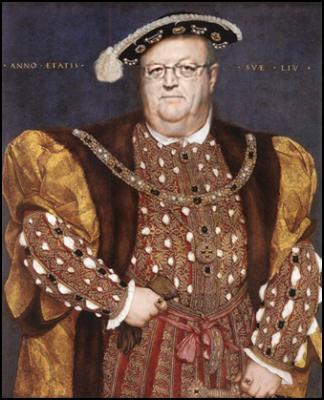
(Updated to add Lyndon Hood’s fantastic image of Brownlee VIII, link to Campbell’s article, and tidy the post up a bit.)

L

Creaky building syndrome

Here’s a conspiracy theory. Building, demolition, waste/fill disposal and other resource consent regulations are being suspended in Canterbury following the recent earthquake. Indications are that exemptions to the RMA regime will be granted by order in council, and (among other things) the norm will be to permit building and reconstruction work to take place without delay, the consents being — here’s a phrase — restrospectively validated. It’s plausible that this will serve as a pilot scheme for the government’s next tranche of deregulation in the building industry and resource management sector.

I’m not a civil engineer or an expert in either town planning or disaster reconstruction. But I have a few concerns. There are obvious concerns with the possible quality of workmanship in the immediate term given the new lack of oversight which, at its most lax, could permit any chap with a hammer and a can-do ethic to undertake their own structural work which will need to be be certified (or not) after the fact; other concerns around the likelihood that rights of objection to resource consent applications will apparently be severely curtailed in order to expedite the reconstruction.

But my main concern is over the longer term. A government which has declared itself the enemy of all environmental regulation — in the local government sector, overseen by Rodney Hide, in particular — is making a There Is No Alternative argument to use Canterbury as the test-bed for its latest massive (and this time rather ad-hoc) deregulation project. The project will have two different and contrasting sets of outcomes. In the short term, the volume of reconstruction and reconstruction work will pick up swiftly, providing a shot in the arm both to a flagging construction sector and to a region whose core industries, particularly manufacturing, were hit hard by the economic downturn. This will begin to peak through the coming year or so, coincidentally about the time it takes to get many resource consent applications underway, and not coincidentally, about the time of the next general election. The adverse consequences of a less-regulated construction and resource management sector — let’s coin the term ‘creaky buildings’ — won’t begin to appear until well after that time.

So, expect the 2011 general election to be fought substantially on this topic of deregulation, particularly of the local government sector, and to be fought on the front-foot with Canterbury as the key battleground. The predominant line in rhetoric will be “under the RMA, nothing would have been rebuilt yet”, and we’ll hear all the same assurances as we heard last time. And based on the rapid development and booming construction sector in that region, similar reforms will be proposed across the country. After all, if it’s good enough for Canterbury, why not everywhere else? And just as before, when the creaky buildings constructed under this regime begin to creak, there’s an even chance it’ll be a Labour government which picks up the pieces. Not only is there No Alternative, for a government focused on the short and medium term with an imperative to grow now and pay the bills later, there is no downside.

L